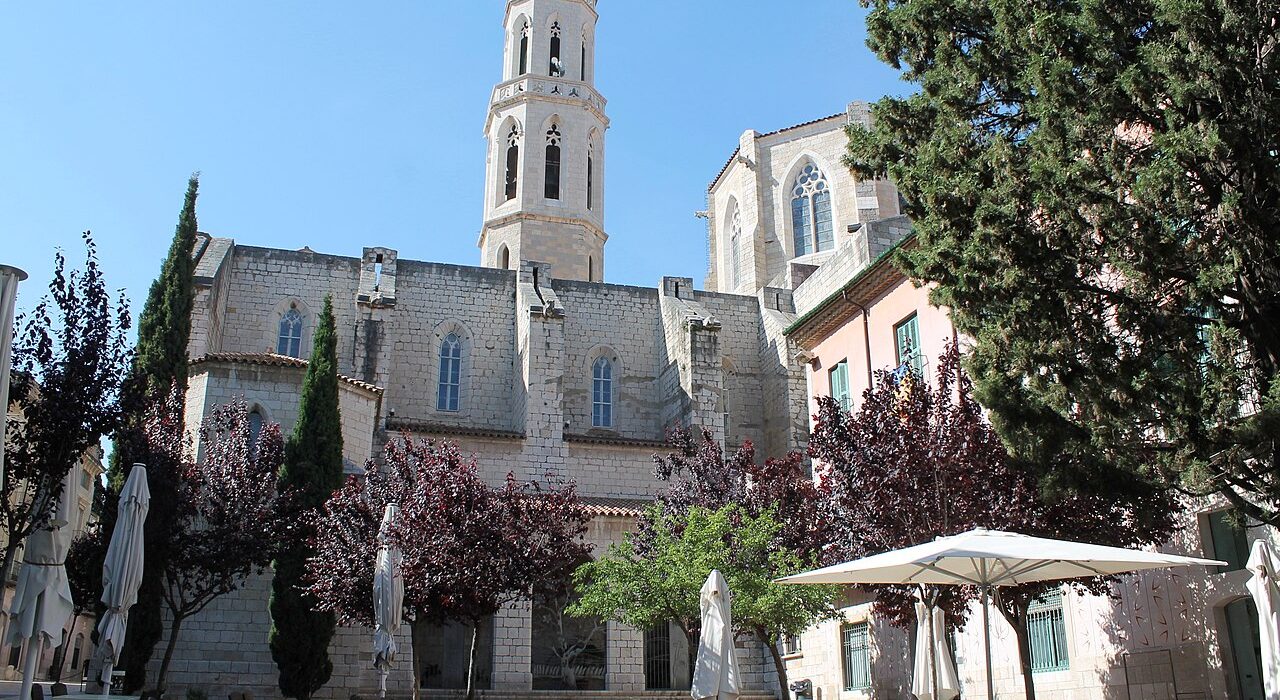
Figueres
CataluñaClimate
Walking along La Rambla at sunset is to feel the vibrant pulse of a city that breathes art on every corner, where the echo of Salvador Dalí mingles with the bustle of the terraces and the aroma of freshly baked crema. You don’t need to look far to find the magic; just lift your gaze to the geodesic dome that dominates the skyline or get lost in the maze of streets in the Centre Històric (Historic Center) to understand why this corner of the Upper Empordà is unique. With an atmosphere that oscillates between the bohemian and the familiar, Figueres invites you to live an authentic experience far from the massed crowds, yet full of culture and flavor.
The must-seesWhat to see in Figueres: the must-sees
Museu de l’Electricitat (Electricity Museum)
This museum offers a fascinating journey through the history of energy, housing a unique collection that illustrates the technological evolution of the region. It stands out for its interactive exhibits that explain how electricity transformed daily life in the Empordà, making the visit both educational and entertaining for all ages. It is a must-stop to understand the industrial development of the area without tourist saturation.
Museu de la Tècnica de l’Empordà (Empordà Technology Museum)
Housed in a historic building, this space preserves the industrial and technical heritage of the region with pieces ranging from agricultural machinery to antique household utensils. The highlight is its focus on local memory, allowing visitors to connect with the work and life traditions of their ancestors. The visit is usually quiet, ideal for those seeking a leisurely and reflective cultural experience.
Casa natal de Dalí (Dalí’s Birthplace)
This museum allows you to step into the early years of the genius of surrealism, showing the family environment where the artist grew up before leaping to worldwide fame. Inside, you can see personal objects and documents that shed light on his childhood, offering an intimate contrast with the grandiloquence of his nearby Theatre-Museum. Booking in advance is essential, as capacity is limited to preserve the privacy of the space.
A Narcís Monturiol 1819-1885
This monument pays tribute to the Figueres-born inventor of the first manned submarine powered by a combustion engine, a key figure in the history of naval engineering. The commemorative statue stands as a symbol of local ingenuity and is usually located in central parts of the city, inviting a quick but meaningful photo stop. It is a constant reminder that Figueres has been a cradle of innovators for centuries.
Casa de totxana
This building is a notable example of the city’s Modernista architecture, characterized by the distinctive use of exposed brick that gives it its name and personality. It stands out for its well-preserved façade that represents the aesthetic of a golden age of construction in the region, being a point of interest for architecture lovers. It can be perfectly appreciated from the outside while strolling through the adjacent streets.
Other points of interest
The city is dotted with tributes to local and international figures such as Josep Pla, Pere Bruguera and Ramon Muntaner, as well as contemporary sculptures like the Homenatge a la Tramuntana (Tribute to the Tramuntana) and the Quixot. You can also find references to Anselm Clavé, the work Arran de l’Aire and the monument Als fundadors de l’Agrupació Mútua (To the Founders of the Mutual Association), which enrich the urban landscape. Don’t miss the Homage to Newton and the sculpture of Sant Jordi i el Drac (Saint George and the Dragon), which complete the open-air artistic route.
🍂 Otoño
Si visitas Figueres en otoño, el tiempo es suave y tranquilo, perfecto para recorrer con calma la Casa de totxana y sus rincones más auténticos. También es una buena época para disfrutar del Museu de l'Electricitat sin aglomeraciones. Apuesta por ropa de abrigo fina y un paraguas por si acaso.
What to do in Figueres
Figueres offers specific cultural and gastronomic activities centered on its local markets, its historical heritage, and its traditional festivals. You can immerse yourself in local life by visiting the Fruit and Vegetable Market on Tuesdays, Thursdays, or Saturdays to buy local produce, or by taking part in the Sant Pau de la Calçada celebrations at the end of January. For music lovers, attending the Acústica Festival is an unforgettable experience that turns the city into one big stage, while strolling through residential neighborhoods such as Parc Bosc offers a relaxed glimpse of everyday life in the Empordà region.
Figueres in one day: express itinerary
If you are short on time, this optimized route lets you see the essentials without rushing, combining culture, history, and gastronomy in an intense but enjoyable day.
- 10:00 AM – Dalí’s birthplace: Start the morning with energy by visiting the artist’s birthplace to understand his roots before the crowds arrive.
- 12:00 PM – Narcís Monturiol monument and Casa de totxana: Stroll through the center admiring the statue of the submarine inventor and the exposed-brick architecture, connecting with the industrial history.
- 14:00 PM – Lunch at the Market or Market Square: Enjoy seasonal Empordà rice at one of the family-run restaurants surrounding the local shopping area.
- 16:00 PM – Museu de la Tècnica de l’Empordà: Spend the afternoon exploring the old machinery and technical heritage of the region in a peaceful setting.
- 18:00 PM – La Rambla and the shopping center: End the day strolling along the main social artery, having a coffee on a terrace, and soaking up the urban atmosphere before dinner.
Where to eat in Figueres: local gastronomy
Where to stay in Figueres
Centre Històric (Barri Vell)
El corazón de Figueres, un laberinto de calles estrechas y plazas con encanto. Concentra las principales atracciones culturales, boutiques y una atmósfera artística y bohemia, especialmente alrededor del mundialmente famoso museo.
La Rambla y Centro Comercial
La principal arteria social y comercial de la ciudad. Un amplio paseo lleno de tiendas, cafeterías con terrazas y restaurantes, ideal para pasear, ir de compras y sentir el pulso de la ciudad.
Plaça de l'Estació y Alrededores
Una zona funcional y de tránsito, marcada por la presencia de la estación de tren. Es una opción conveniente para viajeros con presupuesto ajustado o que planean excursiones, con una buena oferta de hoteles y apartamentos a precios competitivos.
Parc Bosc y Ensanche
Barrio residencial tranquilo que se extiende alrededor del gran parque municipal. Es una zona ideal para familias y para quienes buscan una experiencia más local, con espacios verdes para relajarse lejos del bullicio turístico.
Barrio de la Creu de la Mà
Un barrio residencial con una fuerte identidad local y vida propia. Aunque tiene menos atracciones turísticas, ofrece una visión auténtica de la vida en Figueres, con comercios locales, bares de barrio y menos aglomeraciones.
How to get to Figueres
The city’s connectivity is based mainly on conventional rail transport and regional overland connections.
| Medio | Duración | Precio aprox. | Frecuencia |
|---|---|---|---|
| Tren (Estación Figueres) | Variable según origen (ej. desde Girona aprox. 40 min) | Económico | Regular (según Renfe) |
| Autobús / Coche | Depende del tráfico y punto de partida | Variable | Continua |
It is important to note that the Figueres train station does not have AVE service at this specific location, so travelers should plan their long-distance connections with this detail in mind.
How to get around Figueres
The city is compact and walkable, but for longer distances or to reach certain residential neighborhoods, the available urban transport is the city bus. This service connects the different points of interest, including the Centre Històric (Historic Center) and more outlying areas such as Parc Bosc, making it easy to get around without your own car. To explore the old town and the main attractions such as the Casa Natal de Dalí (Dalí’s Birthplace) or La Rambla, the most recommended and pleasant option is to do it on foot.
Weather in Figueres
Best time to visit Figueres
Day trips from Figueres
If you decide to extend your trip, the city of Girona is the closest and most recommended excursion destination. Located in the same province, Girona offers a historical contrast with its Jewish quarter and cathedral, providing a cultural experience complementary to Figueres in a short journey. It is the logical option for those already in the province of Girona who wish to see another Catalan gem without long trips.
Curious facts about Figueres you didn’t know
Did you know that Figueres is home to the largest bastioned fortress in Europe? The Castillo de San Fernando (San Fernando Castle) covers an impressive area of 32 hectares and has a perimeter of more than 3,000 meters, making it a defensive colossus that dominates the local geography.
The city’s name has a very clear botanical origin: ‘Figueres’ derives from the Latin ‘Ficaria’, meaning ‘place planted with fig trees’, referring to the abundance of these trees in ancient times.
The city is the birthplace of Narcís Monturiol, the inventor of the first manned submarine powered by a combustion engine, whose Ictíneo I was launched in Barcelona in 1859, marking a milestone in world naval engineering.
The Teatro-Museo Dalí (Dalí Theatre-Museum) is not just a museum, but is considered the largest surrealist object in the world, designed by Salvador Dalí himself, who was born here on May 11, 1904 and rests in a crypt beneath its stage.
Cinema has also set its sights on the city; a key scene from the film ‘Perfume: The Story of a Murderer’ (2006) was shot at the Castillo de San Fernando, which served as a prison for the protagonist.
Additionally, the Museo del Juguete de Cataluña (Toy Museum of Catalonia) exhibits more than 22,000 pieces, including toys belonging to personalities such as Federico García Lorca, and the city comes alive every year with the Festival Acústica, which has drawn crowds of more than 120,000 spectators.
Who Figueres is for
Figueres is an ideal destination for lovers of art and history, especially those fascinated by Dalí’s surrealism and Monturiol’s engineering. It is perfect for families seeking a mix of accessible culture and green spaces such as Parc Bosc, as well as for foodies interested in market cuisine and traditional dishes such as Flaona. It is also appealing for budget travelers who find economical options in the station area, and for those who prefer to avoid the tourist crowds of the coast, seeking an authentic urban experience in the interior of the Ampurdán region.
💡 ¿Sabías que...?
- ● Figueres alberga la fortaleza abaluartada más grande de Europa, el Castillo de San Fernando. Ocupa una superficie de 32 hectáreas y tiene un perímetro de más de 3.000 metros. (Consorcio del Castillo de San Fernando)
- ● El nombre 'Figueres' deriva del latín 'Ficaria', que significa 'lugar plantado de higueras'. El topónimo hace referencia a las higueras que eran abundantes en la zona en la antigüedad. (Topónimos de la Generalitat de Catalunya)
- ● El inventor del primer submarino tripulado con motor de combustión, Narcís Monturiol, nació en Figueres. Su primer sumergible, el Ictíneo I, fue botado en el puerto de Barcelona en 1859. (Fundació Navegació Oceànica Barcelona)
- ● El Teatro-Museo Dalí es considerado el objeto surrealista más grande del mundo y fue diseñado por el propio Salvador Dalí. Su cúpula geodésica, diseñada por el arquitecto Emilio Pérez Piñero, es un icono de la ciudad y símbolo del museo. (Fundació Gala-Salvador Dalí)
- ● Salvador Dalí, uno de los artistas más influyentes del siglo XX, nació en Figueres el 11 de mayo de 1904. Su cuerpo está embalsamado y yace en una cripta bajo el escenario de su Teatro-Museo. (Fundació Gala-Salvador Dalí)
- ● El Museo del Juguete de Cataluña, ubicado en Figueres, exhibe más de 22.000 piezas. Parte de su colección incluye juguetes que pertenecieron a personalidades como Salvador Dalí, Federico García Lorca o Joan Miró. (Museu del Joguet de Catalunya)
- ● Una de las escenas clave de la película 'El Perfume: Historia de un asesino' (2006) fue rodada en el Castillo de San Fernando de Figueres, que representaba la cárcel de Grasse donde es encerrado el protagonista. (Catalan Film Commission)
- ● Desde 2002, Figueres celebra el Festival Acústica, un evento musical que ha llegado a congregar a más de 120.000 espectadores en una sola edición, convirtiendo la ciudad en un gran escenario al aire libre. (Festival Acústica)
Frequently asked questions about Figueres
How many days do I need to see Figueres?
1 or 2 days is enough to see the main attractions such as the Casa Natal de Dalí (Dalí Birthplace), the Museu de la Tècnica (Technology Museum) and to stroll along La Rambla, although if you want to include the Castillo de San Fernando (San Fernando Castle) and smaller museums, you might need a third day.
What is the best time of year to visit Figueres?
The best time is from May to September, when the average summer temperature is 22.9°C, offering pleasant weather for exploring the city and enjoying the open-air markets.
How do I get to Figueres from Madrid?
You should take the train to Figueres station (keep in mind that it does not have AVE at this specific location according to the data, so you may need connections), or travel by car or bus, with Girona being a nearby reference point in the province.
What typical dish should I definitely try?
You must try the Flaona, a sweet pastry with more than two hundred years of history, and the Arroz de temporada ampurdanés (seasonal Empordà rice), made with local products from the local market.