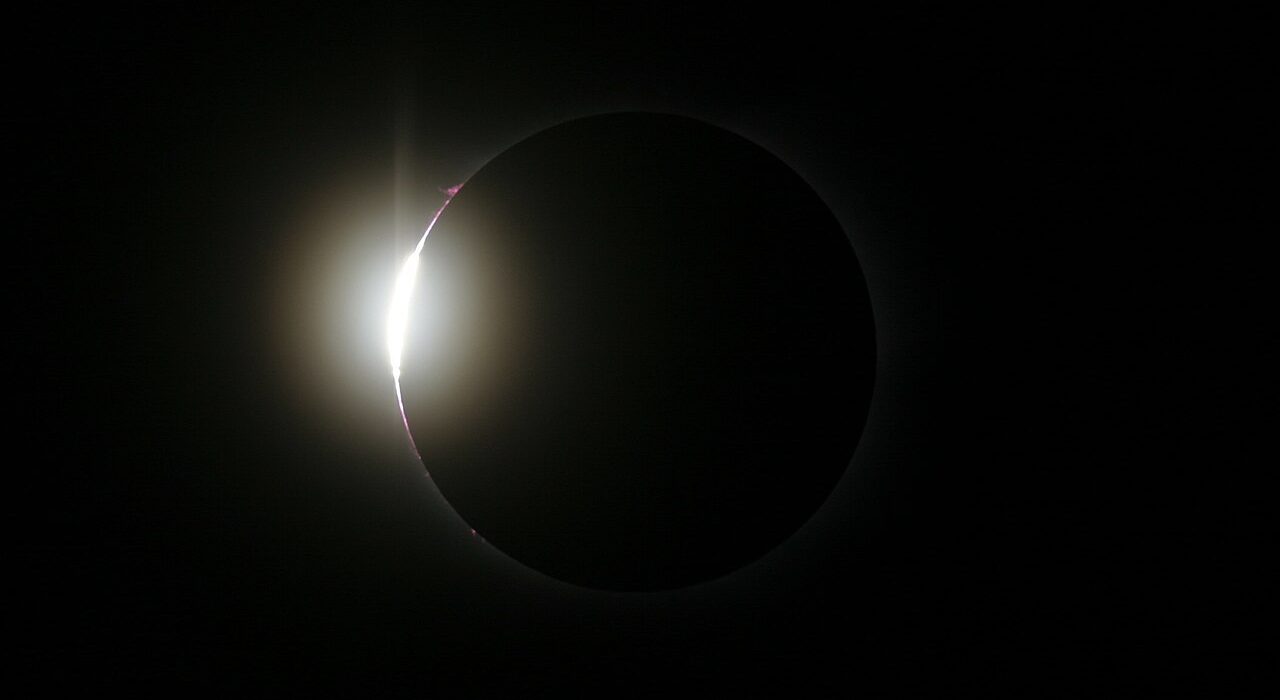
Total Solar Eclipse in Vitoria-Gasteiz, Spain — August 12, 2026: Exact Times and Where to Watch
In Vitoria-Gasteiz, the solar eclipse of August 12, 2026, will be TOTAL, with totality beginning at 20:27 local time and lasting exactly 1 minute and 04 seconds. This event marks a historic moment for Spanish astronomy: it is the first total solar eclipse visible from the Iberian Peninsula mainland since August 30, 1905, ending a 121-year wait. While the path of totality crosses northern Spain, viewing conditions here depend heavily on horizon clarity due to the low position of the sun. This guide provides verified timing data from NASA and the IGN, specific viewing locations within the city, and critical weather contingency planning for travelers.
Eclipse timeline in Vitoria-Gasteiz
The eclipse sequence in Vitoria-Gasteiz unfolds over nearly two hours, transitioning from a standard partial eclipse to a brief period of total darkness. The event begins with the first contact, where the Moon starts to obscure the Sun. As the coverage increases, the ambient light will dim noticeably, mimicking a deep twilight. The critical phase is totality, which occurs just before sunset. Once the Moon fully covers the solar disk, the solar corona becomes visible. The event concludes with the fourth contact, as the Moon completely leaves the Sun’s disk.
| Phase | Local time in Vitoria-Gasteiz (CEST) |
|---|---|
| First contact (partial begins) | 19:32:31 |
| Totality begins | 20:27:43 |
| Maximum eclipse | 20:28:15 |
| Totality ends | 20:28:47 |
| Last contact (partial ends) | 21:17:12 |
| Totality duration | 1 min 04 s |
| Magnitude | 1.0038 |
Source: NASA Five Millennium Catalog. Local times CEST (UTC+2), August 12, 2026.
With a duration of 1 minute and 04 seconds, Vitoria-Gasteiz offers a substantial window for observation, though it is not the maximum possible in Spain. The peninsular maximum duration occurs further north in Oviedo, where totality lasts 1 minute and 49 seconds. Vitoria is located inside the path of totality but sits slightly south of the centerline. This positioning means the Moon will cover the Sun completely (magnitude 1.0038), but observers here will experience a slightly shorter period of darkness compared to those on the central axis. For practical purposes, however, the visual experience of totality—darkness, stars, and the corona—remains identical regardless of this 45-second difference.
Where to watch it in Vitoria-Gasteiz
Selecting a viewing location in Vitoria-Gasteiz requires strict adherence to one criterion: an unobstructed view of the western horizon. During totality, the Sun will be extremely low in the sky, at an altitude of approximately 10 to 12 degrees above the west-northwest horizon. Buildings, hills, or dense tree lines in this direction will block the event entirely. You must prioritize open spaces with a clear line of sight toward the setting sun.
Based on the city’s topography and urban layout, the following locations offer the best potential for a clear view:
- Parque de la Florida: This historic garden is one of the most reliable spots within the city center. Its open layout and lack of tall immediate obstructions to the west make it a strong candidate. The elevation of the park relative to the surrounding streets may offer a slight advantage in clearing nearby rooftops. Arrive early to secure a spot facing west.
- Anillo Verde (Green Ring): The southern sections of the Anillo Verde, particularly the higher elevations along the trail system, provide excellent vantage points. Being on the outskirts, you are less likely to encounter the “canyon effect” of tall city buildings. Look for clearings along the path that face west-northwest. This location also offers more space for groups and equipment setup.
- Plaza de la Virgen Blanca: While central and iconic, this plaza is surrounded by buildings. It is only viable if you can access a higher vantage point or if the specific angle of the sun clears the western facade of the surrounding architecture. It is a high-risk option for horizon visibility compared to the parks, but it offers the best social atmosphere if the view is clear.
- Plaza del Machete: Similar to the Virgen Blanca, this location is constrained by urban density. It is suitable only if you can verify the horizon line is clear of obstructions well in advance. We recommend visiting this spot a week before the eclipse at the same time of day (20:30) to test the view.
For the highest probability of success, we recommend the Anillo Verde or Parque de la Florida. These locations minimize the risk of buildings blocking the low sun. Remember that the sun sets shortly after the eclipse ends; the event will conclude with the sun dipping below the horizon at 21:17, just minutes after the last contact.
August skies in País Vasco: real odds
Travelers must approach the weather forecast with realistic expectations. According to historical climate data from AEMET for the Galicia and Cantabrian Coast zone, the clear sky probability in mid-August ranges between 30% and 50%. This region is prone to specific meteorological risks, including coastal fog and evening cloud cover known locally as ‘orballo’ or marine layer intrusion. While Vitoria is inland, it is still susceptible to cloud systems moving in from the Bay of Biscay.
Do not rely on long-range forecasts. The smart strategy is to monitor the AEMET prediction closely 24 to 48 hours before August 12. If the forecast indicates heavy cloud cover or fog in Vitoria, you must be prepared to execute a Plan B. This involves moving inland to areas with historically better stability, such as Lugo or Oviedo, where the duration of totality is also longer. Flexibility is your most valuable asset; being willing to drive 60-90 minutes inland on the morning of the eclipse can be the difference between seeing totality and seeing nothing but gray clouds.
Getting to Vitoria-Gasteiz for the eclipse
Vitoria-Gasteiz is well-connected by road and rail, but traffic volume on August 12, 2026, will be exceptional. Thousands of astro-tourists will be converging on the path of totality. We strongly advise arriving in the city at least one day prior, on August 11. Attempting to drive in on the morning of the eclipse risks getting stuck in gridlock, which could prevent you from reaching your viewing spot in time.
For those traveling from the south or east, we have detailed driving instructions available. You can follow our specific route guide from Logroño to Vitoria-Gasteiz, which outlines the best highway connections and potential bottlenecks. If you are arriving by train, the Vitoria station is centrally located, but you will still need local transport to reach the optimal viewing sites like the Anillo Verde. Public transport within the city will be crowded; consider walking or using a bicycle if your accommodation is within a reasonable distance of your chosen spot.
Where to stay: book now or arrive the day before
Accommodation inside the path of totality has been booking up rapidly since early 2025. Hotels in Vitoria-Gasteiz and surrounding towns like Pamplona or Burgos are likely to be fully sold out or charging premium rates. Our honest advice is to book immediately with a free cancellation policy. If you cannot find lodging in Vitoria, consider staying in a larger hub outside the path, such as Madrid or Bilbao, and driving in early on the 12th. However, staying within the city allows you to wake up on eclipse day without the stress of a long commute.
Safety: the 30 seconds you must read
Eye safety is non-negotiable. During the partial phases of the eclipse (from 19:32 until 20:27, and again from 20:28 until 21:17), you must wear certified solar eclipse glasses. Looking at the sun without protection during these times can cause permanent eye damage. You may only remove your glasses during the brief window of totality (1 minute and 04 seconds in Vitoria-Gasteiz). The moment the sun begins to reappear—the “diamond ring” effect—you must immediately look away and put your glasses back on. For a comprehensive breakdown of safety protocols, read our complete guide to the 2026 eclipse in Spain.
- ISO 12312-2 certified eclipse glasses — Ensure every member of your group has their own pair. Do not use homemade filters or standard sunglasses. See options on Amazon ES.
The eclipse near Vitoria-Gasteiz
If you are unable to secure a good location in Vitoria or if the weather forecast looks unfavorable, nearby cities offer alternative viewing opportunities. The following table compares the eclipse timings for major locations in the region, helping you decide if a short drive to a different latitude might improve your duration or weather odds.
| City | Distance | Totality duration | Totality begins |
|---|---|---|---|
| Logroño | 47 km | 1 min 22 s | 20:28:09 |
| Bilbao | 51 km | 0 min 31 s | 20:27:23 |
| Burgos | 101 km | 1 min 44 s | 20:28:24 |
| Santander | 115 km | 1 min 04 s | 20:26:57 |
Make a trip of it: what to see in Vitoria-Gasteiz
Since the eclipse occurs at sunset, the entire day of August 12 is available for tourism before the event begins. Vitoria-Gasteiz was named European Green Capital in 2012 and offers a compact, walkable historic center. You can explore the Cathedral of Santa María or stroll through the medieval streets of the Almendra Medieval before heading to your viewing spot. For a full itinerary of cultural sites and dining recommendations, consult our what to see and do in Vitoria-Gasteiz guide.
Frequently asked questions
What time is the eclipse in Vitoria-Gasteiz?
The partial phase starts at 19:32:31 CEST. Totality runs from 20:27:43 to 20:28:47, with maximum at 20:28:15. The partial phase ends at 21:17:12.
How long does totality last in Vitoria-Gasteiz?
1 min 04 s. Being off the centerline, the duration is shorter than the peninsular maximum (Oviedo, 1 min 49 s).
Will the eclipse be total in Vitoria-Gasteiz?
Yes. Vitoria-Gasteiz is inside the path of totality with magnitude 1.0038. The sun will be completely covered by the moon for 1 min 04 s.
Do I need eclipse glasses?
Yes — ISO 12312-2 certified glasses during all partial phases. Only during totality can you safely look at the sun with the naked eye. Sunglasses do NOT protect.
What if it is cloudy in Vitoria-Gasteiz on August 12?
Clear-sky probability for this zone is 30-50% (AEMET historical data). Tener plan B tierra adentro (Lugo, Oviedo) o moverse según predicción AEMET 24h antes. Check the AEMET forecast 24-48 hours before and stay mobile.
When is the next total solar eclipse visible from Spain?
Soon: 2027-08-02. An exceptional back-to-back for the same region.
Conclusion
The August 12, 2026 total solar eclipse is a once-in-a-lifetime event for travellers visiting Spain. With careful planning — picking a centerline location, checking the AEMET forecast 24-48h before, wearing ISO 12312-2 glasses during partial phases and booking accommodation early — you can witness one of nature’s most spectacular phenomena. Use this guide alongside our city guides and itineraries to build the trip of a lifetime.