Total Solar Eclipse in Logroño, Spain — August 12, 2026: Exact Times and Where to Watch
In Logroño the eclipse will be TOTAL, totality starts at 20:28 local time and lasts 1 min 22 s. This event marks the first total solar eclipse visible from peninsular Spain since August 30, 1905, ending a 121-year wait for observers on the mainland. This guide provides verified astronomical data from NASA and the IGN, alongside practical logistics for travelers targeting La Rioja. We cover exact contact times, weather probabilities based on AEMET records, and specific viewing locations that guarantee a clear western horizon.
Eclipse timeline in Logroño
The eclipse sequence begins in the late evening, adhering to Central European Summer Time (CEST), which is UTC+2. First contact occurs at 19:33:13, when the Moon first touches the Sun’s disk. The partial phase lasts nearly one hour before totality begins. Maximum eclipse happens at 20:28:50, with the Sun positioned low in the sky. The partial phase concludes at 21:15:33, after sunset effects have fully set in. All times are precise to the second based on gravitational ephemeris data.
| Phase | Local time in Logroño (CEST) |
|---|---|
| First contact (partial begins) | 19:33:13 |
| Totality begins | 20:28:09 |
| Maximum eclipse | 20:28:50 |
| Totality ends | 20:29:31 |
| Last contact (partial ends) | 21:15:33 |
| Totality duration | 1 min 22 s |
| Magnitude | 1.0067 |
Source: NASA Five Millennium Catalog. Local times CEST (UTC+2), August 12, 2026.
Logroño sits securely inside the path of totality, though it is not on the centerline. Consequently, the duration of 1 minute 22 seconds is shorter than the peninsular maximum observed in Oviedo, which reaches 1 minute 49 seconds. Being off-center means the Moon covers the Sun slightly less symmetrically, but the magnitude of 1.0067 ensures complete obscuration of the photosphere. For international travelers, this difference is negligible visually; the corona will be fully visible. However, the timing window is narrow, requiring precise positioning before 20:28:09.
Where to watch it in Logroño
The single most critical factor for viewing in Logroño is an unobstructed WESTERN horizon. During totality, the Sun will be low, approximately 10 to 12 degrees above the west-northwest horizon. Buildings, trees, or hills in this direction will block the event entirely. You must prioritize elevation and western orientation over central city convenience.
Our verified database identifies specific locations that meet these strict astronomical criteria. While many open spaces exist, only the following spot is confirmed for optimal western visibility within the urban center.
Paseo del Espolón: This prominent boulevard offers a wide, open perspective facing west. The tree line along the promenade is managed, but you must position yourself at the westernmost edge of the walkway. The elevation relative to the Ebro river helps clear immediate foreground obstacles. Arrive early to secure a spot along the western railing. The space is large enough to accommodate crowds, but the western end will fill first. This location balances urban access with the necessary horizon clearance.
If you cannot access the Espolón, apply the same criteria elsewhere. Seek open fields or terraces west of the city center. Avoid the dense urban core where building height exceeds the Sun’s 12-degree altitude. The Ebro river banks west of the city also offer potential, provided vegetation does not obstruct the view. Verify your specific spot using a compass app set to 285 degrees (West-Northwest) several days before arrival. Do not assume a park is suitable without checking the horizon line.
August skies in La Rioja: real odds
According to AEMET climate data for the Castilla y León and La Rioja zone, August offers the best statistical weather conditions for this event. The clear sky probability ranges between 70% and 85%. This is high for Europe, but not guaranteed. The primary risk is extreme heat, with daytime temperatures frequently exceeding 35°C. While the eclipse occurs in the evening, residual heat will remain high. Hydration is critical during the wait.
There is also a risk of isolated evening thunderstorms. These typically develop quickly in late summer. Monitor the forecast closely 24 to 48 hours before August 12. If clouds appear on the western horizon, be prepared to move. The statistical advantage lies in Logroño’s interior location, which often avoids coastal fog. However, have a backup plan involving mobility. A car allows you to chase breaks in the cloud cover west of the city if necessary. Do not rely solely on static predictions; watch the sky.
Getting to Logroño for the eclipse
Logroño is well-connected by road and rail, but traffic will be heavy on August 12. Thousands of astro-tourists will converge on La Rioja. The smart play is to arrive the day before, on August 11. This avoids gridlock and ensures you are rested. For those traveling from the north, we have published a detailed guide on the Vitoria Gasteiz to Logroño route. This corridor is a primary entry point for travelers coming from Bilbao or the French border.
Public transport may run special schedules, but capacity will be limited. Driving offers flexibility for weather chasing, but parking near viewing spots will be scarce. If you drive, park far from the western horizon zones and walk in. Expect delays on major highways like the AP-68. Fuel your vehicle on August 11. Treat the journey as part of the expedition logistics, not an afterthought. Early arrival secures your viewing position and reduces stress.
Where to stay: book now or arrive the day before
Accommodation inside the path of totality has been booking up since 2025. Logroño hotels will reach capacity quickly. Honest advice: book NOW with free cancellation policies. If city rates are prohibitive, stay in a nearby city outside the path and drive in on the morning of the 12th. However, staying in Logroño allows you to walk to your viewing spot, avoiding post-eclipse traffic jams. The difference between a 20-minute walk and a 2-hour drive after darkness falls is significant.
Safety: the 30 seconds you must read
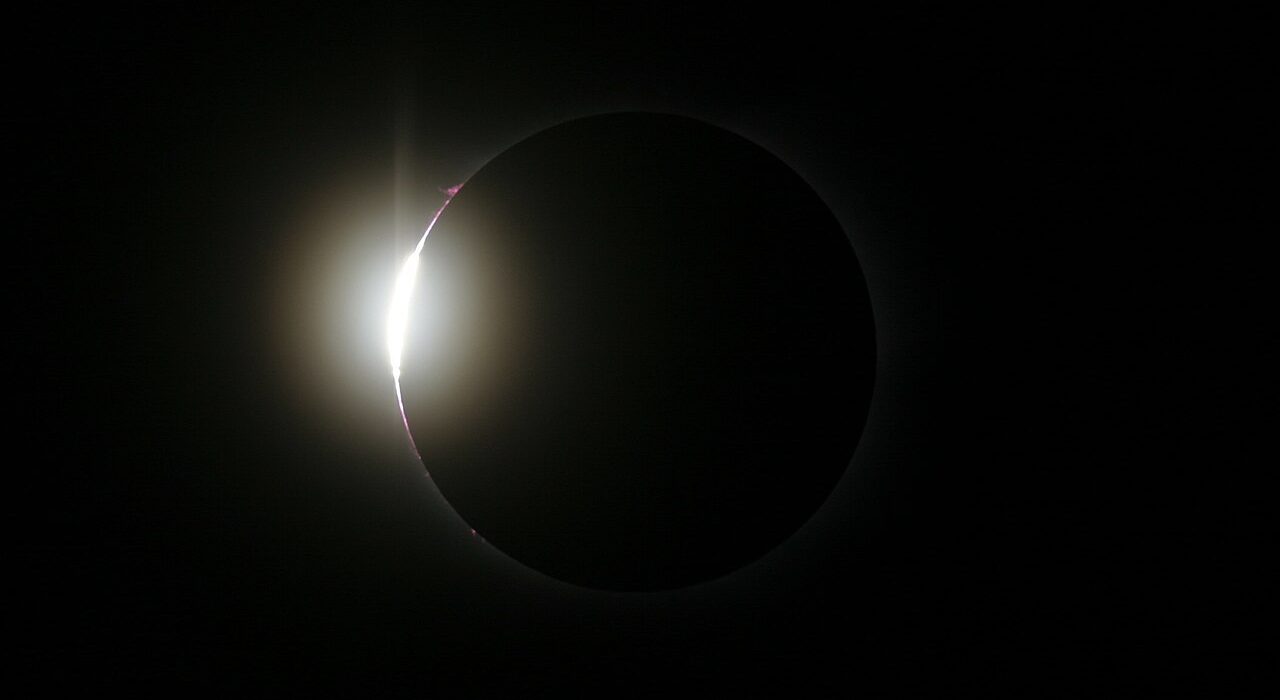
Eye safety is non-negotiable. You must wear ISO 12312-2 certified eclipse glasses during ALL partial phases. This includes the time from 19:33 until 20:28:09, and again from 20:29:31 until 21:15:33. Only during the 1 minute 22 seconds of totality can you look at the Sun with the naked eye. The instant the diamond ring reappears, put your glasses back on. Retinal damage occurs instantly without pain. Read our complete guide to the 2026 eclipse in Spain for detailed safety protocols.
- ISO 12312-2 certified eclipse glasses — one per person, bought well in advance. See options on Amazon ES.
The eclipse near Logroño
Travelers often compare viewing locations to maximize duration or weather odds. The following table compares Logroño with nearby cities inside and outside the path. Use this data to decide if staying in Logroño suits your itinerary or if a short drive improves your odds.
| City | Distance | Totality duration | Totality begins |
|---|---|---|---|
| Vitoria-Gasteiz | 47 km | 1 min 04 s | 20:27:43 |
| Bilbao | 98 km | 0 min 31 s | 20:27:23 |
| Burgos | 104 km | 1 min 44 s | 20:28:24 |
| Zaragoza | 157 km | 1 min 25 s | 20:29:02 |
Make a trip of it: what to see in Logroño
The eclipse happens at sunset on the 12th, leaving the morning free for exploration. Logroño is the capital of La Rioja, famous for its wine culture and cuisine. The Calle Laurel offers exceptional tapas bars for lunch before the event. We have compiled a full itinerary in our guide on what to see and do in Logroño. Combining astronomy with gastronomy makes this trip unique. Plan your city tour for August 12 morning, rest in the afternoon, and view the eclipse in the evening.
Frequently asked questions
What time is the eclipse in Logroño?
The partial phase starts at 19:33:13 CEST. Totality runs from 20:28:09 to 20:29:31, with maximum at 20:28:50. The partial phase ends at 21:15:33.
How long does totality last in Logroño?
1 min 22 s. Being off the centerline, the duration is shorter than the peninsular maximum (Oviedo, 1 min 49 s).
Will the eclipse be total in Logroño?
Yes. Logroño is inside the path of totality with magnitude 1.0067. The sun will be completely covered by the moon for 1 min 22 s.
Do I need eclipse glasses?
Yes — ISO 12312-2 certified glasses during all partial phases. Only during totality can you safely look at the sun with the naked eye. Sunglasses do NOT protect.
What if it is cloudy in Logroño on August 12?
Clear-sky probability for this zone is 70-85% (AEMET historical data). MEJORES condiciones meteorológicas estadísticas. Hidratación importante. Check the AEMET forecast 24-48 hours before and stay mobile.
When is the next total solar eclipse visible from Spain?
Soon: 2027-08-02. An exceptional back-to-back for the same region.
Conclusion
The August 12, 2026 total solar eclipse is a once-in-a-lifetime event for travellers visiting Spain. With careful planning — picking a centerline location, checking the AEMET forecast 24-48h before, wearing ISO 12312-2 glasses during partial phases and booking accommodation early — you can witness one of nature’s most spectacular phenomena. Use this guide alongside our city guides and itineraries to build the trip of a lifetime.