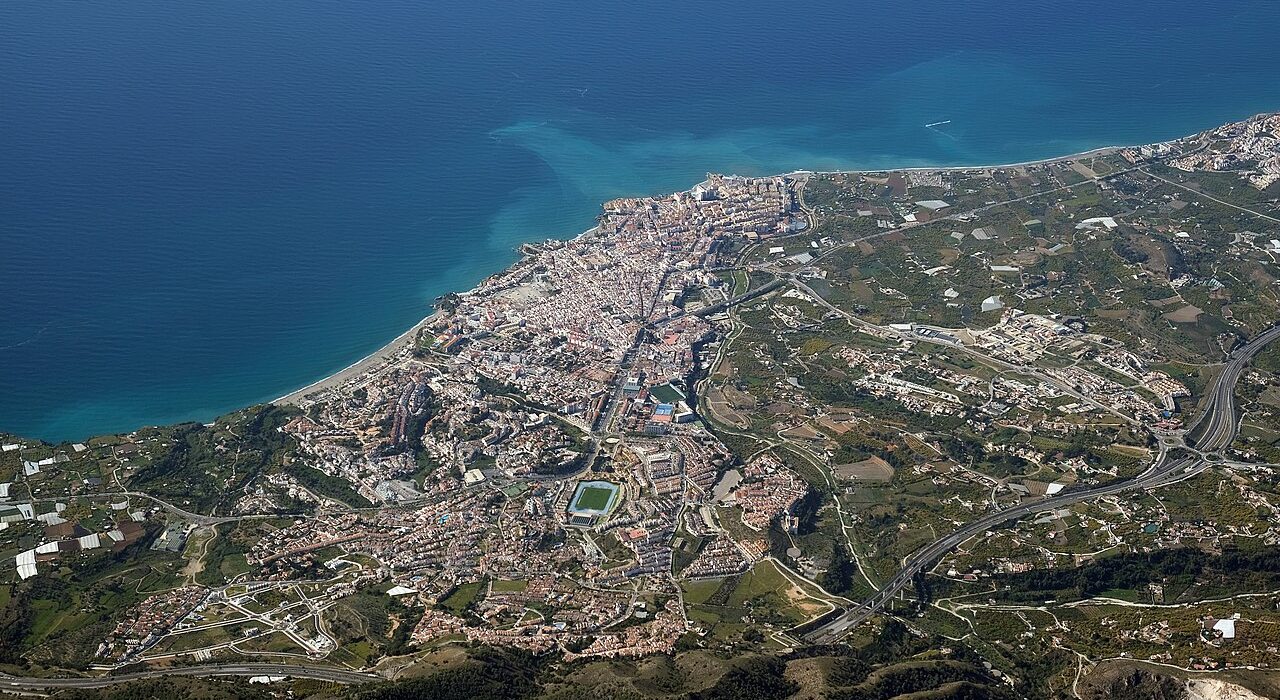
Nerja
AndalucíaClimate
Imagine walking along a white promontory where the air smells of salt and history, with the Mediterranean Sea crashing against the cliffs at your feet and the Andalusian sun warming your back. Nerja is not just a beach destination; it is a corner where prehistory meets the coast, a place where you can see cave paintings dating back 42,000 years in the morning and enjoy an “espeto” (sardine skewer) at sunset. With a population of 22,000 inhabitants, affectionately called “nerjeños” or “trokolos” by locals, this town in the Axarquía region of Málaga invites you to lose time among its whitewashed streets and hidden coves, far from the rush yet full of life.
The must-seesWhat to See in Nerja: The Essentials
Nerja boasts a unique historical and natural heritage ranging from the world’s largest stalactite to cliffs rising 100 meters above the sea.
Cueva de Nerja (Nerja Cave – World Heritage Site)
Located at Plaza de España, 4, inside the Casa de los Canónigos, this archaeological gem houses cave paintings that could be the oldest rock art images in human history, with an estimated age of 42,000 years. Inside the attached museum, you can learn about local history from prehistory to the present while contemplating fascinating finds. Regular opening hours are Tuesday to Sunday from 10:00 to 16:00, closed on Mondays, although during the summer season it opens daily. A combined ticket is available with the Cueva de Nerja to facilitate your visit.
Acantilados de Maro-Cerro Gordo (Maro-Cerro Gordo Cliffs – Natural Park)
This protected Natural Site, declared in 1999, stretches between Nerja and Almuñécar and offers one of the most pristine coastlines on the peninsula, with cliffs reaching up to 100 meters above the sea. It hosts unique Mediterranean ecosystems and coves inaccessible by road, so you can only enjoy them via marked hiking trails or by boat. Entry is free, making it an ideal destination for nature lovers seeking tranquility and spectacular landscapes at no cost.
Acueducto del Águila (Eagle Aqueduct – Monument)
This impressive 19th-century hydraulic engineering structure was designed by Francisco Cantarero Martín and features brick arches that once reached heights of 40 meters. It crosses the Barranco de la Coladilla as part of the old water supply system from Maro to Nerja, serving as a visible testament to the sugar industry of the era. It is a historical monument that you can view freely from the N-340 road, with no restricted hours or access fees, perfect for a quick photo stop.
Playa de Burriana (Burriana Beach)
If you are looking for sun and sand, this is the largest and most popular beach in Nerja, stretching approximately 800 meters in length with full services including beach bars, showers, and access for people with reduced mobility. It consistently stands out for the high quality of its transparent waters and fine sand, maintaining superior environmental standards that make it safe and clean for swimming. Access is free year-round, although you should expect larger crowds during the summer season due to its popularity.
Iglesia del Salvador (Church of the Savior)
This Catholic parish church, built mainly in the 17th century and completed in 1697, sits on the site of an old Muslim mosque in the heart of the historic center, right next to the famous Balcón de Europa (Balcony of Europe). Architecturally, it is notable for its bell tower in the Andalusian Baroque style and houses 18th-century altarpieces and images inside under the jurisdiction of the Archdiocese of Málaga. Visiting hours are generally from 10:00 to 13:00 and from 17:00 to 20:00, with free entry or via voluntary donation for worship and cultural tourism.
Balcón de Europe
This iconic viewpoint, located in the historic center atop the remains of an ancient Muslim fortress, offers spectacular panoramic views over the Mediterranean Sea and the surrounding cliffs. Presided over by the statue of King Alfonso XII, who named the site after the 1884 earthquake, it serves as the main meeting point for visitors and local events in this space historically known as Paseo de la Batería (Battery Promenade). Access is free and open 24 hours a day, allowing you to enjoy the landscape both day and night.
Mirador de la Caleta
Located in the eastern area of Nerja, near the border with Maro, this scenic spot provides privileged views of the cliffs of the Maro-Cerro Gordo Natural Park and the Sierra de Almijara. It is less crowded than the Balcón de Europa, offering different and more tranquil perspectives of the Nerja coastline with access to protected virgin coves. Access is free via a local road and includes a parking area available for visitors arriving by private vehicle.
Nerja Seafront Promenade
This pedestrian promenade, approximately 2 kilometers long, connects the old town from the Balcón de Europa to Burriana Beach, being fully accessible for all types of users. It features benches, decorative lampposts, and direct access to multiple coves, remaining open 24 hours a day and ideal for sunset walks and contemplating the coastline.
Maro Waterfall
These virgin coves within the Maro-Cerro Gordo Natural Site are mainly accessible via hiking trails or by boat, offering transparent waters with protected seabeds ideal for snorkeling. They have no facilities, so bringing provisions is recommended, although access is free year-round for those seeking nature in its purest form.
Cala del Moral
This urban beach is situated to the right of the Balcón de Europa, just after La Caletilla beach. It is a small cove with special charm due to its nooks and sheds among the rocks, traditionally used by local fishermen as storage. At low tide, it allows walking among the rocks toward the next beach with views of the Balcón, offering a more intimate experience than the large sandy beaches.
🍂 Otoño
Si visitas Nerja en otoño, aún podrás aprovechar el buen tiempo hasta octubre con un mar cálido y menos turistas. Es una época tranquila para visitar las cuevas o los pueblos blancos cercanos sin prisas. Revisa el pronóstico del tiempo, ya que las lluvias pueden aparecer hacia el final de la temporada.
What to Do in Nerja
Nerja offers cultural and leisure activities based on its traditional festivals such as Holy Week and the Nerja Fair, as well as visits to its local markets and enjoyment of its coastal neighborhoods.
If you visit the city in March or April, you can immerse yourself in Semana Santa (Holy Week), a deep-rooted religious tradition featuring processions and celebrations that vary between late March and early April. On the other hand, if you travel in mid-October, do not miss the Feria de Nerja (Nerja Fair), which honors the patron saints Saint Michael the Archangel and the Virgin of Anguish with various cultural and festive activities. For a more local and daily experience, you can visit the Mercado Municipal de Abastos (Municipal Supply Market) in the heart of the city to see fresh produce, or head to the Mercadillo de Nerja (Nerja Street Market) on Tuesdays to find cheeses, cured meats, and olives outdoors.
Nerja in One Day: Express Itinerary
To make the most of a 24-hour visit to this city of 22,000 inhabitants, follow this optimized route covering history, views, and relaxation.
- 10:00 – Cueva de Nerja (Nerja Cave): Start your day visiting this 42,000-year-old archaeological site; it’s best to go early to avoid queues and secure entry to both the museum and the cave.
- 12:30 – Balcón de Europa (Balcony of Europe): Walk towards the historic center to enjoy panoramic views from the old fortress and see the statue of Alfonso XII before the midday heat sets in.
- 14:00 – Lunch near the Balcony: Take advantage of the central location to try typical dishes such as ajoblanco or emblanco de pescado at restaurants close to the viewpoint.
- 16:30 – Iglesia del Salvador (Church of the Savior): Visit this 17th-century temple built on the site of an ancient mosque, admiring its Baroque bell tower and altarpieces before heading to the coast.
- 18:00 – Playa de Burriana (Burriana Beach): End the day relaxing on this 800-meter-long beach, enjoying the sunset and, if it’s the season, some espetos de sardinas at the beach bars.
Where to Eat in Nerja: Local Gastronomy
Where to Stay in Nerja
Centro Histórico / Balcón de Europa
Esta es la zona más céntrica y animada, ideal para quienes desean estar cerca de las principales atracciones, restaurantes, tiendas y la vida local.
Playa Burriana
Perfecta para los amantes de la playa, esta zona es conocida por su bonita playa de arena, su animado paseo marítimo, chiringuitos, bares y restaurantes.
Playa La Torrecilla
Situada junto al centro histórico, esta zona costera ofrece acceso directo a las playas y un ambiente relajado.
How to Get to Nerja
Nerja’s connectivity depends mainly on road and air transport from specific points within the province of Málaga.
| Medio | Origen/Destino | Duración | Precio aprox. | Frecuencia |
|---|---|---|---|---|
| Avión | Aeropuerto de Alhama de Granada | Variable según conexión | Variable | Según vuelos |
| Autobús | Transporte urbano / Interurbano | Variable | Económico | Regular |
Getting Around Nerja
To get around the municipality, there is an urban bus service connecting different areas of the city. Since the historic center and zones like the Balcón de Europa are pedestrian-only or difficult to access by car in certain areas, walking is often the best option for short distances, especially if you are staying in the Historic Center or near La Torrecilla Beach.
Weather in Nerja
Best Time to Visit Nerja
Day trips from Nerja
If you decide to explore beyond the municipal limits, the city of Málaga is the main destination for nearby excursions.
Málaga, capital of the homonymous province in the autonomous community of Andalusia, is located at an accessible distance and offers an urban and cultural contrast to the tranquility of Nerja. You can combine the history of the Cueva de Nerja (Nerja Cave) with the art and museums of the provincial capital in a single day, taking advantage of the good road connections of the Axarquía.
Trivia about Nerja you didn’t know
Did you know that Nerja holds a world record underground? The Cueva de Nerja (Nerja Cave) houses the largest stalactite in the world, with 32 meters in height and a diameter of 18 meters, a fact that earned it a place in the Guinness Book of Records in 1977 and which is estimated to be around 450,000 years old.
The discovery of this underground treasure was pure chance. The Cuevas de Nerja (Nerja Caves) were found in 1959 and today are a very important archaeological site, known as the ‘prehistoric cathedral’, where human remains and cave paintings have been found demonstrating human presence since the Upper Paleolithic.
Nerja’s television fame is unforgettable for many Spaniards. The town gained great popularity thanks to being the main setting for ‘Verano Azul’ (Blue Summer), one of the most iconic Spanish television series of the 80s, and in the Parque Verano Azul (Blue Summer Park) there is a replica of Chanquete’s famous boat, ‘La Dorada’, which is an attraction for the nostalgic.
The name of the city has a very aquatic origin. The current name of Nerja comes from the Arabic ‘Narixa’ or ‘Naricha’, which relates to the abundance of water and springs in the area, an etymology that highlights the water wealth that has historically characterized the municipality under Muslim rule.
The iconic Balcón de Europa (Balcony of Europe) owes its name to a monarch. It is said that after an earthquake in 1884, King Alfonso XII visited Nerja and, contemplating the views from this promontory, exclaimed: ‘This is the Balcony of Europe!’, a name that stuck for posterity and which today is commemorated by a statue of the monarch on the spot.
Nineteenth-century engineering also left its mark. The Acueducto del Águila (Eagle Aqueduct), built in the mid-19th century (around 1860) by Francisco Cantarero to supply water to a sugar factory, is one of the symbols of Nerja and, with its four stories of arches, remains in use today as an outstanding engineering work.
Coastal defense was a historical priority. The municipality of Nerja has a total of six towers that in the past were used as coastal defense against maritime incursions, dating mainly from the 16th to the 18th centuries, and some of them, such as the Macaca tower or the Maro tower, are in good condition.
Who is Nerja for?
Nerja is a versatile destination that attracts 65% of foreigners according to the INE, but it is ideal for couples seeking romantic sunsets at the Balcón de Europa (Balcony of Europe), families enjoying the safety and services of Playa de Burriana (Burriana Beach), and history lovers fascinated by the 42,000-year-old cave paintings. It is also perfect for foodies who want to try the authentic espeto and for active travelers wishing to explore the trails of the Acantilados de Maro-Cerro Gordo (Maro-Cerro Gordo Cliffs).
💡 ¿Sabías que...?
- ● La Cueva de Nerja alberga la estalactita más grande del mundo, con 32 metros de altura y un diámetro de 18 metros. Este hecho le valió un lugar en el Libro Guinness de los Récords en 1977, y se estima que esta formación tiene unos 450.000 años de antigüedad. (cuevadenerja.es)
- ● Las Cuevas de Nerja fueron descubiertas por casualidad en 1959. Son un importantísimo yacimiento arqueológico, conocido como la 'catedral prehistórica', donde se han encontrado restos humanos y pinturas rupestres que demuestran la presencia humana desde el Paleolítico Superior. (cuevadenerja.es)
- ● Nerja ganó gran popularidad gracias a ser el escenario principal de 'Verano Azul', una de las series de televisión españolas más icónicas de los años 80. En el Parque Verano Azul se encuentra una réplica del famoso barco de Chanquete, 'La Dorada', que es un atractivo para los nostálgicos. (sitiosdeespana.es)
- ● El nombre actual de Nerja proviene del árabe 'Narixa' o 'Naricha', que se relaciona con la abundancia de agua y manantiales en la zona. Esta etimología resalta la riqueza hídrica que históricamente ha caracterizado al municipio. (andalucia.org)
- ● El icónico Balcón de Europa recibe su nombre del rey Alfonso XII. Se dice que, tras un terremoto en 1884, el rey visitó Nerja y, al contemplar las vistas desde este promontorio, exclamó: '¡Este es el Balcón de Europa!'. Una estatua del monarca conmemora el evento. (ruralidays.com)
- ● El Acueducto del Águila, construido a mediados del siglo XIX (alrededor de 1860) por Francisco Cantarero para abastecer de agua a una azucarera, es uno de los símbolos de Nerja. Con sus cuatro pisos de arcos, sigue en uso hoy día y es una obra de ingeniería destacada de la época. (ruralidays.com)
- ● El municipio de Nerja cuenta con un total de seis torres que en el pasado fueron utilizadas como defensa costera contra incursiones marítimas, datando principalmente de los siglos XVI al XVIII. Algunas de ellas, como la torre de Macaca o la de Maro, se encuentran en buen estado de conservación. (idnerja.com)
Frequently Asked Questions about Nerja
How many days do I need to see Nerja?
With an average stay of 3.95 nights according to the INE, it is recommended to dedicate at least 3 days to visit the Cueva de Nerja (Nerja Cave), stroll along the Balcón de Europa (Balcony of Europe), enjoy beaches like Burriana, and explore the Maro-Cerro Gordo cliffs without rushing.
What is the best time to visit Nerja?
The best time is from April to October, when the average summer temperature reaches 24.7°C and the weather is more stable, although the mild winter of 13.7°C also allows for pleasant cultural visits.
How do I get to Nerja from the airport?
The reference airport indicated in the data is Alhama de Granada. From there, you will need to use ground transportation to reach the city, located at coordinates 36.7415, -3.8706 in the province of Málaga.
Is Nerja an expensive city to visit?
Nerja offers varied options; while the Historic Center and the Burriana area may have medium-high prices, there are free activities such as visiting the Balcón de Europa (Balcony of Europe), the Maro-Cerro Gordo Cliffs, or the Acueducto del Águila (Eagle Aqueduct).