San Sebastián
País VascoClimate
Daily budget
Imagine standing before a bay shaped like a perfect shell, where the green of the mountains merges with the blue of the Cantabrian Sea and the air smells of salt and ocean. San Sebastián is not just a city; it is a sensory experience where Belle Époque elegance coexists with the vibrant pintxo (Basque tapas) culture on every corner. Here, walking along the shoreline feels like a privilege, and every bite tells a story of culinary tradition that has conquered the world.
The must-seesWhat to see in San Sebastián: the essentials
With its 186,000 inhabitants, San Sebastián boasts an enviable density of beauty and culture. According to verified data, these are the gems you cannot miss during your visit.
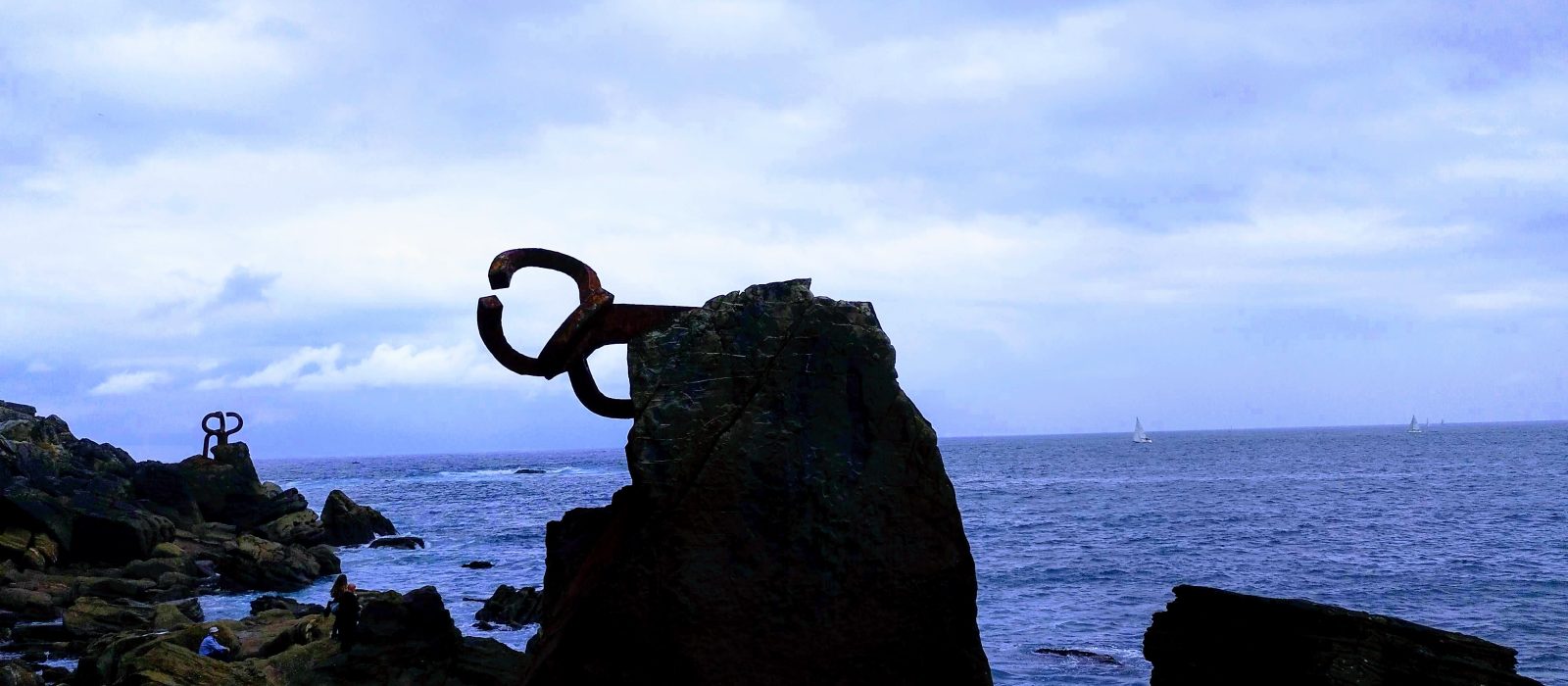
Peine del Viento (Comb of the Wind)
This monument is a masterpiece by sculptor Eduardo Chillida, comprising three steel sculptures embedded directly into the rocks battered by the waves of the Cantabrian Sea. It is the perfect place to feel the force of nature, as water splashes against the metal creating a unique spectacle. Best of all, it is open 24 hours, so you can visit both during the day and at sunset to watch the sun dip below the marine horizon.
Kursaal Congress Centre and Auditorium
Designed by architect Rafael Moneo and inaugurated in 1999, this building extends onto the beach with its iconic glass cubes that contrast with the mouth of the Urumea River. Inside, it houses the prestigious San Sebastián International Film Festival, in addition to offering top-tier concert halls and exhibition spaces. Its modern architecture provides a fascinating counterpoint to the natural surroundings and serves as a cultural landmark in the city.
Mount Urgull
This 123-meter-high hill rises majestically beside La Concha Bay, crowned by the historic Castle of La Mota, dating back to the 12th century, and the statue of the Sacred Heart. Climbing up rewards you with the best panoramic views of all San Sebastián and is home to the House of History, where you can learn more about the city’s past. It is a must-do excursion to understand the geography and historical defense of the urban area.
Basilica of Santa María del Coro
Located in the heart of the Parte Vieja (Old Town), this 18th-century Baroque work is the city’s patron saint church and a magnificent example of local religious architecture. You can visit from 10:00 to 13:00 and from 16:30 to 19:45 to admire its interior and its spiritual significance for the people of Donostia. Its location makes it a central meeting point within the labyrinthine streets of the old quarter.
Parte Vieja (Old Town)
This neighborhood is the pulsating heart of the city, world-famous for its narrow streets, lively atmosphere, and incredible concentration of pintxo (Basque tapas) bars. It is a place to get lost without a fixed route, enjoying the ambiance 24 hours a day, though it comes especially alive at night and during mealtimes. Here, tradition mixes with modernity on every corner.
Other points of interest
- Funicular de Igeldo: A historic transport system with classic cabins operating since 1912 that climbs the slopes of the mountain, offering panoramic views of La Concha Bay during the ascent.
- Eureka! Zientzia Museoa: An interactive museum ideal for understanding science in a fun way.
- Donostiako Aquariuma: One of the most modern oceanariums in Europe, noted for its 360º tunnel and species from the Cantabrian Sea.
- Real 100 Museoa: A museum space dedicated to the history of the local football club.
- Sagardoetxea – Euskal Sagardoaren Museoa: Museum dedicated to Basque cider culture.
- Catedral del Buen Pastor: The city’s largest religious temple, built in the Neo-Gothic style in the 19th century.
- Palacio de Miramar: Former summer residence of the Spanish monarchy featuring English cottage style architecture and public gardens with bay views.
- Iglesia de San Vicente: Considered one of the oldest preserved monuments; construction began in 1507, making it a gem of Basque Gothic architecture.
- Igeldoko itsasargia: An emblematic lighthouse located at the summit of Mount Igeldo.
- Fuerte de Ametzagaña: A historic fortification that was part of the city’s defensive system.
- Reina Mª Cristina: Monument dedicated to the queen who drove the city’s tourism development.
- Ingelesen Hilerria: A historic cemetery of great heritage value.
- Pedro Arana Aizpurua: Commemorative monument in a public thoroughfare.
- Antonio Okendo Almirantea: Statue dedicated to the admiral in the city.
- Balearroka: Monument located in the coastal area.
- Jesusen Bihotz Sakratua: Religious statue located at strategic points throughout the city.
- Playa de La Concha: Considered one of the most beautiful urban beaches in Europe, famous for its bay and iconic railing.
- Mercado de la Bretxa: One of the historic markets located in the Center, near the Boulevard, perfect for buying fresh local products.
- Haizearen orrazia: Another name by which the Wind Comb (Peine del Viento) is known in Basque.
- Don Quijote eta Sancho Panza: Sculpture paying homage to these universal literary characters.
- Eraikuntza Hutsa-Construcción Vacía: A contemporary art piece in public space.
- Isla de Santa Clara: Located in the center of La Concha Bay, it is the only urban natural island space, featuring a lighthouse and a small beach.
- Paseo Nuevo: A paved path surrounding the base of Mount Urgull, separating the Old Town from the open sea and offering views of the Cantabrian Sea.
- Castillo de la Mota: Located at the summit of Mount Urgull at an altitude of 120 meters, it was a key fortification since the 12th century.
- Museo Diocesano: Space dedicated to the religious art of the diocese.
- Igeldo mendia: Marks the western limit of La Concha Bay and features a classic amusement park and viewpoint accessible year-round.
🍂 Otoño
En otoño el clima se vuelve más húmedo y fresco, ideal para refugiarse en los mejores bares de pintxos del centro. Aprovecha para vivir la cultura gastronómica local sin las aglomeraciones estivales. Una chaqueta impermeable será tu mejor aliada para explorar la Parte Vieja bajo la lluvia.
What to do in San Sebastián
San Sebastián offers specific activities such as attending the Tamborrada in January, enjoying the Big Week (Semana Grande) in August, or exploring the neighborhoods of Parte Vieja and Gros. You can immerse yourself in the local culture by visiting the Mercado de la Bretxa to see fresh produce, or simply stroll through the pedestrian center to enjoy the atmosphere.
San Sebastián in one day: express itinerary
If you’re short on time, this plan will let you see the city’s essentials in 24 intense but rewarding hours.
- 09:00 – La Concha Beach: Start your day strolling along the iconic railing of one of Europe’s most beautiful urban beaches to breathe in the fresh sea air.
- 11:00 – Mount Urgull and Castle of La Mota: Climb the 123-m hill to explore the 12th-century ruins and enjoy the best panoramic views of the bay.
- 14:00 – Old Town (Parte Vieja): Head down to the heart of the city to lunch on pintxos (Basque tapas) in its narrow streets and visit the Basilica of Santa María del Coro.
- 17:00 – Kursaal Congress Palace and Auditorium: Walk alongside Rafael Moneo’s glass cubes at the mouth of the Urumea River.
- 19:00 – Peine del Viento (Wind Comb): End your day watching the waves crash against Chillida’s sculptures at sunset.
Where to eat in San Sebastián: local gastronomy
Where to sleep in San Sebastián
Parte Vieja
Ideal para sumergirse en la cultura de pintxos y descubrir el corazón histórico de la ciudad.
Gros
Conocido por su ambiente surfero en la playa de la Zurriola y una escena de pintxos más moderna y alternativa.
How to get to San Sebastián
The city is well connected with the rest of Spain and Europe, located just 20 km from the border with France.
| Medio | Detalles | Ubicación / Distancia |
|---|---|---|
| Tren | Estación de Lugaritz (con AVE). Destinos directos: Madrid, Barcelona, París. | Estación de tren en la ciudad. |
| Bus | Estación Donostiako Autobus Geltokia. Compañías: Alsa, Lurraldebus, Pesa, Flixbus. | Estación de bus central. |
| Avión | Aeropuerto de San Sebastián (EAS). | A 20 km de la ciudad. |
| Coche | Acceso por autopistas AP-8 y A-1. | Conexión directa por carretera. |
Getting around San Sebastián
Once in the city, urban transport is efficient and comfortable. You can use the city bus to move between neighborhoods or simply walk, as the city center is pedestrianized, making it easy to explore the Old Town and commercial areas on foot without worry.
Weather in San Sebastián
Best time to visit San Sebastián
Day trips from San Sebastián
If you decide to explore the surroundings, you have several interesting options for day trips. You can travel to Pamplona, famous for its running of the bulls (encierros), or to Bilbao, known for its Guggenheim Museum. Even Madrid is mentioned as an option for longer trips, although it requires more travel time.
Who is San Sebastián for?
San Sebastián is a versatile destination that attracts more than 1,039,051 travelers per year (INE), 61% of whom are foreigners. It is ideal for foodies seeking the best gastronomy, couples who enjoy romantic walks along the bay, and families wanting to combine culture and beach. It is also perfect for history lovers interested in its fortifications and architecture.
Frequently asked questions about San Sebastián
How many days do I need to see San Sebastián?
The average stay for tourists is 2.08 nights according to the INE, suggesting that 2 or 3 days are enough to see the main attractions such as Mount Urgull, the Old Town (Parte Vieja), and the Comb of the Wind (Peine del Viento).
Is San Sebastián expensive?
Estimated prices indicate that an average meal costs between €25-40. For accommodation, a hostel ranges from €25-40/night, a 3* hotel between €110-180/night, and a 4-5* hotel between €200-350/night.
What is the best time to visit San Sebastián?
The best time is from July to August, when the average temperature is 18.7°C. Winter (November-January) is the worst time, with average temperatures of 8.9°C and higher rainfall.
How do I get to San Sebastián from Madrid?
You can reach it by AVE train from Lugaritz station with a direct route from Madrid, or by bus with companies like ALSA or Flixbus from the Donostiako Autobus Geltokia station.
🗺️ Rutas desde San Sebastián
- How to Get from Madrid to San Sebastián: Distance, Train, Bus & Car
- How to Get from San Sebastian to Bilbao: Distance, Train, Bus and Car
- How to Get from Bilbao to San Sebastián: Distance, Train, Bus and Car
- How to Get from San Sebastián to Barcelona: Distance, Train, Bus & Car
- How to Get from Barcelona to San Sebastián: Distance, Train, Bus & Car
- How to Get from San Sebastián to Madrid: Distance, Train, Bus & Car
- How to Get from San Sebastián to Pamplona: Distance, Train, Bus & Car
- How to Get from Pamplona to San Sebastián: Distance, Train, Bus & Car