Total Solar Eclipse in Oviedo, Spain — August 12, 2026: Exact Times and Where to Watch
In Oviedo the eclipse will be TOTAL, totality starts at 20:27 local time and lasts 1 min 49 s. This event marks a historic return of celestial alignment for the region, representing the first total solar eclipse visible from mainland Spain since August 30, 1905. For international travelers, this guide provides the verified astronomical data, precise viewing locations, and critical safety protocols required for a successful observation. We cover the exact timeline, the specific challenges of the low sun altitude, and the climate realities you must manage to witness the 109 seconds of darkness.
Eclipse timeline in Oviedo
The event unfolds over nearly two hours during the evening of August 12, 2026. All times provided below are in Central European Summer Time (CEST), which is UTC+2, the standard local time for Spain during August. The sequence begins with the first contact, where the Moon starts to obscure the Sun, followed by the partial phases leading up to totality. The moment of maximum eclipse occurs precisely at 20:28:00, situated almost exactly in the middle of the totality window. The event concludes with the last contact as the Moon fully clears the solar disk. Accuracy is vital for planning your position, as the transition between partial and total phases happens rapidly.
| Phase | Local time in Oviedo (CEST) |
|---|---|
| First contact (partial begins) | 19:31:19 |
| Totality begins | 20:27:05 |
| Maximum eclipse | 20:28:00 |
| Totality ends | 20:28:54 |
| Last contact (partial ends) | 21:21:06 |
| Totality duration | 1 min 49 s |
| Magnitude | 1.0155 |
Source: NASA Five Millennium Catalog. Local times CEST (UTC+2), August 12, 2026.
Oviedo holds a distinct advantage for observers because it sits directly on the centerline of the eclipse path. This positioning ensures you experience the peninsular maximum duration of 1 minute 49 seconds, which is the longest possible totality available in Spain for this event. Being on the centerline also provides a margin of safety regarding timing; if you are slightly off-position within the city, you will still experience totality, though the duration may decrease slightly toward the edges of the path. This geometric alignment makes Oviedo one of the best locations on the peninsula, offering maximum duration with good access for travelers. The magnitude of 1.0155 confirms the Moon will completely cover the Sun’s photosphere, allowing the corona to become visible to the naked eye.
Where to watch it in Oviedo
The single most critical criterion for selecting a viewing spot in Oviedo is an unobstructed WESTERN horizon. During totality, the Sun will be low in the sky, with an altitude varying between approximately 10° and 20° above the horizon. Any buildings, trees, or hills blocking the west-southwest view will ruin the experience. You must secure a location with a clear line of sight well before the partial phases begin.
Based on the verified database of public spaces, we recommend specific plazas that offer the necessary openness. The Campo de San Francisco is a primary candidate due to its status as a large urban park with fewer vertical obstructions than narrow streets. Similarly, the Plaza de América provides a wide open space that may facilitate a clearer view of the lower sky. The Plaza de la Escandalera is another viable option, known for its openness in the city center. However, travelers should note the official observation recommendation: Naranco u otras alturas circundantes recomendadas. Elevations like Mount Naranco provide a significant advantage by raising your horizon line above the city’s buildings and potential evening fog. If you cannot access the heights, prioritize the largest plazas listed. Avoid narrow squares like the Plaza del Fontán or Plaza de la Constitución unless you have verified the specific sightlines to the west, as surrounding architecture may block the low sun. The Plaza de la Catedral offers historical ambiance but requires careful positioning to ensure the cathedral itself does not obstruct the view. Ultimately, mobility is key; if your chosen plaza becomes overcrowded or clouded, have a secondary location ready.
August skies in Asturias: real odds
Weather is the greatest variable for this event, and the data for this zone requires careful planning. According to AEMET (State Meteorological Agency) climate records for the Galicia y Costa Cantábrica zone, which includes Oviedo and Gijón, the clear sky probability in August ranges between 30-50%. This indicates a significant risk of cloud cover. The typical risk involves coastal fog and evening cloudiness, locally known as ‘orballo’, which often develops in the late afternoon. Because the eclipse occurs near sunset, the risk of low-lying clouds obscuring the low-altitude Sun is non-negligible. You must treat the forecast as a dynamic tool rather than a static promise. Our advice is to have a Plan B located further inland, such as towards Lugo, or be prepared to move based on the AEMET prediction 24 hours before the event. Do not commit to a single rooftop or location weeks in advance without monitoring the satellite imagery. If the coast is cloudy, moving south or inland often provides clearer skies. Flexibility is the only way to mitigate the 50% cloud risk inherent to this region in late summer.
Getting to Oviedo for the eclipse
There are no specific published route guides for this city in our current database, so general logistics apply. Oviedo is accessible via train and car from nearby hubs like Madrid or Santander. However, you must anticipate heavy traffic on August 12, 2026. Roads leading into the path of totality will experience congestion as thousands of travelers converge on the region. Arriving the day before is the smart play to avoid being stuck in traffic during the critical observation window. For detailed city navigation and local transport options, consult our guide on what to see and do in Oviedo. Public transport may run on special schedules, so verify connections in advance. If driving, ensure your vehicle is fueled and parked in a location that allows for a quick exit if weather conditions require you to relocate. The combination of high visitor volume and limited parking in the city center makes early arrival essential for stress-free viewing.
Where to stay: book now or arrive the day before
Accommodation inside the path of totality has been booking up since 2025. Honest advice is to book NOW with free cancellation policies to secure your base. If city centers are fully booked or prices are prohibitive, consider staying in a nearby city outside the path and driving in on the morning of the 12th. This strategy provides more lodging options but increases your travel risk on the day. Given the low sun altitude, staying within Oviedo reduces the need for long-distance travel during the evening rush. Secure your lodging early to ensure you are positioned correctly for the 20:27 start time.
Safety: the 30 seconds you must read
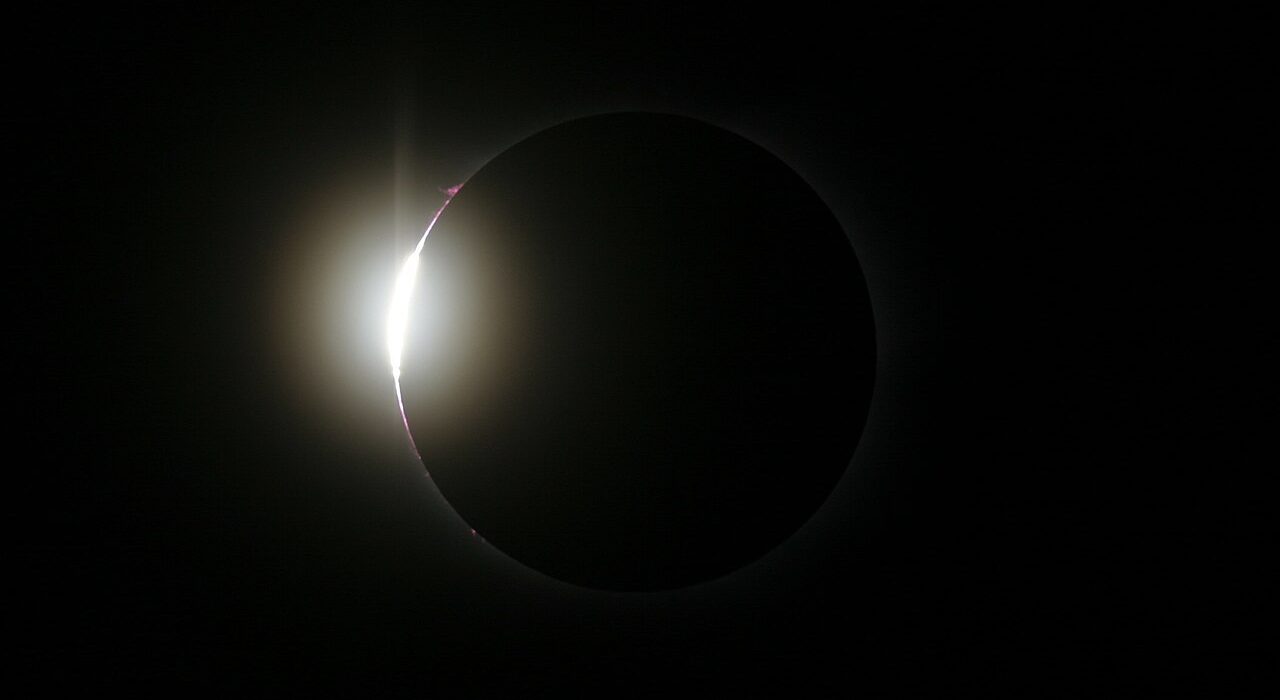
Eye safety is non-negotiable during solar eclipses. You must wear ISO 12312-2 certified eclipse glasses during ALL partial phases. This includes the time from first contact at 19:31 until totality begins at 20:27:05. Only during the 1 minute 49 seconds of totality can you look at the Sun with the naked eye. You must put your glasses back on the instant the diamond ring reappears at 20:28:54. Looking at the partially eclipsed Sun without protection can cause permanent eye damage. For a comprehensive breakdown of safety protocols, read our complete guide to the 2026 eclipse in Spain. Ensure your equipment is certified and undamaged before looking up.
- ISO 12312-2 certified eclipse glasses — one per person, bought well in advance. See options on Amazon ES.
The eclipse near Oviedo
If Oviedo is fully booked or the weather forecast looks unfavorable, nearby cities offer alternative viewing opportunities within the path. The following table compares the timing and duration for locations surrounding Oviedo, allowing you to make an informed decision based on real-time weather data.
| City | Distance | Totality duration | Totality begins |
|---|---|---|---|
| Gijón | 26 km | 1 min 45 s | 20:26:48 |
| Ponferrada | 108 km | 1 min 27 s | 20:28:44 |
| Lugo | 143 km | 1 min 24 s | 20:28:07 |
| Santander | 166 km | 1 min 04 s | 20:26:57 |
Make a trip of it: what to see in Oviedo
The eclipse happens at sunset on the 12th, meaning the morning is free for exploring the city. Oviedo offers rich cultural heritage, including the Holy Chamber in the Cathedral and the pre-Romanesque churches on Mount Naranco. We recommend dedicating the day to sightseeing before setting up for the evening event. Plan your itinerary using our full city guide: what to see and do in Oviedo. Combining tourism with astronomy makes this a complete travel experience, allowing you to enjoy the region regardless of the final weather outcome.
Frequently asked questions
What time is the eclipse in Oviedo?
The partial phase starts at 19:31:19 CEST. Totality runs from 20:27:05 to 20:28:54, with maximum at 20:28:00. The partial phase ends at 21:21:06.
How long does totality last in Oviedo?
1 min 49 s. The city sits on the centerline, close to the maximum possible for Spain.
Will the eclipse be total in Oviedo?
Yes. Oviedo is inside the path of totality with magnitude 1.0155. The sun will be completely covered by the moon for 1 min 49 s.
Do I need eclipse glasses?
Yes — ISO 12312-2 certified glasses during all partial phases. Only during totality can you safely look at the sun with the naked eye. Sunglasses do NOT protect.
What if it is cloudy in Oviedo on August 12?
Clear-sky probability for this zone is 30-50% (AEMET historical data). Tener plan B tierra adentro (Lugo, Oviedo) o moverse según predicción AEMET 24h antes. Check the AEMET forecast 24-48 hours before and stay mobile.
When is the next total solar eclipse visible from Spain?
Soon: 2027-08-02. An exceptional back-to-back for the same region.
Conclusion
The August 12, 2026 total solar eclipse is a once-in-a-lifetime event for travellers visiting Spain. With careful planning — picking a centerline location, checking the AEMET forecast 24-48h before, wearing ISO 12312-2 glasses during partial phases and booking accommodation early — you can witness one of nature’s most spectacular phenomena. Use this guide alongside our city guides and itineraries to build the trip of a lifetime.