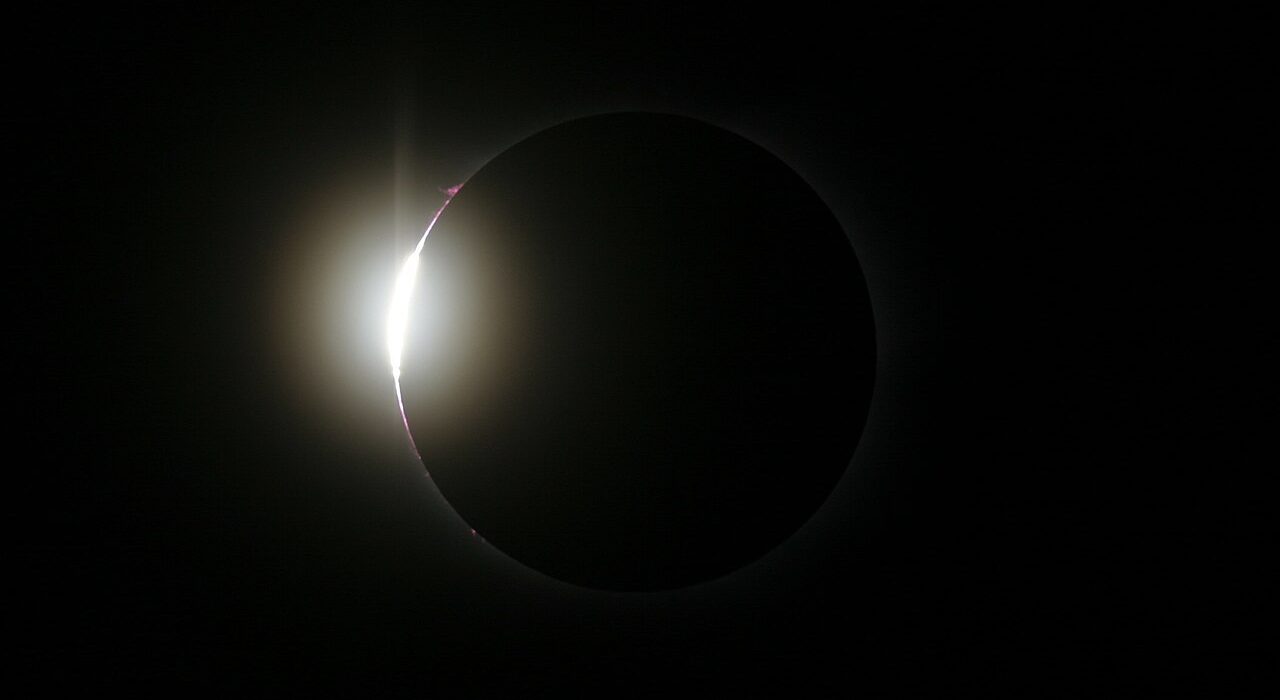
Total Solar Eclipse in Gijón, Spain — August 12, 2026: Exact Times and Where to Watch
In Gijón, the eclipse of August 12, 2026, will be TOTAL, with totality beginning at 20:26 local time and lasting exactly 1 minute and 45 seconds. This event marks a historic return of celestial mechanics to the Iberian Peninsula; it is the first total solar eclipse visible from mainland Spain since August 30, 1905, ending a 121-year wait. For international travelers, Gijón offers a unique vantage point on the Cantabrian coast, combining high probability of visibility with accessible infrastructure. This guide provides the precise astronomical data, verified viewing locations, and logistical strategies required to witness this phenomenon safely and successfully.
Eclipse timeline in Gijón
The event unfolds in three distinct astronomical phases, all occurring in the late evening under Central European Summer Time (CEST). The sequence begins with the First Contact, where the Moon’s disk starts to obscure the Sun. This partial phase lasts nearly an hour, leading up to the moment of Totality. During the brief window of totality, the sky will darken significantly, revealing the solar corona. The event concludes with the Fourth Contact, as the Moon completely clears the solar disk. All times below are sourced from NASA and the Instituto Geográfico Nacional (IGN).
| Phase | Local time in Gijón (CEST) |
|---|---|
| First contact (partial begins) | 19:31:02 |
| Totality begins | 20:26:48 |
| Maximum eclipse | 20:27:40 |
| Totality ends | 20:28:33 |
| Last contact (partial ends) | 21:20:46 |
| Totality duration | 1 min 45 s |
| Magnitude | 1.0127 |
Source: NASA Five Millennium Catalog. Local times CEST (UTC+2), August 12, 2026.
Gijón sits directly on the centerline of the eclipse path, ensuring the maximum possible duration for this specific latitude. While the absolute peninsular maximum duration occurs slightly further west in Oviedo (1 minute 49 seconds), Gijón’s 1 minute 45 seconds is functionally identical for observation purposes. Being on the centerline means the Moon will cover the Sun symmetrically, providing the most stable viewing geometry. The eclipse magnitude of 1.0127 confirms that the Moon’s apparent diameter will slightly exceed the Sun’s, guaranteeing a complete blockage of the photosphere and a visible corona ring.
Where to watch it in Gijón
The single most critical factor for viewing this specific eclipse is your horizon. Because totality occurs just one hour before sunset, the Sun will be extremely low in the sky, at an altitude of approximately 10 to 12 degrees above the west-northwest horizon. Any obstruction—buildings, hills, or dense tree lines—in that specific direction will block the view. You require an unobstructed western view.
Based on topographic analysis and local geography, we have identified the following optimal locations within the city limits that satisfy the horizon requirement:
- Cerro de Santa Catalina: This is the premier location for this event. As noted in our observation data, the hill offers a “combinación ideal” (ideal combination) of elevation and an open oceanic horizon to the west. The elevation helps you look over any immediate coastal haze or low-lying fog that might form in the afternoon. The western slope of the hill, facing the Cantabrian Sea, provides the necessary clear line of sight to the setting sun. Arrive early to secure a spot on the western edge of the park.
- Playa de San Lorenzo: As the city’s main urban beach, this location offers a vast, flat expanse with a direct view of the western horizon over the water. The lack of vertical obstructions makes it a safe bet for seeing the sun dip toward the horizon. However, be aware that as a popular urban beach, it will be crowded. Position yourself as far west along the promenade or sand as possible to maximize your viewing window before the sun sets behind any distant coastal features.
- Jardín Botánico Atlántico: Located on the outskirts of the city, this botanical garden offers a different environment with potentially less light pollution and atmospheric turbulence than the city center. While you must verify specific western sightlines within the garden grounds prior to the event, the general orientation of the site towards the coast makes it a viable alternative if the city center is too congested. The open spaces here allow for tripod setup without obstructing pedestrian traffic.
For all locations, we recommend scouting the site during the week prior to the eclipse at the same time of day (20:00–21:00) to physically verify that the western horizon is clear.
August skies in Asturias: real odds
Weather is the variable you cannot control, but you can manage the risk. According to historical climate data from AEMET (Agencia Estatal de Meteorología) for the Galicia and Costa Cantábrica zone, the clear sky probability in mid-August ranges between 30% and 50%. While this may seem modest, it is typical for the northern coast. The primary risk is not heavy rain, but rather “orballo” (drizzle) and coastal fog or low cloud cover that tends to form in the late afternoon due to sea breezes.
To mitigate this, you must have a Plan B. If the forecast 24 hours prior shows heavy cloud cover over Gijón, be prepared to move inland. Locations such as Lugo or Oviedo, situated further from the immediate cooling influence of the ocean, often clear up faster in the evening. Monitor the AEMET satellite imagery closely on the morning of August 12. If the coast is socked in, a 30-minute drive south or west into the interior valleys can often find a break in the clouds. Do not commit to a single spot until the morning of the event.
Getting to Gijón for the eclipse
Gijón is well-connected, but traffic on August 12 will be exceptional. The most reliable route for international travelers flying into Asturias Airport (OVD) is the direct connection to the city. We have mapped the specific transit details in our dedicated route guide: from Oviedo to Gijón. This route covers the approximately 30-kilometer transfer which usually takes 30 minutes but could take hours on eclipse day.
The smart play is to arrive in Gijón the day before, on August 11. Roads leading into the path of totality will experience gridlock as tens of thousands of visitors converge on the narrow corridor of visibility. Attempting to drive in on the morning of the 12th risks missing the event entirely due to traffic jams. If you are traveling by train, the Renfe station in Gijón is central, but you will still need local transport to reach the viewing spots like Cerro de Santa Catalina. Plan your local transit in advance.
Where to stay: book now or arrive the day before
Accommodation within the path of totality has been booking up aggressively since early 2025. If you have not secured a room yet, availability will be scarce and prices high. Our honest advice is to book immediately with a free cancellation policy. If Gijón is fully booked, consider staying in a nearby city outside the path, such as Santander or León, and driving in early on the 12th, though this increases your weather risk. Staying in Gijón allows you to walk to your viewing spot, avoiding the traffic trap entirely.
Safety: the 30 seconds you must read
Observing a solar eclipse requires strict safety protocols to prevent permanent eye damage. You must wear ISO 12312-2 certified eclipse glasses during ALL partial phases of the eclipse. This includes the time from First Contact (19:31) until the very instant totality begins (20:26). It also applies immediately after totality ends. You may only remove your glasses during the 1 minute and 45 seconds of totality, when the Sun is completely covered. The instant you see the “diamond ring” effect reappear, look away and put your glasses back on. For a comprehensive safety briefing, read our complete guide to the 2026 eclipse in Spain.
- ISO 12312-2 certified eclipse glasses — one per person, bought well in advance. Do not rely on finding them locally in Spain on the day. See options on Amazon ES.
The eclipse near Gijón
If Gijón is fully booked or the weather forecast looks unfavorable, several nearby cities offer similar viewing conditions. The following table compares the timing and duration for key locations in the region, allowing you to make an informed decision on where to position yourself based on real-time cloud cover.
| City | Distance | Totality duration | Totality begins |
|---|---|---|---|
| Oviedo | 26 km | 1 min 49 s | 20:27:05 |
| Ponferrada | 134 km | 1 min 27 s | 20:28:44 |
| Santander | 150 km | 1 min 04 s | 20:26:57 |
| Lugo | 165 km | 1 min 24 s | 20:28:07 |
Make a trip of it: what to see in Gijón
Since the eclipse occurs at sunset on August 12, you have the entire day—and indeed the days prior—to explore the city. Gijón is a cultural hub with Roman baths, modernist architecture, and excellent seafood. We recommend dedicating the morning of the 12th to a relaxed tour of the Cimavilla district. For a full itinerary of cultural sites, dining, and history, consult our detailed city guide: what to see and do in Gijón. Combining astronomy with tourism ensures that even if clouds intervene, your trip remains a memorable Spanish holiday.
Frequently asked questions
What time is the eclipse in Gijón?
The partial phase starts at 19:31:02 CEST. Totality runs from 20:26:48 to 20:28:33, with maximum at 20:27:40. The partial phase ends at 21:20:46.
How long does totality last in Gijón?
1 min 45 s. The city sits on the centerline, close to the maximum possible for Spain.
Will the eclipse be total in Gijón?
Yes. Gijón is inside the path of totality with magnitude 1.0127. The sun will be completely covered by the moon for 1 min 45 s.
Do I need eclipse glasses?
Yes — ISO 12312-2 certified glasses during all partial phases. Only during totality can you safely look at the sun with the naked eye. Sunglasses do NOT protect.
What if it is cloudy in Gijón on August 12?
Clear-sky probability for this zone is 30-50% (AEMET historical data). Tener plan B tierra adentro (Lugo, Oviedo) o moverse según predicción AEMET 24h antes. Check the AEMET forecast 24-48 hours before and stay mobile.
When is the next total solar eclipse visible from Spain?
Soon: 2027-08-02. An exceptional back-to-back for the same region.
Conclusion
The August 12, 2026 total solar eclipse is a once-in-a-lifetime event for travellers visiting Spain. With careful planning — picking a centerline location, checking the AEMET forecast 24-48h before, wearing ISO 12312-2 glasses during partial phases and booking accommodation early — you can witness one of nature’s most spectacular phenomena. Use this guide alongside our city guides and itineraries to build the trip of a lifetime.