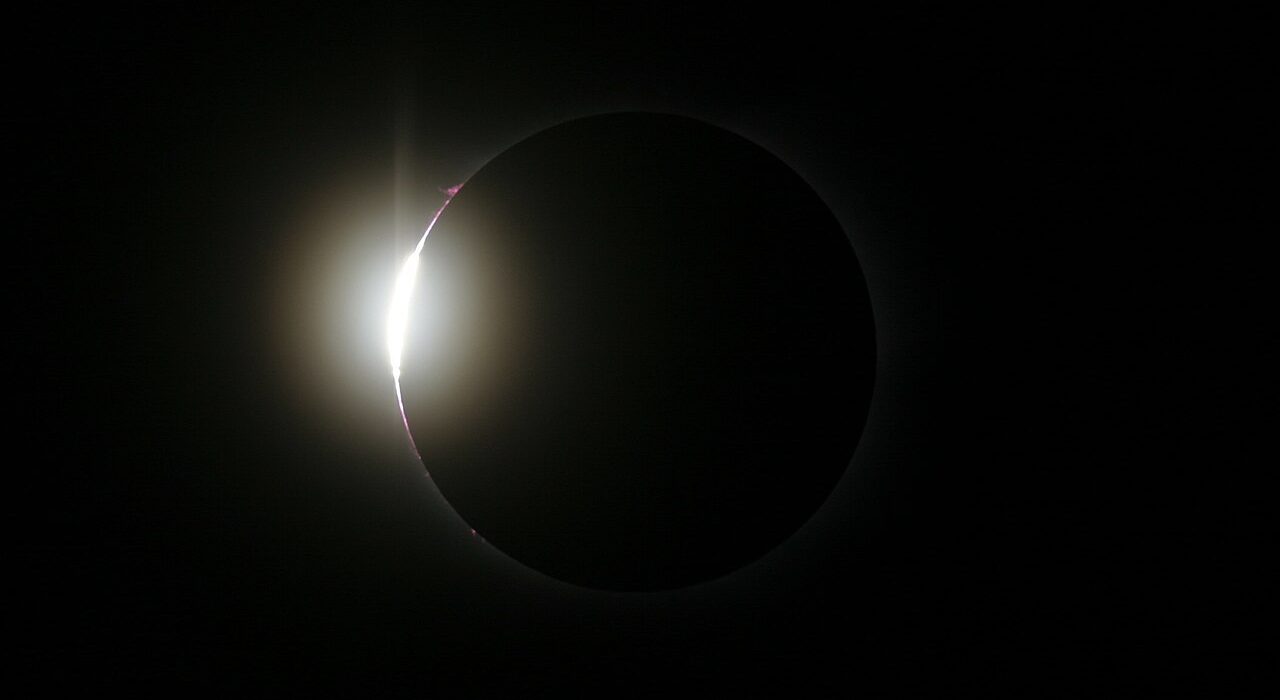
Total Solar Eclipse in Ibiza, Spain — August 12, 2026: Exact Times and Where to Watch
In Ibiza, the eclipse will be TOTAL, with totality starting at 20:32 local time and lasting 1 min 04 s. This event marks Spain’s first total solar eclipse visible from the mainland and islands since 1905, ending a 121-year wait for observers in this region. This guide provides verified times from NASA and IGN, specific viewing locations with clear western horizons, and critical safety protocols for the Balearic Islands. We focus on astronomical rigor and practical utility to ensure your observation is successful.
Eclipse timeline in Ibiza
The eclipse sequence begins in the late afternoon. First contact occurs at 19:39:15 CEST, when the Moon first touches the Sun’s disk. The partial phases continue for nearly an hour as the Moon gradually covers the solar surface. Totality begins at 20:32:45 CEST. The sky will darken significantly, temperatures may drop, and the solar corona will become visible. Totality ends at 20:33:49 CEST. The partial phases resume until last contact at 20:53:00 CEST. All times are in CEST (UTC+2), the local Spanish summer time.
| Phase | Local time in Ibiza (CEST) |
|---|---|
| First contact (partial begins) | 19:39:15 |
| Totality begins | 20:32:45 |
| Maximum eclipse | 20:33:18 |
| Totality ends | 20:33:49 |
| Last contact (partial ends) | 20:53:00 |
| Totality duration | 1 min 04 s |
| Magnitude | 1.0043 |
Source: NASA Five Millennium Catalog. Local times CEST (UTC+2), August 12, 2026.
Ibiza offers a duration of 1 min 04 s, which is substantial but shorter than the peninsular maximum. Observers in Oviedo will experience up to 1 min 49 s of totality. Ibiza is inside the path of totality but sits off the centerline. The magnitude is 1.0043, meaning the Moon covers the Sun completely, but only just. This narrow margin makes precise timing essential. You must be ready before 20:32:45 CEST. There is no room for error during the brief window of darkness. The experience will be profound, but the brevity requires full attention.
Where to watch it in Ibiza
The key criterion for any viewing spot in Ibiza is an unobstructed WESTERN horizon. The sun will be low, approximately 10 to 12 degrees above the horizon during totality. This is roughly one hand-width at arm’s length. Any buildings, hills, or trees in the west-southwest direction will block the view. Elevation helps mitigate marine haze and low-lying clouds. You need a clear line of sight to the sea horizon.
We have verified two specific locations that meet these strict geometric requirements. Torre des Carregador is a historic defense tower located on the northern coast. Its elevation provides a vantage point over the surrounding terrain. The western orientation from this structure allows for a clear view of the setting sun over the Mediterranean. The stone structure offers some wind protection, which is useful as evening breezes pick up. However, space is limited around the tower. Arrive early to secure a position that does not conflict with other observers. The second verified location is Mirador del Rei Jaume I. This viewpoint is situated to offer panoramic views of the coast. It is accessible by road and provides ample space for tripods and groups. The western horizon from this mirador is generally clear of immediate obstructions. Both locations are subject to the same atmospheric risks. Marine haze, known locally as bruma marítima, often forms shortly before sunset in August. Being at elevation reduces this risk but does not eliminate it. Scout these locations during sunset in the days prior to the eclipse if possible. Verify the horizon line personally. Do not rely solely on maps. The sun’s position on August 12 is specific. Ensure your chosen spot aligns with the azimuth of the sunset for that date. Traffic will be heavy near popular viewpoints. Plan your parking in advance. Walking the final distance may be necessary. Bring warm clothing. Even in August, the temperature will drop rapidly during totality. The shadow of the Moon moves quickly. You will feel the chill. Prepare for wind as well. The cooling air can cause local gusts. Secure your equipment. A sturdy tripod is mandatory. Hand-holding cameras during totality is difficult due to the low light and excitement. Test your settings beforehand. Focus on infinity. Disable autofocus. The contrast changes dramatically during the event. These spots offer the best statistical probability of a clear view based on topography. They are not guaranteed, but they are optimized for the solar altitude.
August skies in Islas Baleares: real odds
According to AEMET data for the Islas Baleares zone, the clear sky probability in August ranges between 75% and 85%. This is favorable compared to northern Europe. However, the specific risk for this eclipse is bruma marítima (marine haze) little before sunset. This haze forms due to the temperature difference between the hot land and the cooler sea. It often sits low on the horizon. This is critical because the sun will be low. Overhead clouds are less of a concern than horizon clouds. You must monitor the western horizon specifically. Standard weather apps often predict general cloud cover. They may not predict low-lying haze accurately. Check the forecast 24 to 48 hours ahead. Look for visibility metrics, not just cloud percentage. If haze is predicted, consider moving to higher ground inland. The Costa norte de Mallorca (Pollença, Alcúdia) is noted to be clearer at sunset, but requires inter-island travel. For Ibiza, elevation is your best defense. The 75-85% statistic is an average. Microclimates exist. Be prepared to move if the horizon looks obscured one hour before the event. Do not commit to a spot until you verify the view. Flexibility increases your success rate. The climate is generally stable, but the horizon condition is the variable you must manage.
Getting to Ibiza for the eclipse
There are no published specific route guides to Ibiza for this event at this time. Travelers typically arrive via Ibiza Airport (IBZ) or by ferry from Denia or Barcelona. August is peak tourist season. Expect heavy traffic on the island. Roads near viewing spots will congest significantly on August 12. Arriving the day before is the smart play. Do not attempt to travel from the mainland on the day of the eclipse. Flights and ferries may be delayed or fully booked. Secure your transport weeks in advance. Once on the island, rent a car if possible. Public transport may not align with your viewing location needs. Taxis will be in high demand. Plan your return trip carefully. After the eclipse ends at 20:53:00 CEST, thousands of people will attempt to leave simultaneously. Patience is required. Have supplies in your vehicle. Water and snacks are essential. Fuel your car the day before. Gas stations may run dry or have long queues. Treat the logistics as seriously as the astronomy. A smooth journey ensures you are relaxed for the event. Stress affects observation. Plan for delays. Arrive at your viewing spot at least two hours before first contact. This gives you time to adjust equipment and acclimate to the location.
Where to stay: book now or arrive the day before
Accommodation inside the path of totality has been booking up since 2025. Ibiza is a popular destination regardless of the eclipse. Honest advice: book NOW with free cancellation. If you wait, prices will surge and availability will vanish. Alternatively, stay in a nearby city outside the path and drive in on the morning of the 12th. However, staying on Ibiza reduces travel risk on the day. You avoid ferry dependencies. You can wake up and check the weather locally. If conditions look poor, you have the whole day to relocate. Booking early locks in your base of operations. Look for hotels with western-facing rooms or terraces. This provides a backup viewing location if roads are blocked. Flexibility in accommodation is as valuable as flexibility in viewing spots. Confirm your cancellation policy. Ensure you can modify dates if weather forecasts turn negative.
Safety: the 30 seconds you must read
Eye safety is non-negotiable. You must wear ISO 12312-2 certified eclipse glasses during ALL partial phases. The retina has no pain receptors, so damage occurs silently. Only during totality (1 min 04 s in Ibiza) can you look with the naked eye. This window opens at 20:32:45 CEST and closes at 20:33:49 CEST. Back to glasses the instant the diamond ring reappears. Do not guess the timing. Use a timer. For more details, read the complete guide to the 2026 eclipse in Spain. Regular sunglasses are not sufficient. They do not block infrared radiation. Welding glass must be shade 14 or higher. Inspect your glasses for scratches before use. If damaged, discard them. Protect children strictly. They may remove glasses without understanding the risk. Supervise them constantly. Cameras and telescopes require front-mounted solar filters. Looking through optical aids without filters causes instant blindness. The concentration of sunlight is dangerous. Prepare your safety protocol before you arrive.
- ISO 12312-2 certified eclipse glasses — one per person, bought well in advance. See options on Amazon ES.
The eclipse near Ibiza
Travelers often compare viewing conditions across the Balearics and mainland. The following table compares Ibiza with nearby locations. Duration and times vary slightly based on geographic coordinates. Use this data to decide if relocating within the islands benefits your plan.
| City | Distance | Totality duration | Totality begins |
|---|---|---|---|
| Sant Antoni de Portmany (Ibiza) | 13 km | 1 min 06 s | 20:32:40 |
| Palma | 129 km | 1 min 36 s | 20:31:05 |
| Valencia | 167 km | 1 min 00 s | 20:32:30 |
| Alcúdia (Mallorca) | 180 km | 1 min 29 s | 20:30:34 |
Make a trip of it: what to see in Ibiza
The eclipse happens at sunset on the 12th, so the morning is free for the city. You can explore the historic Dalt Vila or visit the beaches before setting up for the event. Read our full city guide for what to see and do in Ibiza (in Spanish). Combining astronomy with tourism makes the trip worthwhile even if clouds interfere. The island offers rich culture and cuisine. Enjoy the day regardless of the sky. The eclipse is the highlight, but not the only reason to visit.
Frequently asked questions
What time is the eclipse in Ibiza?
The partial phase starts at 19:39:15 CEST. Totality runs from 20:32:45 to 20:33:49, with maximum at 20:33:18. The partial phase ends at 20:53:00.
How long does totality last in Ibiza?
1 min 04 s. Being off the centerline, the duration is shorter than the peninsular maximum (Oviedo, 1 min 49 s).
Will the eclipse be total in Ibiza?
Yes. Ibiza is inside the path of totality with magnitude 1.0043. The sun will be completely covered by the moon for 1 min 04 s.
Do I need eclipse glasses?
Yes — ISO 12312-2 certified glasses during all partial phases. Only during totality can you safely look at the sun with the naked eye. Sunglasses do NOT protect.
What if it is cloudy in Ibiza on August 12?
Clear-sky probability for this zone is 75-85% (AEMET historical data). Costa norte de Mallorca (Pollença, Alcúdia) suele estar más despejada al atardecer. Check the AEMET forecast 24-48 hours before and stay mobile.
When is the next total solar eclipse visible from Spain?
Soon: 2027-08-02. An exceptional back-to-back for the same region.
Conclusion
The August 12, 2026 total solar eclipse is a once-in-a-lifetime event for travellers visiting Spain. With careful planning — picking a centerline location, checking the AEMET forecast 24-48h before, wearing ISO 12312-2 glasses during partial phases and booking accommodation early — you can witness one of nature’s most spectacular phenomena. Use this guide alongside our city guides and itineraries to build the trip of a lifetime.