Manresa
CataluñaClimate
In 1892, Manresa was the setting where the Bases de Manresa (Manresa Bases) were approved, the first written expression of the political aims of Catalanism. But this city of 78,000 inhabitants doesn’t live on its political past alone: it is the capital of Bages, in Central Catalonia, and the place where Saint Ignatius of Loyola spent almost a year of his life between 1522 and 1523, a stay that would transform his mission and give rise to the Spiritual Exercises. Located 65 km north of Barcelona, Manresa marks the boundary between the metropolitan industrial area and the rural north, and welcomes you with a sober, monumental Catalan Gothic, unique medieval streets and a cuisine that ranges from grilled cod.
The must-seesWhat to see in Manresa: the essentials
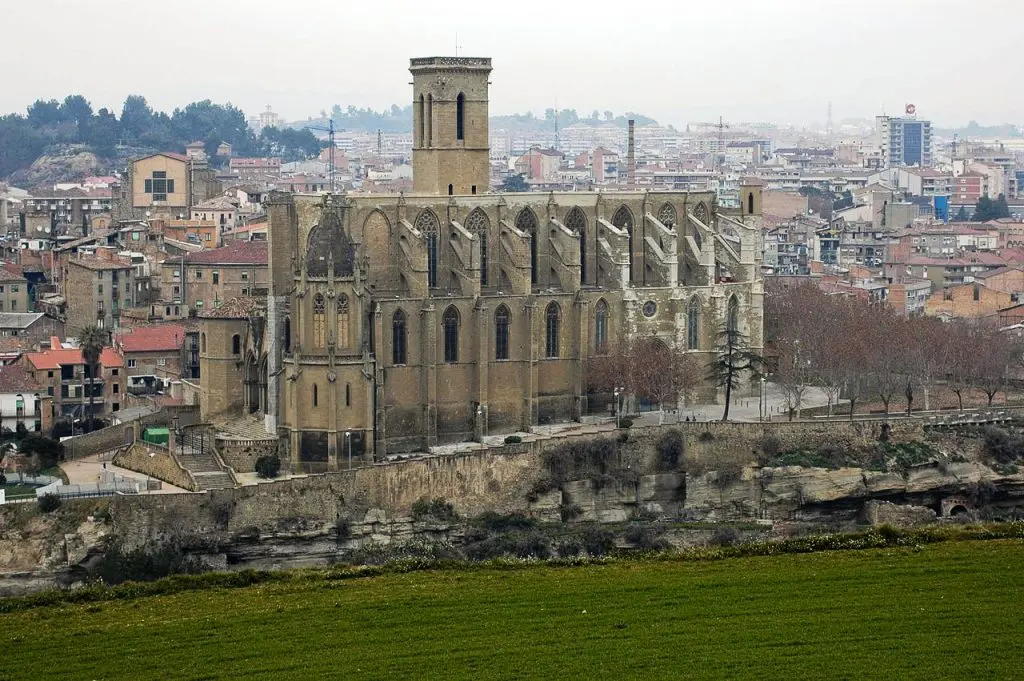
Basilica of Santa Maria de Manresa (La Seu)
La Seu is the city’s main monument and an outstanding example of Catalan Gothic, built between 1322 and 1371 according to the design of the architect Berenguer de Montagut. Its dimensions are remarkable: some 68 metres long, 33 wide and 30 high, with broad, spacious naves that reflect the sobriety and horizontality typical of Catalan Gothic. Inside, medieval altarpieces of great value in the Catalan Gothic painting tradition are preserved, and a visit allows you to explore the naves, chapels and cloister. It was elevated to minor basilica in 1886 and is declared a Bé Cultural d’Interès Nacional (Cultural Asset of National Interest); visiting hours vary by season, so it is worth checking them before you go.
Cave of Saint Ignatius
This monumental complex includes the cave chapel, a Baroque church and a Neoclassical building, and is an international Jesuit pilgrimage site. It is visited with a ticket and set opening hours, and inside you will find a meeting centre with mosaics created by the workshop of the Centro Aletti in Rome depicting the pilgrimage of the Spiritual Exercises. It is located at Camí de la Cova, 17, and is an essential stop for understanding the Ignatian imprint on the city.
Museu de Manresa (Former College of Saint Ignatius)
This large historic building on the Vía de Sant Ignasi houses the Museu Comarcal de Manresa (Regional Museum of Manresa) and was the city’s first Jesuit academy, founded in 1625 by the Aragonese nobleman Lupercio de Arbizu. The current building was constructed around the 1750s, with later extensions, and preserves collections of archaeology, history and local art, including stone elements from churches and convents that have disappeared. It forms part of Manresa’s Ignatian heritage complex and is a key visit for contextualising the city’s medieval and modern past.
Manresa 1522: the city of Ignatius
The Espai Manresa 1522 is a museum space located in the former cloister of the convent of the Predicadores, offering an overview of the city that Ignatius of Loyola knew during his stay of almost a year in the capital of Bages. Through a scale model of early 16th-century Manresa, an audiovisual presentation and illuminated display cases, it offers an approach to the urban, historical and architectural context in which the future saint lived experiences that profoundly transformed him. It is the perfect complement to the Cave of Saint Ignatius for understanding why this city was so decisive in the founding of the Society of Jesus.
Convent of Santa Clara
The Convent of Santa Clara is a conventual complex of medieval foundation located in the historic centre, within the religious and monumental heritage of Bages. Over the centuries it has undergone reforms and extensions, and preserves original elements from different periods, with the typical layout of cloistered convents: church, cloister and community rooms organised around inner courtyards. The community of Poor Clare nuns maintains its conventual activity, so visits are subject to the access conditions typical of a cloistered monastery, although under certain circumstances it is possible to see the church and some spaces of the complex.
Museu del Barroc de Catalunya
A museum of national scope that makes Manresa the epicenter for interpreting Catalan Baroque art, with a significant collection of sculpture, painting and decorative arts.
Capella del Rapte (Antiguo Hospital de Santa Llúcia)
A place of worship located on Plaça de Sant Ignasi, next to the hospital, which from the mid-14th century housed the chapel of Santa Llúcia, the private chapel of the guild of masons and stonemasons.
Antigua Iglesia y Convento del Carme
A temple of Gothic origin designed by Berenguer de Montagut and built in the mid-14th century, with a single nave, side chapels and ribbed vaults.
Capilla de San Marcos
A devotional space located inside Barcelona Cathedral, not in Manresa, whose original Gothic altarpiece of 1346 was moved to the Collegiate Basilica of Santa María de la Aurora in Manresa, where it is currently preserved.
Antiguo Palacio de Justicia
An imposing monumental Baroque building designed in 1661 and completed in 1671, with a symmetrically arranged façade by the sculptor Francesc Grau, which served as the seat of the city’s courts from the 18th century until 2009.
Museu de l’Aigua i el Tèxtil (MAT) de Manresa
A museum located at Carretera de Santpedor, 55, dedicated to the industrial memory of water and textiles in Manresa, housed in a former factory complex linked to the Sèquia de Manresa, a canal of medieval origin.
Calle del Balç y Centro de Interpretación
A medieval street virtually unique in Catalonia, with arcades and projecting structures of great historical value, whose interpretation center opens Saturdays from 10 to 14 h and 17 to 20 h, and Sundays from 10 to 14 h.
Pont Vell (Puente Viejo)
A bridge whose structure has been rebuilt over the centuries, with remains of Roman origin alongside its medieval fabric and access from the C-55 road with a detour via the C-1411z.
Anella Verda de Manresa
A collection of open spaces surrounding the city with 9 signposted itineraries to discover Manresa’s natural and heritage environment on foot, combining nature, historical heritage and farmland.
🍂 Otoño
Si visitas Manresa en otoño, el fresco va ganando terreno y la luz dorada realza los rincones históricos. Es una estación tranquila para entrar al Museu del Barroc de Catalunya o al Museo de Manresa sin prisas. Lleva paraguas plegable y disfruta del contraste entre el interior cálido de los museos y el aire fresco exterior.
What to do in Manresa
Manresa offers a calendar that combines major festivals with an exceptional correfoc, medieval fairs with artisans and ancient crafts, and a network of peri-urban trails surrounding the city. In February, the Festa de la Llum commemorates the miracle that, according to tradition, ended the conflict between the city and the bishop in 1345, with events such as the walk to Montserrat, the Office at the church of El Carme, the Fira de l’Aixada and the Transèquia. The Fira de l’Aixada fills the historic center with artisans, tightrope walkers, minstrels and medieval-inspired attractions, ideal for traveling with children or for any lover of living history. In August, the Festa Major de Manresa bids farewell to summer with culture, tradition and one of the most powerful correfocs in Central Catalonia. If you prefer something quieter, the 9 itineraries of the Anella Verda let you explore Manresa’s peri-urban landscape on foot, connecting open and protected spaces with heritage and historical landmarks.
Manresa in a day: express itinerary
- 09:30 – Basílica de Santa Maria de Manresa (La Seu): start with the main Catalan Gothic monument, with its medieval altarpieces and cloister; morning light enhances the sobriety of its naves.
- 11:00 – Calle del Balç and Interpretation Centre: head down the Baixada del Pòpul to this medieval street unique in Catalonia, with arcades and overhanging structures that transport you to 14th-century Manresa.
- 12:30 – Museu de Manresa (Former College of Saint Ignatius): explore its collections of archaeology, history and local art in a Jesuit building founded in 1625, just a few steps from the historic centre.
- 14:00 – Lunch in the centre: make the most of the traditional Catalan restaurants in the old town, such as Cal Blasi or La Cuina del Bages, to try bacallà a la manresana or seasonal produce.
- 16:00 – Cova de San Ignacio and Espai Manresa 1522: climb up the Camí de la Cova to visit the Jesuit sanctuary and the museum space in the former cloister of the Predicadors; both tell the story of Ignatius of Loyola’s stay in 1522-23.
- 18:30 – Pont Vell and Anella Verda: finish with a stroll across the Pont Vell and a stretch of the Anella Verda to see the city from the river Cardener and the natural surroundings of the Bages.
Where to eat in Manresa: local gastronomy
Where to stay in Manresa
El Centre (Casco Antiguo)
Es el corazón histórico de la ciudad, dominado por la Basílica de la Seu y calles medievales como el Carrer del Balç. Ofrece un ambiente tranquilo durante el día y concentra la mayor parte del comercio tradicional y restaurantes locales.
La Drecera
Barrio residencial situado en una zona elevada al norte del centro, conocido por sus vistas panorámicas sobre la ciudad y el río Cardener. Es una zona tranquila con parques y zonas verdes, alejada del bullicio turístico principal.
El Pla de l'Ametller
Zona de expansión moderna que conecta el centro con las áreas residenciales del sur, caracterizada por amplias avenidas y edificios de los siglos XX y XXI. Alberga equipamientos deportivos y educativos, funcionando principalmente como área de vida local.
Les Escodines
Barrio popular ubicado en la parte baja de la ciudad cerca del río, con una fuerte identidad vecinal y arquitectura más funcional. Aunque no es un foco turístico habitual, refleja la vida cotidiana manresana fuera de las rutas monumentales.
Sant Ignasi
Zona situada alrededor del santuario dedicado a San Ignacio de Loyola, quien tuvo una experiencia mística en esta colina. Combina espacios religiosos significativos con áreas residenciales silenciosas y senderos para caminar.
How to get to Manresa
From Barcelona, the fastest option is driving: 54 min.
Manresa Viladordis (0,6 km from the centre)
| From | Direct train | Direct bus | Car |
|---|---|---|---|
| Barcelona | 1 h 17 min · 65/day R50 | 1 h 06 min · 51/day La Hispano Igualadina, SA Alsina Graells de Auto Transportes, ALSA | 54 min 62 km |
| L'Hospitalet de Llobregat | 1 h 07 min · 65/day R50 | — | 50 min 57 km |
| Terrassa | 25 min · 40/day Regional | 32 min · 2/day SA Alsina Graells de Auto Transportes | 31 min 33 km |
| Cornellà de Llobregat | 1 h 02 min · 65/day R50 | — | 50 min 55 km |
| Montserrat | 17 min · 33/day R50 | 19 min · 30/day Bages Bus, La Hispano Igualadina | 32 min 24 km |
| Sabadell | 43 min · 35/day Rodalies R4 | 52 min · 2/day SA Alsina Graells de Auto Transportes | 35 min 41 km |
| Santa Coloma de Gramenet | 1 h 05 min · 35/day Rodalies R4 | — | 44 min 54 km |
| Cerdanyola del Vallès | 53 min · 35/day Rodalies R4 | — | 39 min 47 km |
| Sant Boi de Llobregat | 59 min · 30/day R50 | — | 54 min 57 km |
| Lleida | 2 h 01 min · 12/day Regional | 1 h 55 min · 4/day Eix-Bus | 1 h 21 min 115 km |
Direct trains and buses from the official timetables published by the operators on Spain's National Transport Access Point (a reference Wednesday); driving times from OpenStreetMap. Operators that do not publish their timetables may run more services. Check the timetable before you travel.
Getting around Manresa
Urban transport in Manresa is based on a city bus network that connects the main neighbourhoods and points of interest. To get around the historic centre, the Cave of Saint Ignatius and the museums, the most practical option is to walk, as distances are short and the old town is largely pedestrianised. If you are staying in outlying neighbourhoods such as La Drecera or El Pla de l’Ametller, the city bus will bring you to the centre in just a few minutes. For excursions to the Anella Verda or the Pont Vell, you can combine the city bus with walks, or simply use the car if you have arrived by road.
Weather in Manresa
Best time to visit Manresa
Day trips from Manresa
Manresa is an excellent base for exploring Central Catalonia and the rural area to the north, thanks to its position as a boundary between the industrial area around Barcelona and the rural area to the north. From the train or bus station you can reach other cities in the region, such as Barcelona itself at 65 km, or venture into the Pla de Bages to visit wine projects such as Oller del Mas and charming villages. The hike to Montserrat, which forms part of the events of the Festa de la Llum, is a classic excursion for those seeking nature and spirituality. For a more urban getaway, Barcelona is just over an hour away by train, ideal for combining Gothic heritage with shopping and gastronomy.
Curious facts about Manresa you didn’t know
The name of Manresa is first documented in the year 889. More than eleven hundred years of written history that can be felt in every stone of the old town, from the Calle del Balç to the Basílica de la Seu.
In 1892, the Catalanist Assembly approved the Bases de Manresa in the council chamber of the Town Hall. It was the first written expression of the political aims of Catalanism, a milestone that links this city to the political history of Catalonia.
Saint Ignatius of Loyola lived in Manresa during the years 1522-23. Almost a year’s stay that transformed his life and gave rise to the Spiritual Exercises, and which is remembered today at the Cave of Saint Ignatius and the Espai Manresa 1522.
Josep Dalmau i Rafel, born in Manresa in 1867, was a painter and art dealer. He introduced and promoted avant-garde art in Barcelona, a key figure for understanding the Catalan art scene of the early 20th century.
The legend of the ‘Miracle of the Light’ gives rise to the festival of the Misteriosa Llum. Every 21 February, Manresa continues to celebrate this miracle which, according to tradition, put an end to the conflict between the city and the bishop in 1345, with events that fill the streets with history and devotion.
Who Manresa is for
Manresa is for history lovers, couples looking for a destination with soul, families who want to combine heritage with nature, and foodies ready to be surprised by Catalan cuisine with a Michelin star and a Bib Gourmand. Backpackers will find affordable accommodation in Les Escodines and a compact, walkable city, while pilgrims and spiritual travellers have a unique reason to visit in the Cave of Saint Ignatius and the Ignatian complex. If you like sober Catalan Gothic, authentic medieval streets and destinations that haven’t been devoured by mass tourism, you’re going to love Manresa.
💡 ¿Sabías que...?
- ● El nombre de Manresa aparece documentado por primera vez en el año 889. (https://www.manresa.cat/web/menu/15765-informacio-historica-del-municipi)
- ● En 1892, la Asamblea Catalanista aprobó en el salón de sesiones del Ayuntamiento las Bases de Manresa, primera plasmación escrita de los objetivos políticos del catalanismo. (https://www.manresa.cat/web/menu/15765-informacio-historica-del-municipi)
- ● San Ignacio de Loyola residió en Manresa durante los años 1522-23. (https://www.manresa.cat/web/menu/15765-informacio-historica-del-municipi)
- ● Josep Dalmau i Rafel, nacido en Manresa en 1867, fue un pintor y marchante de arte que introdujo y promovió el arte de vanguardia en Barcelona. (https://es.wikipedia.org/wiki/Josep_Dalmau)
- ● La leyenda del 'Milagro de la Luz' da origen a la fiesta de la Misteriosa Llum que la ciudad de Manresa sigue celebrando cada 21 de febrero. (https://ciudadinnova.alainjorda.com/p/una-leyenda-medieval-para-el-desarrollo)
Frequently asked questions about Manresa
How many days do I need to see Manresa?
With a full day you can see the essentials: the Basílica de la Seu, the Calle del Balç, the Museo de Manresa, the Cave of Saint Ignatius and the Espai Manresa 1522. If you want to add the Museu del Barroc de Catalunya, the MAT, the Pont Vell and a stretch of the Anella Verda, 2 days are ideal. To combine it with excursions to Montserrat or other cities in the region, set aside 3 days.
What is the best time to visit Manresa?
The best time is from May to September, with an average summer temperature of 23.6°C. Winter is cold (6.8°C on average), but February brings the Festa de la Llum and the Fira de l’Aixada, two events that fill the city with medieval atmosphere and tradition. Annual rainfall is 548.9 mm, so always bring something for light rain.
How do I get to Manresa from Madrid?
There is no direct AVE connection to Manresa. The most common option is to take a high-speed train from Madrid to Barcelona and there transfer to a Cercanías or regional train to Manresa Baixador, with a total journey of about 3 h 30 min to 4 h. You can also fly to Barcelona and continue by train or bus to Manresa.
Does Manresa have an AVE station?
No, Manresa does not have an AVE station. The train station is Manresa Baixador, with Cercanías and regional services connecting to Barcelona and other cities in Catalonia. For AVE, the nearest station is Barcelona Sants.
What typical dishes should I try in Manresa?
Don’t leave without trying the bacallà a la manresana, with spinach, raisins and pine nuts, accompanied by roast garlic muslin according to Ignasi Domènech’s recipe. Pair it with a wine from Pla de Bages, made from native varieties such as sumoll, and finish with a good pa de pagès català, artisan bread protected by a Protected Geographical Indication.
For up-to-date museum opening hours, tickets to the Cave of Saint Ignatius, the festival programme and routes along the Anella Verda, check the official Manresa tourism website.