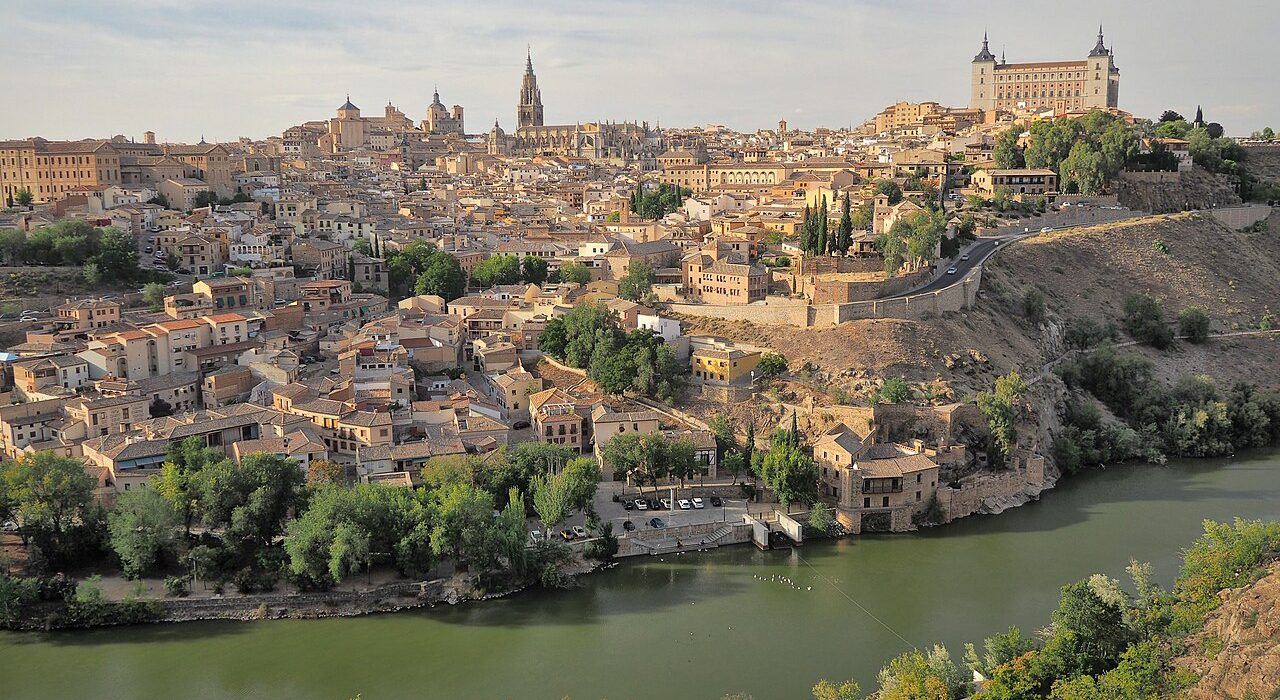
5-Day Itinerary in Castile-La Mancha: Overview
This 5-day itinerary covers Toledo, Cuenca, Ciudad Real, Albacete, and Consuegra with a budget of 250-350€ per person.
This route through Castile-La Mancha is designed for travelers looking to immerse themselves in the essence of inland Spain, combining world-class monumental heritage with the authenticity of rural landscapes. It is ideal for lovers of history, photography, and traditional gastronomy who want to take a 5-day trip to Castile-La Mancha without sacrificing comfort while keeping strict control of expenses. Along this journey, you will discover everything from the imperial majesty of Toledo to the hanging architecture of Cuenca, passing through the volcanoes of Ciudad Real and the windmills that inspired Cervantes.
| Día | Ciudad Base / Ruta | Highlights Principales | Km Aprox. (Traslado) |
|---|---|---|---|
| Día 1 | Toledo | Catedral, Alcázar, Sinagogas, Casco Histórico | – |
| Día 2 | Toledo > Consuegra > Ciudad Real | Molinos de Consuegra, Catedral de Ciudad Real, Volcanes | 110 km (aprox) |
| Día 3 | Ciudad Real > Albacete | Museo del Prado, Pasaje de Lodares, Teatro Circo | 130 km (aprox) |
| Día 4 | Albacete > Cuenca | Traslado panorámico, llegada a Cuenca, Mirador | 160 km (aprox) |
| Día 5 | Cuenca | Casas Colgadas, Catedral, Ciudad Encantada (opcional) | – |
Day 1: Toledo, the City of the Three Cultures
Morning
- 09:00 – Visit to the Santa Iglesia Catedral Primada de Toledo (Primate Cathedral of Saint Mary of Toledo): Start the day early to avoid queues. It is one of the most important Gothic cathedrals in Spain. Estimated time: 1.5 hours. Approx. entry fee: 10€.
- 11:00 – Sinagoga del Tránsito (Synagogue of El Tránsito) and Sinagoga de Santa María la Blanca (Synagogue of Saint Mary the White): Explore the city’s Jewish legacy. Both are very close to each other and offer impressive Mudéjar architecture. Estimated time: 1 hour.
- Recommended breakfast: Café at Plaza de Zocodover. Order a café con leche and a tostada con tomate (toast with grated tomato). Indicative price: 3-5€.
Midday
- Where to eat: Look for a “Menú del Día” (set daily menu) on the streets around the Cathedral or near Santo Tomé. Avoid restaurants right on the main square to save money.
- Typical dish: Try the Carcamusas (pork stew with tomato) or the Cochifrito (fried lamb), emblematic dishes according to local sources.
- Average price: 12-18€ per person.
Afternoon
- 16:00 – El Alcázar de Toledo (The Alcázar of Toledo): Climb to the highest part of the city to visit this fortress that dominates the skyline. It offers spectacular views of the Tagus River valley. Estimated time: 1.5 hours.
- 18:00 – Mezquita del Cristo de la Luz (Mosque of Christ of the Light): A small but historic building that showcases the Islamic footprint in the city.
- Afternoon snack: A must is buying Mazapán (marzipan) at a traditional confectionery (such as Santo Tomás) to take away or eat on the spot.
Night
- Dinner: Tapas crawl along Calle Nueva or Calle de la Plata. Order a portion of Perdiz a la Toledana (Toledo-style partridge) to share. Area: Historic center. Price: 15-20€.
- Atmosphere: Toledo has a tranquil atmosphere at night, ideal for strolling through its illuminated cobblestone streets.
Day 2: From the Windmills to the Volcanoes (Toledo – Consuegra – Ciudad Real)
Morning
- 09:00 – Departure to Consuegra: Drive or take a bus to Consuegra (approx. 50 km from Toledo).
- 10:30 – Windmills of Consuegra: Climb up to Cerro Calderico. This is the iconic image of the region. You can go inside one of the restored windmills (Molino Bolero). Estimated time: 1.5 hours. Approx. entry fee: 3-4€.
- Recommended breakfast: In Consuegra, try chocolate con churros (hot chocolate with fritters) or coffee in the village before heading up the hill. Price: 3€.
Midday
- Transfer to Ciudad Real: Continue the journey to the capital (approx. 60 km from Consuegra).
- Where to eat: In Ciudad Real, look for taverns near the Cathedral.
- Typical dish: Pisto Manchego (Manchego-style ratatouille) or Migas Manchegas (Manchego-style fried breadcrumbs) (if in season, they tend to be more common in winter/spring, but they are available all year round). Average price: 12-15€.
Afternoon
- 16:30 – Santa Iglesia Prioral Basílica Catedral de las Órdenes Militares: Visit this Gothic-Isabelline temple, unique in Spain.
- 18:00 – Calatrava Volcanoes Geological Park: If you have a car, head to the outskirts (Campo de Calatrava) to see the extinct volcanoes (e.g. Cerro de los Santos). It is a unique lunar landscape. If you are using public transport, visit the Museo de Ciudad Real – Convento de la Merced in the centre.
- Afternoon snack: Take a break in Plaza del Pilar.
Night
- Dinner: Area around Calle Ronda de Toledo or near the Cathedral. Try the Asadillo Manchego (Manchego-style roasted peppers). Price: 15€.
- Atmosphere: Ciudad Real is a university city, so there is a great tapas scene in the centre.
Day 3: Architecture and Tradition in Albacete
Morning
- 09:30 – Transfer to Albacete: Journey from Ciudad Real (approx. 130 km, 1h 30min by car).
- 11:00 – El Pasaje de Lodares: A gem of early 20th-century modernism. It is a beautiful glass-roofed shopping arcade, perfect for photos.
- Recommended breakfast: In Plaza de la Catedral or near the Pasaje. Price: 3-4€.
Midday
- Where to eat: Area around Calle Tinte or Plaza de la Catedral.
- Typical dish: Gazpacho Manchego (note: this is a hot stew with rabbit/hare and flatbread, not the cold Andalusian gazpacho) or Atascaburras. Average price: 13-18€.
Afternoon
- 16:30 – Teatro Circo de Albacete: One of the few circus-theatres remaining in Spain. Take a guided tour if available or admire its façade.
- 18:00 – Albacete Archaeological Museum: To understand the history of the region from prehistoric times. Alternative option: Stroll through the Jardines de la Feria if it is September.
- Afternoon snack: Ice cream in the pedestrian area.
Night
- Dinner: Albacete has a varied dining scene. You can opt for a budget-friendly option of Migas Ruleras or, if your budget allows, book at places like Asador Concepción (although this would raise the budget from economy to mid-range).
- Atmosphere: The Feria area and the centre offer an active nightlife.
Day 4: Heading to the Hanging City (Albacete – Cuenca)
Morning
- 09:00 – Departure for Cuenca: This is the longest leg of the trip (approx. 160 km, 1h 50min). Take the time to enjoy the landscape shifting toward the highlands.
- 11:30 – Arrival and check-in (or leave your bags in left luggage).
- Recommended breakfast: Once in Cuenca, coffee in the Plaza Mayor. Price: 3€.
Midday
- Where to eat: Calle Alfonso VIII or the streets around the Cathedral.
- Local dish: Zarajos (lamb intestines wrapped around vine shoots) or Morteruelo (a warm game pâté). These are hearty dishes, perfect for refueling. Average price: 14-20€.
Afternoon
- 16:30 – Cathedral of Santa María and San Julián: The first Gothic cathedral in Castile. Its façade is stunning.
- 18:00 – Torre de Mangana: A symbol of the city. Climb it (if open) or view it from the Plaza de la Ciudad for the best views over the Júcar River.
- Afternoon snack: Stroll through the narrow streets of the old town.
Night
- Dinner: A light tapas dinner. Try the Ajo Arriero (salt cod and potato). Area: Old Town. Price: 15€.
- Atmosphere: Cuenca at night is magical and very peaceful, perfect for a walk beneath the illuminated Casas Colgadas (Hanging Houses).
Day 5: Cuenca, nature, and farewell
Morning
- 09:30 – Casas Colgadas: Visit the Museum of the Casas Colgadas. This is the postcard image of the city. Estimated time: 1 hour. Approx. entry: 5-6€.
- 11:00 – Puente de San Pablo: Cross this wooden suspension bridge for the best perspective of the houses and the Hoces del Júcar gorge.
- Recommended breakfast: Before heading out, one last coffee with a view. Price: 3€.
Midday
- Where to eat: Final lunch in Cuenca.
- Local dish: Migas with egg or revisit a favorite from the area. Average price: 12-16€.
- Afternoon activity (Active Option): If you have time before leaving, visit the Ciudad Encantada (Enchanted City, a 30-minute drive away). These are spectacular limestone rock formations. Entry: 5€.
- Afternoon activity (Relaxed Option): A final walk to the Mirador de San Pablo viewpoint and souvenir shopping (folding knives, honey).
Afternoon
- 17:00 – End of the itinerary: Collect your luggage and depart for Madrid or your next destination.
Night
- Dinner: If you leave late, a light farewell dinner. If you have already departed, the trip concludes here.
Recommended accommodation
To keep a budget-friendly approach on this route through Castile-La Mancha, the following options are recommended:
- Toledo: Guesthouses near the Bus/Train Station or small pensions in the historic center (side alleys). Range: 40-60€/night for a double room.
- Ciudad Real / Albacete: As provincial capitals with a university scene, there are plenty of clean, centrally located guesthouses. Range: 35-55€/night.
- Cuenca: Look for accommodation in the lower part of the city (near the station or Plaza Mayor) to avoid hauling luggage up steep slopes to the old town, though staying in the old town is more picturesque. Range: 45-65€/night.
Transport between cities
To explore Castile-La Mancha efficiently, a rental car is the best option, as it gives you total flexibility to visit Consuegra or the Volcanes. However, public transport is viable if planned well.
- Car: The most recommended option. Distances are manageable (Toledo to Cuenca is 180km, approx 1h 55min). Fuel and tolls (A-40, A-4, A-3 motorways) must be added to the budget.
- Bus (ALSA): Connects all the capitals. The Toledo-Ciudad Real-Albacete-Cuenca routes are frequent. Indicative prices: 10-20€ per journey.
- Train (Renfe): Renfe connects Toledo with Madrid frequently, but the direct connection between cities in La Mancha (e.g. Toledo to Cuenca) often requires a transfer at Madrid Atocha, which is time-consuming. It is better to use the train only to reach the region from Madrid.
Estimated budget
Breakdown for a budget trip per person (based on 2 people sharing expenses):
- Accommodation (4 nights): 100€ – 140€ (shared).
- Meals (5 days): 125€ – 150€ (Breakfast 3€, Lunch 15€, Dinner 15€ + water/coffees).
- Transport:
- Car option (rental + petrol + tolls shared): ~80€ – 100€ per person.
- Bus option: ~60€ – 80€ per person.
- Entrance fees and leisure: 40€ – 50€ (Cathedrals, Windmills, Museums).
- ESTIMATED TOTAL: 345€ – 440€ per person.
Note: You can drastically reduce the cost by having picnics for lunch and using only regional public transport.
Independent travel or organised tour?
This is a key decision for your 5-day trip to Castile-La Mancha.
- Independent travel (Recommended):
- Advantages: Total flexibility to stop in Consuegra or the Volcanes whenever you want. Budget control (you can eat a cheap menú del día). Your own pace.
- Disadvantages: You need to organise logistics (car rental, hotels). In rural areas without a car it is difficult to get around.
- Profile: Independent travellers, couples, backpackers with a car.
- Organised Tour:
- Advantages: Total convenience. A guide explains the history (very useful in Toledo and Cuenca). You don’t worry about driving.
- Disadvantages: Higher budget. Strict timings (you may not have time to eat at leisure). Routes tend to be “express” (Toledo in the morning and back to Madrid), missing the essence of staying overnight in the region.
- Profile: Large groups, older people who don’t want to drive, travellers with little time who only see the main sights from Madrid.
Practical tips
- The Heat: Castile-La Mancha has an extreme continental climate. In summer, temperatures exceed 40°C. Avoid the central hours of the day (13:00-16:00) for walking outdoors.
- Meal Times: People eat late. Restaurants open for lunch at 14:00 or 14:30. If you go at 13:00, they will likely be closed or still setting up.
- Water: Always carry a reusable bottle. The air is very dry and dehydration is common when walking around cities like Toledo or Cuenca.
- Footwear: Toledo and Cuenca have many steep streets and cobblestones. Forget heels or thin-soled shoes; wear comfortable walking shoes.
- Reservations: On weekends, quality restaurants offering the “Menú del Día” (fixed-price daily menu) fill up fast. Try to book or arrive before 14:15.
- Gasoline: If you are driving, refueling in provincial capitals is usually cheaper than on highways or at small service stations in very remote villages.
Frequently asked questions
Is it necessary to rent a car to do this route?
It is not strictly necessary if you stick to the capitals (Toledo, Cuenca, Ciudad Real, Albacete), since ALSA has good connections between them. However, to visit Consuegra, the Ciudad Encantada (Enchanted City) or the Volcanes de Calatrava (Calatrava Volcanoes) comfortably and without depending on rigid bus schedules, a car is highly recommended.
What is the best time of year to visit Castile-La Mancha?
Spring (April-June) and autumn (September-October) are ideal. The countryside is green or golden, and temperatures are pleasant (20-25°C). Avoid July and August due to the extreme heat, and winter if you are looking for green landscapes, although snow in Cuenca is beautiful.
Are the cities on this itinerary safe?
Yes, Castile-La Mancha is one of the safest regions in Spain. Tourism is quiet and family-oriented. As in any tourist city (especially Toledo and Cuenca), you should be cautious of pickpockets in very crowded areas, but the risk is low compared to other major European capitals.
What dishes should I not miss on this route?
It depends on the area: in Toledo, the Perdiz (partridge) and Mazapán (marzipan); in Cuenca, the Morteruelo (a warm pâté-like stew) and Zarajos (grilled lamb intestines); in Ciudad Real and Albacete, the Pisto Manchego (Manchego-style ratatouille) and Migas (fried breadcrumbs). These are hearty, spoon-based dishes typical of inland cuisine.