Frigiliana
AndalucíaClimate
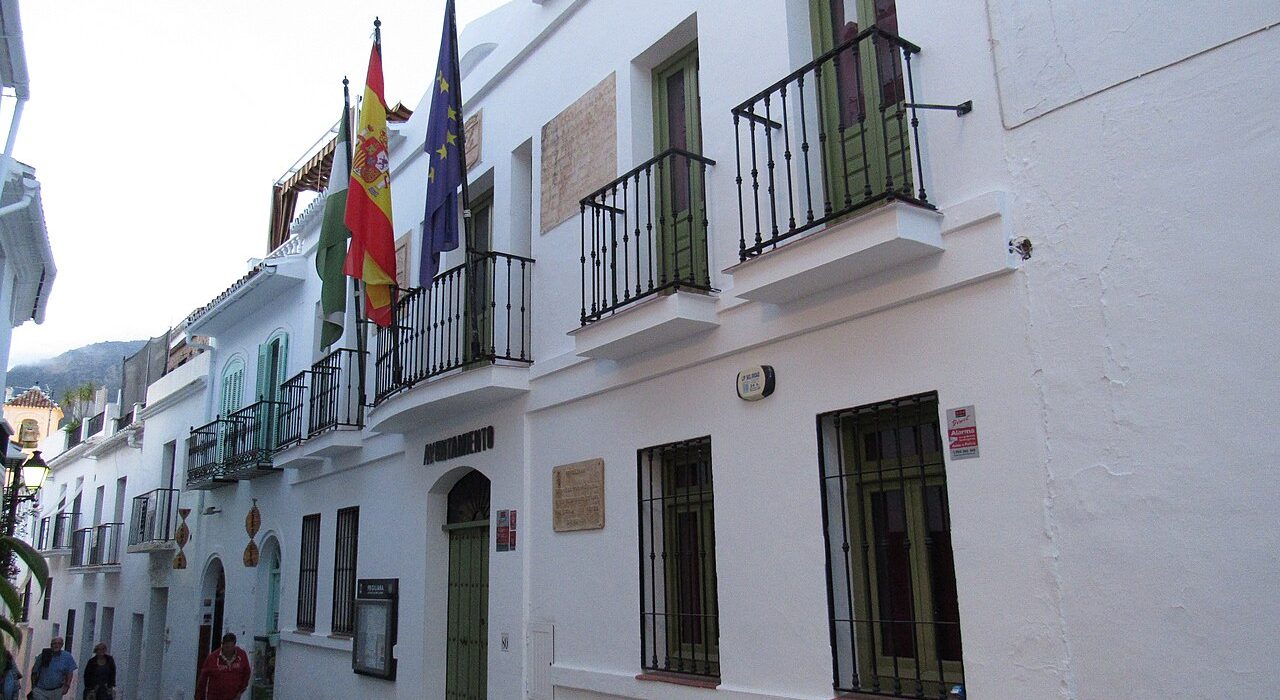
In 1982, Frigiliana won the 1st National Prize for the Beautification of Spain’s Villages, a title that comes as no surprise when you walk its cobbled streets and see how the whitewashed houses compete with pots of geraniums for your attention. This village of barely 3,000 inhabitants in the province of Malaga is not just a pretty setting; it is an open history book where, in June 1569, one of the bloodiest battles of the Morisco Rebellion was fought, an event you can trace today by following 12 ceramic plaques scattered throughout the old town. If you are looking for authenticity away from the mass crowds, here you will find the perfect balance between a cuisine unique in Europe and views that dominate the Sierras de Almijara, Tejeda y Alhama Natural Park.
The must-seesWhat to see in Frigiliana: the must-sees
Castillo Lizar (Remains)
The remains of this ancient palace and fortress are the silent testimony to the Morisco defense during the 1569 rebellion. When visiting this spot, you will notice the strategic position it occupied above the village, offering a clear perspective on why it was such a coveted military enclave. It is an ideal place to connect with the area’s warlike past while enjoying a privileged view of the surroundings.
Museo Arqueológico Casa del Apero (Archaeological Museum Casa del Apero)
This museum is essential for understanding the historical depth of Frigiliana, as it houses pieces that narrate the evolution of the settlement since ancient times. The most notable feature is its location in a traditional house, which allows you to see archaeology in a real domestic context. It is a must-stop if you want to go beyond the aesthetics and understand the lives of those who inhabited these lands before you.
Fábrica San Miguel (San Miguel Factory)
This monument is not just a historic building, but the industrial heart of the village where its most emblematic product is made. It stands out as the place where the famous cane honey is produced, a process you can observe and which defines the economic and cultural identity of Frigiliana. Its architecture reflects the importance of the sugar industry in the Axarquía region.
Domingo F. Sarmiento
This monument pays homage to a relevant historical figure, marking a point of cultural interest along the urban route. It is an example of how the village honors its connection with personalities who have left their mark, adding an intellectual layer to your visit. Stopping here allows you to appreciate the careful detail in the sculpture and its integration into the surroundings.
Memorial Padre Blas Infante (Father Blas Infante Memorial)
Dedicated to the father of Andalusian nationalism, this monument is a symbol of regional identity located in a prominent spot in the village. What you should highlight is its value as a meeting point for reflecting on the history and culture of Andalusia. It is a brief but significant stop for understanding the local pride in its roots.
Other points of interest
- The monument to Mayor Antonio Villasclaras Rosas honors local memory.
- Calle Chorrera (Chorrera Street) is an emblematic stretch that deserves a mention for its charm.
- The Reales Pósitos (Royal Granaries) are an example of historic storage architecture.
- The Corral de Pinto offers a glimpse of traditional rural life.
- The Ermita de San Calixto (Hermitage of Saint Calixtus) is a point of devotion and religious architecture.
- The lime kiln recalls the area’s ancient construction techniques.
- The Mirador del Bendito (Blessed One’s Viewpoint) offers a spectacular panorama for photos.
- The Franciscus road marker is another viewpoint with interesting views.
- El Encuentro (The Encounter) is a place with cultural significance for visitors.
- The Tres Culturas (Three Cultures) space symbolizes the village’s historical coexistence.
- The Nerja Gondola is a nearby attraction linked to the area.
- Otra Vista (Another View) is one more viewpoint to complete your photographic tour.
🍂 Otoño
Si visitas Frigiliana en otoño, notarás cómo bajan las temperaturas pero aún podrás disfrutar de la mejor época hasta octubre. Es un momento encantador para visitar con menos turistas y probar los productos de la cosecha local. Consulta siempre la previsión de lluvia antes de salir, porque las precipitaciones aumentan ligeramente.
What to do in Frigiliana
Frigiliana offers immersive cultural activities centered on its multicultural history and gastronomic traditions. You cannot miss the Frigiliana 3 Culturas Festival in August, where music and gastronomy celebrate Christian, Jewish, and Sephardic coexistence, nor the Día de la Miel de Caña (Cane Honey Day) in April, a day dedicated exclusively to celebrating the star product with tastings and show cooking. If you visit in June, the Fiestas Patronales (Patron Saint Festivities) in honor of San Antonio de Padua fill the streets with processions and a romería (pilgrimage), while in May the Cruces de Mayo (May Crosses) transform the historic center into a contest of floral altars that fills the entire town with fragrance. For a more everyday experience, the Mercadillo Semanal (Weekly Market) is the ideal meeting point to buy crafts and local products.
Frigiliana in one day: express itinerary
If you are short on time, this plan allows you to cover the essentials without losing the charm of the stroll:
- 10:00 AM – Morisco-Mudéjar Quarter: Start by getting lost in the labyrinth of cobblestone streets of the Old Town, admiring the ceramic mosaics that narrate Moorish history.
- 12:30 PM – San Miguel Factory: Head to the El Ingenio area to visit the only cane honey factory in Europe and understand its production process.
- 14:30 PM – Typical Lunch: Enjoy a meal trying the berenjenas fritas con miel de caña (fried eggplants with cane honey) at a restaurant in the center.
- 17:00 PM – Casa del Apero Archaeological Museum: Visit the museum to contextualize everything you have seen during the morning with real historical pieces.
- 19:00 PM – Bendito Viewpoint: End the day contemplating the sunset and the views over the mountains of the natural park.
Where to eat in Frigiliana: local gastronomy
Where to stay in Frigiliana
Casco Antiguo (Barrio Morisco-Mudéjar)
El corazón histórico de Frigiliana y su principal atractivo. Un laberinto de estrechas y empinadas calles empedradas, casas encaladas adornadas con flores y mosaicos de cerámica que cuentan la historia de la rebelión morisca.
Barribarto
La zona más alta y antigua del barrio morisco, considerada por muchos el núcleo del Casco Antiguo. Ofrece las vistas más espectaculares y las callejuelas más fotogénicas y tranquilas.
Zona de El Ingenio
Área situada en la parte baja, cuyo centro es el Palacio de los Condes de Frigiliana, también conocido como El Ingenio. Alberga la única fábrica de miel de caña de Europa, un emblema del pueblo.
La Parte Nueva
La zona más moderna y funcional de Frigiliana, ubicada en la parte baja del pueblo. Aquí se encuentran la mayoría de servicios, comercios, y el acceso es más cómodo, sin tantas cuestas.
Loma de la Cruz
Una pequeña colina que domina el pueblo, coronada por una cruz. No es un barrio residencial, sino una zona de paseo que ofrece una de las panorámicas más completas y hermosas de Frigiliana y las montañas.
How to get to Frigiliana
To plan your trip, take into account the available transport options according to regional data:
| Medio | Duración | Precio aprox. | Frecuencia |
|---|---|---|---|
| Avión | Variable | Variable | Según vuelos |
| Bus Urbano | Local | Económico | Regular |
The reference airport indicated for the area is Alhama de Granada. Once in the region, the urban bus is the main option for getting to the town.
How to get around Frigiliana
The best way to explore Frigiliana is on foot, especially if you are staying in the Old Town or Barribarto, where the streets are narrow and steep. However, for longer journeys or if you have reduced mobility, the town has an urban bus service that connects the different areas. Keep in mind that the upper part of the town can be difficult for vehicles, so walking is often the most practical and pleasant option.
Weather in Frigiliana
Live webcam — Nerja*
Frigiliana* The nearest webcam to Frigiliana is in Nerja, 5.1 km away.
Source: Windy Webcams
Best time to visit Frigiliana
Day trips from Frigiliana
Make the most of your stay to explore the cities of the region. Frigiliana is part of the Parque Natural de las Sierras de Almijara, Tejeda y Alhama (Sierras de Almijara, Tejeda and Alhama Natural Park), a protected area of more than 40,000 hectares perfect for hiking. From here you can plan routes to other villages in the Axarquía region or visit the nearby coast. The village’s strategic location, with coordinates 36.7879, -3.9003, makes it an excellent base for discovering the surroundings of Málaga and Granada.
Things you didn’t know about Frigiliana
Did you know that the name ‘Frigiliana’ has Roman origins? It comes from ‘Frexinius-ana’, meaning ‘the villa or farmstead of Frexinius’, a Roman patrician who owned these lands.
Another surprising fact is that Frigiliana is home to the last cane honey (not bee honey) factory still operating in all of Europe, producing this product since 1640 in the Palacio de los Condes (Counts’ Palace).
The village was the scene of a crucial battle in June 1569, when around 4,000 Moriscos were defeated in the Batalla del Peñón (Battle of the Rock) by an army of more than 6,000 soldiers.
For television lovers, some scenes from the iconic series ‘Verano Azul’ (Blue Summer) were filmed here; the character ‘El Piraña’ was originally from Frigiliana in the fiction.
Additionally, the highest point in the municipality is the peak ‘El Fuerte’, which reaches 976 meters in altitude within the natural park.
Who Frigiliana is for
This destination is perfect for couples seeking romance on cobblestone streets, backpackers who appreciate history and photography, and families wanting a safe and cultural environment. It is also ideal for foodies interested in unique products such as cane honey and sweet wine, as well as cultural travelers who want to understand the coexistence of the three cultures.
💡 ¿Sabías que...?
- ● En Frigiliana se encuentra la última fábrica de miel de caña (no de abeja) en funcionamiento de toda Europa. Este producto se elabora desde 1640 en el Palacio de los Condes de Frigiliana, también conocido como El Ingenio. (Turismo de Frigiliana, diversas fuentes turísticas)
- ● El pueblo fue escenario de una de las últimas y más sangrientas batallas de la Rebelión de los Moriscos. En junio de 1569, unos 4.000 moriscos fueron derrotados en la Batalla del Peñón de Frigiliana por un ejército de más de 6.000 soldados. (Placas cerámicas históricas en el pueblo, Wikipedia)
- ● El nombre 'Frigiliana' tiene un origen romano. Proviene de 'Frexinius-ana', que se traduce como 'la villa o el cortijo de Frexinius', un patricio romano que poseyó estas tierras. (Ayuntamiento de Frigiliana)
- ● Cada año, a finales de agosto, se celebra el Festival de las Tres Culturas. Este evento de 4 días atrae a miles de visitantes y conmemora la coexistencia de las culturas cristiana, judía y árabe con conciertos, gastronomía y un gran mercado. (Página oficial del Festival de las Tres Culturas)
- ● Frigiliana está integrada en el Parque Natural de las Sierras de Almijara, Tejeda y Alhama, un espacio protegido de más de 40.000 hectáreas. Su punto más alto dentro del municipio es el pico 'El Fuerte', a 976 metros de altitud. (Junta de Andalucía)
- ● En 1982, Frigiliana recibió el I Premio Nacional de Embellecimiento de los Pueblos de España. Su casco histórico, conocido como Barrio Morisco-Mudéjar, es uno de los mejor conservados de Andalucía. (Ayuntamiento de Frigiliana)
- ● A lo largo del casco histórico existen 12 placas de cerámica que narran la historia de la sublevación y expulsión de los moriscos. Este itinerario visual permite a los visitantes seguir los acontecimientos de la batalla de 1569. (Turismo de Andalucía)
- ● Algunas escenas de la mítica serie de televisión española 'Verano Azul' fueron rodadas en Frigiliana. El personaje de 'El Piraña', interpretado por Miguel Ángel Valero, era originario del pueblo en la ficción. (Blogs de cine y televisión, cultura popular)
Frequently asked questions about Frigiliana
How many days do I need to see Frigiliana?
One day is enough to see the main attractions such as the Castillo Lizar (Lizar Castle), the Fábrica San Miguel (San Miguel Factory) and the Museo Arqueológico (Archaeological Museum), but 2 or 3 days are recommended to enjoy the gastronomy, the viewpoints and the neighborhoods at a relaxed pace.
What is the best time to visit Frigiliana?
The best time is from April to October, when the average temperature is pleasant (around 24.7°C in summer) and key events are held such as the Festival 3 Culturas (Three Cultures Festival) in August or the Día de la Miel de Caña (Cane Honey Day) in April.
How do I get to Frigiliana from Madrid?
The most common option is to travel to the region (the reference airport is Alhama de Granada according to local data) and from there take the urban bus or regional transport to reach the village.
What is the most typical food to eat in Frigiliana?
The most emblematic dish is berenjenas fritas con miel de caña (fried eggplant with cane honey), a dish of Arab origin, accompanied by the sweet wine of the Axarquía made from Moscatel grapes.
For more practical information on exact opening hours, ticket prices and the updated events calendar, I recommend checking the official Frigiliana tourism website.