Aranjuez → Toledo
52 kmLeaving the gardens of the Royal Site of Aranjuez and heading toward the sacred hill of Toledo is one of the most evocative journeys in central Spain, where Habsburg history merges with the vastness of the La Mancha plain in under an hour of driving. It is not just a change of geographical location; it is a journey through time that takes you from the riverside serenity of the Tagus in its lower course to the medieval fortress crowning the horizon, all along a road that glides gently between cereal fields and vineyards beneath a sky that seems infinite.
How to get from Aranjuez to Toledo: quick overview
The most efficient, direct, and recommended way to travel between these two historic cities is by private vehicle, as it covers the 52 kilometers in just 40 minutes without the need for complicated transfers. Given that the data confirms there is no direct rail connection between Aranjuez and Toledo, the car becomes the undisputed king of this route, offering total freedom to enjoy the landscape and reach your destination without depending on bus schedules or train combinations that could lengthen the journey considerably. For the independent traveler, this option is unbeatable in terms of time-to-distance ratio, while for those who prefer not to drive, the lack of a direct train forces them to seek road transport alternatives that, although we do not detail here due to a lack of specific route data, tend to be less flexible than your own or a rental car.
Why is the car the dominant option on this route?
The supremacy of the automobile on this journey is due to the excellent highway connectivity and the absence of a train line directly linking both points. While on other Spanish routes the AVE or regional trains compete in speed, here the road wins by a landslide. The 52 kilometers are covered in a record time of 40 minutes, meaning you can have a leisurely breakfast in Aranjuez and be strolling through the streets of Toledo before mid-morning. This speed makes the trip a perfectly viable day excursion or a comfortable transfer for those who decide to spend the night in the imperial city. Furthermore, as there are no tolls on the main roads, the cost of the trip is strictly limited to fuel, making it an economical option for couples or family groups who can share expenses.
Driving from Aranjuez to Toledo
The driving route is extremely simple and fast, using exclusively toll-free highways that guarantee a smooth 40-minute journey covering the 52 kilometres of distance. The trip begins by leaving Aranjuez and taking the A-4 (Autovía del Sur), a wide, well-maintained road that quickly takes you out of the urban surroundings and into the plain. This highway, known for being the backbone of southern Madrid, has no tolls, which is a significant advantage for the traveller’s wallet. After a short stretch, the route invites you to connect with the A-40 (Autovía de la Meseta Sur). This change of road is smooth and well signposted; the A-40 acts as a transversal axis crossing the plateau, offering panoramic views of the Castilian countryside that change colour with the season, from the intense green of spring to the golden ochre of summer.
The final stretch: the A-42 and arrival in the city
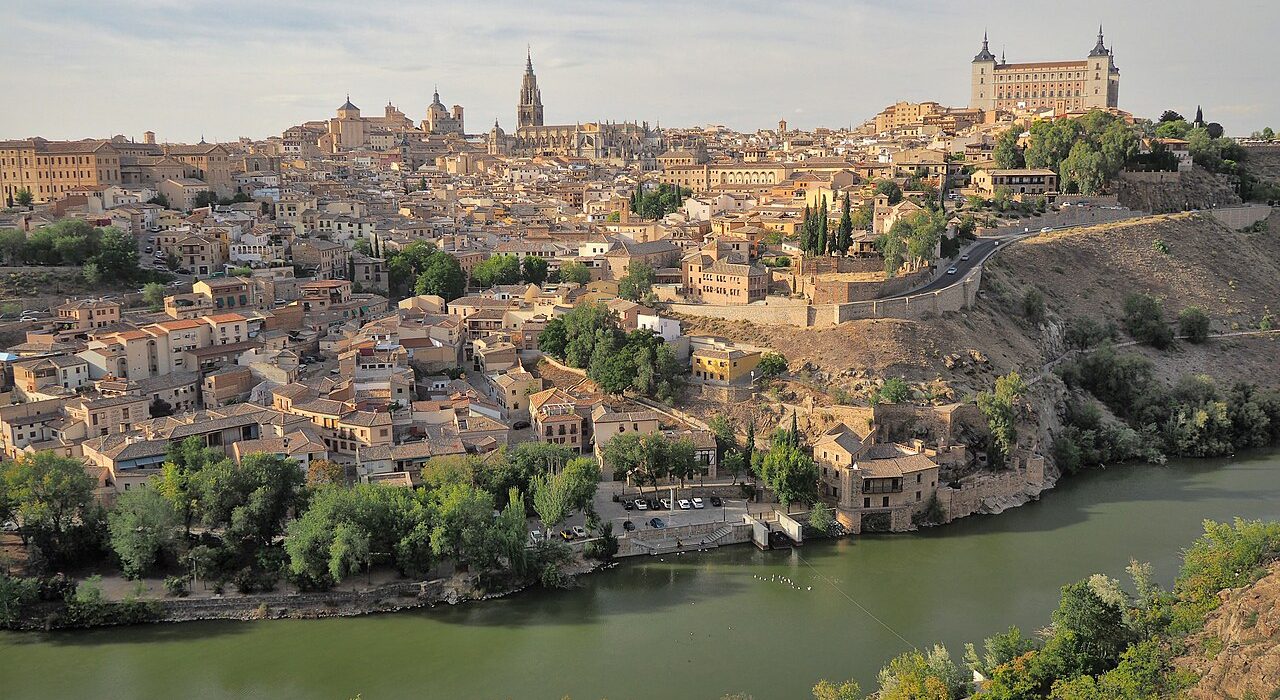
The final leg of the journey is along the A-42 (Autovía de Toledo), the road that literally drops you at the gates of the city. Like its predecessors on this route, the A-42 is a toll-free highway, which eliminates any cost surprises at the end of the trip. As you approach Toledo on the A-42, the landscape begins to transform; the plain gives way to the undulations of the terrain on which the city sits, and soon you will see the unmistakable silhouette of the Alcázar and the Cathedral appear. It is important to bear in mind that, although the road is fast and safe, entering the urban centre of Toledo can present some complexity due to traffic restrictions for non-resident vehicles. It is recommended to have your GPS or map ready to head directly to one of the public car parks located on the periphery of the walls, as access by private car to the interior of the medieval streets is highly restricted. The combination of the A-4, A-40 and A-42 creates a high-capacity corridor that makes the 52 km distance feel even shorter due to the usual fluidity of traffic on this axis.
Where to stay in Toledo
To live the full experience of the imperial city, the best area to stay is within the Casco Histórico (Old Town), although this means considering the access and parking restrictions for vehicles. Sleeping within the walls allows you to walk along cobblestone streets lit by old streetlamps once the day-trippers have left, offering a magical and quiet atmosphere you won’t find anywhere else. However, if you’re traveling by car following the route we’ve described, you should know that many hotels within the historic quarter don’t have their own garage or have very limited spaces. In that case, you’ll need to leave your vehicle in a nearby public parking lot and get around on foot, which is perfectly feasible given that the center is compact and walkable. Accommodations here tend to be charmingly restored buildings, ranging from former noble houses converted into boutique hotels to more modest guesthouses on side streets.
Alternative areas and price ranges
If you prefer the convenience of having your car close to your room, the areas immediately outside the city gates, such as the surroundings of the Puerta de Bisagra (Bisagra Gate) or the area around the Bus Station (outside the walls), are excellent alternatives. In these areas, it’s more common to find hotels with their own parking or easy access to the main road, making it easier to enter and leave the city without having to navigate the maze of streets in the center. As for prices, Toledo offers a very wide range for all budgets. You can find budget or mid-range options ranging from €50 to €90 per night, ideal for practical travelers looking for cleanliness and a good location without excessive luxuries. On the other hand, if you’re looking for a luxury experience, prices can exceed €150 or €200 per night, especially in establishments occupying historic buildings with views of the Tagus River or the Alcázar. Regardless of your choice, booking in advance is crucial, especially during long holiday weekends and high season, as the supply in the historic center is limited and demand is very high due to the proximity to Madrid and the ease of access from Aranjuez.
Frequently asked questions about the Aranjuez-Toledo route
How long does it take to get from Aranjuez to Toledo?
The estimated travel time is 40 minutes by car. This duration is based on a smooth 52-kilometre journey using the A-4, A-40 and A-42 motorways, not counting potential hold-ups entering the city of Toledo.
Which is cheaper, the train or the bus?
According to the available data, there is no direct train option between Aranjuez and Toledo, which rules out this mode as a viable or economical alternative for this specific route without making complex transfers. With no direct train, the price comparison tilts towards a private car (fuel cost) or the bus, with the car often proving more economical when travelling in a group due to the short 52 km distance and the absence of tolls.
Is it worth renting a car?
Yes, it is absolutely worth renting a car for this route. Given that there is no direct train and the distance is short (40 minutes), the car gives you maximum flexibility to visit both destinations at your own pace, park in Toledo (in the external car parks) and move around with total freedom without depending on public transport timetables that may not be synchronised for a direct journey.
When is the best time to travel?
The best time to travel is during spring and autumn, when temperatures on the meseta (central plateau) are mild and pleasant for walking around Toledo and enjoying the gardens of Aranjuez. Avoid the central summer months if possible, as temperatures can be very high on the La Mancha plain during the 40-minute journey, although the road has the necessary features for safe travel at any time of year.