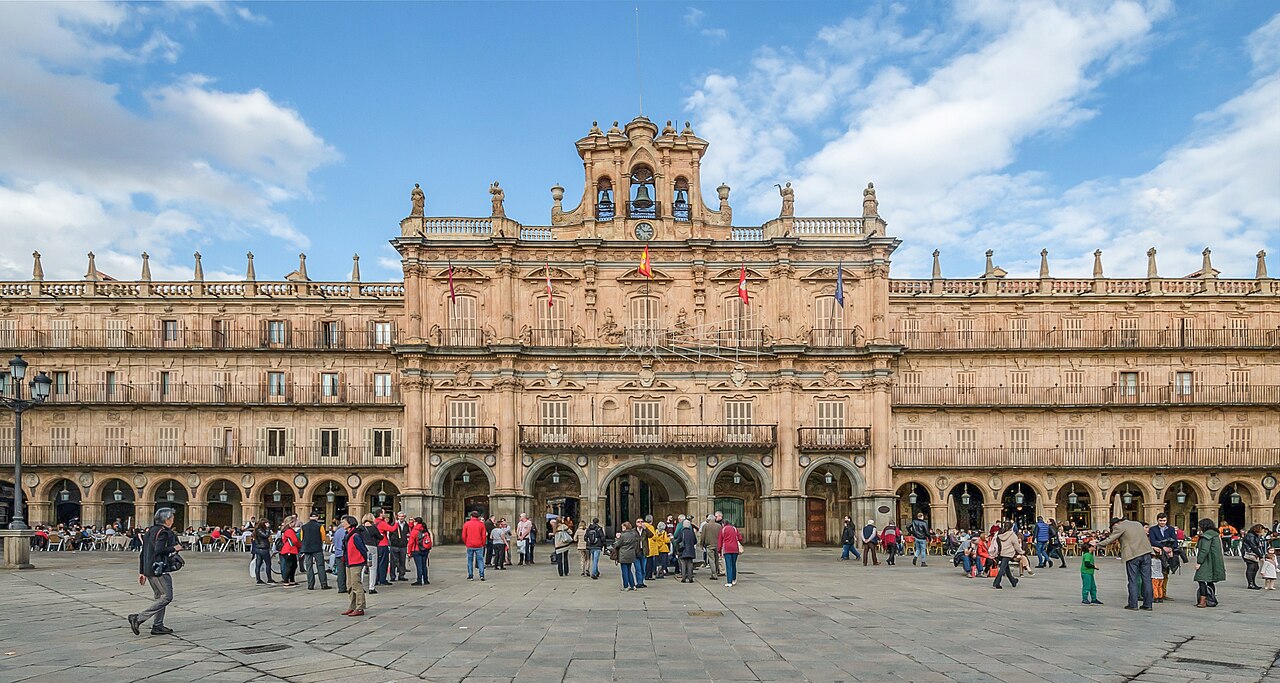
Ávila → Salamanca
104 kmImagine crossing the Castilian plateau, where stone-built history merges with the immensity of the sky, on a journey that in just over an hour connects you with the magic of the golden city. This trip is not merely a 104-kilometer transfer, but a direct bridge between two of Spain’s most important medieval gems, allowing you to enjoy the freedom of the open road or the comfort of the train without any hassle.
How to Get from Ávila to Salamanca: Quick Overview
The fastest way to get there is by car, taking approximately 1 hour and 5 minutes, although the train is the most comfortable option if you prefer not to drive. You have three main alternatives for covering this route: a private vehicle, which offers total freedom; the Renfe Media Distancia (mid-distance) train, ideal for travelers who value time and comfort; and the Avanza bus company, which stands out for its affordability and frequency. If you are traveling in a group or with family and luggage, the car is usually the standard recommendation, while for solo travelers or couples looking to relax, the train is unbeatable.
By Car from Ávila to Salamanca
Driving from Ávila to Salamanca is extremely straightforward thanks to a network of modern, toll-free highways connecting both cities without any tolls. The total distance to cover is 104 km, a short journey that takes an estimated 1 hour and 5 minutes, depending on traffic and weather conditions. When leaving Ávila, you will find excellent road infrastructure designed to facilitate smooth transit toward the west of the region.
The main roads you will use on this journey are the A-50 (Autovía Ávila-Salamanca), which is the direct and natural route for this trip. This highway allows you to bypass urban centers and maintain a constant speed. On certain stretches, or depending on your exact starting point in the city of origin, you might connect with other major roads such as the A-6 (Autovía del Noroeste) or the A-66 (Autovía Ruta de la Plata), which are key transport arteries in Castile and León. You may also use sections of the A-62 (Autovía de Castilla) as you approach your destination. The best part of this route is that all these highways are toll-free, meaning the cost of the trip is reduced solely to fuel and vehicle wear and tear, with no last-minute surprises at toll booths.
The landscape along the way is typical of the northern plateau, offering wide, open views that invite relaxed driving. Since it is such a short journey, you will barely notice the time pass before finding yourself on the outskirts of Salamanca. It is important to remember that, although the driving is easy, you should always respect the speed limits on these highways and maintain a safe following distance, especially on straight stretches where visual monotony can play tricks on you.
By train from Ávila to Salamanca
The train is the fastest and most comfortable option for stress-free travel, with a journey lasting between 66 and 81 minutes depending on the specific service. The operator in charge of this service is Renfe, which offers a direct connection that eliminates the need for intermediate transfers. The type of train you will usually find on this line is the MD (Media Distancia), a service designed to cover regional distances with a good level of comfort and amenities.
The service frequency is quite acceptable for a route of these characteristics, with a total of 9 trains per day. This gives you flexibility to plan your day, whether you want to arrive early in the morning or return at night. The departure schedule from the origin station, Ávila, starts at 9:09 with the first train of the morning, and the last train leaves at 22:38, thus covering most of the usable day and even allowing for dinners or nighttime events in the destination city. You will arrive directly at Salamanca station, strategically located to facilitate access to the city center.
Traveling on Renfe’s MD train allows you to make the most of your journey time to read, work, or simply enjoy the Castilian landscape through the window without the stress of driving. It is an especially recommended option if you are traveling alone or if you plan to consume some alcohol during your stay in Salamanca, thus avoiding the risks of driving back. Additionally, the stations are usually well connected with local urban transport, making it easier to get around once you reach your destination.
By bus from Ávila to Salamanca
The bus is the most economical alternative for traveling between these two cities, with fares ranging from 0 to 18 euros depending on how far in advance you book and available offers. The company operating this direct service is Avanza, a company with extensive experience in regional routes that guarantees safety and regularity. Although the travel time is slightly longer than by car or train, it remains a very competitive option for the budget-conscious traveler.
The estimated duration of the bus journey is 90 minutes. This is about 25 minutes longer than going by private car, a minimal difference that is often offset by the financial savings and the convenience of not having to look for parking at the destination. As it is a direct service, you won’t have to worry about changing buses or long waits at intermediate stations; you will board in Ávila and get off directly in Salamanca.
The price range is very attractive, with tickets available from 0 euros in special promotions up to a maximum of 18 euros for standard or last-minute fares. This makes the bus the winning option for students, backpackers, or any traveler looking to maximize their money. Avanza buses usually feature basic amenities such as air conditioning and luggage space, making the hour and a half journey pleasant and comfortable.
Recommended stops along the way
If you decide to make the journey by car, there are strategic points where you can stop to stretch your legs or visit something interesting before reaching your final destination. Although the route is short, these stops can enrich your travel experience and break up the monotony of the road.
- Santa Marta de Tormes: This town is an almost obligatory stop just before entering the capital of Salamanca. Located at the gates of Salamanca, Santa Marta de Tormes offers a quieter, more residential atmosphere. It is an ideal place to take one last break before diving into the bustle of the university city, or even to park your car if you want to avoid downtown traffic and access the city via local transport. Its proximity to the capital makes it a key geographical landmark on the final stretch of your journey.
- Peñaranda de Bracamonte: Located along the route, Peñaranda de Bracamonte is an excellent midpoint if you need a longer rest or want to explore a bit beyond the two main cities. It is a town with its own history and charm, perfect for grabbing a coffee, refueling, or simply getting a change of scenery. Stopping here allows you to split the journey into two more manageable legs and discover a different side of the province of Salamanca, far from the more crowded tourist circuits.
Where to stay in Salamanca
Salamanca offers a variety of accommodations to suit every budget, with the historic center being the most sought-after area due to its proximity to the monuments. When you arrive in the city, you will find a range of options from luxury boutique hotels to budget hostels and tourist apartments. The most recommended area to stay is the Historic Center, especially around Plaza Mayor, as it will allow you to walk to all the points of interest such as the University, the Cathedrals, and the Casa de las Conchas (House of Shells) without needing to use transport.
If you are looking for something quieter and perhaps more affordable, the areas on the outskirts of the center or neighborhoods such as Vistahermosa or near the train station are good alternatives. In these areas, prices tend to be more moderate and it is easier to find parking if you have come by car. The price ranges in Salamanca are varied: you can find beds in hostels from very low prices, ideal for backpackers, up to 4- or 5-star hotel rooms that exceed 100 euros per night, especially in high season or on weekends.
It is advisable to book in advance, especially if you are traveling on weekends or during university events, as the city fills up quickly with visitors. When choosing your accommodation, pay close attention to whether it includes breakfast or has an elevator, as many buildings in the old town are historic and may not have one. Staying in Salamanca is part of the experience, as the city has a vibrant nightlife and a magical atmosphere when its golden stones are illuminated at night.
Frequently asked questions about the Ávila-Salamanca route
How long does it take to get from Ávila to Salamanca?
Travel time varies depending on the mode of transport you choose. If you go by private car, the journey is the fastest, taking approximately 1 hour and 5 minutes to cover the 104 km distance. If you opt for the Renfe train, the trip takes between 66 and 81 minutes, depending on the specific MD service. Finally, if you travel by bus with the Avanza company, you should allow around 90 minutes for the journey. In general, no option exceeds an hour and a half of travel time.
Which is cheaper, the train or the bus?
Generally, the bus is the most economical option. According to data from the Avanza company, bus prices range between 0 and 18 euros, with very low promotional fares sometimes available. By contrast, the Renfe train (MD type) usually has a fixed or variable price that, while competitive, rarely drops below the bus’s minimum prices, especially if not purchased well in advance. For travelers on a tight budget, the bus is the clear winner in terms of cost.
Is it worth renting a car?
Renting a car is mainly worthwhile if you plan to make intermediate stops such as Santa Marta de Tormes or Peñaranda de Bracamonte, or if you value schedule flexibility and luggage transport. Since the roads (A-50, A-66, etc.) are toll-free highways, the extra cost is limited to fuel. However, if your only goal is to get from point A to point B quickly and stress-free, the train (66 min) or the bus are perfectly good options that spare you the driving and parking hassles in Salamanca.
When is the best time to travel?
The best time to travel depends on your preferences regarding weather and crowds, but the route is viable year-round. Taking into account the train schedules (first train at 9:09 and last at 22:38), traveling during the day allows you to make the most of natural light to enjoy the meseta (plateau) landscape. Avoid peak traffic hours if you go by car, although since it is a 104 km highway journey, delays are rare. To enjoy Salamanca with fewer crowds, weekdays are preferable to weekends.
📍 También te puede interesar
Qué ver en Ávila →
Qué ver en Salamanca →