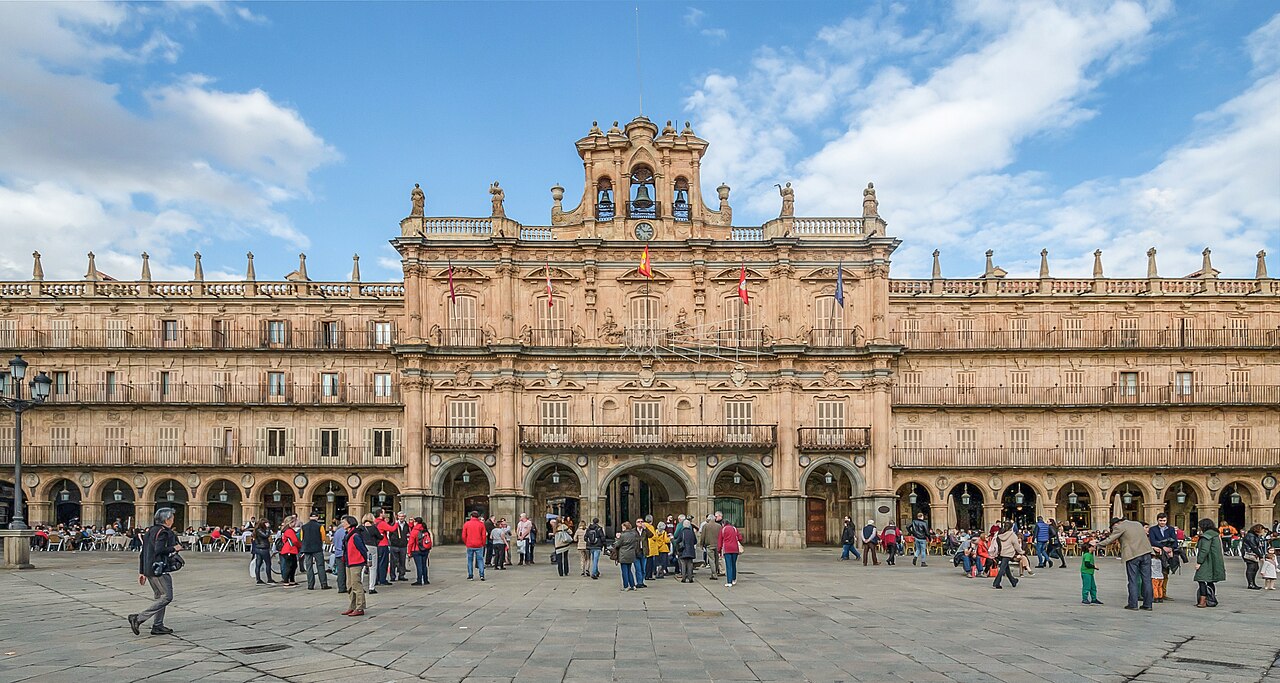
Valladolid → Salamanca
115 kmCrossing the vastness of the Castilian meseta between two of Spain’s most important university cities is an experience that combines the speed of modernity with the calm of the Duero’s golden landscapes. Whether you choose the freedom of the open road or the comfort of the train, this journey of just over a hundred kilometers connects you with the heart of Castile and León in the blink of an eye, offering you the chance to discover stops steeped in history before arriving in the city of golden stone.
How to get from Valladolid to Salamanca: quick overview
The most efficient way to travel depends entirely on whether you prioritize flexibility for sightseeing along the way or top speed to arrive directly. For the traveler seeking comfort and speed without worrying about traffic, the Alvia train is the star option, covering the distance in just 66 minutes. However, if your goal is to save money or you need complete freedom to visit intermediate towns like Tordesillas or Medina del Campo, the car or the bus are excellent, well-connected alternatives. In short, you have three main options: a private car for a 115 km route, the Renfe train with up to 7 daily departures, or the direct bus operated by Avanza Grupo.
By car from Valladolid to Salamanca
Driving from Valladolid to Salamanca is a smooth and economical experience thanks to a network of toll-free highways that cross the region. The total distance by road is exactly 115 km, which translates to an estimated driving time of 1 hour and 15 minutes under normal traffic conditions. The best part of this route is that you won’t have to shell out money on tolls, as all the main available roads are free-access highways.
To make this journey, you have several verified road options that guarantee a safe and fast trip. The road network includes the A-66 (Autovía Ruta de la Plata, the “Silver Route” Highway), a key route that runs through the west of the peninsula. You can also use the A-11 (Autovía del Duero, the “Duero Highway”), which follows the course of the river offering pleasant scenery. Other alternatives are the A-50 (Autovía Ávila-Salamanca), the A-6 (Autovía del Noroeste, the “Northwest Highway”) and the N-122, a national road connecting Zaragoza with Portugal via Zamora. Additionally, the network is complemented by the A-62 (Autovía de Castilla, the “Castile Highway”) and the A-60 (Autovía Valladolid-León). Since there are no tolls on any of these roads (A-66, A-11, A-50, A-6, N-122, A-62, A-60), the cost of the trip is limited exclusively to fuel and vehicle wear and tear, making the car a very competitive option for groups or families.
By train from Valladolid to Salamanca
The train is, without a doubt, the fastest and most comfortable option to connect these two capitals, operated exclusively by Renfe. According to the operator’s data, there are 7 daily trains connecting Valladolid station with Salamanca station, offering a frequency that covers from the early hours of the morning until well into the night. The departure schedule begins at 7:35 with the first train and ends at 21:22 with the last service of the day.
As for the types of trains available, the offering is divided into three main categories based on speed and number of stops. The fastest option is the ALVIA, of which there is 1 departure per day that completes the journey in 66 minutes. You will also find MD (Media Distancia, “Medium Distance”) trains, with 4 daily frequencies that also complete the trip in 66 minutes, matching the Alvia’s speed. Finally, there are the REG.EXP. (Regional Exprés, “Regional Express”) trains, with 2 departures per day that take slightly longer, around 89 minutes. This variety allows the traveler to choose between maximum speed or more regional services, ensuring there is always a slot in the schedule to travel between the two university cities without stress.
By bus from Valladolid to Salamanca
The bus is the most economical and direct alternative for those who do not have their own vehicle or prefer not to drive. The company in charge of this service is Avanza Grupo, which operates direct routes between the two cities. The bus journey takes approximately 75 minutes, a very competitive time that barely differs from driving or taking the fast train.
One of the strong points of this option is its price, which remains in a very affordable range for the traveler. The ticket costs between €10.05 and €11, making it an ideal option for students or travelers on a tight budget. As it is a direct service, you will not have to make any transfers, allowing you to enjoy the Castilian landscape from the window while you approach your final destination in just over an hour.
Recommended stops along the way
If you decide to make the journey by car, the route is dotted with charming towns that deserve a pause to stretch your legs or enjoy a coffee. Below, we detail the verified recommended stops to break up the trip:
- Arévalo: A medieval town with an imposing castle that dominates the horizon, perfect for a historic stop halfway along the route.
- Arroyo de la Encomienda: Located very close to the start of the route, it is a strategic point if you need to leave the Valladolid metropolitan area at a relaxed pace.
- La Cistérniga: Another municipality near the departure point that allows you to get on the road calmly before entering the highway.
- Laguna de Duero: Known for its natural surroundings and its proximity to the capital, it is a good reference point when starting the journey south.
- Toro: A must-stop for lovers of wine and history, famous for its collegiate church and its underground wineries, strategically located on the route.
- Santa Marta de Tormes: Just before reaching Salamanca, this town offers the perfect prelude to the city, situated on the banks of the Tormes River.
- Medina del Campo: A historic market town with impressive architecture, ideal for stopping and admiring the Castle of La Mota before continuing.
- Tordesillas: Famous worldwide for the Treaty that divided the world, its cobbled streets and the Casa de Colón (Columbus House) make it a top-tier cultural stop.
Where to stay in Salamanca
Upon arriving in Salamanca, the choice of where to stay will depend on whether you are looking for the bustle of the historic center or the tranquility of the outskirts. The most recommended areas tend to be the Casco Histórico (Old Town), where you can walk to the Plaza Mayor and the Cathedrals in just a few minutes, although prices can be somewhat higher due to high tourist demand. Another practical option is the areas near the train station or the fairgrounds, which usually offer better public transport connections and more moderate prices.
As for types of accommodation, the city has a wide range of options, from luxury hotels in restored buildings to budget hostels and tourist apartments. Price ranges vary considerably depending on the season and location, but you can generally find everything from basic backpacker options to high-end establishments. Since it is a university city, it is also common to find student residences that offer rooms during holiday periods at competitive prices.
Frequently asked questions about the Valladolid-Salamanca route
How long does it take to get from Valladolid to Salamanca?
Travel time varies depending on the mode of transport you choose. By car, the 115 km journey takes approximately 1 hour and 15 minutes. By train, the fastest option (Alvia or MD) takes 66 minutes, while the Regional Exprés takes 89 minutes. By bus, the estimated time is 75 minutes.
Which is cheaper, the train or the bus?
Based on the data provided, the bus is the option with the most transparent and lowest price, with fares between €10.05 and €11. Although the exact train price is not specified in the data, the bus stands out as the guaranteed budget option for this journey.
Is it worth renting a car?
Renting a car is worth it if you plan to visit the recommended stops along the route such as Toro, Medina del Campo, or Tordesillas, since public transport focuses on connecting the main cities. Additionally, as all the roads (A-66, A-11, etc.) are toll-free, the extra cost is limited to fuel, which can be cost-effective if you are traveling in a group.
When is the best time to travel?
Thanks to the frequency of 7 daily trains (from 7:35 to 21:22) and the availability of buses, you can travel at any time of day. However, to avoid crowding at stations or traffic on highways such as the A-62 or A-60, it is recommended to avoid peak hours on public holidays or at the start and end of university terms.
📍 También te puede interesar
Qué ver en Valladolid →
Qué ver en Salamanca →