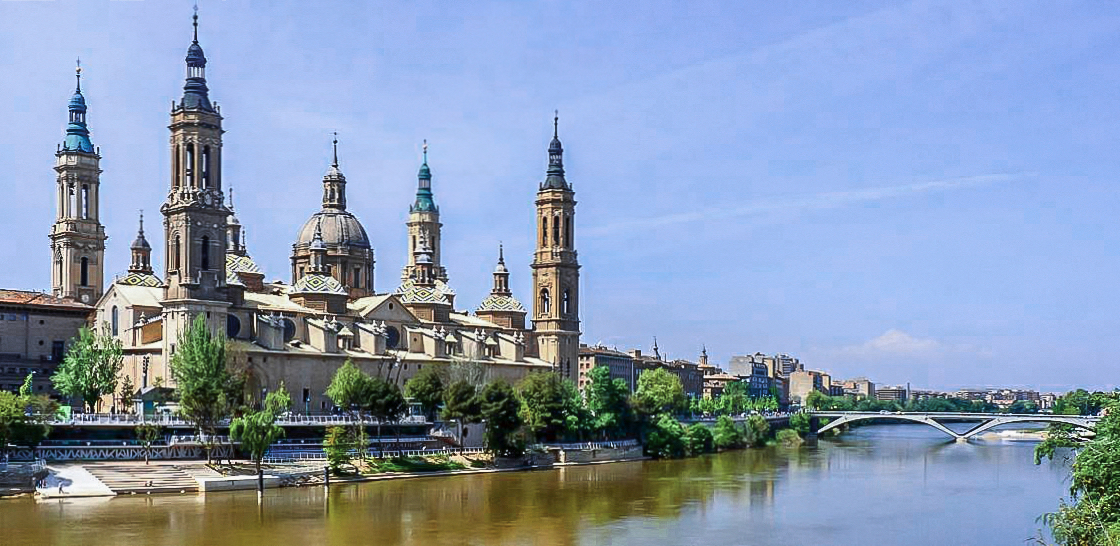
Barcelona → Zaragoza
296 kmCrossing the peninsula from the vibrant Catalan capital to the majestic Aragonese capital is far more than a simple transfer; it’s a journey through history and geography that can be covered in just over an hour aboard a high-speed train or enjoyed on a road trip filled with ever-changing landscapes. Whether you seek the efficiency of the AVE or the freedom to stop in medieval villages, this route connects two worlds with surprising ease.
How to Get from Barcelona to Zaragoza: Quick Overview
The fastest and most recommended option for most travelers is the AVE train, which covers the distance in just 85 minutes, while driving is the best alternative if you plan to go sightseeing along the way and have a flexible schedule. For those on a tighter budget or who prefer to travel with more luggage freedom without the train’s restrictions, the bus operated by Alsa is a viable option, although travel times can be longer. If your priority is absolute speed, the train is unbeatable, but if you’re looking to explore the interior of Catalonia and Aragon at your own pace, renting a vehicle will allow you to discover charming intermediate stops that you would otherwise miss at high speed.
Barcelona to Zaragoza by Car
Driving from Barcelona to Zaragoza involves covering a distance of 296 kilometers, which takes approximately 3 hours, using a network of modern, toll-free highways that make the journey extremely easy. The main and most direct route usually involves taking the A-2, known as the Autovía del Nordeste (Northeast Highway), which is toll-free and crosses the heart of the connection between both cities. Depending on your exact departure point in the Barcelona metropolitan area, you might connect with other major roads like the A-27 (Autovia Tarragona-Montblanc) or the N-152z (N-152z Barcelona – Ripoll) to leave the city. Once en route, the A-2 will take you to areas near Lleida, where you could take detours to the A-22 (Autovia del Camí Català) or the A-14 (Autovia de la Ribagorça) if your route requires it, although the direct connection to Zaragoza remains seamless. As you approach your destination, the A-68 (Autovía del Ebro) and the A-23 (Autovia Mudèixar) are the main arteries that will lead you into the Aragonese capital, all without toll costs, making the car journey economically efficient in terms of road infrastructure. The driving is generally straightforward, with wide lanes and good asphalt conditions, ideal for those who enjoy the open road without the interruptions of traditional tolls.
Barcelona to Zaragoza by Train
The train is, without a doubt, the most efficient means of transport for this route, with a main operator like Renfe offering up to 25 daily trains connecting Barcelona-Sants station with Zaragoza-Delicias. The star option is the AVE, with 18 daily services completing the journey in a record time of 85 minutes, making the trip feel almost instantaneous. For those seeking alternatives, there is the AVE INT with 1 daily departure taking 95 minutes, and the ALVIA with 3 daily frequencies completing the journey in 115 minutes. The Intercity service is also available, with 1 train per day and a duration of 122 minutes, ideal for travelers not in a hurry. At the opposite end of the speed spectrum, the REG.EXP. trains offer 2 daily connections with a travel time of 389 minutes, designed for slower regional journeys. The frequency is excellent, with the first train leaving at 5:40 in the morning and the last at 20:00, allowing you to plan your day with total freedom for both business and leisure trips. The comfort on board the high-speed trains, combined with Renfe’s usual punctuality on this corridor, makes it the preferred choice for the vast majority of tourists.
By bus from Barcelona to Zaragoza
The company Alsa operates direct bus services between Barcelona and Zaragoza, offering an overland transport alternative for those who prefer this mode of travel. Since specific details regarding journey time and price can vary significantly depending on the season, how far in advance you book, and current demand, it is advisable to check directly with the operator for the most up-to-date information on exact fares and timetables. The bus is usually a popular option for students and backpackers, as it allows you to carry more luggage without the extra costs sometimes associated with high-speed trains. Although the bus journey time is generally longer than the train due to intermediate stops and road speed limits, the comfort of Alsa’s modern coaches makes the trip bearable. It is a solid option if train tickets are sold out or if you are looking for a route that lets you enjoy the scenery continuously from the window.
Recommended stops along the way
If you decide to make the journey by car, you have the perfect opportunity to stop at several towns full of character that will enrich your travel experience far more than simply reaching your final destination. Sabadell and Terrassa, located very close to the start of the route in the metropolitan area, are industrial cities with a rich Modernista (Catalan Art Nouveau) and cultural heritage that are worth a quick visit to stretch your legs and enjoy their architecture. A little further on, Montcada i Reixac and Santa Coloma de Gramenet offer points of interest near the capital that serve as excellent first stops before heading onto the motorway. Continuing inland, Montblanc is a must-stop for history lovers, famous for its perfectly preserved medieval walls and its legend of Sant Jordi (Saint George), offering a beautiful contrast to the modernity of the highway. Already in the province of Lleida, les Borges Blanques is known for its landscape of olive groves and its Modernista cooperative, an ideal place to buy quality olive oil. The city of Lleida itself is an important cultural hub, dominated by the Seu Vella (Old Cathedral), a fortress-cathedral offering spectacular panoramic views that alone justifies a stop of several hours. Finally, before crossing completely into Aragon, Fraga welcomes you with its famous Meandros del Cinca (Cinca River Meanders) natural park, an oasis of vegetation and tranquility perfect for a picnic before your final arrival in Zaragoza. Each of these stops, from Sabadell to Fraga, adds a different nuance to the journey, transforming the trip into a sightseeing route in itself.
Where to sleep in Zaragoza
When you arrive in Zaragoza, you have several strategic areas to stay that will allow you to make the most of your visit without spending too much on internal travel. The most recommended area is the Casco Histórico (Old Town), especially around the Plaza del Pilar and the Catedral del Salvador, where you will find yourself immersed in the monumental heart of the city and just a few minutes’ walk from the Basílica del Pilar and the Aljafería. For travelers seeking a more local and less touristy atmosphere, the Magdalena neighborhood or the areas near the Plaza de España offer a wide variety of authentic tapas bars and restaurants. As for accommodation types, the city boasts a broad range, from 5-star luxury hotels in restored historic buildings to budget hostels and tourist apartments ideal for families or groups of friends. Price ranges can vary considerably depending on the time of year, being higher during the Fiestas del Pilar (Pilar Festival) or major trade fair events, and more affordable during the winter months or on weekdays. It is advisable to look for accommodation near tram or bus stops if you are staying on the outskirts of the center, although Zaragoza’s walkability makes almost any central point a good option for sleeping.
Frequently asked questions about the Barcelona-Zaragoza route
How long does it take to get from Barcelona to Zaragoza?
Travel time varies drastically depending on the chosen means of transport: by car it takes approximately 3 hours covering 296 km, while the AVE train journey is reduced to just 85 minutes. Other train options such as the ALVIA take 115 minutes, and the bus can have variable durations depending on traffic and stops.
Which is cheaper, the train or the bus?
Generally, the bus tends to be the most economical option, although exact Alsa prices fluctuate according to demand; on the other hand, the train offers very competitive fares if purchased in advance, especially on regional or Intercity services, while the AVE is the premium option with higher prices but greater speed.
Is it worth renting a car?
Yes, it is worth it if your goal is to tour the route and visit intermediate stops such as Montblanc, Lleida, or Fraga, as public transport would not allow you to explore these towns freely; in addition, the A-2 and A-68 motorways are free, which lowers the cost of the road trip.
When is the best time to travel?
The best time to travel is during spring and autumn, when the weather is mild for both driving and walking around Zaragoza; however, if you travel by train, the frequency of 25 daily trains allows you to travel comfortably at any time of the year, avoiding peak traffic hours by car.
📍 También te puede interesar
Qué ver en Barcelona →
Qué ver en Zaragoza →