Total Solar Eclipse in Palma, Spain — August 12, 2026: Exact Times and Where to Watch
In Palma, the eclipse will be TOTAL, with totality starting at 20:31 local time and lasting 1 min 36 s. This event marks a historic moment for astronomy enthusiasts, representing the first total solar eclipse visible from the mainland and islands of Spain since 1905. This guide provides verified timing data from NASA and IGN, specific viewing locations within the city, and critical safety information for travelers planning their journey to the Balearic Islands.
Eclipse timeline in Palma
The eclipse sequence begins in the late evening, progressing through distinct phases defined by the Moon’s shadow. First contact occurs at 19:38:03 CEST, when the Moon first touches the Sun’s disk. The partial phase continues for nearly an hour until totality begins at 20:31:05. The maximum eclipse happens at 20:31:53, followed by the end of totality at 20:32:41. The event concludes with the last contact at 20:49:22. All times are in CEST (UTC+2), the local Spanish time zone.
| Phase | Local time in Palma (CEST) |
|---|---|
| First contact (partial begins) | 19:38:03 |
| Totality begins | 20:31:05 |
| Maximum eclipse | 20:31:53 |
| Totality ends | 20:32:41 |
| Last contact (partial ends) | 20:49:22 |
| Totality duration | 1 min 36 s |
| Magnitude | 1.0152 |
Source: NASA Five Millennium Catalog. Local times CEST (UTC+2), August 12, 2026.
Palma sits directly on the centerline of the eclipse path, ensuring the maximum possible duration for this latitude. While the peninsular maximum duration reaches 1 minute 49 seconds in Oviedo, Palma offers a robust 1 minute 36 seconds of totality. Being on the centerline means observers here will experience the darkest sky and the most symmetrical view of the solar corona. The magnitude of 1.0152 confirms the Moon will completely cover the Sun’s photosphere, allowing the faint outer atmosphere to become visible to the naked eye during the brief window of totality.
Where to watch it in Palma
Selecting a viewing spot in Palma requires strict attention to horizon geometry. Because the maximum eclipse occurs approximately one hour before sunset, the Sun will be low in the sky. The solar altitude varies between ~10° and ~20° depending on exact positioning. Consequently, an unobstructed western or west-southwest horizon is the critical criterion for a successful observation. Buildings, hills, or trees blocking this specific sector will obscure the event.
We have verified three specific locations within the city that meet these geometric requirements. Castell de Bellver is the premier choice for elevation. Situated on a hill overlooking the city, the castle grounds offer a panoramic view that clears most urban obstructions. The height advantage compensates for the low solar altitude, providing a clear line of sight to the west. However, arrive early to secure a spot on the western ramparts, as space is limited. Playa de Palma offers the most open horizon. The beachfront provides an unimpeded view over the Mediterranean Sea. This location minimizes the risk of terrestrial obstacles, but observers must account for the typical maritime haze that can accumulate near the water line before sunset. Finally, Plaza Mayor is a central urban option. While convenient, the surrounding buildings create an urban canyon effect. Only specific corners of the plaza offer the necessary western exposure. This spot is viable only if you verify the sun’s path relative to nearby facades beforehand. The observation note for this region highlights the “Larga duración mediterránea,” meaning the event is combinable with beach vacations, but accommodation must be reserved with MUCHA antelación due to high demand.
August skies in Islas Baleares: real odds
Weather is the single greatest variable for eclipse observation. According to data from AEMET for the Islas Baleares zone, the clear sky probability in August ranges between 75-85%. While these odds are favorable, they are not guaranteed. The typical risk for this time of year is bruma marítima (marine haze) shortly before sunset. This low-lying fog can obscure the Sun precisely when it dips toward the horizon during totality. Travelers should monitor local forecasts closely 24-48 hours ahead of the event. If the forecast predicts high humidity or coastal haze, consider moving slightly inland or to higher ground within the city limits. For those willing to travel north within the island, the north coast of Mallorca (Pollença, Alcúdia) is often clearer at sunset, though this requires leaving Palma. Always have a backup plan ready based on the latest meteorological updates.
Getting to Palma for the eclipse
Palma is a major transport hub, accessible by air and sea. However, eclipse day logistics will differ significantly from standard travel patterns. Expect heavy traffic on all access roads to the city and the airport on August 12. We strongly advise arriving at least one day before the eclipse. This buffers against flight delays or ferry cancellations that could leave you outside the path of totality. Since there are no specific published route guides to this city on our platform currently, travelers should coordinate via standard rail, car, or flight connections from nearby hubs. Check the complete guide to the 2026 eclipse in Spain for broader transport updates across the country. Once in Palma, public transport may be overcrowded; walking to your viewing spot is often more reliable than driving on the day of the event.
Where to stay: book now or arrive the day before
Accommodation inside the path of totality has been booking up since 2025. Supply is finite, and prices reflect the high demand for this historic event. Our honest advice is to book NOW with a free cancellation policy. This secures your position while retaining flexibility if your plans change. Alternatively, consider staying in a nearby city outside the path and driving in on the morning of the 12th. However, this introduces traffic risk. Securing a room within Palma ensures you are already in position when the clouds clear. Do not wait until the last month to arrange lodging.
Safety: the 30 seconds you must read
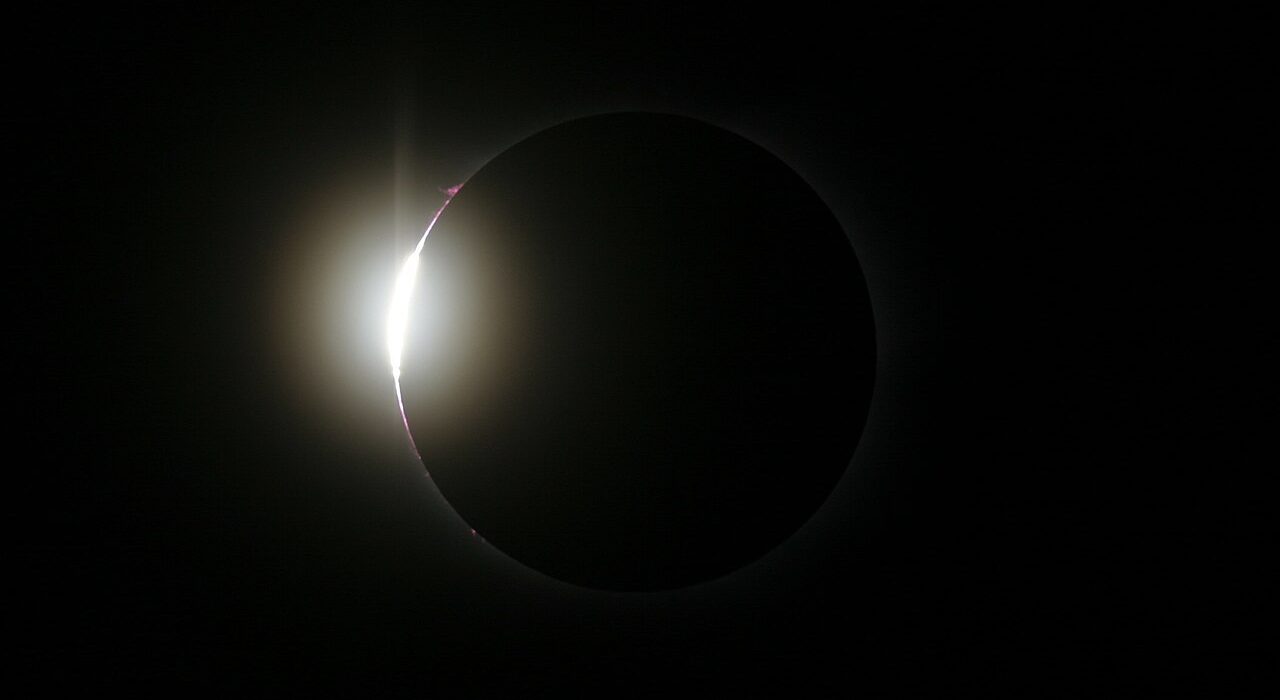
Eye safety is non-negotiable. During ALL partial phases, you must wear ISO 12312-2 certified eclipse glasses. The Sun’s radiation can cause permanent retinal damage instantly, even when 99% covered. You may only look with the naked eye during the brief totality phase, which lasts 1 min 36 s in Palma. The instant the diamond ring reappears at the end of totality, you must return your glasses to your eyes. There is no sensation of pain when damage occurs, so discipline is essential. Read our complete guide to the 2026 eclipse in Spain for detailed safety protocols.
- ISO 12312-2 certified eclipse glasses — one per person, bought well in advance. See options on Amazon ES.
The eclipse near Palma
For travelers comparing locations, the following table outlines how viewing conditions vary in cities surrounding Palma. Duration and timing shift slightly depending on the distance from the centerline.
| City | Distance | Totality duration | Totality begins |
|---|---|---|---|
| Alcúdia (Mallorca) | 51 km | 1 min 29 s | 20:30:34 |
| Port de Pollença (Mallorca) | 53 km | 1 min 28 s | 20:30:30 |
| Ibiza | 129 km | 1 min 04 s | 20:32:45 |
| Sant Antoni de Portmany (Ibiza) | 133 km | 1 min 06 s | 20:32:40 |
Make a trip of it: what to see in Palma
The eclipse happens at sunset on the 12th, leaving the morning free for exploration. Palma offers rich cultural sites that complement the astronomical experience. We recommend visiting the cathedral or the old town before heading to your viewing spot. Consult our full city guide for what to see and do in Palma to maximize your stay. Combining the eclipse with a Mediterranean vacation allows you to enjoy the island’s amenities while waiting for the sky to darken.
Frequently asked questions
What time is the eclipse in Palma?
The partial phase starts at 19:38:03 CEST. Totality runs from 20:31:05 to 20:32:41, with maximum at 20:31:53. The partial phase ends at 20:49:22.
How long does totality last in Palma?
1 min 36 s. The city sits on the centerline, close to the maximum possible for Spain.
Will the eclipse be total in Palma?
Yes. Palma is inside the path of totality with magnitude 1.0152. The sun will be completely covered by the moon for 1 min 36 s.
Do I need eclipse glasses?
Yes — ISO 12312-2 certified glasses during all partial phases. Only during totality can you safely look at the sun with the naked eye. Sunglasses do NOT protect.
What if it is cloudy in Palma on August 12?
Clear-sky probability for this zone is 75-85% (AEMET historical data). Costa norte de Mallorca (Pollença, Alcúdia) suele estar más despejada al atardecer. Check the AEMET forecast 24-48 hours before and stay mobile.
When is the next total solar eclipse visible from Spain?
Soon: 2027-08-02. An exceptional back-to-back for the same region.
Conclusion
The August 12, 2026 total solar eclipse is a once-in-a-lifetime event for travellers visiting Spain. With careful planning — picking a centerline location, checking the AEMET forecast 24-48h before, wearing ISO 12312-2 glasses during partial phases and booking accommodation early — you can witness one of nature’s most spectacular phenomena. Use this guide alongside our city guides and itineraries to build the trip of a lifetime.