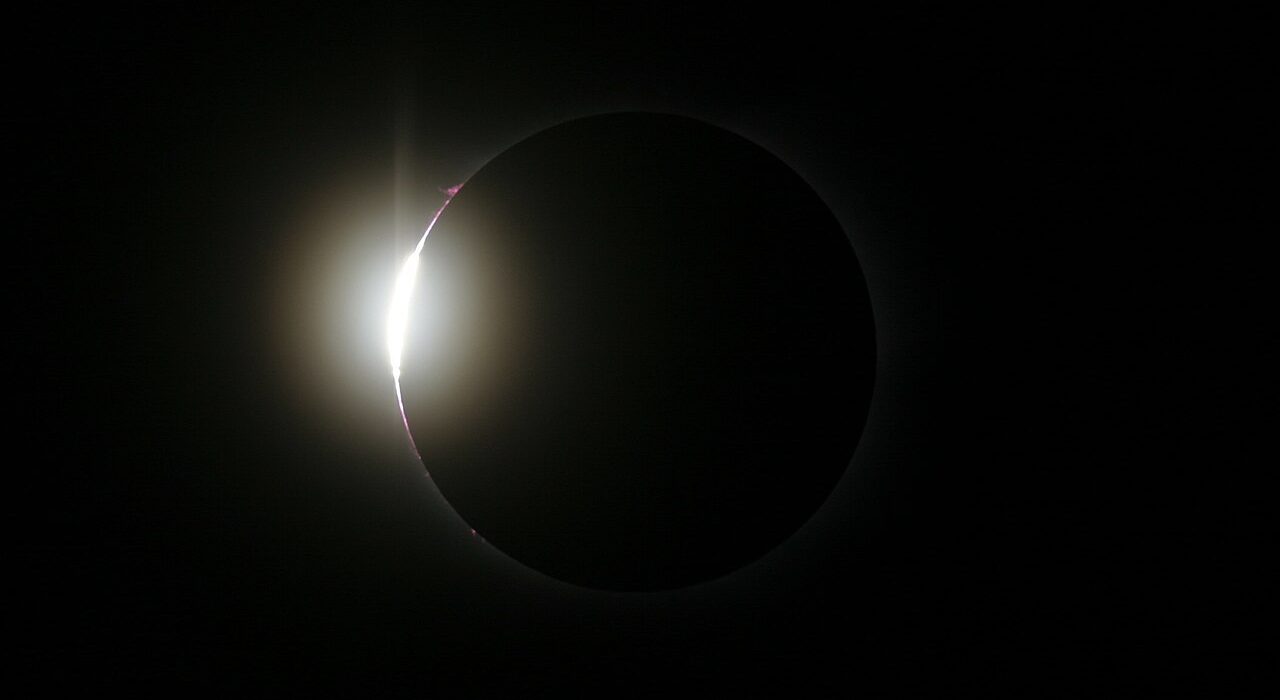
Total Solar Eclipse in Zaragoza, Spain — August 12, 2026: Exact Times and Where to Watch
In Zaragoza the eclipse will be TOTAL, totality starts at 20:29 local time and lasts 1 min 25 s. This event marks a historic return of celestial alignment, representing the first total solar eclipse visible from peninsular Spain since August 30, 1905. For 121 years, the mainland has waited for the Moon’s umbra to cross its territory again. This guide provides verified astronomical data, specific viewing locations within the city, and critical safety protocols for travelers planning their journey to Aragón.
Eclipse timeline in Zaragoza
The event unfolds over approximately one hour and thirty minutes, divided into distinct astronomical phases. All times listed are in Central European Summer Time (CEST), which is UTC+2. The partial phase begins at 19:34:40, when the Moon first touches the Sun’s disk. Darkness deepens gradually until totality commences at 20:29:02. The maximum eclipse occurs at 20:29:44, followed by the end of totality at 20:30:27. The partial phase concludes at 21:07:33 when the Moon completely leaves the solar disk. For a comprehensive breakdown of the phenomenon across the country, consult the complete guide to the 2026 eclipse in Spain.
| Phase | Local time in Zaragoza (CEST) |
|---|---|
| First contact (partial begins) | 19:34:40 |
| Totality begins | 20:29:02 |
| Maximum eclipse | 20:29:44 |
| Totality ends | 20:30:27 |
| Last contact (partial ends) | 21:07:33 |
| Totality duration | 1 min 25 s |
| Magnitude | 1.0074 |
Source: NASA Five Millennium Catalog. Local times CEST (UTC+2), August 12, 2026.
Zaragoza sits securely inside the path of totality, though it is not on the centerline. The maximum duration here is 1 minute 25 seconds, compared to the peninsular maximum of 1 minute 49 seconds observed in Oviedo. The magnitude of 1.0074 indicates that the Moon will cover the Sun completely, but only just barely. Being off the centerline means the duration is shorter than in northern Spain, and the geometry of the shadow requires precise positioning. Observers must prioritize a clear western horizon over duration, as the Sun will be low in the sky. Every second of the 85-second totality window is valuable for photography and visual observation.
Where to watch it in Zaragoza
The single most critical criterion for selecting a viewing spot in Zaragoza is an unobstructed WESTERN horizon. During totality, the Sun will be low, with an altitude between approximately 10° and 20° above the horizon. Buildings, trees, or hills blocking the west-southwest view will ruin the experience. You need elevation or open space facing the setting Sun.
Puente de Piedra: This historic stone bridge crosses the Ebro River and offers a long, linear viewing platform. The orientation of the bridge allows for a clear view down the river valley toward the west. Being over the water reduces the risk of immediate foreground obstructions compared to street-level spots. However, it will be crowded. Arrive early to secure a position on the railing facing the sunset.
Parque Grande José Antonio Labordeta: Located on a hill south of the city center, this park provides natural elevation. The higher altitude helps clear the immediate urban skyline. Large open terraces within the park face west, offering a panoramic view of the horizon. This is a strong candidate for photographers needing a stable tripod setup away from the densest crowds of the old town.
Puente del Tercer Milenio: A modern structure further downstream, this bridge offers wide sidewalks and minimal architectural obstruction on the western side. The design is open, allowing sightlines over the river banks. It is slightly further from the historic center, which may reduce pedestrian density compared to the Puente de Piedra, but traffic access needs to be planned carefully.
Torre Mirador del Pilar: For the highest vantage point, the tower of the Basilica del Pilar is unmatched. Elevation guarantees a view over most city buildings. However, access is controlled and capacity is limited. This spot requires advance booking and strict adherence to safety rails. The view encompasses the cityscape silhouetted against the eclipsed Sun.
Plaza del Pilar: The main square offers vast open space, but the horizon view is the challenge. Surrounding buildings may clip the low Sun depending on your exact position. If choosing this location, move to the western edge of the plaza near the riverbank access. It is the most central option but requires careful scouting of the specific skyline profile before the event day.
August skies in Aragón: real odds
According to data from AEMET (State Meteorological Agency), the statistical probability of a clear sky in this zone during August ranges between 70% and 85%. This makes Zaragoza one of the most reliable locations on the peninsula for visibility. However, “probability” is not a guarantee. The region experiences extreme heat, with temperatures frequently exceeding 35°C during the day. Thermal inertia means it will remain warm during the evening eclipse. There is also a risk of isolated afternoon thunderstorms typical of the Ebro Valley summer climate. Travelers must monitor the forecast 24 to 48 hours in advance. Have a backup plan to drive north or south if cloud cover develops locally. Hydration is critical; bring water supplies that exceed your normal daily intake to prevent heat exhaustion while waiting for the event.
Getting to Zaragoza for the eclipse
Zaragoza is a major logistics hub connected by high-speed rail (AVE) and major highways. Since there are no specific published route guides for this city on our site, travelers should plan independent transport via train or car from nearby hubs like Madrid or Barcelona. Expect heavy traffic congestion on August 12. Roads leading into the city and parking areas near the river will reach capacity hours before the eclipse. The smart play is to arrive the day before, on August 11. Secure your accommodation and scout your viewing spot during daylight on the 11th. Trying to drive in on the morning of the 12th risks missing the event due to gridlock. Public transport within the city will be strained, so walking to your chosen spot is advisable once you are in the center.
Where to stay: book now or arrive the day before
Accommodation inside the path of totality has been booking up since 2025. Prices will surge as the date approaches. Honest advice: book NOW with free cancellation policies to secure a room. If city centers are sold out, stay in a nearby town outside the path and drive in on the morning of the 12th. However, remember the traffic warning. Being already in Zaragoza on the night of the 11th reduces stress and ensures you are in position for the 19:34 start time.
Safety: the 30 seconds you must read
Eye safety is non-negotiable. During ALL partial phases, you must wear ISO 12312-2 certified eclipse glasses. The Sun emits invisible infrared radiation that can burn the retina without pain. You may only look with the naked eye during the total phase, which lasts 1 min 25 s in Zaragoza. The instant the diamond ring reappears at the end of totality, you must return the glasses to your eyes. This transition happens quickly. Practice the motion before the event. For detailed protocols on equipment and photography, read the complete guide to the 2026 eclipse in Spain.
- ISO 12312-2 certified eclipse glasses — one per person, bought well in advance. See options on Amazon ES.
The eclipse near Zaragoza
If you cannot secure a spot in Zaragoza, nearby cities offer similar experiences with varying durations. The following table compares timing and magnitude for locations surrounding the Aragón capital. Use this data to decide if moving slightly north or south improves your odds of clear skies or duration.
| City | Distance | Totality duration | Totality begins |
|---|---|---|---|
| Teruel | 146 km | 1 min 34 s | 20:31:04 |
| Logroño | 157 km | 1 min 22 s | 20:28:09 |
| Salou (Tarragona) | 180 km | 1 min 08 s | 20:29:31 |
| Vitoria-Gasteiz | 198 km | 1 min 04 s | 20:27:43 |
Make a trip of it: what to see in Zaragoza
The eclipse happens at sunset on the 12th, leaving the entire day free for tourism. Zaragoza is rich in history, from the Roman ruins to the Mudéjar architecture. You can explore the Aljafería Palace or the Cathedral of the Savior before heading to your viewing spot. For a detailed itinerary of cultural sites and dining recommendations, see what to see and do in Zaragoza. Combining the astronomical event with a city break maximizes the value of your trip to Spain.
Frequently asked questions
What time is the eclipse in Zaragoza?
The partial phase starts at 19:34:40 CEST. Totality runs from 20:29:02 to 20:30:27, with maximum at 20:29:44. The partial phase ends at 21:07:33.
How long does totality last in Zaragoza?
1 min 25 s. Being off the centerline, the duration is shorter than the peninsular maximum (Oviedo, 1 min 49 s).
Will the eclipse be total in Zaragoza?
Yes. Zaragoza is inside the path of totality with magnitude 1.0074. The sun will be completely covered by the moon for 1 min 25 s.
Do I need eclipse glasses?
Yes — ISO 12312-2 certified glasses during all partial phases. Only during totality can you safely look at the sun with the naked eye. Sunglasses do NOT protect.
What if it is cloudy in Zaragoza on August 12?
Clear-sky probability for this zone is 70-85% (AEMET historical data). MEJORES condiciones meteorológicas estadísticas. Hidratación importante. Check the AEMET forecast 24-48 hours before and stay mobile.
When is the next total solar eclipse visible from Spain?
Soon: 2027-08-02. An exceptional back-to-back for the same region.
Conclusion
The August 12, 2026 total solar eclipse is a once-in-a-lifetime event for travellers visiting Spain. With careful planning — picking a centerline location, checking the AEMET forecast 24-48h before, wearing ISO 12312-2 glasses during partial phases and booking accommodation early — you can witness one of nature’s most spectacular phenomena. Use this guide alongside our city guides and itineraries to build the trip of a lifetime.