Conil de la Frontera
AndalucíaClimate
The Phoenicians established a settlement in this land around 1500 BC, introducing a tuna fishing technique that has endured for over 3,000 years and continues to define the soul of this town. With more than 14 kilometers of fine, golden sandy beaches, Conil de la Frontera presents itself as a destination where the military history of the Nasrid frontier blends with a privileged natural setting on the coast of Cádiz. Although its official population hovers around 22,000 inhabitants, in summer the town comes vibrantly alive, surpassing 100,000 people, transforming into the epicenter of Cádiz tourism without losing its seafaring essence.
The must-seesWhat to See in Conil de la Frontera: The Essentials
Castillo de Conil de la Frontera (Castle of Conil de la Frontera)
This defensive system dates back to 1295, when King Sancho IV rewarded Guzmán el Bueno with the almadrabas (traditional tuna trap fisheries) and ordered the fortification of the coast to prevent Muslim attacks. Its preserved remains, including sections of the ancient walls and watchtowers, recount centuries of military history along the Cádiz coastline. Visiting the site reveals how medieval engineering adapted to the terrain to protect local fishing interests and residents from enemy raids. It is an essential stop for understanding the strategic importance this town held during the Reconquista and the early modern period.
Torre de Guzmán (Guzmán Tower)
Located on Cape Roche, this defensive structure was part of a network of watchtowers built to safeguard the Cádiz shoreline against external threats. Originally a beacon tower, it was later converted into a lighthouse while retaining its protection status as a Bien de Interés Cultural (Asset of Cultural Interest) under the category of Historical Monument. From its privileged vantage point, it offers spectacular views over the natural surroundings and the sea, allowing visitors to appreciate the vastness of the Atlantic Ocean. Its silhouette has become one of the most recognizable symbols of Conil’s visual identity.
Torre Vigía Castilnovo (Castilnovo Watchtower)
This tower forms part of a group of fortifications alongside Roche, Blanca, and Atalaya within the coastal defense plan established in 1295 by Guzmán el Bueno. Its strategic location on Castilnovo Beach allowed for visual control of specific coastal stretches to protect the almadrabas and ensure fishermen’s safety. It stands as a clear example of military engineering designed to safeguard the town’s economic resources against maritime threats. Today, its ruins serve as a silent testament to the constant vigilance once maintained over these waters.
Arco de la Villa de Conil (Arch of the Town of Conil)
This landmark features natural rock formations that blend with golden beaches to create stunning coastal landscapes. These elevated spots are ideal for contemplating the immensity of the Atlantic Ocean and spotting the ancient watchtowers dotting the horizon. They form an essential part of the 14 kilometers of coastline that include protected natural areas, providing a unique scenic backdrop for photography and enjoying the environment. Access here connects visitors directly with the wild beauty characteristic of this part of the Cádiz province.
Calle Cádiz (Cádiz Street)
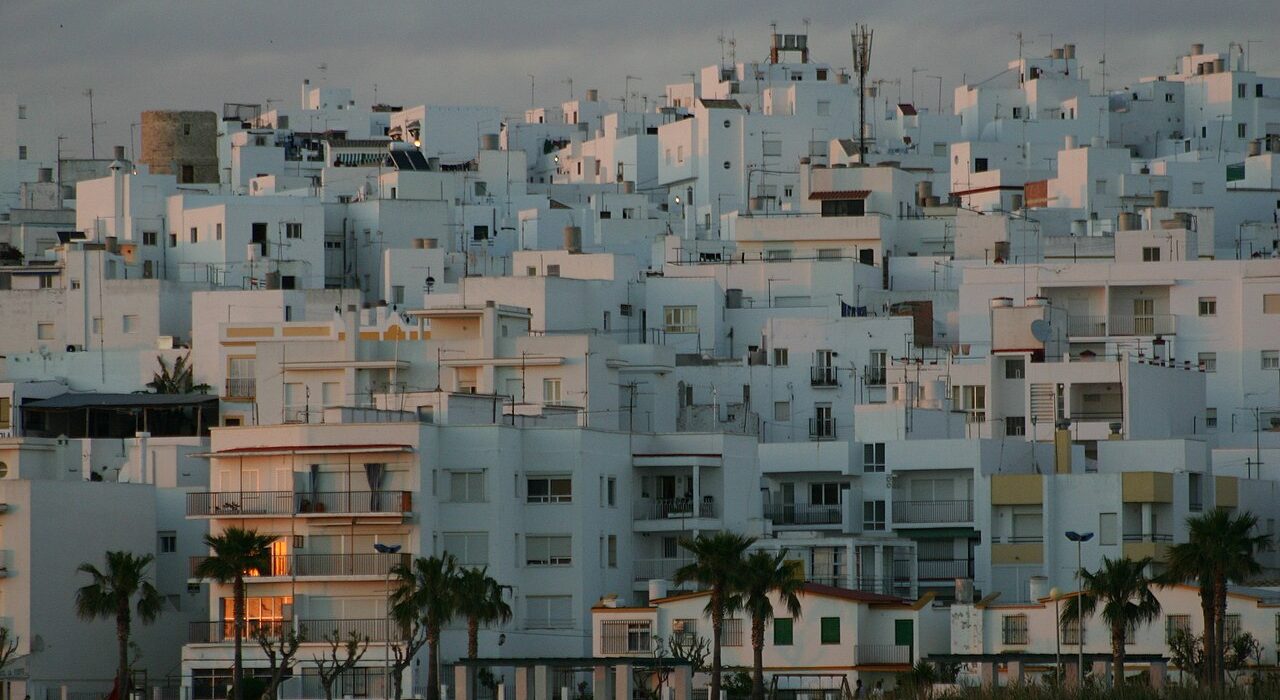
This urban thoroughfare plays a significant role in the layout of Conil de la Frontera, known for its commercial activity and direct connection to residential areas. Situated within the historic quarter, it reflects the traditional architecture of Cádiz’s white villages with its typical whitewashed buildings. It serves as a common transit route for visitors exploring local gastronomy and seeking access to the town center and beaches. Strolling along it offers an authentic way to immerse yourself in the daily life of the municipality.
Other Points of Interest
Other notable sites include the Friday Market (Mercadillo de los viernes), the remains of the Wall (Muralla), the Cemetery, and the Jabiguero Viewpoint, all offering varied perspectives on the town. Torre Blanca (White Tower), although historically linked to Tarifa’s defense, is mentioned here in the context of watchtowers like Torre del Puerco that articulated medieval coastal defenses in the area. Likewise, the Necrópolis de la Huerta del Sol (Huerta del Sol Necropolis), though located in Cádiz city, is a key Phoenician archaeological site that contextualizes ancient presence in the bay. Do not miss Plaza de Santa Catalina (Saint Catherine’s Square), a historic fortification erected after the 1596 sack under the orders of Philip II.
🍂 Otoño
Si visitas Conil de la Frontera en otoño, el clima se mantiene templado hasta octubre aunque puede llover ocasionalmente. Es el momento perfecto para disfrutar de la gastronomía local con más tranquilidad. Consulta siempre la previsión meteorológica antes de salir.
What to do in Conil de la Frontera
Conil de la Frontera offers specific activities centered on its seafood gastronomy and festive traditions, such as the Almadraba Tuna Route (Ruta del Atún de Almadraba) in May and the bonfires of Saint John’s Eve (Noche de San Juan) in June. Visitors can explore the different neighborhoods, from the Old Town (Casco Antiguo) to the beaches of Los Bateles and La Fontanilla, enjoying local life and natural spaces. It is the ideal place to tour the 14 kilometers of coastline, visit the Fishing Port (Puerto Pesquero) to see the almadraba tradition live, or relax in the Virgin Coves (Calas Vírgenes) hidden among cliffs.
Conil de la Frontera in one day: express itinerary
If you are short on time, this itinerary will allow you to see the city’s highlights in an intense but complete day:
- 09:00 – Torre de Guzmán: Start the day at Cape Roche to enjoy the best sea views and the morning light on the defensive structure.
- 11:30 – Old Town and Calle Cádiz: Stroll through the whitewashed streets, visit the Arco de la Villa, and immerse yourself in traditional architecture before the midday heat.
- 14:00 – Lunch at the Mercado de Abastos or Bateles area: Try local gastronomy near the port or at the beach bars (chiringuitos) on the central beach.
- 17:00 – Torre Vigía Castilnovo: Head to Castilnovo Beach to discover another key piece of the defensive system dating back to 1295 and enjoy the sand.
- 20:00 – Fishing Port and Promenade: End the day watching the arrival of artisanal boats and enjoying the nightlife on the promenade.
Where to eat in Conil de la Frontera: local gastronomy
Where to sleep in Conil de la Frontera
Casco Antiguo
El corazón histórico de Conil, un laberinto de calles estrechas y encaladas que rebosan encanto andaluz. Aquí se mezcla la tradición con una animada vida de bares de tapas, pequeños comercios y plazas pintorescas.
Barrio de Pescadores
Situado junto al Casco Antiguo, este barrio conserva la esencia marinera de Conil. Ofrece un ambiente más tranquilo y auténtico, con casas humildes y una fuerte conexión con la vida local y la gastronomía del mar.
Playa de los Bateles y Paseo Marítimo
La playa central y más animada de Conil, con arena dorada y aguas tranquilas. Es el epicentro de la actividad turística durante el día y la noche, con chiringuitos, restaurantes y un vibrante paseo marítimo.
Playa de la Fontanilla
Una playa semiurbana y familiar, reconocida por su limpieza y sus servicios. Es ideal para aquellos que buscan comodidad y accesibilidad, con fácil aparcamiento y una buena oferta de restaurantes a pie de playa.
Fuente del Gallo
Una zona residencial tranquila con una impresionante playa enmarcada por acantilados. Perfecta para quienes buscan relajación, puestas de sol espectaculares y un entorno natural más apacible, alejado del bullicio del centro.
How to get to Conil de la Frontera
To access the town, the nearest air option mentioned is AeroSidonia airport, although land connections are fundamental for reaching the municipality.
| Medio | Duración | Precio aprox. | Frecuencia |
|---|---|---|---|
| Aeropuerto (AeroSidonia) | Variable según origen | Variable | Según vuelos |
| Autobús / Coche | 43 km desde Cádiz capital | Económico | Diario |
How to get around Conil de la Frontera
Once in the city, urban transport is mainly carried out via the city bus, which connects the different areas of the municipality. Given the extension of the municipal term of 88.61 km² and the dispersion of some beaches such as Castilnovo or Fuente del Gallo, a private vehicle or public transport is necessary to move comfortably between the urban center and the more distant coastal areas.
Weather in Conil de la Frontera
Live webcam — Vejer de la Frontera*
Conil de la Frontera* The nearest webcam to Conil de la Frontera is in Vejer de la Frontera, 4.7 km away.
Source: Windy Webcams
Best time to visit Conil de la Frontera
Day trips from Conil de la Frontera
From Conil, you can take day trips to other cities in the province of Cádiz, taking advantage of its strategic location 43 kilometers from the provincial capital. The surroundings allow you to explore other municipalities in the “Banda Morisca” (Moorish Strip) that share the suffix “de la Frontera,” such as Vejer or Jerez, thereby discovering the area’s defensive history. Its proximity to the Atlantic Ocean also facilitates visits to other points of interest along the coast within the province of Cádiz.
Facts about Conil de la Frontera you didn’t know
Did you know that the surname ‘de la Frontera’ was added in the 13th century to mark its position on the unstable border between the Christian kingdoms and the Nasrid Kingdom of Granada? This historical distinction is shared by other towns in Cádiz and defines the identity of the village.
The ‘Chanca’ of Conil was an industrial complex from the 16th century and one of the most important centers in Europe for butchering and salting tuna, now housing a museum dedicated to this millennia-old history.
Several scenes from the film ‘La ley del deseo’ (Law of Desire, 1987), directed by Pedro Almodóvar, were filmed in Conil, specifically at the Church of Santa Catalina and the virgin beach of Castilnovo.
The Romería de San Sebastián (Pilgrimage of Saint Sebastian), the patron saint of Conil, is one of the oldest traditions with over five centuries of history, gathering thousands of people every January in the pine forests of El Colorado.
The writer Fernando Quiñones, a key literary figure of Cádiz, spent long periods in the town, which became a setting and inspiration for part of his work, although he was not born here.
Who is Conil de la Frontera for?
Conil is a versatile destination ideal for families seeking safe beaches like Fontanilla, couples looking for romance in areas such as Fuente del Gallo, and foodies interested in the Tuna Route and seafood gastronomy. It is also perfect for history lovers who want to explore watchtowers and castles, as well as backpackers who appreciate the authentic atmosphere of the Barrio de Pescadores (Fishermen’s Quarter).
💡 ¿Sabías que...?
- ● Los fenicios establecieron un asentamiento en Conil sobre el 1500 a.C., introduciendo la técnica de la almadraba para la pesca del atún, una tradición que ha perdurado más de 3.000 años y sigue siendo un pilar económico y cultural de la localidad. (Ayuntamiento de Conil, diversos historiadores)
- ● La Torre de Guzmán, uno de los símbolos de Conil, fue construida en 1295 por orden de Alonso Pérez de Guzmán, 'Guzmán El Bueno', como parte del sistema defensivo de la costa y para administrar el monopolio de la pesca del atún que le fue concedido. (andalucia.org, guias de turismo locales)
- ● Conil cuenta con más de 14 kilómetros de playas de arena fina y dorada, destacando por estar entre las mejor conservadas de la costa española, con grandes extensiones libres de urbanizaciones masivas. Disfruta de más de 3.200 horas de sol al año. (Turismo de Conil)
- ● El apellido 'de la Frontera' fue añadido en el siglo XIII para señalar su posición en la 'Banda Morisca', la inestable frontera entre los reinos cristianos y el Reino nazarí de Granada. Otras localidades de Cádiz como Jerez o Vejer también comparten este distintivo. (Sociedad Española de Estudios Medievales)
- ● La 'Chanca' de Conil, un complejo industrial del siglo XVI, fue uno de los centros más importantes de Europa para el despiece y salazón del atún pescado en las almadrabas. Hoy, rehabilitado, alberga un museo dedicado a esta historia. (Junta de Andalucía, Turismo de Conil)
- ● Varias escenas de la película 'La ley del deseo' (1987), dirigida por Pedro Almodóvar, fueron rodadas en Conil, específicamente en la Iglesia de Santa Catalina y en la virgen Playa de Castilnovo. (Andalucía Film Commission, La Voz del Sur)
- ● La Romería de San Sebastián, patrón de Conil, es una de las tradiciones más antiguas y multitudinarias, con más de cinco siglos de historia. Cada enero, miles de personas peregrinan a los pinares de El Colorado para celebrar una jornada festiva. (Ayuntamiento de Conil)
- ● Aunque no nació en Conil, el escritor y periodista Fernando Quiñones (1930-1998), una de las figuras literarias más importantes de Cádiz, pasó largas temporadas en la localidad, que se convirtió en escenario e inspiración para parte de su obra literaria. (Fundación Fernando Quiñones)
Frequently asked questions about Conil de la Frontera
How many days do I need to see Conil de la Frontera?
With an average stay of 4.05 nights according to the INE, you have enough time to visit the watchtowers, enjoy the beaches, and try the local gastronomy without rushing.
What is the best time to visit Conil de la Frontera?
The best time is from April to October, when the average summer temperature reaches 24.1°C, ideal for enjoying the 14 kilometers of coastline and festivals like the Ruta del Atún (Tuna Route).
How do I get to Conil de la Frontera from Madrid?
You must first reach the province of Cádiz, possibly via AeroSidonia or land transport, and from the provincial capital (43 km away) access the municipality.
What typical dishes should I try in Conil?
Do not miss the Red Tuna from Almadraba, Fried Fish, Shrimp Fritters, and Cuttlefish with Potatoes, available at the Mercado de Abastos (Wholesale Market) and local restaurants.
Is Conil a safe place for tourists?
Conil receives 215,327 travelers annually (INE), being a consolidated tourist destination with a population that exceeds 100,000 people in summer, indicating a high capacity for hosting visitors.