Alcalá de Henares
Comunidad de MadridClimate
Daily budget
Imagine strolling beneath endless arcades as the scent of freshly baked puff pastry mingles with the echo of centuries of university history. Alcalá de Henares is not just a train stop; it is the birthplace of Cervantes and the first city in Europe planned specifically as a university seat, a place where time seems to have paused in the Renaissance so you can experience it at your own pace.
The must-seesWhat to see in Alcalá de Henares: the essentials
Alcalá de Henares boasts a heritage site declared a UNESCO World Heritage Site in 1998, centered on its Historic University Precinct and its medieval layout.
Historic University Precinct of Alcalá de Henares
Inscribed on the World Heritage List on December 2, 1998, for its outstanding universal value, this precinct encompasses the University, Calle Mayor, and the medieval and Renaissance urban layout. It was the first city in Europe planned specifically as a university seat, a milestone that transformed education across the continent. Access to public spaces is free, allowing you to wander its cobblestone streets at no cost, while internal monuments are managed independently and require specific tickets for a full visit.
Convento de las Bernardas (Convent of the Bernardines)
Founded in 1617 by Cardinal Sandoval y Rojas, this monastery is a key 17th-century gem within the World Heritage ensemble. It stands out for its impressive Baroque architecture featuring traditional cloistered design and a central-plan church that invites silent contemplation. Public access is usually restricted to the interior of the religious temple, the parlor to purchase its famous sweets, or during occasional cultural events, so checking availability before visiting is recommended.
Casa de los Grifos (House of the Griffins)
This exceptional private residence is located in the Roman city of Complutum and was built around the turn of the Era during the reign of Emperor Augustus. It is renowned for its abundant wall paintings and stuccoes, with domestic structures that were remodeled after a fire in the 3rd century and remained in use until the 5th century. Access is integrated into the archaeological route of the Roman city, allowing visitors to step into daily life from two millennia ago.
Capilla del Oidor (Chapel of the Judge)
This site preserves the remains of the apse of the Church of Santa María la Mayor, the exact spot where Miguel de Cervantes was baptized on October 9, 1547. In addition to safeguarding the original baptismal font, the enclosure features an isolated tower converted into a viewpoint offering privileged views of the city. It opens for cultural visits and temporary exhibitions according to schedule, making it a mandatory stop for literature lovers.
University and Historic Precinct
This monumental complex, a World Heritage Site since 1998, houses historically significant buildings such as the Colegio Mayor de San Ildefonso. Visiting hours are typically from 10:00 to 19:00, although purchasing a ticket is required to access the interiors and enjoy its courtyards and historic halls. It is the academic heart that made the city famous, where the student atmosphere of past centuries still lingers.
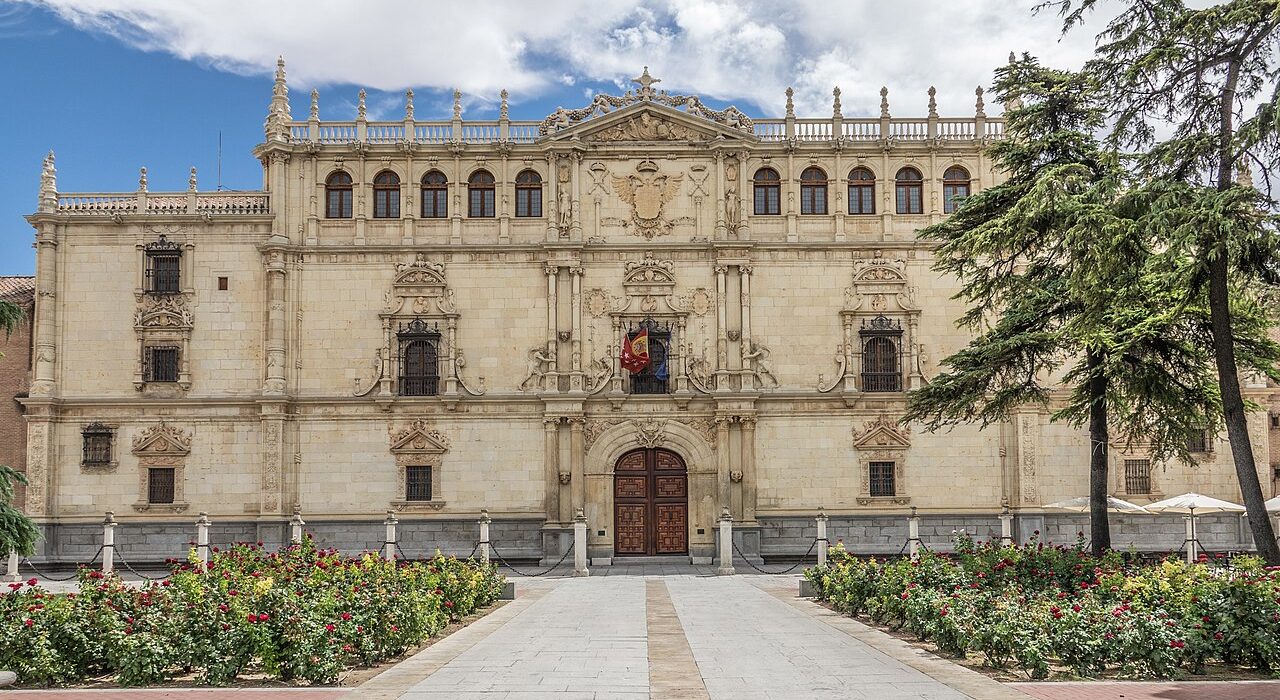
Universidad de Alcalá (Colegio Mayor de San Ildefonso)
Founded in 1499 by Cardinal Cisneros as the first planned university in Europe, it currently serves as the Rectorate and is one of the most important works of the Spanish Renaissance. Visitors can admire the Patio de Santo Tomás, the Paraninfo (Great Hall), and the Chapel with its exquisite Plateresque decoration, although interior access requires a ticket or a guided tour subject to established schedules.
Torre de la Magistral
This is the tower of the Cathedral of Saints Justus and Pastor, one of only two collegiate cathedrals in the world alongside Leuven due to their historic university connection. This building, featuring Gothic, Plateresque, and Renaissance styles, offers panoramic views over the historic ensemble declared a UNESCO World Heritage Site, although access to the tower is subject to security hours, maintenance schedules, and guided tour availability.
Murallas de Alcalá de Henares
In the Middle Ages, the city was fully walled to control access; today, the Puerta de Madrid (Madrid Gate), built by Antonio Juana Jordán in 1788, replaced the old medieval watchtower. Sections of the enclosure and the Posada del Infierno (Hell Inn) opposite the gate remain preserved, allowing a walk along the outer perimeter that is freely accessible at any time.
Catedral Magistral de los Santos Justo y Pastor
It is the only church in the world, together with the one in Leuven (Belgium), to hold the title of ‘Magistral’, making it a unique case globally.
Plaza de los Santos Niños
Adjacent to the Catedral Magistral and the Archiepiscopal Palace in the nerve center of Complutum, this public space represents the urban origin and radial hub of its historic structure, named in memory of the child martyrs Justus and Pastor.
Yacimientos Arqueológicos de Complutum
This ancient Roman city, spanning over 50 hectares and inhabited from the 1st century AD until the Visigothic period, features a route including thermal baths, a monumental forum, a civil basilica, a market, and houses with polychrome mosaic floors.
Ciudad Romana de Complutum
This refers to the archaeological site of the ancient Roman city that gave rise to Alcalá, essential for understanding the area’s historical layers.
Museo Casa Natal de Cervantes
Located in the city’s nerve center, surrounded by important buildings and featuring a statue of Cervantes, this museum pays homage to the universal author.
Corral de Comedias
It is one of the oldest surviving public theaters in Europe, dating back to the 17th century, keeping alive the theatrical tradition of the Golden Age.
Calle Mayor
This is the longest arcaded street in Spain, filled with shops, bars, and restaurants, ideal for a leisurely stroll under the shade of its columns.
Plaza de Cervantes
The nerve center of the city, surrounded by important buildings and featuring a statue of Cervantes, it serves as the main meeting point.
Palacio Laredo
A 16th-century Renaissance palace serving as the seat of the Archbishopric, with limited access, showcasing the city’s architectural grandeur.
🍂 Otoño
Si visitas Alcalá de Henares en otoño, el clima se vuelve fresco y los árboles tiñen la ciudad de colores dorados. Es otra de las mejores épocas para viajar, con menos turistas que en primavera pero igual de agradable. No olvides llevar una chaqueta ligera para las tardes más frescas.
What to Do in Alcalá de Henares
Alcalá de Henares offers vibrant cultural activities such as the Mercado Cervantino in October and the Ferias y Fiestas (Fairs and Festivals) in late August, featuring concerts and social clubs.
Beyond visiting monuments, you can immerse yourself in history during Holy Week, declared a National Tourist Interest event, or enjoy the nightlife in the La Garena neighborhood. For shopping enthusiasts who appreciate direct interaction, the Monday Flea Market at the fairgrounds offers an authentic local experience with all kinds of products.
Alcalá de Henares in one day: express itinerary
If you’re short on time, this itinerary lets you see the city’s essentials in an intense but rewarding day.
- 10:00 – Plaza de Cervantes and Calle Mayor: Start in the heart of the city by strolling along Spain’s longest arcaded street to soak up the local atmosphere.
- 11:30 – University and Colegio Mayor de San Ildefonso: Visit the central building of this UNESCO World Heritage Site (entry required) to see the Patio de Santo Tomás and the Paraninfo (Great Hall).
- 13:30 – Capilla del Oidor: Head to the remains of the church where Cervantes was baptized in 1547, and climb the watchtower if it’s open.
- 15:00 – Lunch in the Historic Center: Enjoy local gastronomy in the surroundings of the square before continuing your tour.
- 16:30 – Archaeological Site of Complutum: End your day exploring this Roman city spanning over 50 hectares and its polychrome mosaics.
Where to eat in Alcalá de Henares: local gastronomy
Where to stay in Alcalá de Henares
Casco Histórico
Ideal para sumergirse en la historia, visitar monumentos y disfrutar de la gastronomía.
La Garena
Zona moderna con una amplia oferta de restaurantes y ambiente nocturno.
How to get to Alcalá de Henares
The city is well connected by train and road, located 31 km from Madrid and 27 km from Guadalajara.
| Medio | Duración / Distancia | Precio aprox. | Frecuencia / Notas |
|---|---|---|---|
| Tren (Estación Alcalá de Henares) | Conexión directa con Madrid, Guadalajara, Ávila, Segovia. | Variable según Renfe | Sin AVE, destinos directos frecuentes. |
| Autobús | Desde Estación de Autobuses de Alcalá de Henares. | Económico | Compañías: Alsa, Avanza, Monbus. |
| Coche | Vía A-2, R-2, M-300, M-100. | Combustible + Peajes (R-2) | Acceso directo desde Madrid y alrededores. |
| Avión | Aeropuerto Adolfo Suárez Madrid-Barajas (MAD) a 25 km. | Alto | Requiere trasbado a tren o bus. |
Getting around Alcalá de Henares
Urban transport consists mainly of city buses, although the city center is pedestrianized and very walkable.
Since the Historic Center and Plaza de Cervantes are pedestrian areas integrated into the free-access tourist route, the best way to get around is on foot. For longer distances or to reach outer neighborhoods like La Garena, you can use the urban bus network.
Weather in Alcalá de Henares
Best time to visit Alcalá de Henares
Day trips from Alcalá de Henares
Madrid is the main nearby city for excursions, located just 31 km away.
Thanks to the direct train connection and proximity via the A-2 highway, you can easily combine your visit to Alcalá with a day in the Spanish capital. You are also 27 km from Guadalajara, another viable option if you wish to explore the neighboring province.
Who is Alcalá de Henares for?
Alcalá de Henares is ideal for history lovers, students, and cultural tourists seeking a UNESCO heritage destination that is accessible and close to Madrid.
With 269,317 annual visitors (INE) and 33% foreigners, the city attracts a diverse profile. It is perfect for families wanting education and leisure, couples looking for a romantic weekend in a historic setting, and backpackers who appreciate the offer of budget hostels and the free architectural richness of its streets.
Frequently asked questions about Alcalá de Henares
How many days do I need to see Alcalá de Henares?
With an average stay of 1.79 nights according to the INE, one day is enough to see the essentials like the University and Calle Mayor (Main Street), but two days allow you to visit the Roman ruins and enjoy the gastronomy at a leisurely pace.
Is Alcalá de Henares expensive?
It is not an expensive city; you can eat for €12-25 and find accommodation from €20-35 in hostels or €60-100 in 3-star hotels, making it very accessible for all types of budgets.
When is the best time to visit Alcalá de Henares?
The best time is Spring and Autumn, when temperatures are pleasant; avoid summer if possible, as the average temperature is 24°C and it can be very hot for walking around the historic quarter.
How do I get to Alcalá de Henares from Madrid?
You can reach it by train from the Alcalá de Henares station (no AVE) with frequent direct destinations, or by car via the A-2 and R-2, with the city located just 31 km from the capital.