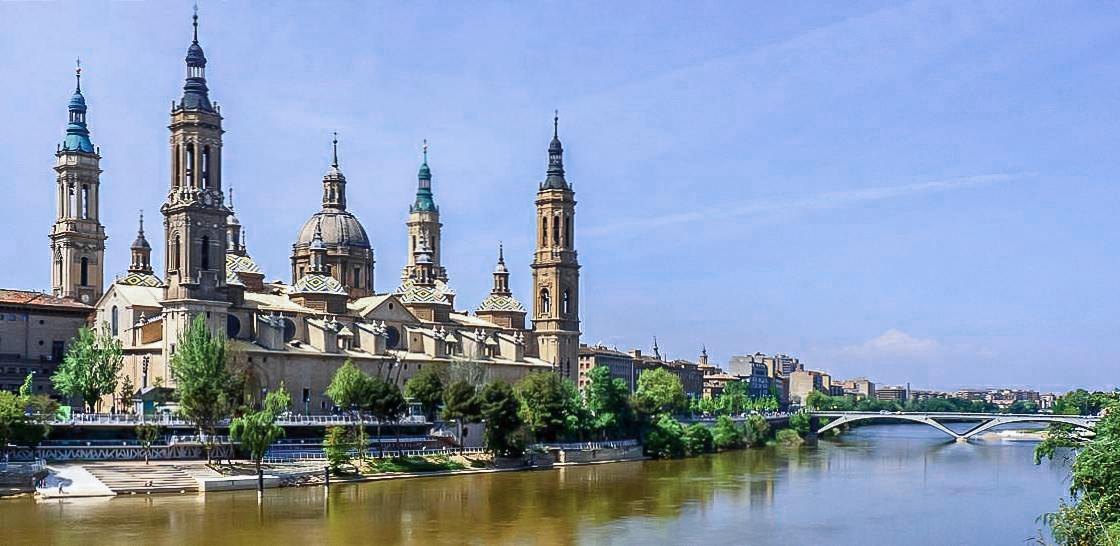
Madrid → Zaragoza
325 kmImagine crossing the Castilian meseta at full speed, where the landscape shifts from the sierra to the Ebro Valley in the blink of an eye, connecting two of Spain’s most vibrant cities in next to no time. Whether you choose the comfort of the AVE, the freedom of your own vehicle, or the affordability of the bus, this journey is an experience in itself, linking the heart of the peninsula with the capital of Lower Aragon.
How to get from Madrid to Zaragoza: a quick overview
The best way to travel from Madrid to Zaragoza depends entirely on whether you prioritize speed, budget, or schedule flexibility. For most travelers seeking efficiency, the AVE train is the undisputed choice, covering the distance in just 95 minutes; however, if you are traveling in a group or plan to explore along the way, the car offers complete autonomy over 325 kilometers, while the bus presents itself as the most economical alternative with fares starting from 5 euros.
Madrid to Zaragoza by car
Driving from Madrid to Zaragoza involves covering a distance of 325 kilometers, which takes an estimated time of 3 hours and 15 minutes. The main and most direct route is via the A-2, known as the Autovía del Nordeste (Northeast Highway), which is toll-free and allows for smooth driving towards the northeast of the peninsula. However, depending on your exact departure point in Madrid or traffic conditions, you have a wide network of free highways at your disposal that connect to the final destination.
Among the verified road options for this journey or its access routes, you will find the A-23 or Autovía Mudéjar (Mudéjar Highway), which is essential for accessing Zaragoza from the south, and the A-68 or Autovía del Ebro (Ebro Highway), which runs through the valley connecting the city. If you prefer alternative routes or are coming from other directions, the map includes the A-1 (Autovía del Norte), the A-6 (Autovía del Noroeste), and the A-5 (Autovía del Suroeste). Also available are the A-3 (Autovía del Este), the A-4 (Autovía del Sur), and the A-42 (Autovía de Toledo) for connecting to the main access roads. Other important secondary and connecting routes include the A-11 (Autovía del Duero), the A-15 (Autovía de Navarra), the N-1, the N-122 (Carretera Zaragoza a Portugal por Zamora), and the N-232 (Carretera de Vinaròs a Santander). All these roads mentioned have the advantage of being toll-free, making the car journey very competitive in terms of fixed costs.
Madrid to Zaragoza by train
The train is the fastest option for getting from Madrid to Zaragoza, with a single operator, Renfe, running 20 daily trains between the two cities. The travel experience varies significantly depending on the type of ticket you choose, as journey times range dramatically from 95 minutes for high-speed services to almost 6 hours for regional trains. The departure station is always Madrid Pta. Atocha – Almudena Grandes, and you will arrive at the modern Zaragoza-Delicias station, a key transport hub in the city.
The star service is the AVE, with 16 daily departures and a record journey time of 95 minutes, ideal for business travelers or tourists short on time. There is also an AVE INT (International or Intermediate) option, with 1 daily departure that takes 103 minutes. For those on a tighter budget and with less urgency, Renfe offers 2 REGIONAL EXPRESO (REG.EXP.) trains per day with a travel time of 354 minutes, and a single daily REGIONAL train that completes the journey in 374 minutes. The operating hours are extensive, with the first train leaving at 6:27 in the morning and the last at 20:30, covering most of the day.
By Bus from Madrid to Zaragoza
The bus is the most affordable alternative for traveling from Madrid to Zaragoza, with established companies like FlixBus and ALSA operating direct routes. The journey takes 210 minutes, which is equivalent to 3 and a half hours, placing it between the speed of the AVE and the flexibility of driving. This option is particularly appealing for backpackers or travelers who don’t need the extreme speed of the high-speed train but want to avoid driving.
In terms of cost, prices can vary enormously depending on how far in advance you book and demand, ranging from 5 to 60 euros. This means you can find incredible bargains if you reserve early, making the bus unbeatable for pure savings. Both companies generally offer services with basic amenities to make the 3-and-a-half-hour highway journey comfortable.
Recommended Stops Along the Way
If you decide to travel by car, you have the chance to break up the monotony of the highway by visiting several points of interest, especially when leaving Madrid or taking alternative routes. Below, we detail verified stops to enrich your route:
- Alcalá de Henares: A classic and almost obligatory stop just after leaving the capital. This city boasts immense historical and cultural value, perfect for stretching your legs and admiring its architecture before heading into the meseta (central plateau).
- Torrejón de Ardoz: Located very close to the start of the route, this town offers convenient services and rest areas for travelers leaving Madrid with a full tank or needing a coffee before hitting the highway.
- Almazán: This stop represents an interesting detour if you opt for more northern routes or secondary roads like the N-122. It is a charming village that allows you to disconnect from the heavy traffic of the main highways.
- Daganzo de Arriba: Another town in the Henares corridor that serves as a reference point in the first kilometers of the trip, ideal for avoiding the initial traffic jams on the M-30 and M-40 ring roads.
- San Sebastián de los Reyes: Located north of Madrid, this is a useful stop if your exit route takes you onto the A-1 motorway or northern connections before turning towards Zaragoza.
- Alcobendas: Similar to San Sebastián, this area is key for travelers who reside in or are starting their journey from the northern metropolitan area, providing easy access to the main highways without crossing the city center.
- Paracuellos de Jarama: A strategic point near the airport and exit routes, allowing travelers to avoid the capital’s dense traffic and begin their journey more smoothly.
- San Agustín del Guadalix: Located in the northern mountain range, this stop is recommended if you are looking for a more natural and less urban setting before heading onto the highway eastward.
Where to Stay in Zaragoza
When you arrive in Zaragoza, you’ll find a variety of accommodation options spread throughout the city to suit different budgets and travel styles, though we won’t specify particular hotel names. The most sought-after area is the Centro Histórico (Historic Center), near the Basílica del Pilar and the Catedral del Salvador, where you’ll find charming hotels and tourist apartments ideal for walking to the monuments. Another very practical area is the zone around Zaragoza-Delicias Station, perfect if you’re arriving by train or bus and prioritize logistical convenience, with chain hotels and modern options.
For travelers with a car, the peripheral areas or well-connected residential neighborhoods offer easier parking and more competitive prices. The price range in the city is broad: from budget-friendly hostels and low-cost options for backpackers, to 4 and 5-star hotels with full services. The offering is extensive, so booking in advance is recommended, especially for weekends or local festivities, to secure the best rate within the city’s usual price ranges.
Frequently Asked Questions about the Madrid-Zaragoza Route
How long does it take to get from Madrid to Zaragoza?
Travel time varies by means of transport: by car it takes 3 hours and 15 minutes (325 km), by bus it’s 210 minutes, and by train the time ranges from 95 minutes on the AVE to 374 minutes on a Regional train.
Which is cheaper, the train or the bus?
Generally, the bus is the cheapest option, with prices that can drop to 5 euros with companies like FlixBus or Alsa, while the AVE train usually has higher fares, although Renfe Regional trains can compete on price if booked in advance.
Is it worth renting a car?
Renting a car is worth it if you plan to make several of the recommended stops, such as Alcalá de Henares or Almazán, or if you’re traveling in a group to split the costs, as the 325 km route is short and all the main highways, like the A-2, are toll-free.
When is the best time to travel?
The best time to travel depends on your priorities: to avoid crowds on the train (20 daily frequencies) or traffic on the A-2, steer clear of holiday weekends; however, the climate on the meseta (plateau) is pleasant in spring and autumn for enjoying the stops along the route.
📍 También te puede interesar
Qué ver en Madrid →
Qué ver en Zaragoza →