El Ejido
AndalucíaClimate
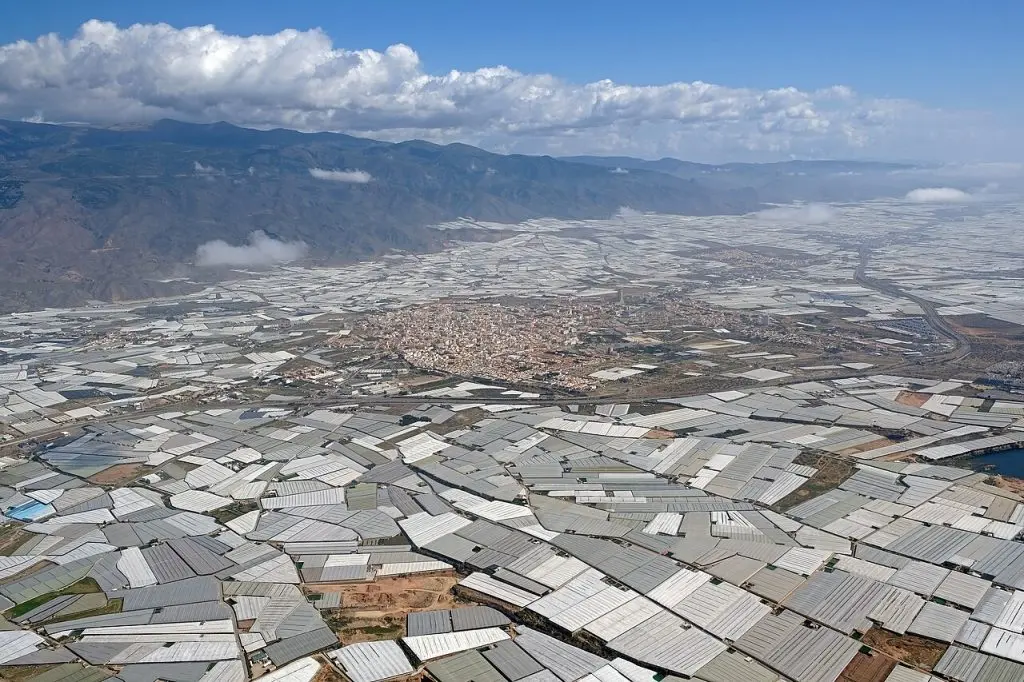
It is eight in the evening on the Balerma promenade and the Fortified Tower cuts its 18th-century silhouette against a sky that is beginning to turn orange. A few kilometres away, the docks of Almerimar Marina switch on their first lights over 1,100 moorings while someone orders grilled prawns at a beach bar. This is El Ejido: 87,000 inhabitants between the Mediterranean and the so-called “sea of plastic”, a land where greenhouses coexist with coastal castles, Roman remains and a cuisine that combines garden aubergines with freshly caught fish.
The must-seesWhat to see in El Ejido: the essentials
El Ejido concentrates its most singular heritage along the coastal strip, with 18th-century fortresses, medieval watchtowers and a natural area of dunes and junipers that surprises with its rawness. Inland, the Ciavieja archaeological site and several museums round off a cultural offering that goes far beyond the cliché of the greenhouses.
Castillo de Guardias Viejas
This 18th-century coastal fortress was built in the time of Charles III as part of the defensive system of the Almería coastline and stands on a small rocky hill practically overlooking the sea. During the Peninsular War it was partially destroyed and rebuilt in 1817, and today its parade ground connects the different rooms and gives access to a terrace with impressive views of the coast. Inside there is a permanent exhibition of uniforms and weapons from the period, and concerts are held in summer. Admission is free, which makes it an almost obligatory stop.
Torre Fortificada de Balerma
Built in the mid-18th century to protect the coast of the former Kingdom of Granada, this defence tower stands right on the Balerma promenade, in Plaza la Torre. Its ground floor stored weapons and ammunition, while the upper floor housed the military quarters; the original access was via the upper floor by means of stairs and a small bridge. It is one of the most recognisable heritage features of the coastal centre of Balerma.
Torre de Los Cerrillos
A coastal watchtower built around 1575, possibly on the foundations of a Muslim tower, whose square base could be a vestige of that earlier phase. Also known as Torre de Punta Entinas or Torre de la Serena, it formed part of the defensive system of the Kingdom of Granada and in 1803 was classified as a signal watchtower. It lies between El Ejido and Roquetas de Mar, within the municipality of Roquetas de Mar.
Paraje Natural Punta Entinas-Sabinar
It is advisable to bring water and sun protection given the lack of shade. This protected coastal area is a landscape of dunes, salt flats and junipers where silence is broken only by birds, and it is ideal for unhurried walks between the sea and the native vegetation.
Puerto Deportivo de Almerimar
Almerimar marina is the hub of this tourist centre on the El Ejido coastline, with 1,100 moorings for recreational craft of up to 60 metres in length. It is the second most important marina in Andalusia and one of the largest in Europe. Most of the area’s bars, restaurants, shops and leisure venues are clustered around its docks, and a stroll along them at sunset is the perfect finishing touch to any day.
Teatro Municipal de El Ejido
Its stage has hosted nationally renowned companies and artists, with productions ranging from classical and contemporary theatre to comedy, dance and family shows.
Castillo de Malerva
Along with the Torre de Balerma, Castillo de Malerva was one of the most significant historical features of the coastal centre of Balerma, performing surveillance and defence functions along the coastline; the documented remains, among which ashlars survive, are located in the vicinity of the current Balerma market.
Pepe Moreno Museum of Vintage Vehicles
During the visit you can admire cars, sidecars, motorcycles and bicycles, as well as other period objects from the mid-20th century, with pieces from European and American brands; as it is a private collection, it is essential to call ahead to arrange an appointment.
El Ejido Local History Room
An exhibition space devoted to the local history of the municipality, with materials and documents on the settlement and evolution of the city, located in the Plaza Teniente Arturo Muñoz and also suitable for visiting with children.
Daymún Roman Mausoleum
A funerary monument from the Roman era that follows the models of funerary architecture of the Roman tradition, conceived as a monumental burial of a family or personal nature, and which helps to understand funerary practices and the Romanization of the territory.
Torre Cuadrada
A square-plan defensive tower located about 250 metres north of Guardias Viejas Castle, built between the 13th and 14th centuries as part of the coastal surveillance system in the surroundings of an Andalusian farmstead called al-Nubayra.
Plaza Mayor de El Ejido
It is the usual starting point for exploring the town centre and hosts the market and the main civic events, as well as being one of the venues of the El Ejido Theatre Festival every spring.
Ciavieja Archaeological Zone
An archaeological site located to the east of the municipality that reflects a chronological sequence of settlements from Prehistory to the Roman period, documenting the Iberian-Roman settlement of Murgi on the ancient coastal road; among the finds, the Roman mosaic discovered in 1984 and the Roman baths stand out.
Ciavieja Roman Baths
Remains of a Roman thermal complex belonging to the Ciavieja site, with bathing structures and heating systems that illustrate urban life in the Early Imperial period.
Murgi
An ancient Iberian-Roman settlement documented at the Ciavieja site, linked to the Roman city of Murgi.
🍂 Otoño
Si visitas El Ejido en otoño, el ambiente se vuelve más tranquilo y el clima sigue siendo muy agradable, dentro del periodo recomendado de marzo a noviembre. Es un buen momento para conocer la Torre Fortificada de Balerma o la Torre de Los Cerrillos sin aglomeraciones. Lleva una chaqueta fina para el atardecer y consulta la previsión por si aparece alguna lluvia ocasional.
What to do in El Ejido
El Ejido offers a range of activities that combine deeply rooted popular festivities, strolls around marinas and beaches, heritage routes through towers and castles, and a cultural calendar whose great spring event is the El Ejido Theatre Festival.
If you coincide with the local festivities, the experience changes completely. The Fiestas de San Isidro Labrador in June are the municipality’s main festival, with concerts, the Batalla de las Flores (Battle of the Flowers), a pyrotechnics festival, a funfair and a pilgrimage in honour of the patron saint. In April, the Romería de San Marcos, declared of Tourist Interest by the Regional Government of Andalusia, attracts thousands of people in an atmosphere of decorated carts, horses and outdoor dining. And in February, the El Ejido Carnival fills the streets with parades, costumes and activities before Lent.
For a quieter plan, a stroll around the docks of Almerimar Marina at sunset is a must, and the Punta Entinas-Sabinar Nature Reserve invites you to walk among dunes and salt flats with binoculars for birdwatching. The Plaza Mayor and its surroundings concentrate the everyday atmosphere of the centre, with a market and terraces where you can have a drink while watching the pulse of the city.
El Ejido in a day: express itinerary
If you only have one day, prioritise the coast and the town centre. This route lets you see the essentials without rushing too much:
- 9:00 – Castillo de Guardias Viejas: start with the 18th-century coastal fortress, with its exhibition of uniforms and weapons and the views from the terrace. Entry is free and it’s still cool early in the day.
- 10:30 – Paraje Natural Punta Entinas-Sabinar: a short walk among dunes and junipers to stretch your legs before the heat sets in. Bring water and sun protection.
- 12:30 – Balerma and its Fortified Tower: stroll along the seafront promenade to Plaza la Torre and take the opportunity to have a drink facing the sea.
- 14:00 – Lunch in Almerimar: head to the Puerto Deportivo de Almerimar and choose one of its restaurants to try fresh fish and seafood or berenjenas rellenas de marisco (aubergines stuffed with seafood).
- 17:00 – A walk around the docks of Almerimar: explore the 1100 moorings of the second most important marina in Andalusia and sit at a terrace to watch the boats.
- 19:30 – Plaza Mayor de El Ejido: finish in the town centre, with a walk around the Plaza Mayor and the nearby shopping streets before dinner.
Where to eat in El Ejido: local cuisine
Where to stay in El Ejido
Casco Antiguo / Centro
Núcleo histórico de El Ejido, con la Iglesia de San Isidro Labrador y calles comerciales como la Avenida de la Constitución. Ambiente de pueblo andaluz con servicios, bares y tiendas, aunque muy transformado por la agricultura intensiva.
Ejido Norte / Zona de la Avenida de la Constitución
Zona residencial y comercial al norte del centro, con supermercados, bancos y restaurantes. Es una de las áreas de expansión urbana más activas, con ambiente cotidiano y buena conectividad.
Barrio de San Isidro
Barrio tradicional alrededor de la iglesia homónima, con calles estrechas y casas bajas. Ambiente familiar y tranquilo, con pequeños comercios y bares de barrio.
Zona de Las Norias / Barrio de Las Norias
Área periférica con fuerte presencia de población inmigrante y trabajadores agrícolas. Ambiente multicultural, con comercios étnicos y bares sencillos; no es una zona turística típica.
Barrio de Santa María del Águila
Localidad pedánea de El Ejido con identidad propia, conocida por su iglesia y su ambiente residencial. Tiene servicios básicos y es tranquila, orientada a familias y residentes.
Zona de Almerimar
Urbanización costera de El Ejido con puerto deportivo, playas y campos de golf. Ambiente turístico y residencial de segunda vivienda, con restaurantes y paseo marítimo.
How to get to El Ejido
From Almería, the fastest option is driving: 27 min.
| From | Direct train | Direct bus | Car |
|---|---|---|---|
| Almería | — | 30 min · 56/day Red de Consorcios de Transporte de Andalucía - Área de Almería, ALSA | 27 min 35 km |
| Motril | — | 1 h 05 min · 6/day ALSA | 58 min 73 km |
| Málaga | — | 2 h 35 min · 3/day ALSA | 2 h 06 min 167 km |
| Granada | — | 2 h 15 min · 3/day ALSA | 1 h 41 min 133 km |
| Nerja | — | 1 h 50 min · 3/day ALSA | 1 h 28 min 113 km |
| Sevilla | — | 8 h 15 min · 1/day ALSA | 4 h 21 min 372 km |
| Alcalá de Guadaíra | — | 7 h 40 min · 1/day ALSA | 4 h 08 min 358 km |
Direct trains and buses from the official timetables published by the operators on Spain's National Transport Access Point (a reference Wednesday); driving times from OpenStreetMap. Operators that do not publish their timetables may run more services. Check the timetable before you travel.
How to get around El Ejido
El Ejido has an urban bus service connecting the main centres of the municipality, including Almerimar, Balerma, Santa María del Águila and Las Norias. To move between the centre and the coast freely, a hire car is the most comfortable option, especially if you want to visit the Castillo de Guardias Viejas, the Paraje Natural Punta Entinas-Sabinar or the Puerto Deportivo de Almerimar without depending on timetables.
Weather in El Ejido
Best time to visit El Ejido
Day trips from El Ejido
El Ejido’s location in the Poniente Almeriense makes it easy to combine your visit with other towns in the region, both coastal and inland. Roquetas de Mar, just a few kilometres away, offers beaches, a seafront promenade and its own defensive heritage. Vícar and La Mojonera bring you closer to everyday life in this farming district. Dalías, inland, provides the contrast of a traditional Almerian village, and Balanegra, on the coast, is a quiet stop for continuing your route along the shoreline.
Curiosities about El Ejido you didn’t know
El Ejido became an independent municipality in 1982, according to the history page of its tourism website. It is a young city from an administrative point of view, but with a territory steeped in history spanning from Prehistory to the Roman era and from medieval towers to 18th-century fortresses.
The name El Ejido comes from the Latin exitum, ‘exit to the countryside’, whose Late Latin form derived into exitu, ‘exit’. An etymology that speaks of a territory conceived as a gateway to the countryside and the sea.
El Ejido’s greenhouses, known as the “sea of plastic”, are the only human construction visible from space, according to the tourism website. An image that sums up the scale of the intensive agriculture that transformed this district.
In El Ejido, peas are called “présules”, and the présules tortilla is a local delicacy. An example of how local speech and cuisine intertwine in the town’s bars.
Among El Ejido’s notable figures are the artist Manolo Escobar, film director Manuel Martín Cuenca and world windsurfing champion Víctor Fernández. Manolo Escobar was born in El Ejido, Almería, according to an article on notable figures from Almería.
The Almerimar golf course was designed by golf legend Gary Player. One more reason for fans of the sport to include the area on their itinerary.
The only Michelin-starred restaurant in the province of Almería is in El Ejido. It is La Costa, which has renewed its distinction in the 2026 Guide and puts the town on the Andalusian culinary map.
Who El Ejido is for
El Ejido is a versatile destination that works especially well for couples seeking sun, beach and food in Almerimar; for families wanting a quiet atmosphere with seafront promenades and popular festivals; and for lovers of history and heritage, with its network of castles, watchtowers and Roman remains. Backpackers will find more affordable prices in areas such as Las Norias, and foodies have two strong reasons to come in La Costa and its seafood-stuffed aubergines. If you’re looking for grand urban monuments or a massive cultural offering, this isn’t your destination; if you want coastline, defensive heritage, nature and good, unpretentious food, it will suit you perfectly.
💡 ¿Sabías que...?
- ● El Ejido se convirtió en municipio independiente en 1982, según la página de historia de su turismo. (https://turismo.elejido.es/index.php/informacion/historia/)
- ● El nombre de El Ejido procede del latino exitum, 'salida al campo', cuya forma bajolatina derivó en exitu, 'salida'. (https://es.wikipedia.org/wiki/El_Ejido_(Almer%C3%ADa))
- ● Los invernaderos de El Ejido, conocidos como el «mar de plástico», son la única construcción humana visible desde el espacio, según la web de turismo. (https://turismo.elejido.es/index.php/informacion/datos-sobre-el-ejido/)
- ● En El Ejido los guisantes se llaman «présules», y la tortilla de présules es una delicia local. (https://turismo.elejido.es/index.php/informacion/datos-sobre-el-ejido/)
- ● Entre los personajes ilustres de El Ejido destacan el artista Manolo Escobar, el director de cine Manuel Martín Cuenca y el campeón mundial de windsurf Víctor Fernández. (https://turismo.elejido.es/index.php/informacion/datos-sobre-el-ejido/)
- ● Manolo Escobar nació en El Ejido, Almería, según un artículo sobre personajes ilustres de Almería. (https://soyjavierlopez.com/personajes-ilustres-de-almeria/)
- ● El campo de golf de Almerimar fue diseñado por la leyenda del golf Gary Player. (https://turismo.elejido.es/index.php/informacion/datos-sobre-el-ejido/)
- ● El único restaurante con Estrella Michelin de la provincia de Almería está en El Ejido. (https://turismo.elejido.es/index.php/informacion/datos-sobre-el-ejido/)
Frequently asked questions about El Ejido
How many days do I need to see El Ejido?
Two or three days are enough to cover the essentials: Guardias Viejas Castle, the Fortified Tower of Balerma, Almerimar Marina, the Punta Entinas-Sabinar Nature Reserve and the town centre with the Plaza Mayor. If you want to add the Ciavieja archaeological site, the Museum of Vintage Vehicles and a day trip to Roquetas de Mar or Dalías, set aside four or five days.
What is the best time of year to visit El Ejido?
From March to November, with an average temperature of 26.4°C in summer and 14.1°C in winter. Annual rainfall is just 278.1 mm, so rain rarely ruins your plans. For the beach, June to September; for walking in the Nature Reserve or visiting castles, spring and autumn are ideal.
How do I get to El Ejido from Madrid?
The fastest option is to fly to Almería Airport (LEI) and from there drive the 55 km to El Ejido, about 40 minutes by car. There are regular flights from Madrid to Almería, and once at the airport you can hire a car or take a road transfer service.
Does El Ejido have a beach?
Yes. The municipality borders the Mediterranean Sea and has coastal centres such as Almerimar and Balerma, with a seafront promenade, chiringuitos and beaches. In addition, the Punta Entinas-Sabinar Nature Reserve offers a less developed coastline of dunes and junipers.
What typical dish should I try in El Ejido?
Seafood-stuffed aubergines are the most representative dish: aubergines from the El Ejido market gardens stuffed with fresh seafood and gratinated, using zero-kilometre produce. Fresh fish and seafood from the coast and grilled greenhouse vegetables are also well worth trying.
For more practical information on opening times, tickets and cultural events, see the official El Ejido tourism website.