Barakaldo
País VascoClimate
What to see in Barakaldo: the must-sees
Barakaldo isn’t your typical postcard town, and that’s precisely why it draws you in. Here, the industrial pulse of the Cargaderos de Mineral (Mineral Loading Docks) coexists with the bourgeois elegance of the Palacio Munoa (Munoa Palace), and in between slips a 60,000 m² botanical garden that smells of plants from half the world. This city of 100,000 inhabitants, hugging the Nervión estuary, is best explored without rushing, and it makes more sense once you discover it was the steel heart of Bizkaia. Come with an open mind, and Barakaldo will surprise you more than you expect.
Finca Munoa (Munoa Palace)
The Palacio Munoa is Barakaldo’s great architectural treasure and the finest example of contemporary Basque and European bourgeois architecture. The estate is already mentioned in 1569 as property of the nearby Monasterio de Burceña (Burceña Monastery), but its transformation came around 1860, when Juan Echevarria La Llana — mayor of Bilbao and one of the largest landowners in the area — commissioned an elegant country house. In 1916, the architect Ricardo Bastida completely remodelled the palace on behalf of Rafael Echevarria Azcarate and Amalia Echevarrieta, sister of the famous industrialist Horacio Echevarrieta. The historic gardens, with singular botanical species, can be visited free of charge, while access to the interior requires advance booking through the tourist office.
Jardín Botánico Ramón Rubial (Ramón Rubial Botanical Garden)
This botanical garden of some 60,000 m², opened in 2002 and designed by the architect Ángel de Diego Rica, is a living museum where vegetation becomes art. It sits on a vantage point overlooking the Triano mountains, within the town centre, and its main entrance — the Jardín Blanco (White Garden) — is on Calle La Torre. It brings together more than 300 woody species and a great diversity of herbaceous plants, arranged in themed gardens with singular trees and seasonal blooms. Admission is free and it deserves at least a couple of hours to lose yourself among native species and plants from all over the world.
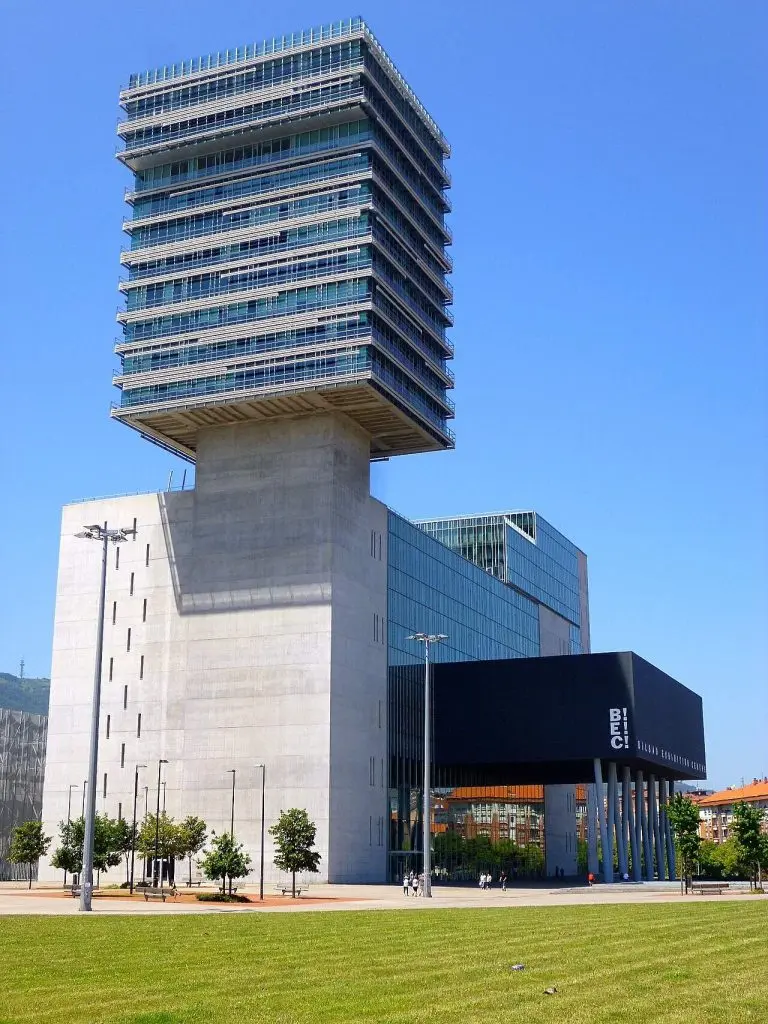
Bilbao Exhibition Centre (BEC)
The Bilbao Exhibition Centre (BEC) is Barakaldo’s main trade fair and congress venue, a hub of events throughout the year. The city’s tourist office is located here, at Ronda de Azkue, 1, open only on fair days. Its weekday hours are 08:00 to 14:00 and 17:00 to 20:00; on public holidays, 09:00 to 15:00 and 18:00 to 21:00. You can get in touch by phone on 94 499 58 21 or by email at turismo@barakaldo.eus.
Barakaldoko Historia eta Ingurumen Interpretaziorako Zentroa
Interpretation centre dedicated to the history and environment of Barakaldo.
Casa-Torre de Zubileta (Zubileta Tower House)
Historic palace of Barakaldo linked to one of the oldest lineages in the municipality.
Iglesia de San Vicente Mártir (Church of Saint Vincent the Martyr)
The parish church of Barakaldo has its origins in the 14th century, although the current building dates from the first half of the 17th century and has undergone numerous interventions. Inside, the main altarpiece stands out, presided over by the figure of a young Saint Vincent with his eyes raised to heaven, accompanied by a neoclassical Saint Anthony of Padua, a modern Saint Joseph and a Baroque calvary from the early 18th century. It is one of the most valued places in the municipality and a landmark of local religious heritage.
Cargaderos de Mineral (Orkonera and Franco-Belga)
Remains of Barakaldo’s thriving industrial past and symbols of the industrialisation of Bizkaia. They form part of the city’s cultural and industrial heritage, together with the Palacio Munoa and the Edificio Ilgner.
Edificio Ilgner (Ilgner Building)
A singular building of Barakaldo’s industrial heritage, linked to the city’s manufacturing past. After careful restoration, it now houses the headquarters of CEDEMI, the business development centre of the Left Bank.
Herriko Plaza (Plaza del Pueblo)
Barakaldo’s central square, home to the Town Hall, the civic core and meeting point of the city.
Barakaldo Antzokia
The city’s main performing arts venue, dedicated to theatre, music and cultural events, with a well-established track record as a benchmark on the performing arts scene.
Escuelas de Barrio de Larrazabal
Museum housed in the former Larrazabal neighbourhood schools.
Fundación de Trabajadores de la Siderurgia Integral
Museum dedicated to the memory of the workers of the integrated steel industry.
Centro de Interpretación Histórica y Medioambiental de Barakaldo (CIHMA)
A centre where you can discover Barakaldo’s heritage and history, including fascinating facts about its industrial past.
Euskadiko industria ondare higigarriaren zentroa
Museum focusing on the movable industrial heritage of the Basque Country.
Museo Mercedes-Benz Aguinaga
Museum dedicated to the Mercedes-Benz brand.
Iglesia del Sagrado Corazón de Jesús
Religious monument in Barakaldo.
Moto Lube
Monument linked to the world of motoring.
🍂 Otoño
Si visitas Barakaldo en otoño, el clima se vuelve más húmedo y fresco, con precipitaciones repartidas a lo largo de la estación. Es un buen momento para conocer el Bilbao Exhibition Centre o la Casa-Torre de Zubileta sin aglomeraciones. Lleva calzado impermeable y consulta la previsión antes de planificar actividades al aire libre.
What to do in Barakaldo
Barakaldo offers markets with almost a century of history, patron saint festivals with a txupinazo (rocket launch) and the descent of popular characters, carnivals with a parade and the burning of the sardine, and neighbourhoods with a life of their own, ranging from the commercial bustle of the Casco Antiguo (Old Town) to the riverside walks of Lasesarre. If you happen to be there for the Fiestas del Carmen in July, get ready for the txupinazo, the opening speech, the descent of Jolín and Deabru, concerts, txosnas (festival bars), giants and big-heads, and the procession on 16 July. In February, the Carnavales de Barakaldo fill the streets with the Traditional Basque Carnival, parades, youth and children’s parties, the burning of the sardine and the farewell to Tarambolo. The Mercado Municipal, opened in 1931, is another must: fish, meat, fruit and vegetable stalls, artisan bakery and preserves, with activities and tastings. For a quieter plan, stroll through the Lasesarre river park beside the Nervión river or head up to the Jardín Botánico Ramón Rubial to watch the sunset over the Triano mountains.
Barakaldo in a day: express itinerary
- 09:30 – Herriko Plaza: start in the square by the Town Hall to get your bearings in the civic heart of Barakaldo and have a first coffee in the surrounding bars.
- 10:15 – Iglesia de San Vicente Mártir: go in to see the main altarpiece with the young San Vicente and the 18th-century Baroque calvary; it’s a short but essential visit.
- 11:30 – Jardín Botánico Ramón Rubial: spend an hour and a half wandering its themed gardens and enjoying the views of the Triano mountains; admission is free.
- 13:30 – Mercado Municipal de Barakaldo: browse the local produce stalls and try a tapa or pick up something to nibble on; it’s a lively space with tastings.
- 15:00 – Lunch in the centre: order bacalao al pil pil or chipirones en su tinta at a tavern in the Herriko Plaza area.
- 17:00 – Finca Munoa: stroll for free through the historic gardens of the palace and admire the exterior of this gem of Basque bourgeois architecture; if you want to go inside, book in advance at the tourist office.
- 19:00 – A walk through Lasesarre: end the day walking beside the Nervión estuary and seeing the Lasesarre football stadium at sunset.
Where to eat in Barakaldo: local cuisine
Where to stay in Barakaldo
Casco Antiguo / Centro
Núcleo histórico de Barakaldo, con calles comerciales, plazas y edificios de interés como el Ayuntamiento y la iglesia de San Vicente. Ambiente urbano y animado durante el día, con bares y comercios tradicionales.
Lasesarre
Zona moderna junto al río Nervión, conocida por el estadio de fútbol de Lasesarre y el parque fluvial. Ambiente residencial y deportivo, con paseos junto al agua.
Cruces
Barrio residencial y comercial, sede del Hospital de Cruces, uno de los más importantes de Bizkaia. Tiene ambiente de barrio trabajador con comercio local y buenas conexiones de transporte.
Retuerto
Barrio residencial situado en la zona alta de Barakaldo, con ambiente tranquilo y vistas. Cuenta con comercio básico y parques, ideal para estancias tranquilas.
Urban Galindo
Zona residencial moderna en expansión, con nuevos desarrollos urbanos y espacios verdes. Ambiente familiar y tranquilo, bien conectado con el centro.
Beurko
Barrio histórico y popular de Barakaldo, con carácter obrero y tradición industrial. Tiene comercio local, bares y una vida de barrio activa.
How to get to Barakaldo
From Bilbao, the fastest option is the bus: 8 min (Bizkaibus, ALSA, Autobuses La Unión), 319 a day.
| From | Direct train | Direct bus | Car |
|---|---|---|---|
| Bilbao | 15 min · 91/day Cercanías C2 | 8 min · 319/day Bizkaibus, ALSA, Autobuses La Unión | 12 min 9 km |
| Getxo | — | 19 min · 78/day Bizkaibus | 14 min 13 km |
| Vitoria-Gasteiz | — | 1 h 14 min · 9/day Autobuses La Unión | 58 min 71 km |
| Valladolid | — | 4 h 25 min · 2/day ALSA | 3 h 16 min 286 km |
| Burgos | — | 1 h 55 min · 2/day ALSA | 1 h 55 min 165 km |
| Salamanca | — | 5 h 55 min · 2/day ALSA | 4 h 27 min 403 km |
| Palencia | — | 3 h 40 min · 2/day ALSA | 2 h 50 min 250 km |
| Santander | — | 1 h 35 min · 1/day ALSA | 1 h 12 min 95 km |
| Badajoz | — | 12 h 15 min · 1/day ALSA | 7 h 49 min 697 km |
| Cáceres | — | 10 h 15 min · 1/day ALSA | 6 h 37 min 606 km |
Direct trains and buses from the official timetables published by the operators on Spain's National Transport Access Point (a reference Wednesday); driving times from OpenStreetMap. Operators that do not publish their timetables may run more services. Check the timetable before you travel.
Getting around Barakaldo
Barakaldo has an urban bus service for getting between neighbourhoods, a practical option if you want to travel from the centre to areas such as Cruces, Retuerto or Urban Galindo without relying on a car. The Casco Antiguo and the area around Herriko Plaza are perfectly walkable, and the Lasesarre riverside promenade invites you to stroll along the estuary. For occasional trips between the centre and the BEC or the Botanical Garden, the urban bus is the most convenient way to get around without any hassle.
Weather in Barakaldo
Best time to visit Barakaldo
Day trips from Barakaldo
Barakaldo is an excellent base for exploring the cities of the Biscay and Basque region. Its train and bus stations connect you with Bilbao in just a few minutes, ideal for a day of museums, pintxos and architecture. From there you can hop to other destinations on the coast or inland Bizkaia, combining the industrial past of the Left Bank with the urban appeal of the capital. If you prefer to get around by urban or intercity bus, the Barakaldo-Centro Bus Station is the starting point for comfortable car-free day trips. For more practical information on schedules, tickets and what’s on, check the official Barakaldo tourism website.
Barakaldo curiosities you never knew
A surname that appears in the year 1051. The first documentary mention of Barakaldo names a certain senior Lope Blascoz Baracaldoensis, who confirms a donation from the Lord of Bizkaia Eneko López to the Bishop of Álava García. In other words, the city’s name was already ringing out almost a thousand years ago.
The church that was born from a split. The church of San Vicente de Barakaldo was founded in 1340 by Sancho López de Barakaldo, Lope González de Zorrotza and Galindo de Retuerto, breaking away from that of Santa María de Erandio. A founding charter with names and surnames.
A Barakaldo man who went around the world. Juan de Zubileta, born on the Zubileta estate in Barakaldo in 1504, took part in the Magellan and Elcano expedition and was one of the few survivors who completed the first circumnavigation of the globe. A Barakaldo local in the greatest nautical adventure in history.
The birthplace of integrated steelmaking. The Nuestra Señora del Carmen steelworks, forerunner of Altos Hornos de Bilbao — later de Vizcaya —, was built in Barakaldo in 1854. That year marked the beginning of the first integrated steel industry and radically transformed the town forever.
Two gems that sum up its soul. Barakaldo boasts the Palacio Munoa, the finest example of contemporary Basque and European bourgeois architecture, and the Ore Loading Docks (Orkonera and Franco-Belga), vestiges of its industrial past. Elegance and factory, face to face.
Who Barakaldo is for
Barakaldo is for curious travellers who prefer to understand a place rather than just photograph it. Families enjoy the parks, the Lasesarre riverside walk and quiet neighbourhoods such as Retuerto or Urban Galindo. Lovers of history and industrial heritage have a goldmine here: ore loading docks, the Edificio Ilgner, the Finca Munoa and several museums devoted to steelmaking. Foodies will find in bacalao al pil pil, chipirones en su tinta and canutillos compelling reasons to linger over lunch. And backpackers can sleep cheaply in Beurko and get around on foot or by urban bus without spending too much. If you’re after perfect postcards, Bilbao may call to you more; if you want a city with character, Barakaldo awaits.
💡 ¿Sabías que...?
- ● La primera mención documental de Barakaldo data del año 1051, cuando se cita a un 'senior Lope Blascoz Baracaldoensis' que confirma una donación del señor de Bizkaia Eneko López al obispo de Álava García. (https://ezagutubarakaldo.net/barakaldo-de-aldea-a-ciudad/)
- ● La iglesia de San Vicente de Barakaldo se fundó en el año 1340 por Sancho López de Barakaldo, Lope González de Zorrotza y Galindo de Retuerto, desmembrándose de la de Santa María de Erandio. (https://ezagutubarakaldo.net/barakaldo-de-aldea-a-ciudad/)
- ● Juan de Zubileta, nacido en el solar de Zubileta de Barakaldo en 1504, fue uno de los participantes en la expedición de Magallanes y Elcano, y uno de los pocos supervivientes que completaron la vuelta al mundo. (https://aunamendi.eusko-ikaskuntza.eus/es/zubileta-juan-de/ar-148423/)
- ● La fábrica siderúrgica Nuestra Señora del Carmen, antecesora de Altos Hornos de Bilbao (después 'de Vizcaya'), se construyó en Barakaldo en 1854, lo que supuso el inicio de la primera siderurgia integral y una radical transformación de la localidad. (https://ezagutubarakaldo.net/barakaldo-de-aldea-a-ciudad/)
- ● Barakaldo cuenta con el Palacio Munoa, considerado el máximo exponente de la arquitectura burguesa vasca y europea contemporánea, y con los Cargaderos de Mineral (Orkonera y Franco-Belga), vestigios de su pasado industrial. (https://visitbarakaldo.eus/conoce-la-ciudad/historia-y-cultura/)
Frequently asked questions about Barakaldo
How many days do I need to see Barakaldo?
With a full day you can cover the essentials: Herriko Plaza, the church of San Vicente, the Ramón Rubial Botanical Garden, the Mercado Municipal (municipal market) and the Finca Munoa estate. If you want to add industrial heritage museums, a Barakaldo CF match at Lasesarre or coincide with festivities such as the Karmenak, the ideal is two or three days.
What is the best time of year to visit Barakaldo?
From June to September, with average summer temperatures around 20.5°C and the lowest rainfall levels of the year. July adds the Fiestas del Carmen. Avoid November to January if you don’t like rain: annual rainfall is 1150 mm and in winter the average temperature drops to 9.5°C.
How do I get to Barakaldo from Madrid?
Barakaldo has no AVE station, so the most usual option is to travel by train or bus to Bilbao and from there connect to Barakaldo’s train station or the Barakaldo-Centro bus station. The journey between Bilbao and Barakaldo is short and frequent.
Is it worth visiting the Palacio Munoa?
Yes, especially its historic gardens, free to enter and home to unique botanical species. The exterior of the palace is a gem of Basque bourgeois architecture. To visit the interior you must book in advance through the tourist office.
What typical dishes should I try in Barakaldo?
Don’t leave without trying bacalao al pil pil (cod in pil pil sauce), chipirones en su tinta (squid in its ink) and canutillos de hojaldre rellenos de crema (puff pastry tubes filled with cream). You’ll find all of it in the bars, taverns and pastry shops of the centre, especially around Herriko Plaza and the Mercado Municipal.