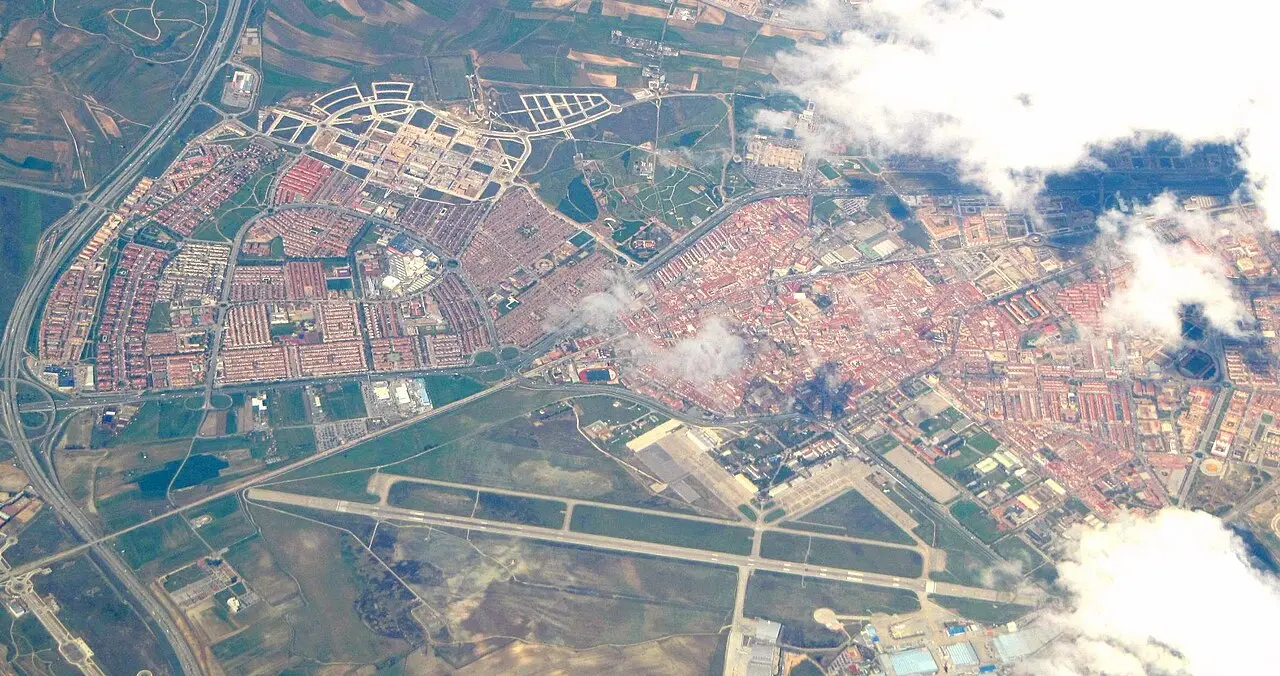
Getafe
Comunidad de MadridClimate
What to see in Getafe: the must-sees
Getafe holds a heritage that surprises for its historical density and accessibility: from a cathedral with a 16th-century Mudéjar tower to the site traditionally considered the geographic centre of the Iberian Peninsula. Most of the must-sees are concentrated in the old town or on the Cerro de los Ángeles (Hill of the Angels), and nearly all offer free admission, making a visit an excellent plan for any budget.
Basílica del Sagrado Corazón de Jesús (Cerro de los Ángeles)
On the Cerro de los Ángeles, traditionally regarded as the geographic centre of the Iberian Peninsula, stands this basilica, one of the main pilgrimage sites of the Diocese of Getafe. The grounds house the Monument to the Sacred Heart of Jesus, inaugurated by Alfonso XIII on 30 May 1919, the work of architect Carlos Maura Nadal and sculptor Aniceto Marinas. From here there are sweeping views of the surrounding area that, on clear days, stretch as far as Madrid. Admission is free and it can be visited during worship hours.
Catedral de Santa María Magdalena
The current cathedral, located on Plaza de la Magdalena, is the seat of the diocesan bishop and the principal church of the diocese, elevated to cathedral status in 1995 following the creation of the Diocese of Getafe. Its history begins in 1549, when a Mudéjar chapel was demolished and construction began on the present church to a design by Alonso de Covarrubias; of the original chapel only the slender tower that now presides over the square remains. Inside, the main altarpiece and several side chapels with religious imagery stand out. It can be visited during worship hours and Mass, with free admission outside liturgical celebrations; the tower is not usually open to the public on a regular basis.
Hospital de San José (Hospitalillo de San José)
This is one of the best-preserved heritage complexes in Getafe’s historic centre. Its traditional architecture and state of conservation make it an essential stop for understanding the city’s charitable and social past. Entry is usually free during municipal opening hours.
Parque de la Alhóndiga
This park, located in the El Bercial neighbourhood, combines landscaped areas, an artificial lake and recreation areas. It takes its name from the historic Alhóndiga building, and its lake — popularly known as the duck lake — was created in the 1990s as part of the neighbourhood’s urban development. Ducks live in its waters and by the waterfall, and it is a freely accessible space much frequented by locals for strolling or sitting for a while.
Casa Museo Andrés Torrejón
Dedicated to Andrés Torrejón, the mayor of Getafe known for his role in the uprising of 2 May 1808 against Napoleon’s troops, this house museum preserves objects and documents related to local history and the Peninsular War. It is a brief but highly illuminating visit for understanding Getafe’s leading role in that historical episode. Visits take place during municipal hours, possibly by prior appointment.
Santuario del Cerro de los Ángeles
The Cerro de los Ángeles is home to the Monument to the Sacred Heart of Jesus and offers sweeping views of the surroundings; access to the grounds is free and the sanctuary has worship hours and visiting times.
Museo Sanitario Dr. Andrés Esteban
Located at the main entrance of the Hospital Universitario de Getafe, it brings together a large collection of historical medical devices and instruments, including spittoons for tuberculosis and a 1964 pacemaker; a visit may require a prior appointment or checking municipal opening hours.
Parque de Castilla-La Mancha
Its landscaped gardens, paths and pedestrian walkways make it a meeting place for locals and visitors alike, with extensive green areas for relaxing, picnics and sports; admission is free and open to all.
Escuelas Pías de Getafe (Pious Schools of Getafe)
Its history dates back to 1736, the year of its founding, and continues until 1936, a period during which it carried out work focused on free education aimed at the lower classes; the complex preserves a church and school buildings of architectural and historical interest, and it is partially possible to visit during worship hours and school activities.
🍂 Otoño
Si visitas Getafe en otoño, el clima sigue siendo agradable y las lluvias son escasas, así que es un buen momento para recorrer la ciudad sin paraguas. Puedes visitar la Catedral de Santa María Magdalena o la Basílica del Sagrado Corazón de Jesús con más tranquilidad. Lleva una chaqueta ligera para las mañanas frescas.
What to do in Getafe
Getafe offers a combination of deeply rooted patron saint festivals, food markets with a local atmosphere and neighbourhoods with a character all their own that invite you to wander at leisure.
If you happen to be there for the Fiestas Patronales (Patron Saint Festivals) in honour of Nuestra Señora de los Ángeles in May, you will see the lowering of the image from the Cerro de los Ángeles, the novena, Pentecost processions, concerts, fairs and popular activities that fill the streets of the centre. In February, the Carnaval de Getafe brings a proclamation, a youth concert, a parade of murgas, children’s activities, a dance for seniors and the traditional burial of the sardine on Ash Wednesday.
For everyday life, the Mercado Municipal de Abastos (Municipal Food Market) is an excellent stop: it opens Monday to Saturday mornings and brings together stalls selling charcuterie, fish and vegetables with a local atmosphere and affordable prices. Afterwards, you can stroll through the Casco Antiguo (Old Town), with its pedestrian streets, squares and old buildings, or head to neighbourhoods such as Las Margaritas, where the local bars keep the city’s authentic pulse beating.
Getafe in a day: express itinerary
This route lets you see the essentials of Getafe in a full day, combining heritage, views and local gastronomy without the need for a car.
- 09:30 — Cerro de los Ángeles: Start the day at the spot considered the geographical centre of the Iberian Peninsula. Visit the Basílica del Sagrado Corazón de Jesús and the monument inaugurated by Alfonso XIII in 1919, and take advantage of the panoramic views before the heat sets in.
- 11:30 — Catedral de Santa María Magdalena: Head down to the centre and enter the cathedral, elevated to that status in 1995. Note the Mudéjar tower inherited from the original 1549 chapel and the main altarpiece. Free entry outside liturgical celebrations.
- 12:30 — Casco Antiguo and Hospital de San José: Wander the pedestrian streets of the historic centre and make your way to the Hospitalillo de San José, one of the best-preserved heritage complexes in the area. If it is open, entry is usually free.
- 13:30 — Mercado Municipal de Abastos: Step into the market to see the charcuterie, fish and vegetable stalls. It is the ideal moment to buy acorn-fed Iberian ham or Manchego cheese and pick up something for a picnic.
- 14:30 — Lunch in the centre or the San Isidro neighbourhood: Try huevos rotos with Iberian ham or a portion of calamares a la andaluza in the tapas bars of the centre or San Isidro.
- 17:00 — Parque de la Alhóndiga or Parque de Castilla-La Mancha: End the afternoon with a stroll by the duck lake in El Bercial or resting in the green areas of the Parque de Castilla-La Mancha. Both are free and open to all.
Where to eat in Getafe: local cuisine
Where to stay in Getafe
Casco Antiguo / Centro
Núcleo histórico de Getafe, con calles peatonales, plazas y edificios antiguos. Ambiente tranquilo durante el día y animado los fines de semana. Alberga la Catedral de Nuestra Señora de la Magdalena y el Ayuntamiento.
Getafe Norte
Zona residencial moderna al norte de la ciudad, bien comunicada por metro y cercanías. Cuenta con el Hospital Universitario de Getafe y el Campus de la Universidad Carlos III. Ambiente familiar y universitario.
El Bercial
Barrio residencial al este de Getafe, con amplias avenidas y zonas verdes. Cerca del centro comercial El Bercial y con fácil acceso a la A-4. Ambiente tranquilo y familiar.
Sector III
Barrio residencial al sur de Getafe, con una mezcla de viviendas unifamiliares y bloques. Cuenta con el Parque de los Olivos y el Centro Comercial Getafe 3. Ambiente tranquilo y bien comunicado por autobús.
Las Margaritas
Barrio obrero tradicional al sur de Getafe, con ambiente local y calles comerciales. Cerca de la estación de cercanías Las Margaritas-Universidad. Zona con bares y restaurantes de barrio.
Juan de la Cierva
Barrio residencial al oeste de Getafe, con el Parque de Juan de la Cierva y el Hospital de Getafe. Zona tranquila con comercio local y buenas conexiones por autobús y cercanías.
How to get to Getafe
From Madrid, the fastest option is the train: 6 min (Cercanías C4), 181 a day.
Getafe-Industrial (2,1 km from the centre)
| From | Direct train | Direct bus | Car |
|---|---|---|---|
| Madrid | 6 min · 181/day Cercanías C4 | 8 min · 37/day ALSA | 22 min 15 km |
| Parla | 9 min · 121/day Cercanías C4a | 6 min · 33/day ALSA | 14 min 10 km |
| Alcobendas | 49 min · 56/day Cercanías C4a | — | 31 min 34 km |
| San Sebastián de los Reyes | 50 min · 56/day Cercanías C4a | — | 33 min 35 km |
| Valdemoro | 10 min · 58/day Cercanías C3 | 52 min · 34/day Consorcio Regional de Transportes de Madrid | 16 min 18 km |
| Aranjuez | 24 min · 59/day Cercanías C3 | — | 34 min 38 km |
| Colmenar Viejo | 57 min · 59/day Cercanías C4b | — | 48 min 52 km |
| Pinto | 6 min · 3/day Cercanías C3 | 32 min · 34/day Consorcio Regional de Transportes de Madrid | 13 min 13 km |
| Toledo | — | 1 h 17 min · 33/day ALSA | 43 min 60 km |
Direct trains and buses from the official timetables published by the operators on Spain's National Transport Access Point (a reference Wednesday); driving times from OpenStreetMap. Operators that do not publish their timetables may run more services. Check the timetable before you travel.
Getting around Getafe
Getafe has an urban bus network connecting the main neighbourhoods and points of interest. For getting around the old town, walking is the most practical option: the Cathedral, the Town Hall, the Hospital de San José and the Mercado de Abastos are all within a short distance of one another. To go from the centre to the Cerro de los Ángeles, the El Bercial neighbourhood or areas such as Sector III or Las Margaritas, the urban bus is the most direct option if you don’t have a car.
If you’re staying in Getafe Norte or Juan de la Cierva, bus and Cercanías connections will let you move around easily both within the city and towards Madrid. In general, you won’t need a car for a one-day sightseeing visit, but it can be useful if you plan to combine Getafe with excursions around the region.
Weather in Getafe
Best time to visit Getafe
Day trips from Getafe
Getafe is part of the Madrid metropolitan area, which makes it a convenient and generally cheaper base for exploring the cities of the region. Its Cercanías train and road connections make it possible to plan day trips to other destinations in the Community of Madrid without having to change accommodation.
The most natural options are Madrid itself, a short Cercanías train ride away, and other towns in the southern metropolitan area with which Getafe shares a rail connection. If you have a car, the A-4 and other main roads open the door to exploring the region with complete flexibility. For up-to-date practical information on timetables and connections, see the official Getafe tourism website.
Getafe curiosities you never knew
The name that comes from a road. Getafe comes from the Arabic ‘jata’, meaning ‘something long’, and referred to the royal road that linked Madrid and Toledo. In other words, the city’s name describes a road, not a landscape or a person.
The first jewel of Madrid’s goldsmithing appeared here. In 1976, a gold bracelet considered the first jewel of Madrid’s goldsmithing was found in the La Aldehuela area. A discovery that puts Getafe firmly on the map of archaeology.
The ‘Prince of the Enlightenment’ was from Getafe. Daniel Vierge, considered the second most important illustrator of the late 19th and early 20th centuries, was born in Getafe on 5 March 1851. His talent for drawing and illustration earned him that nickname and a prominent place in the history of graphic art.
Who Getafe is for
Getafe is an excellent destination for travellers seeking an authentic Spanish experience without the crowds of central Madrid. Families will find quiet neighbourhoods such as El Bercial, Getafe Norte or Sector III, with parks, green spaces and good connections. Backpackers and budget-conscious travellers will appreciate the lower prices in Las Margaritas and the local bar scene. Lovers of history and heritage have more than enough reasons in the Cathedral, the Hospital de San José and the Cerro de los Ángeles for a full-day visit. And foodies will enjoy a bar-style cuisine —huevos rotos, calamares, jamón and manchego cheese— that eats well and at reasonable prices.
Frequently asked questions about Getafe
How many days do I need to see Getafe?
With a full day you can see the essentials: Cerro de los Ángeles (Hill of the Angels), Catedral de Santa María Magdalena (Cathedral of Saint Mary Magdalene), the old town with the Hospital de San José (Hospital of Saint Joseph) and one of its parks. If you want to take it easy, visit the Mercado de Abastos (food market) without rushing and explore neighbourhoods like Las Margaritas or El Bercial, 2 days are enough. Getafe also works very well as a base for sleeping and visiting Madrid and other cities in the region.
What is the best time of year to visit Getafe?
From May to October, according to climate data. The average temperature in summer is 25.2°C and in winter 6.9°C, with annual rainfall of 355.0 mm. May is especially appealing thanks to the Fiestas Patronales (patron saint festivities) in honour of Nuestra Señora de los Ángeles (Our Lady of the Angels), with processions, concerts and fairs.
How do I get to Getafe from Madrid?
The most practical way is the commuter train, with a stop at El Bercial station, which connects Getafe with Madrid and other towns in the metropolitan south. By car, the journey from Madrid usually takes between 20 and 30 minutes depending on traffic. Adolfo Suárez Madrid-Barajas airport is 34 km away by road, about 30 minutes by car.
Do you have to pay admission to Getafe’s main attractions?
Most of the essentials are free: the Basílica del Sagrado Corazón de Jesús (Basilica of the Sacred Heart of Jesus) can be visited during worship hours with free admission, the Catedral de Santa María Magdalena has free access outside liturgical celebrations, and the Hospital de San José is usually free during municipal opening hours. Some spaces such as the Casa Museo Andrés Torrejón (Andrés Torrejón House Museum) or the Museo Sanitario Dr. Andrés Esteban (Dr. Andrés Esteban Health Museum) may require a prior appointment or a check of opening hours.
What typical dishes should I try in Getafe?
Don’t leave without trying the huevos rotos con jamón ibérico (broken eggs with Iberian ham), typical of the tapas bars in the centre and the San Isidro neighbourhood, and the calamares a la andaluza (Andalusian-style squid), common on Calle Polvoranca and around it. At the Mercado Municipal de Abastos (municipal food market) you’ll find acorn-fed Iberian ham and Manchego cheese with designation of origin to buy or taste right there.