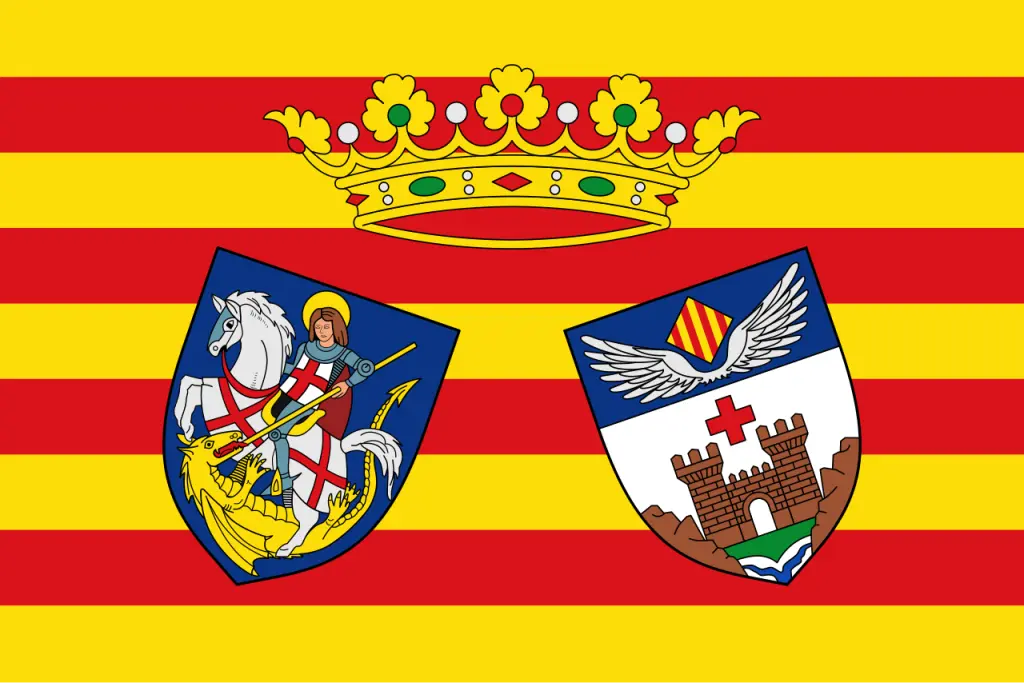
Alcoy
Comunidad ValencianaClimate
It is nine in the morning and the sun is already casting long shadows across the Modernista grille of the Parc de la Glorieta, with its unmistakable whip-stroke motif. From the Puente de San Jorge, the ravine opens up at your feet as the old town wakes among Neoclassical façades and the distant aroma of an olleta simmering over a slow fire. You are in one of the most singular cities in the Valencian Community, a place where bridges are not mere infrastructure but the backbone of an industrial, Modernista and festive history best explored on foot, unhurried and with all five senses alert.
The must-seesWhat to see in Alcoy: the essentials
Alcoy packs a surprising heritage into its urban centre for a city of 58,000 inhabitants: rock art declared a World Heritage Site, emblematic bridges, museums with unique collections and Modernista architecture that coexists with medieval remains. These are the stops you cannot miss.
Pintures rupestres de la Sarga
The rock art complex of La Sarga is Alcoy’s prehistoric jewel and one of the great treasures of the Spanish Mediterranean arc. Declared a World Heritage Site by UNESCO in 1998, it preserves shelters with Levantine and schematic paintings more than 6,000 years old, a direct testimony to humanity’s earliest symbolic expressions. Visits are conducted only with a booked guide from the Alcoy interpretation centre, which guarantees an interpreted experience that respects the surroundings. If prehistoric art interests you, book in advance, as access is controlled to protect the painted panels.
Puente de San Jorge
The Pont de Sant Jordi is much more than an elevated crossing: it is Alcoy’s modern postcard. The work of architect Víctor Eusa, it is listed by the DOCOMOMO Ibérico Foundation as an outstanding example of 20th-century Spanish architecture and engineering. Its singular structure, combining concrete and formal daring, has been the subject of tributes and studies by professional architecture associations. Crossing it at dusk, with the raking light over the ravine, is one of those experiences that define a visit to the city.
Museu Alcoià de la Festa (MAF)
This museum, on Carrer Sant Miquel, is devoted entirely to the Moors and Christians festivities, Alcoy’s most important celebration. Its displays reveal the history, costumes, music and development of these celebrations, which are declared of International Tourist Interest. It is open Tuesday to Saturday from 10:00 to 14:00 and 16:00 to 19:00, and on Sundays and public holidays from 11:00 to 14:00; in July the hours are 9:00 to 14:00 and it remains closed in August. Admission has reduced rates for students and retirees, and it is managed by the Associació de Sant Jordi (info@associaciosantjordi.org, +34 865 585 016).
Museo Arqueológico Camil Visedo Moltó
Housed in the 16th-century former Casa de la Villa, this museum boasts a Renaissance façade with a loggia that is worth the visit on its own. Inside, it traces local archaeology from prehistory to the medieval period, with especially notable Iberian and Roman pieces from the region. It is open Tuesday to Sunday with reduced hours, and admission is free on Sundays, a good way to round off the morning without spending a euro.
Museo de Bomberos de Alcoy (MUBOMA)
MUBOMA, whose official name is Museo de Bomberos del Consorcio Provincial de Alicante, is at Carrer Alcassares number 64 and is one of the most comprehensive museum facilities of its kind in the Valencian Community. Its collections bring together historic vehicles, uniforms and firefighting equipment, offering a journey through the evolution of the firefighting and rescue service. It is a surprising visit, especially enjoyable if you are travelling with children or interested in industrial and technical heritage.
Iglesia Arciprestal de Santa María
Neo-baroque temple originally built between 1725 and 1767 to a design by the architect Roque Monllor Boronat, located on the Plaza de España next to the town hall and declared a Site of Local Relevance.
Refugi de Cervantes
Underground gallery built in 1938 to protect the civilian population during bombing raids, which preserves its original concrete structure and has operated since 2006 as a museum space of historical memory open to the public.
Centre de Arte de Alcoy (CADA)
Cultural space managed by the Institut Valencià d’Art Modern (IVAM) dedicated to modern and contemporary art, with temporary exhibitions and workshops throughout the year; check opening hours and programme at ivamcadaalcoi.com before you go.
Torre de Na Valora
Medieval watchtower integrated into the walled enclosure founded in 1256, one of the most outstanding examples of the military architecture of medieval Alcoy, together with the tower of N’Aiça and the Portal de Riquer.
Viaducto de Canalejas
An emblematic feature of Alcoy’s urban heritage that forms part of the city’s historic bridges route, notable for its artistic Modernista-style plaques of great historical value.
Parc de la Glorieta
Park remodelled in 1899 by the architect Vicente Pascual Pastor, with an elliptical ring promenade divided into three large avenues, an iron railing with an Art Nouveau motif and a traditional bandstand.
Monestir del Sant Sepulcre
Monastery with open access and visitable rooms, set in surroundings of historical and scenic value that make it a heritage and religious point of interest in the city.
Explora, Exponavisió de la Ciutat
Expo-museum located on Carrer dels Tints, next to the bed of the Riquer river, conceived as a starting point for understanding the urban and industrial evolution of Alcoy before exploring other tourist offerings in the town (telephone 96 553 72 03, www.alcoyturismo.com).
Teatre Principal d’Alcoi
Inaugurated in 1838 and remodelled in 1902, it is one of the oldest theatres in the Valencian Community, with a neoclassical façade and a three-tier Italian-style auditorium that programmes seasons of theatre, music and dance.
Hospital Sueco-Noruego
City monument.
Palauet d’Albors
City monument.
Boticelli Art
City museum.
🍂 Otoño
Si visitas Alcoy en otoño, septiembre y octubre traen temperaturas moderadas y agradables, perfectas para senderismo sin extremos térmicos. Puedes aprovechar para conocer el Refugi de Cervantes o el Hospital Sueco-Noruego con calma. Lleva algo impermeable, ya que las lluvias pueden aparecer.
What to do in Alcoy
Alcoy offers a range of experiences that go from immersing yourself in festivities declared of International Tourist Interest to enjoying tapas in municipal markets, strolling through characterful neighbourhoods and discovering its industrial and Modernista past. The Moors and Christians Fiestas in April, in honour of Saint George, are the great event of the year: parades, embassies and alardes that re-enact the battle between Moors and Christians and transform every corner of the old town. In February, the Alcoy Carnival brings together more than 1,200 participants in a parade that runs through the streets from El Partidor to the Plaça de Dins. For everyday life, the Mercado de San Mateo —inaugurated in 1947 and renovated in 2002— is the epicentre of local life with 37 stalls of fresh produce and tapas on Saturdays from 13:00 to 15:00, while the Mercado de San Roque adds 47 stalls of food and local products, including cured meats and traditional pastries. The neighbourhoods also set the pace: the Casco Antiguo concentrates narrow streets, Modernista buildings and traditional shops; El Camí offers a quiet, family-friendly atmosphere; the Zona Alta rewards with panoramic views; El Pla is the expansion area with shopping centres; Batoy preserves an authentic, traditional atmosphere next to the Santuario de la Virgen de los Desamparados; and Santa Rosa combines residential life and small shops with good connections.
Alcoy in a day: express itinerary
With a well-organised day you can capture the essence of Alcoy: its bridge-studded topography, its modernist and industrial heritage, its archaeology and its local flavour. This itinerary takes you through the must-sees without rushing.
- 09:00 – Parc de la Glorieta: start the day in this park remodelled in 1899, with its Art Nouveau railing and its bandstand; it is the best visual wake-up call and a classic meeting point for the people of Alcoy.
- 10:00 – Puente de San Jorge and Viaducto de Canalejas: cross both structures to understand why Alcoy is called the “city of bridges”; the modernist plaques on the viaduct and the structural daring of the Pont de Sant Jordi are unmissable.
- 11:30 – Museo Arqueológico Camil Visedo Moltó: in the old 16th-century Casa de la Villa, explore the prehistory, Iberian culture and Roman era of the region; if it is Sunday, entry is free.
- 13:00 – Casco Antiguo and Mercado de San Mateo: wander the historic centre, peek into the plaza de España with the Iglesia Arciprestal de Santa María and round off the morning with tapas at the market if it is Saturday.
- 16:30 – Museu Alcoià de la Festa (MAF): spend the afternoon on the Moors and Christians festivities, with their costumes, music and history; check opening times because it closes in August and has reduced hours in July.
- 18:30 – Refugi de Cervantes or Centre de Arte de Alcoy: choose between the historical memory of the 1938 air-raid shelter or the contemporary art of IVAM CADA Alcoi, depending on your energy and tastes.
Where to eat in Alcoy: local gastronomy
Where to sleep in Alcoy
Casco Antiguo
Centro histórico de Alcoy, con calles estrechas y edificios modernistas. Ambiente animado durante el día, con plazas y comercios tradicionales. Es el corazón cultural y social de la ciudad.
El Camí
Zona residencial y comercial situada al norte del centro. Cuenta con avenidas amplias y diversos establecimientos. Ambiente tranquilo y familiar.
La Zona Alta
Barrio residencial ubicado en la parte alta de la ciudad, con vistas panorámicas. Predominan las viviendas unifamiliares y zonas verdes. Ambiente tranquilo y alejado del bullicio.
El Pla
Zona moderna con amplias avenidas y centros comerciales. Es el área de expansión de la ciudad, con nuevos desarrollos urbanos. Ambiente comercial y de negocios.
Batoy
Barrio tradicional situado al sur del casco antiguo, conocido por su ambiente popular. Alberga el Santuario de la Virgen de los Desamparados. Ambiente auténtico y castizo.
Santa Rosa
Barrio residencial cercano al centro, con una mezcla de viviendas y pequeños comercios. Ambiente tranquilo y bien comunicado.
How to get to Alcoy
Alcoy has no AVE, but its train station allows you to arrive by conventional rail from various points on the network. The nearest airport is Beneixama UL, and urban road transport connects with the main cities of the region.
| Medio | Duración | Precio aprox. | Frecuencia |
|---|---|---|---|
| Tren (estación de Alcoi) | Variable según origen | Medio | Según Renfe |
| Aeropuerto Beneixama UL | Acceso en vehículo privado o taxi | Variable | Bajo demanda |
| Bus urbano / interurbano | Variable según ruta | Bajo | Frecuencia regular |
Getting around Alcoy
The city bus is the main form of public transport for getting around town, with routes connecting the residential neighbourhoods to the centre. Even so, the old town and the main points of interest are perfectly walkable, especially if you’re staying in the centre or in nearby neighbourhoods such as Santa Rosa or El Camí. To go up to the Zona Alta or travel to Batoy, the city bus is the most comfortable option. If you’re coming by car, bear in mind that the ravines that shape the terrain affect traffic and parking in the historic centre.
Weather in Alcoy
Best time to visit Alcoy
Day trips from Alcoy
Alcoy is an excellent base for exploring other cities in the region, well connected by road and with very different characters from one another. From the capital of the Hoya de Alcoy you can reach coastal destinations, historic towns of the Valencian interior or places with industrial and natural heritage. The intercity transport network and the proximity to the province of Alicante make day trips easy without having to change accommodation. Check timetables and frequencies at the bus station or at Alcoi train station before planning your outing.
Curiosities about Alcoy you didn’t know
40,000 years ago, in the middle of the Middle Palaeolithic, there was already human occupation at the El Salt site and in the Polop area. This is no minor detail: we’re talking about one of the oldest documented prehistoric settlements in the area, with traces of Neanderthals from the Mediterranean region dated between 47.2 ± 4.4 and 45.2 ± 3.4 thousand years ago.
In 1256 Alcoy was founded as a town, and only twenty years later, in 1276, the patronage of Saint George originated. That medieval devotion is the direct seed of today’s Fiestas de Moros y Cristianos (Moors and Christians Festival), one of the most spectacular celebrations in the Spanish festive calendar.
During the second half of the 18th century, Alcoy became the first industrial centre in Valencia. Long before other cities took off, a productive fabric focused on textiles, metal and paper was already operating here, one that would shape the character of the city.
In July 1873, Alcoy was the scene of the Revolució del Petroli (Petroleum Revolution), bloody anarchist workers’ revolts that shook the city and left a deep mark on its social and political memory. This is no minor anecdote: it is a key episode in the Spanish labour movement.
Alcoy is known as the “city of bridges” for its distinctive terrain marked by ravines. That geography forced the building of infrastructure to span the uneven ground that is now heritage, from the Puente de San Jorge (Saint George Bridge) to the Viaducto de Canalejas (Canalejas Viaduct).
El Salt, in Alcoy, features an episodic waterfall with a drop of almost 80 metres. A waterfall that, when it carries water, turns the surroundings into an unexpected natural spectacle in the heart of the south-east of the peninsula.
Who Alcoy is for
Alcoy is a city for curious travellers looking for more than sun and beach. History buffs and industrial heritage enthusiasts will enjoy its bridges, its archaeology and its textile past; families will find friendly museums such as MUBOMA and parks such as La Glorieta; couples can lose themselves in the old town and climb up to the Zona Alta in search of views; and foodies have in the olleta, the pericana, the café licor and the municipal markets more than enough reason to extend their stay. It is a compact destination, with reasonable prices and a pace that invites you to walk without a fixed agenda.
💡 ¿Sabías que...?
- ● El poblamiento prehistórico de Alcoy se remonta al Paleolítico medio, hace 40.000 años, en el yacimiento de El Salt y en la partida de Polop. (https://www.alcoyturismo.com/pag/4294/historia-de-alcoy.html)
- ● En 1256 se fundó Alcoy como villa, y en 1276 se originó el patronazgo de San Jorge. (https://www.alcoyturismo.com/pag/4294/historia-de-alcoy.html)
- ● Durante la segunda mitad del siglo XVIII, Alcoy se convirtió en el primer núcleo industrial valenciano. (https://www.alcoyturismo.com/pag/4294/historia-de-alcoy.html)
- ● En julio de 1873, Alcoy protagonizó la Revolució del Petroli, con sangrientas revueltas obreras de carácter anarquista. (https://www.alcoyturismo.com/pag/4294/historia-de-alcoy.html)
- ● Alcoy es conocida como la «ciudad de los puentes» debido a su peculiar orografía marcada por barrancos. (https://es.wikipedia.org/wiki/Alcoy_(Alicante))
- ● En el yacimiento de El Salt se han encontrado vestigios de ocupación de uno de los últimos neandertales de la región mediterránea, con una antigüedad de 47,2 ± 4,4 y 45,2 ± 3,4 miles de años. (https://dialnet.unirioja.es/servlet/articulo?codigo=8165370)
- ● El Salt (Alcoy) se caracteriza por una cascada episódica de casi 80 m de caída vertical. (https://dialnet.unirioja.es/servlet/articulo?codigo=8165370)
- ● Alcoy fue ciudad pionera en el proceso de industrialización de España desde mediados del siglo XVIII. (http://hdl.handle.net/10045/109694)
Frequently asked questions about Alcoy
How many days do I need to see Alcoy?
With two full days you can cover the essentials: Puente de San Jorge, Viaducto de Canalejas, the Archaeological Museum, the Museu Alcoià de la Festa, Refugi de Cervantes and the old town with its markets. If you want to add the guided tour of the Pintures rupestres de la Sarga and an excursion around the region, consider three or four days.
What is the best time of year to visit Alcoy?
According to climate data, the best time is from May to June and from September to October, with moderate and pleasant temperatures. The average temperature in summer is 24.5°C and in winter 7.8°C; January is the coldest month with frequent frosts, and July and August can easily exceed 35°C.
How do I get to Alcoy from Madrid?
Alcoy has a conventional train station, with no AVE, so the journey from Madrid usually combines a high-speed train to Alicante or Valencia and then a conventional railway or bus to Alcoi. Check schedules and frequencies with Renfe and the intercity bus companies.
What typical dishes should I try in Alcoy?
Don’t leave without trying the olleta, the borreta, the pericana, the bajoques farcides, the coca, the olive stuffed with anchovy and the café licor. The San Mateo and San Roque markets are good starting points, and the tapas bars of the historic centre and the traditional taverns complete the culinary route.
Is it worth visiting Alcoy during its festivals?
Yes, especially in April with the Fiestas de Moros y Cristianos in honour of San Jorge, declared of International Tourist Interest. In February, the Carnaval de Alcoy brings together more than 1,200 participants in a parade that runs through the streets from El Partidor to the Plaça de Dins.