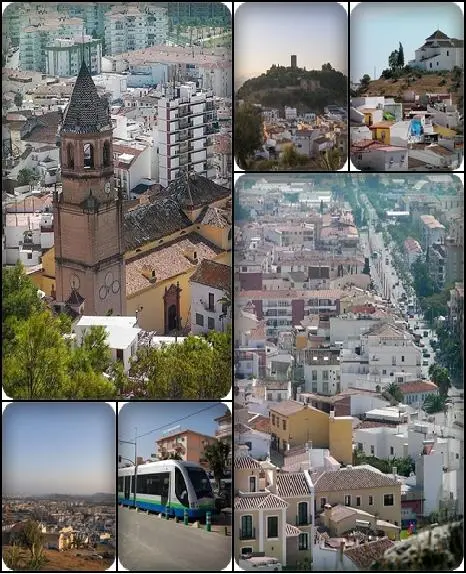
Vélez-Málaga
AndalucíaClimate
What to see in Vélez-Málaga: the essentials
Palacio Marqués de Beniel
The Palacio Marqués de Beniel (Marquis of Beniel Palace) is the most important civil building in Vélez-Málaga for its grandeur and architectural beauty. Its construction was completed in 1609, taking shape as a sober Mannerist-influenced building of brick and stone. What draws the eye most is its outstanding façade, with a marble doorway adorned with the coats of arms of the Molina Medrano family. Inside, the rooms are laid out around a central courtyard with marble columns, among which the exquisite coffered ceiling of its imperial staircase stands out. It was built by Don Alonso Molina y Medrano, who never came to live in it; as he had no direct descendants, it was inherited by his nephew, the Marquis of Beniel of Murcia, who kept it ceded as the residence of the Captains General and the Regiment.Ermita Virgen de los Remedios and Camarín de Nuestra Señora de los Remedios
The Ermita de la Virgen de los Remedios was built in the mid-17th century on the summit of the Cerro de San Cristóbal, with its camarín (shrine) dedicated to the city’s patron saint. In that same century, devotion to the Virgen de los Remedios became a matter of great interest among the people of Vélez, spearheaded by Father Vedmar, who founded the brotherhood of Nuestra Señora de los Remedios. The old image of Ntra. Sra. de los Remedios was brought in 1592 from Granada by Doña María Calderón and placed in the private oratory of the house of the ensign Don Francisco de Toledo, her brother. It is a place of traditional devotion that offers panoramic views over the entire city and the coast.Playa de Torre del Mar
The Playa de Torre del Mar is a long urban beach, four kilometres in length and up to almost one hundred metres wide at some points along its course. Its fine black sand is an invitation to enjoy the open air all year round. It has countless services, excellent connections, a vast range of leisure and dining options, an enviable climate and the hospitality of its people, which make Torre del Mar a benchmark on the Málaga coastline. Its recreational areas also stand out, along with the merenderos where you can enjoy tasty pescaíto (fried fish) and its Paseo Marítimo (seafront promenade), admired by all the visitors who enjoy it throughout the year.MUVEL Museo de Vélez-Málaga
MUVEL is the municipal museum housed in the old Hospital Real de Vélez-Málaga, a building founded in 1487 by the Catholic Monarchs after the reconquest of the city on 3 May of that year. The property was handed over in the 17th century to the Order of Saint John of God. Its main architectural value lies in the solidity of its materials and geometry, and in its adaptation to the slope through retaining and foundation systems based on brick vaults made with local material. Among its most interesting spaces are those that were never built, such as the Mudéjar-style courtyard and the courtyard preceding the entrance.Teatro del Carmen
The Teatro del Carmen in Vélez-Málaga occupies the former Convento del Carmen (Carmen Convent), founded in 1591 by the Order of the Discalced Carmelites and regarded as one of the most important in the city. During the Trienio Liberal (Liberal Triennium), the building was confiscated and the monks evicted in 1821; the church passed into the ownership of the Diocese of Málaga and the rest to private individuals, with its orchard turned into a bullring. In 1884 the church was deconsecrated from liturgical use and converted into a theatre. Of that conventual complex, the cloister—known as the Patio de la Meditación (Courtyard of Meditation)—survives today, along with the theatre itself, whose striking façade is Mannerist in style. The space was restored in the early 1990s to recover its use as a performance venue, and it is now the city’s main municipal theatre, with a year-round programme of cultural and theatrical events.Convento de San Francisco and Iglesia de Santiago
A conventual complex and church of notable heritage value in the old town of Vélez-Málaga, whose origins date back to 1487, when a Franciscan monk settled in an old mosque in the suburb to convert it into a church under the patronage of Santiago. From that former mosque, its Almohad-era minaret survives, reconverted into a bell tower and profusely decorated with distinctive sebka panels.Iglesia de Santa María la Mayor
The Iglesia de Santa María la Mayor is one of the main monuments of the old town of Vélez-Málaga and forms part of the town’s essential monumental itinerary. It stands on the site of the former great mosque of the Muslim medina, whose minaret tower was reused as a bell tower after the Christian conquest. The temple, Mudejar in style at its origin, has undergone various architectural transformations over the centuries that have left their mark in later styles, including Gothic and Baroque. The complex also houses the Museo de Semana Santa (Holy Week Museum), linked to the town’s brotherhood and its local processional imagery.Iglesia de San Juan Bautista
The original church, in the Gothic-Mudejar style, was built in 1487 on the site of an old medieval mosque. The temple is laid out in three naves of six bays, the central one taller and wider, separated by semicircular transverse arches resting on pillars with recessed pilasters attached to their faces. The major renovations it underwent in the mid-19th century transformed its interior and its façades into a Neoclassical church.Centro de Arte Contemporáneo Francisco Hernández
The Centro de Arte Contemporáneo (CAC) Francisco Hernández in Vélez-Málaga is the first exhibition space dedicated to emerging art created in Andalusia outside a provincial capital. It opened on 14 September 2013 with a major retrospective exhibition of the painter Francisco Hernández, a leading figure in Spanish contemporary painting. The centre is housed in a former mansion on Calle Félix Lomas, in the heart of the city’s old town. Dedicated to the avant-garde and new artistic perspectives, the museum programmes temporary exhibitions and preserves the legacy of Francisco Hernández, establishing itself as one of the town’s most important cultural facilities.Antigua Fábrica de Azúcar Nuestra Señora del Carmen
This is one of the main examples of the pre-industrial and sugar-making heritage of the area, linked to the old mill or trapiche that processed the sugar cane grown in the nearby river plains and hillsides. The factory formed part of the network of mills and sugar refineries that dotted the Vega del río Vélez (Vélez River plain), an activity that took root in the region from the Andalusian period and continued until the sector’s decline in the 20th century. Its heritage value lies in the preservation of the industrial architectural typology and in its status as a material record of the economic and social history of Vélez-Málaga and its surroundings.Convento de Jesús, María y José (Convent of the Carmelites)
It was founded in 1702 by the Discalced Carmelite order, with nuns from Écija and Antequera. The church was built between 1738 and 1745, and its façade retains the Mannerist scheme typical of Carmelite churches. It has a single nave, with important mural paintings depicting, for the most part, saints.Fortress or Alcazaba of Vélez-Málaga
The walled enclosure, adapted to the terrain, corresponds to the old Arab medina of La Villa and preserves stretches of wall and towers that allow visitors to walk part of the defensive layout. The visit lets you explore the walls and enjoy sweeping views over the Axarquía region, forming part of the so-called Ruta de la Medina (Medina Route), which traces the Arab legacy of Vélez-Málaga’s old town alongside other monumental landmarks such as convents, palaces and churches.Casa Cervantes
The Casa de Cervantes (Cervantes House) is an imposing palace dating back to the early 16th century, located in the old town of Vélez-Málaga. The building owes its name to the popular tradition that the illustrious writer Miguel de Cervantes Saavedra stayed here around 1594, during his work as a royal tax collector, a story that lends the palace great artistic and literary value. Architecturally, the Casa de Cervantes is a treasure trove of styles: on the outside, the façade remodelled in the 18th century stands out with elements of civil Baroque, large balconies with wrought-iron enclosures and an old Gothic ashlar doorway with a lintel. On entering, visitors discover a beautiful quadrangular interior courtyard with arcaded galleries on columns.🍂 Otoño
Si visitas Vélez-Málaga en otoño, el calor da una tregua y las tardes son muy agradables para recorrer el centro. Septiembre trae la Real Feria de San Miguel, una excusa perfecta para mezclar tradición y buen tiempo. Aprovecha para visitar el Convento de San Francisco e Iglesia de Santiago con calma, y lleva algo de abrigo fino para la noche.
What to do in Vélez-Málaga
Vélez-Málaga offers a range of activities that go from immersing yourself in its Mudéjar and Renaissance heritage to enjoying a four-kilometre urban beach in Torre del Mar, not to mention street markets, patron saint festivals and a cuisine tied to the fertile plain of the Vélez River.- Follow the Ruta de la Medina: stroll through the old town along the layout of the former Arab medina, climb up to the Alcazaba and look out from the viewpoints of Cerro de San Cristóbal to understand why this city was one of the most coveted strongholds of the Nasrid kingdom.
- Get up early at the Mercado Municipal: have breakfast at one of the bars by the entrance, where set menus and toast with local produce are a sacred ritual among the people of Vélez.
- Go to the market on Thursdays: the weekly market brings together local agricultural produce, textiles, plants and household utensils in an atmosphere of an Andalusian souk that is still alive today.
- Experience the Night of San Juan on the beach: if you travel in June, join the bonfires on the sand of Torre del Mar, one of the most magical nights in the local calendar.
- Attend the Teatro del Carmen: check the cultural and theatre programme of the main municipal theatre, housed in a former 16th-century Carmelite convent.
- Explore emerging art: visit the Centro de Arte Contemporáneo Francisco Hernández, the first exhibition space for emerging art created in Andalusia outside a provincial capital.
Vélez-Málaga in a day: express itinerary
If you only have one day, this route gives you the essentials of Vélez-Málaga without rushing, starting in the old town and finishing with your feet in the sand.- 9:00 – Breakfast at the Mercado Municipal (Municipal Market): start with a hearty breakfast at the bars by the entrance, where local produce from the vega del río Vélez (Vélez River plain) makes all the difference.
- 10:00 – Iglesia de Santa María la Mayor (Church of Santa María la Mayor): step into the temple that stands on the site of the old main mosque of the medina, with its minaret converted into a bell tower and centuries of history layered on top.
- 11:00 – Palacio Marqués de Beniel (Marqués de Beniel Palace): admire the marble doorway bearing the coats of arms of the Molina Medrano family and peek into its central courtyard with marble columns.
- 12:00 – Fortaleza or Alcazaba: walk the walls of the old Arab medina and enjoy the views over the Axarquía, joining in the Ruta de la Medina (Medina Route).
- 13:30 – Lunch in the old town: order an ajobacalao if you’re travelling during Lent or some sopas de maimones if the day is cool; in summer, a well-chilled chambao is the perfect choice.
- 16:30 – Ermita Virgen de los Remedios (Virgen de los Remedios Chapel): climb up to the Cerro de San Cristóbal to see the patron saint’s shrine and get the best panoramic view of the city and the coast.
- 18:00 – Playa de Torre del Mar (Torre del Mar Beach): end the day with a walk along the Paseo Marítimo, stopping at one of the beach bars to try the pescaíto frito (fried fish).
Where to eat in Vélez-Málaga: local cuisine
Where to stay in Vélez-Málaga
Casco Histórico
Corazón monumental de la ciudad con calles empedradas, palacios renacentistas y ruinas árabes. Es la zona más pintoresca, llena de iglesias, conventos y plazas tradicionales donde se concentra el patrimonio cultural.
La Torre del Mar
Principal núcleo costero y turístico, conocido por su extenso paseo marítimo flanqueado de palmeras y playas urbanas. Ofrece un ambiente más moderno y relajado frente al mar con amplia oferta de restaurantes y chiringuitos.
El Cerro
Barrio residencial situado en una elevación junto al casco histórico, caracterizado por sus vistas panorámicas sobre la ciudad y la costa. Es una zona tranquila, principalmente habitada por locales, con acceso rápido al centro pero alejada del bullicio turístico directo.
Zapillo
Zona costera situada entre el centro urbano y La Torre del Mar, conocida por su playa larga y fina y su ambiente familiar. Cuenta con un paseo marítimo más tranquilo que el de la Torre y es popular entre quienes buscan tranquilidad cerca del agua.
San Roque
Barrio tradicional ubicado en las inmediaciones del casco histórico, conocido por albergar la ermita de su santo patrón y mantener una atmósfera vecinal auténtica. Es una zona de tránsito común hacia el centro, con arquitectura típica andaluza y menos presencia comercial turística.
How to get to Vélez-Málaga
From Málaga, the fastest option is driving: 36 min.
| From | Direct train | Direct bus | Car |
|---|---|---|---|
| Málaga | — | 45 min · 71/day ALSA, Red de Consorcios de Transporte de Andalucía - Área de Málaga | 36 min 37 km |
| Rincón de la Victoria | — | 33 min · 45/day Red de Consorcios de Transporte de Andalucía - Área de Málaga, ALSA | 20 min 21 km |
| Granada | — | 2 h 30 min · 1/day ALSA | 1 h 29 min 118 km |
Direct trains and buses from the official timetables published by the operators on Spain's National Transport Access Point (a reference Wednesday); driving times from OpenStreetMap. Operators that do not publish their timetables may run more services. Check the timetable before you travel.
Getting around Vélez-Málaga
Vélez-Málaga has an urban bus service connecting the historic centre with coastal areas such as Torre del Mar and Zapillo, making it possible to travel car-free between the monumental city and the beaches. For getting around the old town itself, walking is best: the cobbled streets and squares are made for strolling, and most of the monuments are clustered within easy walking distance. If you want to explore the Vega del Río Vélez (the river plain) or take trips through the Axarquía, a rental car will give you more freedom.Weather in Vélez-Málaga
Best time to visit Vélez-Málaga
Day trips from Vélez-Málaga
Vélez-Málaga is an excellent base for exploring the Axarquía region and the Costa del Sol, thanks to its position just 37 km from central Málaga and its good road connections.- Málaga city: at 37 km, the provincial capital offers museums, cultural life and an enormous dining scene. By car or bus, it’s a comfortable half-day or full-day trip.
- Torre del Mar and the eastern coast: Vélez-Málaga’s own coastal district is a day trip in itself, with its four-kilometre beach and seafront promenade. From there you can continue on to other spots along the Málaga coastline.
- Inland Axarquía: the region’s white villages, with their vineyards and mountain scenery, are a perfect escape for anyone wanting to discover the less touristy side of Andalusia.
Fascinating facts about Vélez-Málaga you never knew
A name that comes from the valley. The name Vélez derives from ‘Ballix’ (valley), the name the city was given during the period of Muslim rule. Every time you stroll through the Vega del Río Vélez, you’re walking over the city’s original place name. A city by royal decree. Vélez-Málaga was granted city status in 1487 by the Catholic Monarchs after the Reconquista. It wasn’t a gradual rise: it was a political gift that changed the town’s status forever. Spain’s avocado capital. Vélez-Málaga is Spain’s largest producer of avocados. The fields of the Vega del Río Vélez are dotted with avocado and mango trees, and the local produce reaches markets all over Europe. A first-class alcazaba. The Alcazaba-Fortaleza de Vélez-Málaga (the city’s fortress), built in the 10th century, is one of the most important alcazabas of the Nasrid kingdom. Its walled enclosure, adapted to the terrain, preserves stretches of wall and towers that let you follow part of the original defensive layout. A legendary earthquake. According to legend, on 31 July in the year 365 a powerful earthquake accompanied by gigantic waves destroyed the city at the mouth of the river Vélez. The story is passed down from generation to generation as a warning about the power of the sea and the earth.Who Vélez-Málaga is for
Vélez-Málaga is a city for travellers who want to combine historic heritage and beach without giving up local life. Couples will find in the old town a maze of cobbled streets, Renaissance palaces and charming squares. Families will enjoy Torre del Mar beach, with its promenade, its beach bars and its safe atmosphere. History and architecture lovers have in the Ruta de la Medina (Medina Route), the convents, churches and palaces a dense and well-preserved monumental circuit. And foodies can go from bar to bar sampling ajobacalao, sopas de maimones and chambao, as well as fresh produce from the vega del río Vélez (Vélez river plain). With 1,776,904 travellers a year (INE) and an average stay of 2.13 nights, Vélez-Málaga is a city to be enjoyed unhurriedly, ideal for a weekend break or as a base for exploring the Axarquía.💡 ¿Sabías que...?
- ● El nombre de Vélez procede de 'Ballix' (valle), denominación que recibía la ciudad en tiempos de la dominación musulmana. (https://turismo.velezmalaga.es/historia)
- ● Vélez-Málaga obtuvo el título de ciudad en el año 1487, otorgado por los Reyes Católicos. (https://es.wikipedia.org/wiki/V%C3%A9lez-M%C3%A1laga_(M%C3%A1laga))
- ● Vélez-Málaga es el mayor productor de aguacate de España. (https://es.wikipedia.org/wiki/V%C3%A9lez-M%C3%A1laga_(M%C3%A1laga))
- ● La Alcazaba-Fortaleza de Vélez-Málaga, erigida en el siglo X, es una de las alcazabas más importantes del reino nazarí. (https://www.juntadeandalucia.es/cultura/agendaculturaldeandalucia/espacios/la-fortaleza-alcazaba-de-velez-malaga)
- ● Según una leyenda, el 31 de julio del año 365 un fuerte terremoto acompañado de olas gigantescas arrasó la ciudad situada en la desembocadura del río Vélez. (https://www.malaga.es/es/laprovincia/tradiciones/lis_cd-7995/cuento-y-leyenda-de-velez-malaga)
Frequently asked questions about Vélez-Málaga
How many days do I need to see Vélez-Málaga?
With two full days you can see the essentials of the old town (Palacio Marqués de Beniel, Iglesia de Santa María la Mayor, Alcazaba, MUVEL) and spend an afternoon at Torre del Mar beach. If you want to take trips around the Axarquía or savour the gastronomy at leisure, three or four days are ideal. The average stay for travellers is 2.13 nights according to the INE, which confirms that most people visit it as a short break.
What is the best time to visit Vélez-Málaga?
From April to October, when average temperatures range from 13.1°C in winter to 24.3°C in summer and the annual rainfall of 416.0 mm is concentrated in autumn and winter. September is especially recommended thanks to the Real Feria de San Miguel (Royal Fair of San Miguel), with a daytime fair in the old town and a fairground with casetas, concerts and rides.
How do I get to Vélez-Málaga from Málaga?
Vélez-Málaga is 37 km from the centre of Málaga and 50 km by road from Málaga-Costa del Sol Airport (AGP), about 48 minutes by car. There is a regular bus service from Málaga arriving at the Vélez-Málaga bus station (Centro Comercial), with a journey time of approximately 45–60 minutes.
Does Vélez-Málaga have a beach?
Yes, Playa de Torre del Mar is a long urban beach four kilometres in length and up to almost one hundred metres wide in some spots, with fine dark sand, a promenade, beach bars and a wide range of leisure and dining options. There is also the coastal area of Zapillo, with a long, fine beach and a family atmosphere.
What typical dishes should I try in Vélez-Málaga?
Don’t leave without trying ajobacalao (a Lenten dish with desalted cod, garlic, paprika and country bread), sopas de maimones (a hot soup of stale bread, garlic and poached egg, typical of autumn and winter) and chambao (a cold salad of cucumber, onion, tomato, oil, salt and vinegar, ideal for summer). The bars of the old town and the beach bars of Torre del Mar are the best places to sample them.