Mataró
CataluñaClimate
The smell of sea salt and freshly baked dough mingles in the air along Mataró’s Passeig Marítim, where the broad trunks of the ombu trees shade the little fishermen’s houses of the Callao neighborhood. A few kilometers away, the medieval stone of the old town preserves the echo of a medieval shipyard that launched the largest vessels in Catalonia, and the Modernista ceramics of Puig i Cadafalch shine on a facade that any architecture lover knows how to recognize. This city on the Maresme coast, just 30 km from Barcelona, combines beach, Roman heritage, and a textile tradition that can still be sensed in its museums. Come hungry, with comfortable shoes, and ready to get lost in streets that have been gazing at the same sea for centuries.
The must-seesWhat to see in Mataró: the essentials
Mataró packs in heritage ranging from a Roman villa from the 1st century BC to the first preserved building by Antoni Gaudí, with an obligatory stop at the Modernisme of Puig i Cadafalch. According to the INE, the city has more than 130,000 inhabitants and a cultural offering that surprises for its size. Here’s what you can’t miss, ordered by level of importance.
Casa Coll i Regàs
This Modernista house is one of Mataró’s most recognizable works, commissioned by textile industrialist Joaquim Coll i Regàs from architect Josep Puig i Cadafalch. Built between 1832 and 1935, it reflects how the bourgeoisie transformed Catalan cities during the industrial revolution, merging medieval heritage with the most innovative Modernista currents. Today it hosts exhibitions and cultural activities; guided tours take place mainly on Saturdays and Sundays, and the facade can be viewed freely from the street. A tip: pause in front of the facade before entering, because every ceramic detail tells a story of industrial Mataró.
Vil·la Romana de Torre Llauder
The archaeological site of Torre Llauder, located on Avenida Lluís Companys, corresponds to a Roman villa from the late 1st century BC with a prolonged period of use extending into late antiquity. Two rooms, a paleochristian basilica, the fauces, a peristyle, a hortus, the frigidarium, the tepidarium, the caldarium, a service room, the sewer network (clavegueres), and the latrines (latrinae) have been documented there—a rarity in Hispania. The visit allows you to observe the evolution of a Roman domus with its thermal spaces and its later reuse in late antiquity, an open-air history lesson right in the heart of the city. Don’t forget your camera: the mosaics and the sanitation network are unique.
Basilica of Santa Maria de Mataró
The history of this parish is tied to that of the city itself, with the first known document dating from the year 1008, making it one of the oldest in Mataró. Inside, pieces of great value are kept: the alabaster image of the Mare de Déu (Virgin Mary, 15th century), the parish cross (Creu parroquial), the image of the Mare de Déu del Roser (Our Lady of the Rosary, 17th century) by Antoni Riera and Carles Moretó, the canvas of the Purísima (Immaculate Conception) by Antoni Viladomat, and the one depicting the Calvary, the work of Ramon Amadeu (18th century). Access to the basilica is usually free during worship hours, while the chapel may require a guided tour or a specific ticket. The associated museum also offers an audio guide with a tour of the temple, ideal for understanding each work in context.
Nau Gaudí – Colección Bassat
This former cotton-bleaching warehouse, built in 1883 on behalf of the Sociedad Cooperativa La Obrera Mataronense (La Obrera Mataronense Cooperative Society), was designed by a young Antoni Gaudí and is his first surviving building, declared a BCIN (Cultural Asset of National Interest). It forms part of a larger project conceived between 1878 and 1883 that included the Salvador Pagès house (1878, no longer standing) and the latrine pavilion (ca. 1878-1880), the first three buildings constructed by the architect. In the warehouse, Gaudí experimented for the first time with parabolic arches as structural elements, a key work that served as a guide for his most authentic creative output. It can be visited during museum hours with paid admission, and it is advisable to check the official website to confirm opening times and possible reservations; the Bassat family art collection rounds out the visit with a leap into contemporary art.
Museo de Mataró (Can Serra)
The Museu de Mataró occupies the Modernista building of Can Serra, the main headquarters of the municipal museum where the city’s museum offerings are coordinated, including that of Can Marfà, dedicated to knitwear, and the collection of archaeological and ethnographic holdings from the Maresme region. It is the ideal starting point for understanding Mataró’s identity before exploring the rest of its attractions.
Presó de Mataró (Former Prison)
The 19th-century prison building designed by Elies Rogent i Amat in the historicist style—teacher of Modernista architects such as Antoni Gaudí and Lluís Domènech i Montaner—applies a new conception of prison architecture that makes it a singular construction. The project, commissioned in 1851, is based on the “panopticon” concept of the English philosopher Jeremy Bentham, with a rectangular body, a central watchtower, and a semicircular wing for the cells. Today it functions as a contemporary art space dedicated to exhibitions and cultural activities, with generally free access during opening hours.
Can Marfà – Museu de Gènere de Punt
This museum preserves machinery, samples, and graphic archives from the textile sector, with reduced-price admission and opening hours from Tuesday to Saturday. It forms part of the Museu de Mataró as its exhibition space dedicated to teixit de punt (knitwear), showcasing the tradition that defined the city’s industrial identity.
Museu Arxiu de Santa Maria – Centre d’Estudis Locals de Mataró
Access during public service hours, generally free or by donation. The institution was created under the impetus of archivist Lluís Ferrer i Clariana to manage the artistic, historical, and cultural heritage of the parish of Santa Maria, the oldest in the city, and among its sections the dels Dolors collection stands out, a display of the artistic heritage linked to the basilica.
Torre d’Onofre Arnau
A 15th-century medieval defense tower linked to the masia (farmhouse) of Can Triter, built to protect the coast from pirate attacks and a witness to the system of watchtowers along the Maresme. Rectangular in plan with a gabled roof, it is listed as a Bé Cultural d’Interès Local (Local Cultural Asset) and is located at an altitude of 113 meters at a turnoff to the right of the road toward Llavaneres, at kilometer 2.6.
Passeig Marítim de Mataró
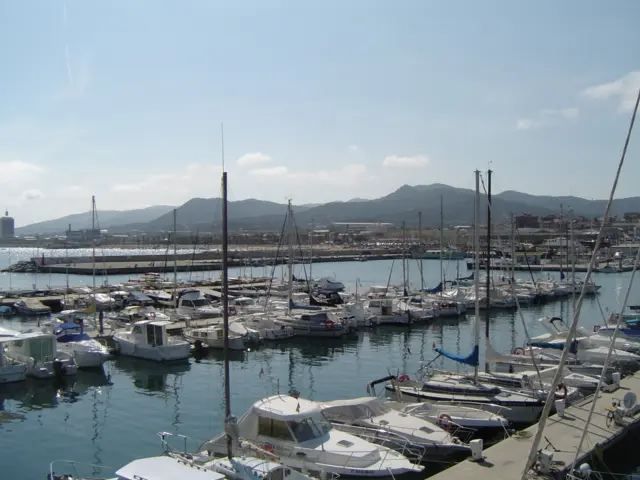
A public space with free access year-round, featuring palm trees, pines, and the distinctive bellaombres (umbrella trees) facing the little seafaring houses of Callao. From there, a 6 km route (round trip) runs along the entire seafront promenade, and another 2 km route follows the arm of the marina, with fixed tables and benches for resting under the pines.
🍂 Otoño
Si visitas Mataró en otoño, el clima sigue siendo templado y forma parte de la mejor temporada del año, así que disfrutarás de paseos tranquilos. Es un momento perfecto para visitar la Nau Gaudí - Colección Bassat, el Museo de Mataró (Can Serra) o la Presó de Mataró, sin las aglomeraciones del verano. Consejo: aprovecha la luz suave de la tarde para fotografiar la arquitectura modernista y llevar una capa ligera para la noche.
What to do in Mataró
Mataró offers a cultural programme that revolves around its main festivals, its local commerce and its neighbourhoods with their own distinct character. In July, the city erupts with Les Santes, the Festa Major declared a Festival of National Interest by the Generalitat de Catalunya, with over a hundred events in honour of Santa Juliana and Santa Semproniana, including the Nit Boja (Crazy Night), the Crida (Opening Proclamation), the Ofici de les Santes (Santes Service), the Focs d’artifici (Fireworks) and the Matinades (Dawn Parades). In April, the Fira del Llibre de Sant Jordi fills Plaza de Santa Anna and La Rambla with book and rose stalls, and in May, Parque Central hosts the Fira d’Atraccions (Funfair) of the Spring Festival, designed for families. Beyond the festive calendar, it is worth wandering through the Barri Vell (Old Quarter), strolling along the Centre commercial, getting lost in Els Molins or Cerdanyo to feel the neighbourhood pulse, and ending the day in the Zona Portuària i Platja (Port and Beach Area) with a rice dish overlooking the sea.
Mataró in one day: express itinerary
If you only have one day, this route takes you through the essentials without losing pace:
- 09:30 — Basílica de Santa Maria de Mataró. Start the day with a stroll through the historic centre and the basilica dating from 1008, enjoy the museum’s audio guide and pause before the alabaster Mare de Déu (Virgin Mary).
- 11:00 — Museu de Mataró (Can Serra) and Can Marfà. Explore the main site of the municipal museum and then the textile section, to understand the city’s industrial identity.
- 12:30 — Casa Coll i Regàs. First admire the Modernista façade by Puig i Cadafalch from the street and, if it coincides with Saturday or Sunday, sign up for the guided tour of the interior.
- 14:00 — Lunch in the Zona Portuària i Platja. Head up to the port area and try the Estofado de Mataró (Mataró stew) or a Fideuà (noodle paella) overlooking the sea.
- 16:30 — Vil·la Romana de Torre Llauder. Explore the remains from the 1st century BC with its sewer network and thermal baths, a history lesson in the open air.
- 18:00 — Nau Gaudí – Colección Bassat. End the day in the first preserved building by Gaudí, experimenting with its parabolic arches from 1883, and then let yourself be drawn in by the contemporary art of the Colección Bassat.
Where to eat in Mataró: local gastronomy
Where to stay in Mataró
Barri Vell
Es el casco histórico de Mataró, caracterizado por calles estrechas y empedradas con edificios medievales y renacentistas. Aquí se encuentra la Basílica de Santa Maria y un ambiente tranquilo lleno de historia y pequeños comercios tradicionales.
El Centre
Zona comercial y administrativa que rodea el Barri Vell, donde convergen las principales tiendas, bancos y servicios de la ciudad. Es un área vibrante durante el día con amplias avenidas peatonales ideales para pasear.
Els Molins
Barrio residencial situado cerca del centro pero con un carácter más local y menos turístico, conocido por su proximidad a zonas verdes y escuelas. Ofrece una visión auténtica de la vida cotidiana de los mataronenses sin aglomeraciones.
Vista Alegre
Zona residencial tranquila ubicada en una ligera elevación que ofrece buenas vistas hacia el mar y la ciudad. Es un área principalmente de viviendas unifamiliares y bloques bajos, muy silenciosa y segura.
Cerdanyo
Barrio popular y extenso situado al norte de la ciudad, con una fuerte identidad vecinal y diversos parques urbanos. Aunque es mayoritariamente residencial, cuenta con equipamientos deportivos y culturales importantes para la comunidad local.
Zona Portuària i Platja
Área costera que incluye el puerto deportivo, el club náutico y el paseo marítimo que conecta con las playas urbanas. Es el lugar predilecto para disfrutar del mar, comer pescado fresco y realizar actividades acuáticas.
How to get to Mataró
From Barcelona, the fastest option is the bus: 30 min (Empresa Casas, Barcelona Bus), 148 a day.
| From | Direct train | Direct bus | Car |
|---|---|---|---|
| Barcelona | 41 min · 95/day Rodalies R1 | 30 min · 148/day Empresa Casas, Barcelona Bus | 34 min 33 km |
| L'Hospitalet de Llobregat | 53 min · 95/day Rodalies R1 | — | 42 min 43 km |
| Badalona | 22 min · 94/day Rodalies R1 | 34 min · 25/day Empresa Casas | 23 min 24 km |
| Granollers | — | 26 min · 50/day Cingles Bus | 23 min 19 km |
| Sabadell | — | 57 min · 29/day Cingles Bus | 38 min 37 km |
| Santa Coloma de Gramenet | — | 57 min · 20/day Empresa Casas | 26 min 27 km |
Direct trains and buses from the official timetables published by the operators on Spain's National Transport Access Point (a reference Wednesday); driving times from OpenStreetMap. Operators that do not publish their timetables may run more services. Check the timetable before you travel.
How to get around Mataró
The urban bus is the most convenient way to get around Mataró, with lines connecting residential neighborhoods to the historic center, the shopping area, and the seafront. The old town and the Centre can easily be explored on foot in just over 15 minutes, and the Passeig Marítim (seafront promenade) invites you to stroll unhurriedly among palm trees, pines, and the characteristic bellaombres (shade trees). For trips to the Vil·la Romana (Roman villa), the upper neighborhoods, or the port, the urban bus covers the demand with regular schedules.
Weather in Mataró
Best time to visit Mataró
Day trips from Mataró
Mataró’s location on the Maresme coast makes it an excellent starting point for excursions around the region and the province of Barcelona. A few kilometres to the north, coastal towns of the Maresme open up with small coves and seafront restaurants, perfect for a morning at the beach and a meal based on suquets (Catalan fish stews). Inland, the natural parks of the Serralada Litoral and Montnegre-Corredor offer hiking routes through pine forests, the same ones that in 1575 twenty-five Mataró farmers committed to reforesting. And of course, Barcelona is just 30 km to the southwest, easily reachable by commuter train (Rodalies de Catalunya) according to Renfe data, for a day of culture, shopping or architecture that perfectly complements a visit to Mataró.
Curious facts about Mataró you didn’t know
The chronicler Pere Gil already noted that the largest ships in Catalonia were built in Mataró because its beach was deep enough to launch them, a detail that gives an idea of the historical importance of its medieval and modern shipyard. Few know that Miquel Biada, the most famous indiano (returned emigrant) from Mataró, brought to the city the first railway line on the Iberian Peninsula, the Mataró-Barcelona line of 1848, a connection that forever changed the relationship between the capital and the coast. And if you drive along the motorway linking Mataró with Montgat, remember that in 1969 the first toll motorway in all of Spain opened there, a milestone that many drivers pass without knowing it. To close, an image few imagine: in 1575, twenty-five Mataró farmers committed to planting more than 14,700 pines and 526 poplars in a massive reforestation effort after severe deforestation, one of the oldest documented forest policies in Catalonia.
Who Mataró is for
Mataró is for the curious who want to discover a Catalan coast different from the most familiar postcard: lovers of Modernisme who enjoy the Casa Coll i Regàs and Gaudí’s legacy, foodies who want to sink their teeth into Estofado and Fideuà, and families who appreciate a welcoming Passeig Marítim, parks like Central and quiet neighbourhoods such as Vista Alegre or Els Molins. It is also ideal for couples who want to get lost in the Barri Vell, and for those travelling by train from Barcelona looking for a day trip with heritage, sea and good food without queues or crowds.
💡 ¿Sabías que...?
- ● El cronista Pere Gil destacaba que los navíos más grandes de Cataluña se hacían en Mataró porque su playa era lo suficientemente profunda para botarlos. (https://capgros.elnacional.cat/es/mataro/sabias-mataro-se-construian-galeras-rey-con-madera-dosrius-hace-500-anos_816351_102.html)
- ● Miquel Biada, el indiano mataroní más famoso, llevó a la ciudad la primera línea de ferrocarril de la península Ibérica (Mataró-Barcelona, 1848). (https://es.wikipedia.org/wiki/Matar%C3%B3)
- ● En 1969 se abrió la primera autopista de peaje de toda España, entre Mataró y Montgat. (https://es.wikipedia.org/wiki/Matar%C3%B3)
- ● En 1575, veinticinco campesinos mataronenses se comprometieron a plantar más de 14.700 pinos y 526 álamos en una reforestación masiva tras la fuerte deforestación. (https://capgros.elnacional.cat/es/mataro/sabias-mataro-se-construian-galeras-rey-con-madera-dosrius-hace-500-anos_816351_102.html)
Frequently asked questions about Mataró
How many days do I need to see Mataró?
With one well-planned full day it is possible to cover the essentials: Basílica de Santa Maria, Casa Coll i Regàs, Vil·la Romana de Torre Llauder and Nau Gaudí, plus a stroll along the seafront. If you want to add Can Marfà, the Colección Bassat at a leisurely pace and an excursion to the Maresme region, two days is ideal.
What is the best time of year to visit Mataró?
According to AEMET data, the average temperature is 21.1°C in summer and 9.7°C in winter, with the best period running from May to November. May, June, September and October are the most balanced months for combining beach and heritage, and July adds the appeal of Les Santes.
How do I get to Mataró from Madrid?
There is no direct AVE connection to Mataró; the city’s train station belongs to the commuter network (Rodalies de Catalunya) according to Renfe. From Madrid you must first travel by long-distance train to Barcelona and then connect with a commuter train to Mataró station, with a total journey time of around 4-5 hours depending on the connection.
Does Mataró have a beach?
Yes, Mataró has urban beaches along its Passeig Marítim, including the Callao area, with services, showers and a 6 km seafront promenade (round trip) ideal for walking or cycling among palm trees, pines and the curious bellaombres.
Is visiting Mataró expensive?
Many of the main attractions, such as the Basílica de Santa Maria, the façade of Casa Coll i Regàs or the Passeig Marítim, are free. Paid venues, such as Nau Gaudí or Can Marfà, have reduced rates and combined access tickets, and the two Michelin Selection recommendations in the city allow you to enjoy a high-level gastronomic experience without leaving the municipal area.