Chiclana de la Frontera
AndalucíaClimate
The smell of freshly fried fish mingles with the Atlantic breeze as the sun sets behind the Castle of Sancti Petri, tingeing the 5,350 metres of golden sand at La Barrosa orange. Chiclana de la Frontera is not just a beach: it is a town with 3000 years of Phoenician history, centuries-old wineries and an almadraba (tuna-fishing) tradition that can still be felt in its tidal marshes. With 459,257 travellers a year (INE) and an average stay of 4.58 nights, this corner of the Bay of Cádiz has managed to keep its seafaring soul without giving up the comforts of a first-class tourist destination.
The must-seesWhat to see in Chiclana de la Frontera: the essentials
Chiclana de la Frontera packs into just a few kilometres a heritage that ranges from 16th-century watchtowers to family beaches with protected dunes, by way of an old town declared a Conjunto Histórico (Historic Site). These are the stops you cannot miss.
Castle of Sancti Petri
The Castle of Sancti Petri is much more than a fortress: it is the gateway to an old almadraba and salt-making settlement that preserves Chiclana’s most seafaring memory. Overlooking the maze of tidal channels in the Bay of Cádiz Natural Park, this small territory marks the natural border between the waters of the Atlantic and the creeks. Strolling through the streets of its old settlement is to hear the echoes of a fishing craft that, since time immemorial, brought the prized almadraba tuna into port. Today the settlement has been restored as a marina and sports harbour, and it is one of the best places in the province to watch the sunset.
La Barrosa Beach
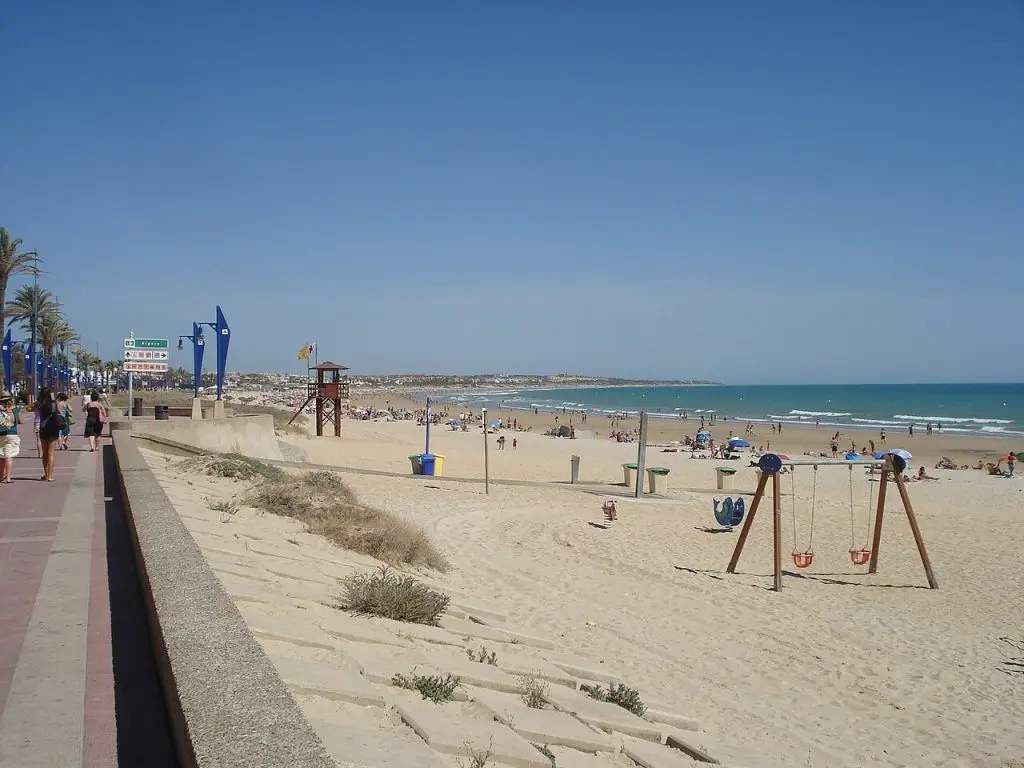
La Barrosa is the municipality’s main tourist engine and one of the longest beaches in the province of Cádiz, with some 5,350 metres of fine golden sand. Its gentle slope and great breadth make it a family beach where relaxation and play go hand in hand at any time of day. It is divided into sections, with protected dunes and pine groves that give it a natural feel hard to find on other developed stretches of sand. At its northern end, near the start of the La Barrosa road, you can take in one of the most beautiful sunsets in Cádiz, with the sun setting right beneath the silhouette of the Castle of Sancti Petri.
Chiclana Municipal Museum (Casa de los Briones)
The Chiclana Municipal Museum occupies the Casa de los Briones, a characterful building right on the Plaza Mayor. It offers guided tours for both large and small groups as well as for schools and secondary schools, making it an ideal stop for understanding local history. In summer (from 1 April to 31 October) it opens Tuesday to Sunday from 10:00 to 14:00, with afternoon hours on Thursdays and Fridays from 18:30 to 21:30. In winter (from 1 November to 31 March) the hours are Tuesday to Sunday from 10:00 to 14:00, with afternoon hours on Wednesdays, Thursdays and Fridays from 17:30 to 20:30; it is closed on Mondays.
Torre del Puerco
The Torre del Puerco is a watchtower of military architecture built in the 16th century as part of the network of coastal watchtowers. It has been listed as a Bien de Interés Cultural (Asset of Cultural Interest) in the Monument category since 29 June 1985. It stands on the Loma del Puerco, on the boundary between Chiclana and Conil, and although it is in a ruined state and cannot be visited, it is worth approaching to imagine its defensive role against pirate raids.
Novo Sancti Petri Beach
Novo Sancti Petri, also known as La Loma del Puerco, is one of Chiclana’s three great stretches of sand alongside La Barrosa and San Pedro. It is an extensive beach of fine golden sand bathed by the Atlantic, with a protected public pine grove next to the sand and a tourist information point facing the pines. Its tourist development is organised around hotel complexes and golf courses integrated into the natural surroundings, shaping a model of tourist urbanisation characteristic of the Cádiz coastline.
Balneario de Fuente Amarga
Balneario de Fuente Amarga is a historic spa whose mineral-medicinal springs have been known since ancient times, and which today complements the tourist offering with hydrotherapy treatments and thermal cures.
Ermita de Santa Ana
The Ermita de Santa Ana (Chapel of Saint Anne) is a neoclassical temple with an octagonal floor plan built in the second half of the 18th century atop Santa Ana hill, the highest point in the city, with an original ring-shaped portico over arcades designed by Torcuato Cayón.
Iglesia de San Juan Bautista
The main church of San Juan Bautista is a neoclassical temple built from the 16th century onwards, declared a Site of Cultural Interest since 16 April 1975, and which treasures inside a 16th-century relief and the image of the city’s patron saint.
Centro de Interpretación del Vino y la Sal
The Centro de Interpretación del Vino y la Sal (Wine and Salt Interpretation Centre), located at Plaza de las Bodegas, s/n, explains the wine-making and salt-mining tradition of Chiclana and houses the Centro Ciudad Tourist Office, where you can pick up maps and brochures.
Iglesia de San Telmo
The Iglesia de San Telmo forms part of the religious heritage of Chiclana’s old town and is listed among the religious monuments of Andalusia.
Torre Bermeja
Torre Bermeja is a 16th-century watchtower declared a Site of Cultural Interest on 29 June 1985, located on La Barrosa beach and preserved in restored condition, although it cannot be visited inside.
Casco antiguo de Chiclana de la Frontera
Chiclana’s old town, declared a Historic Site, is a maze of narrow whitewashed streets that preserves the commercial and Enlightenment-era splendour of the 18th century, with churches built of oyster-stone and century-old mansions and wine cellars.
🍂 Otoño
Si visitas Chiclana de la Frontera en otoño, el calor veraniego da paso a temperaturas más templadas, lo que permite seguir disfrutando de la playa sin multitudes. En septiembre se celebra la Fiesta de la Parpuja, una excusa perfecta para conocer la gastronomía local. Es un buen momento para visitar el Balneario de Fuente Amarga o el Museo Municipal de Chiclana con más calma.
What to do in Chiclana de la Frontera
Chiclana offers activities ranging from flamenco festivities in the Plaza Mayor to tours of century-old wine cellars, along with fresh-produce markets stocked from the bay and boat trips through the marshes of the Natural Park. Local life is spread between the old town, the fishermen’s neighbourhoods and the tourist beaches, and each season brings its own calendar of events.
- Feria y Fiestas de San Antonio (June): Chiclana’s most representative festival, of livestock-farming origin, with casetas, sevillanas dancing, horse parades and carriages at the Las Albinas fairground.
- Carnaval de Chiclana (March): Parades, tanguillos, performances by carnival groups, presentation of insignia and the opening speech at the Carpa Anfiteatro on the Alameda del Río and in the streets of the centre.
- Fiesta de la Parpuja (September): A flamenco festival in the Plaza Mayor with performances by local artists and great figures of cante, toque and baile.
- Mercado de Abastos: A provincial benchmark with more than 15 years of history, where you can buy fish from the bay, seafood and produce from the market gardens of Chiclana.
- Poblado de Sancti Petri: The epicentre of water sports, with a marina and sports harbour, and one of the most beautiful sunsets in Cádiz.
Chiclana de la Frontera in a day: express itinerary
If you only have one day, this route takes in the must-sees without rushing and with time to eat well. The key is to start early in the old town and finish by the sea.
- 9:30 – Old town and Plaza Mayor: Stroll through the whitewashed streets of the Historic Quarter, visit the Municipal Museum in the Casa de los Briones and climb up to the Ermita de Santa Ana for the best panoramic views of the Bay of Cádiz.
- 11:30 – Iglesia de San Juan Bautista: Step inside to see the 16th-century relief and the image of the patron saint in this neoclassical temple declared a Site of Cultural Interest.
- 12:30 – Wine and Salt Interpretation Centre: Get to grips with the local wine-making and salt-mining tradition and take the chance to pick up maps at the Centro Ciudad Tourist Office.
- 14:00 – Lunch at La Banda or El Lugar: Try the atún encebollado (tuna with onions) or the pescaíto frito (fried fish) in a tapas bar in the centre, or head to the Mercado de Abastos for a snack made with fresh produce.
- 17:00 – La Barrosa beach and Torre Bermeja: Walk along the golden sand, seek out the restored Torre Bermeja and take a dip if the weather obliges.
- 20:30 – Sancti Petri village: End the day watching the sunset with the Castillo de Sancti Petri in the foreground and the sun setting over the Atlantic.
Where to eat in Chiclana de la Frontera: local cuisine
Where to stay in Chiclana de la Frontera
El Lugar (Casco Antiguo)
Es la parte más antigua y tradicional de Chiclana, situada en la margen izquierda del río Iro. De calles estrechas, plazas peatonales y casas señoriales, concentra el latido histórico, administrativo y comercial de la ciudad.
La Banda
La zona surgida a partir de la expansión histórica en la margen derecha del río Iro. Es de carácter muy residencial y con gran arraigo popular, albergando importantes bodegas locales y parques con excelentes panorámicas.
Playa de La Barrosa (Pistas 1 y 2)
El principal motor vacacional de Chiclana, caracterizado por una vibrante vida turística en torno a su playa de arena dorada. Cuenta con un animado paseo marítimo repleto de chiringuitos, restaurantes y heladerías.
Novo Sancti Petri
Exclusivo desarrollo residencial y hotelero de gran prestigio internacional situado junto a dunas espectaculares. Alberga resorts de lujo, spas y campos de golf diseñados por grandes leyendas del deporte en un entorno idílico.
Poblado de Sancti Petri
Antiguo y pintoresco asentamiento pesquero de almadraba con un aire nostálgico, rehabilitado hoy como puerto náutico y deportivo. Es el epicentro de las actividades acuáticas y ofrece una de las puestas de sol más hermosas de Cádiz.
Fuente Amarga
Un barrio tranquilo y residencial situado al sur del núcleo urbano. Es ampliamente reconocido por su histórico e idílico balneario de aguas medicinales, lo que lo convierte en un rincón perfecto para el relax.
How to get to Chiclana de la Frontera
From Cádiz, the fastest option is driving: 29 min.
| From | Direct train | Direct bus | Car |
|---|---|---|---|
| Cádiz | 53 min · 18/day Cercanías T1 | 35 min · 49/day Consorcio de Transportes Bahía de Cádiz | 29 min 26 km |
| San Fernando | 20 min · 36/day Cercanías T1 | 15 min · 36/day Consorcio de Transportes Bahía de Cádiz | 15 min 11 km |
| Conil de la Frontera | — | 25 min · 8/day Consorcio de Transportes Bahía de Cádiz | 21 min 20 km |
| Vejer de la Frontera | — | 50 min · 8/day Consorcio de Transportes Bahía de Cádiz | 31 min 35 km |
| Jerez de la Frontera | — | 45 min · 1/day Consorcio de Transportes Bahía de Cádiz | 39 min 39 km |
| El Puerto de Santa María | — | 25 min · 1/day Consorcio de Transportes Bahía de Cádiz | 32 min 30 km |
Direct trains and buses from the official timetables published by the operators on Spain's National Transport Access Point (a reference Wednesday); driving times from OpenStreetMap. Operators that do not publish their timetables may run more services. Check the timetable before you travel.
Getting around Chiclana de la Frontera
Chiclana de la Frontera has an urban bus service connecting the centre with the main neighbourhoods and the beaches. To get between the old town, La Barrosa, Novo Sancti Petri and the Poblado de Sancti Petri, a car is the most flexible option, especially if you’re travelling in high season and want to make the most of the day. If you’re staying in the La Barrosa or Novo Sancti Petri area, many trips to the beach and the chiringuitos can be made on foot.
Weather in Chiclana de la Frontera
Best time to visit Chiclana de la Frontera
Day trips from Chiclana de la Frontera
Chiclana de la Frontera is part of the metropolitan area of the Bay of Cádiz, the third most populous in Andalusia, which makes it an excellent base for exploring the province. From here you can take day trips to other towns and villages in the Cádiz region, combining beach, history and gastronomy. Its proximity to the coast lets you alternate sandy stretches such as La Barrosa with urban or natural destinations in under an hour’s drive. Check the official tourism website of Chiclana de la Frontera for practical information on opening times, tickets and the events calendar.
Curiosities about Chiclana de la Frontera you didn’t know
Chiclana de la Frontera holds stories that surprise even those who have been visiting for years. Here are some of the most striking.
Archaeological finds at the Cerro del Castillo have shown that the Phoenicians inhabited this territory around 3000 years ago, so the town is not the 700 years old it was credited with until recently, but rather three millennia of history behind it.
On 8 August 1876, King Alfonso XII signed the Royal Decree granting the honorary title of city to the town of Chiclana de la Frontera, a recognition that marked its administrative history.
Francisco de Paula Montes Reina, known as «Paquiro», was born in Chiclana and is considered the inventor of the montera (bullfighter’s hat), as well as a figure who changed bullfighting forever.
The writer Antonio García Gutiérrez, author of the play «El Trovador», was born in Chiclana and was immortalised as «hijo del genio» (son of genius) in 1835.
The cyclist José Manuel Moreno Periñán, known as «El Ratón», is an Olympic champion born in Chiclana, a local source of pride who unites sport and a nickname.
The municipality of Chiclana de la Frontera covers an area of 203.13 square kilometres, which explains the variety of landscapes between marshes, pine groves and sandy beaches.
Who is Chiclana de la Frontera for
Chiclana de la Frontera is a destination for almost everyone, but it shines especially for families looking for safe, spacious beaches such as La Barrosa, for couples who want spa and golf resorts in Novo Sancti Petri, and for foodies in pursuit of almadraba tuna and the cuisine of Ángel León. History lovers will find in its old town, its watchtowers and its 3000 years of Phoenician past a compelling reason to stay more than a day. And those travelling on a tight budget can enjoy tapas, markets and public beaches without spending too much. With 459,257 travellers a year and 34% of them foreign (INE), Chiclana is a mature destination but one with a local soul.
💡 ¿Sabías que...?
- ● Chiclana de la Frontera tiene unos 3000 años de historia, ya que los hallazgos arqueológicos del cerro del Castillo evidencian que los fenicios habitaron este territorio, y no los 700 años que se le atribuían hasta fechas recientes. (https://es.wikipedia.org/wiki/Chiclana_de_la_Frontera)
- ● El 8 de agosto de 1876, el rey Alfonso XII firmó el Real Decreto por el que concedió el título honorífico de ciudad a la villa de Chiclana de la Frontera. (https://www.chiclana.es/150aniversario/breves-apuntes-historicos)
- ● Francisco de Paula Montes Reina, conocido como «Paquiro», nació en Chiclana y es considerado el inventor de la montera y una figura que cambió el toreo para siempre. (https://www.chiclana.es/elcronista)
- ● El escritor Antonio García Gutiérrez, autor de la obra «El Trovador», nació en Chiclana y fue inmortalizado como «hijo del genio» en 1835. (https://www.dechiclana.com/personajes/)
- ● El ciclista José Manuel Moreno Periñán, conocido como «El Ratón», es un campeón olímpico nacido en Chiclana. (https://www.dechiclana.com/personajes/)
- ● El municipio de Chiclana de la Frontera tiene una superficie de 203,13 kilómetros cuadrados. (https://www.chiclana.es/fileadmin/user_upload/soc/HISTORIA_DE_CHICLANA_DE_LA_FRONTERA.pdf)
Frequently asked questions about Chiclana de la Frontera
How many days do I need to see Chiclana de la Frontera?
With 2-3 days you can see the essentials: the old town, Ermita de Santa Ana (St Anne’s Chapel), Iglesia de San Juan Bautista (St John the Baptist Church), Playa de La Barrosa (La Barrosa Beach), Torre Bermeja (Bermeja Tower) and the Poblado de Sancti Petri (Sancti Petri village). If you want to add a relaxing beach day, a trip to the Bay of Cádiz and dinner at Alevante by Ángel León, plan for 4-5 days. The average stay for travellers is 4.58 nights (INE), which confirms that most people stay for almost a week.
What is the best time of year to visit Chiclana de la Frontera?
From April to October, with an average summer temperature of 24.2°C and annual rainfall of 476.4 mm concentrated outside the summer months. June is ideal for the Feria de San Antonio (St Anthony’s Fair) and September for the Fiesta de la Parpuja (Parpuja Festival). In winter the average temperature is 13.0°C, perfect for walks without the crowds.
How do I get to Chiclana de la Frontera from Madrid?
The fastest option is to fly to Jerez Airport (XRY), located 47 km away by road, and continue by car or bus. The drive from the airport takes about 47 minutes. You can also arrive by road from Madrid by car or long-distance bus, with times varying depending on traffic and stops.
Which beaches are the best in Chiclana de la Frontera?
Playa de La Barrosa (La Barrosa Beach) is the largest and most visited, with around 5,350 metres of fine golden sand, dunes and protected pine groves. Playa de Novo Sancti Petri, also known as La Loma del Puerco, is another great option with a protected public pine forest and a more exclusive feel. Both are ideal for families thanks to their gentle slope.
Where can I eat well in Chiclana de la Frontera?
For fine dining, Alevante by Ángel León in Novo Sancti Petri holds a Michelin star. For local tapas, look for bars in La Banda or El Lugar where you can try atún encebollado (tuna with onions), pescaíto frito (fried fish) and chicharrones de Chiclana (Chiclana-style pork scratchings). The Mercado de Abastos (covered market) is perfect for buying fresh produce from the bay.