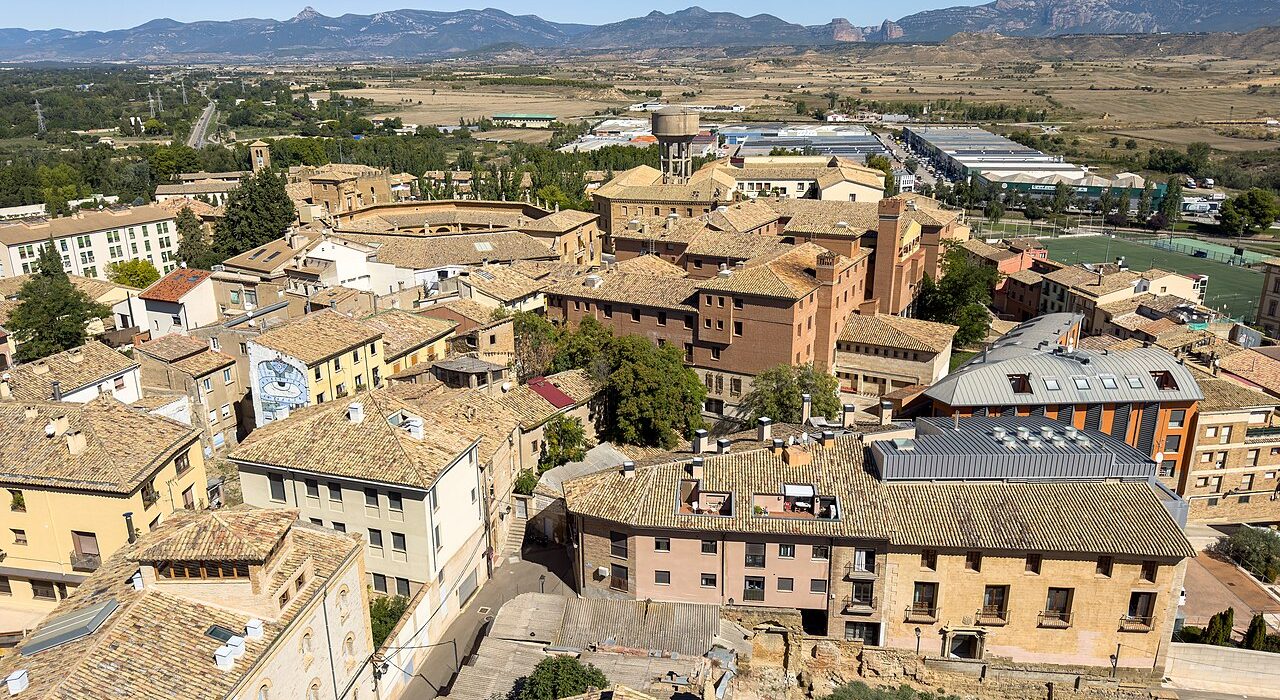
Zaragoza → Huesca
72 kmLeaving Zaragoza and, in under an hour, feeling the air turn cooler and the horizon fill with mountains is one of those small pleasures of traveling through northern Spain. The journey to Huesca is not just a logistical transfer, but a quick and fascinating transition from the great city on the Ebro to the gateway of the Pyrenees, where the speed of the AVE competes with the freedom of the open road on a short but intense route.
How to get from Zaragoza to Huesca: quick overview
The fastest way to get there is by AVE train, although the most economical and flexible option is the bus or your own car. To decide on your ideal means of transport, you should consider whether you value the convenience of arriving in the center without driving or the freedom to move around once you’re there. If you’re looking for pure speed, the AVE train covers the distance in just 49 minutes, making it unbeatable compared to the 50 minutes the car takes under ideal traffic conditions. On the other hand, if your priority is budget, the bus operated by Avanza offers fares from €5.7, making it the cheapest alternative compared to the generally higher prices of high-speed rail. For travelers planning to explore the surroundings of Huesca or do rural tourism, renting a car or using your own vehicle remains the top recommendation, as it allows you to stop in charming towns like Almudévar or Zuera without depending on fixed schedules.
By car from Zaragoza to Huesca
Driving from Zaragoza to Huesca is a straightforward 72-kilometer journey that takes approximately 50 minutes via a network of modern, toll-free highways. The main and most direct route usually involves taking the A-23, known as the Autovía Mudéjar (Mudéjar Highway), which connects both provincial capitals smoothly and safely. However, the area’s road network offers several verified alternatives you can use depending on your departure point in Zaragoza or your driving preferences. Among the available options is the A-2, or Autovía del Nordeste (Northeast Highway), as well as the A-68, or Autovía del Ebro (Ebro Highway), both toll-free and in good condition. It is also possible to travel on the N-232, the Vinaròs to Santander road, or use the A-22, the Autovía del Camino Catalán (Catalan Route Highway), to connect with the main route. All these roads, including the aforementioned A-23, guarantee a journey with no additional toll costs, which makes traveling by private vehicle very competitive in terms of total cost if you’re traveling in a group. As you leave the city, the landscape quickly changes from agricultural plains to the first pre-Pyrenean foothills, making those 50 minutes behind the wheel pleasant and visually appealing.
By train from Zaragoza to Huesca
The train is the fastest and most comfortable option, with services operated by Renfe connecting Zaragoza-Delicias station with Huesca station in record times. According to operator data, there are up to 9 daily trains covering this route, offering adequate frequency for business travelers or tourists who want to make the most of the day. The service is mainly divided into two categories: the AVE and the Regional. The AVE is the crown jewel in terms of speed, with 2 daily departures that complete the journey in just 49 minutes, getting you to the center of Huesca almost faster than it would take you to park the car. The Regional train, for its part, offers a slightly slower but more frequent alternative, with 7 trains a day completing the trip in 56 minutes. The schedule is extensive, with the first train starting the day at 6:29 in the morning and the last service ending at 21:39 at night. This connectivity makes it perfectly feasible to take a day trip without needing to stay overnight, although the comfort of the carriages invites you to relax and enjoy the scenery as you approach the mountains.
By bus from Zaragoza to Huesca
The bus is the most economical option for traveling between these two cities, with fares ranging from €5.7 to €9.4 depending on how far in advance you book and demand. The company responsible for operating this direct service is Avanza, which maintains a regular route connecting the stations of both capitals. With an estimated journey time of 55 minutes, the bus competes very closely with the Regional train in terms of time, being only a few minutes slower than the standard rail option and barely 5 minutes slower than the fastest AVE. This option is ideal for travelers on a tight budget, students, or tourists who don’t need the extreme flexibility of a car but want to avoid the higher prices that high-speed train tickets usually have. The comfort of Avanza buses on this route is generally adequate for short journeys, allowing you to arrive at your destination rested and ready to start exploring the city of Huesca.
Recommended stops along the way
If you decide to make the journey by car, the 72-kilometer route offers several excellent opportunities to stop and stretch your legs in towns full of history and charm. The first logical stop is Villanueva de Gállego, a municipality located very close to Zaragoza that serves as a gateway to the region and offers a tranquil glimpse of life in the Gállego river valley. Continuing north, you’ll find San Mateo de Gállego, another strategic town on the route that allows for a brief pause before venturing further into Huesca province. A little further on, the town of Zuera stands out as a notable point of interest, being an important communications hub and a place with a rich history worth exploring if you have time. Finally, before reaching the capital, the town of Almudévar is an almost obligatory stop; strategically situated on the route, it is known for its heritage and its commanding position over the landscape, offering a perfect prelude to what awaits you in the city of Huesca. None of these stops requires major detours, as they are aligned with the main transport routes such as the A-23.
Where to stay in Huesca
For an overnight stay in Huesca, the best option is to look for accommodation in areas close to the historic center or around the train station to make getting around on foot easier. The city is not excessively large, so staying in the center will allow you to walk to most of the points of interest, such as the Cathedral or the Museum of Huesca, without needing additional transport. As for types of accommodation, the range usually varies from mid-range urban hotels to more economical options such as hostales or guesthouses, ideal for travelers looking to spend as little as possible on their stay. There are also tourist apartment options that can be advantageous for families or groups of friends traveling by car who prefer to have more space. Price ranges in the city tend to be moderate compared to other mountain tourist destinations, especially if you avoid the busiest dates during ski season or local festivals. Choosing a central area will also guarantee you a better selection of evening dining and nearby services.
Frequently asked questions about the Zaragoza–Huesca route
How long does it take to get from Zaragoza to Huesca?
Travel time varies depending on the mode of transport you choose: by car it takes approximately 50 minutes covering 72 km, while the AVE train journey takes 49 minutes and by bus or Regional train it is around 55–56 minutes.
Which is cheaper, the train or the bus?
The bus is generally the cheapest option, with prices ranging from €5.7 to €9.4 with the Avanza company, while train tickets, especially AVE ones, tend to have higher fares although they vary depending on how far in advance you book.
Is it worth renting a car?
Yes, it is worth it if you plan to visit the recommended stops along the route such as Zuera, Villanueva de Gállego, San Mateo de Gállego or Almudévar, since public transport only connects the main cities without intermediate stops.
When is the best time to travel?
It is best to travel during the day, taking advantage of the wide frequency of trains from 6:29 to 21:39, which allows you to organize round-trip excursions comfortably without depending on limited nighttime schedules.
📍 También te puede interesar
Qué ver en Zaragoza →
Qué ver en Huesca →