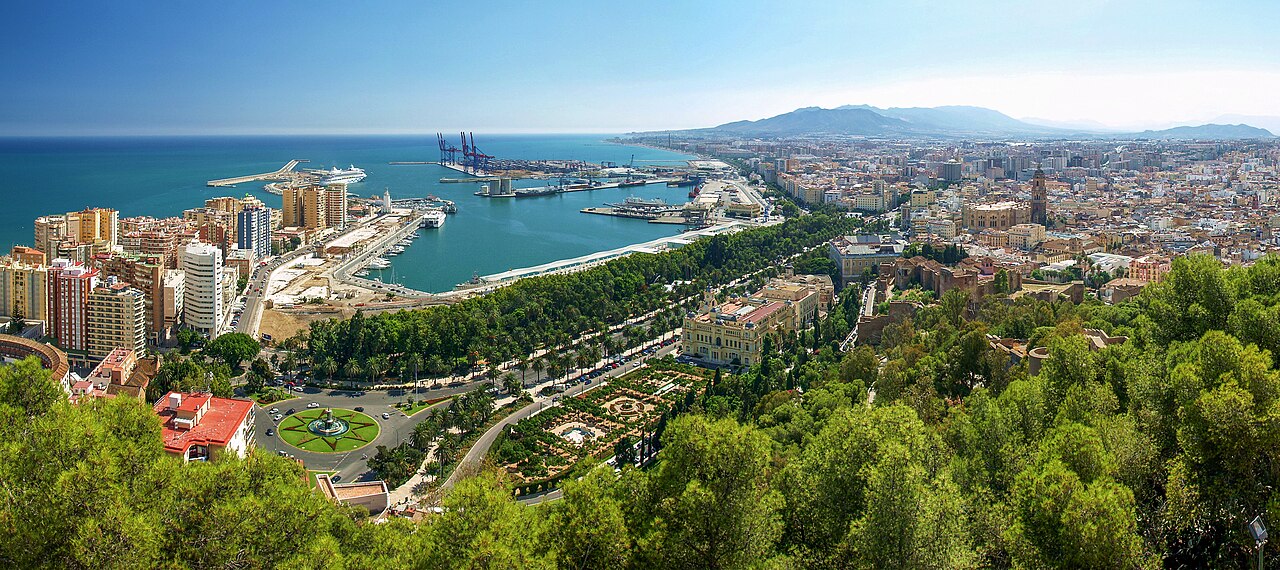
Barcelona → Málaga
997 kmImagine swapping the Gothic bustle of the Ramblas for the scent of jasmine and the radiant sunshine of the Costa del Sol in less time than it takes to tell the tale. This journey isn’t just a 1,000-kilometer transfer; it’s a crossing that lets you choose between the dizzying speed of the AVE, the absolute freedom of the open road, or the budget-friendly ease of the bus, turning the simple act of traveling into the first chapter of your holiday.
How to get from Barcelona to Málaga: a quick overview
The fastest way to travel is by AVE train, while the most flexible option is by car, and the cheapest is usually the bus. You have three main options on the table depending on your budget and travel style. If you prioritize time and comfort, the high-speed train is unbeatable, dropping you in the center of Málaga in under 7 hours. If your plan is to enjoy the Mediterranean scenery, make pit stops along the way, or travel with bulky luggage, the car is your best ally, though it requires patience to cover the nearly 1,000 km. Finally, if you’re looking to save as much as possible without sacrificing a direct route, bus companies offer regular services at very competitive prices.
By car from Barcelona to Málaga
The road route covers a distance of 997 km and takes approximately 10 hours of actual driving time. For this journey, the backbone of your trip will be the A-7: Autovía del Mediterráneo, a vital toll-free highway that will accompany you for much of the route as you travel down the coast. Leaving Barcelona, you will connect with crucial networks like the A-2: Autovía del Nordeste or the A-3: Autovía del Este, depending on your exact exit from the city. As you progress south, you will likely use sections of the A-31: Autovía de Alicante and the A-35: Autovía Almansa-Játiva to stay on course towards the Levante region. On the final stretch, the A-30: Autovía de Murcia and the A-4: Autovía del Sur will welcome you to Andalusia, finally merging into the A-45: Autovía de Málaga, which leaves you at the city’s doorstep. Although most of these highways are free, you should watch out for potential toll sections like the A-41: Autovía Ciudad Real – Puertollano, where costs can be around the variable rates indicated at the toll booth. Other roads like the A-5, A-6, A-1, or the N-232 are part of the connected national network, but for this specific route, you will focus mainly on the Mediterranean and southern corridor.
By train from Barcelona to Málaga
The train is the fastest option, with an AVE journey lasting between 384 and 394 minutes. According to data from Renfe, the national operator, you have a frequency of 2 direct trains per day, which guarantees comfort but requires advance planning. The departure schedule is well distributed to make the most of the day: the first train leaves at 8:30 in the morning, allowing you to arrive in Andalusia before dinner, and the last available train departs at 15:16. The type of service available is the AVE, which completes the journey in an average of 384 minutes. The experience begins at the origin station, Barcelona-Sants, a modern and well-connected transport hub, and ends comfortably at the destination station, Málaga María Zambrano, strategically located for accessing the city center or taking local connections.
By bus from Barcelona to Málaga
The bus is the budget-friendly alternative, with a journey time of 394 minutes and prices ranging from €66 to €143.27. The companies operating this direct service are ALSA and FlixBus, two giants of ground transportation offering different levels of on-board comfort. Although the travel time is similar to the train (just a few minutes more), the price difference can be significant depending on how far in advance you book. The price range of €66 to €143.27 reflects the variability between promotional fares, last-minute prices, and premium classes. It’s a solid option if you don’t mind spending a few hours seated in exchange for considerable savings on your travel budget.
Recommended stops along the way
If you decide to drive, here are some verified stops to rest or explore, though some may involve detours off the most direct route.
- Madrid (Madrid): The capital of Spain is a majestic stop if you choose to head inland. It offers an immense cultural scene, world-class museums, and a vibrant nightlife, making it ideal for turning the journey into a two-day mini-vacation.
- Alacant / Alicante (Alicante): Located right on the coast, this is the perfect place to stretch your legs by the sea. Its castle perched on Mount Benacantil and the Explanada de España promenade are must-sees to break up the monotony of driving.
- Garrucha (Garrucha): A charming fishing village on the Almería coast. It is famous for its gastronomy, especially its red prawns (gambas rojas), and offers a tranquil, seafaring atmosphere far from mass tourism.
- Huércal-Overa (Huércal-Overa): Located inland, this town is an important communication hub. It’s a practical stop to refuel and grab a bite, known for its history and proximity to natural areas in the southeast.
- Segovia (Segovia): Although it requires a considerable detour north, its Roman aqueduct is one of the wonders of ancient engineering. If you have the time, the architecture of its historic quarter fully justifies the deviation.
- Albacete (Albacete): Known as the “New York of La Mancha,” it is a spacious, modern city in the middle of the plains. A strategic rest point, it is famous for its cutlery-making tradition and its tapas bars.
- Torrevieja (Torrevieja): Famous for its pink salt lakes and its seafront promenade. It’s an ideal stop to enjoy a unique landscape and have a drink facing the Mediterranean before continuing south.
- València (Valencia): Spain’s third-largest city is a must-stop if you’re seeking culture and avant-garde architecture. The City of Arts and Sciences and its historic center, featuring the Silk Exchange (La Lonja de la Seda), offer a complete urban experience at the halfway point.
Where to stay in Málaga
For accommodation, the most recommended areas are the Historic Centre and the Málaga Centro area, with price ranges varying from budget hostels to luxury hotels. The Historic Centre is the preferred choice for tourists who want to be steps away from the Cathedral, the Alcazaba and the best tapas restaurants; here you will mainly find boutique hotels and tourist apartments with mid-to-high prices. The Málaga Centro area, around Calle Larios and María Zambrano station, is ideal for business travellers or those who prioritise connectivity, offering large hotel chains. If you are looking for something quieter and more residential, the neighbourhoods of El Perchel or La Merced offer more authentic and affordable options. In terms of price ranges, you can find beds in hostels from €25-€40 per night, 3-star hotels between €60 and €100, and 4 or 5-star accommodation easily exceeding €150 per night, especially in high season.
Frequently asked questions about the Barcelona-Málaga route
How long does it take from Barcelona to Málaga?
The time varies depending on the transport: by car it takes 10 hours, by AVE train between 384 and 394 minutes, and by bus 394 minutes.
Which is cheaper, the train or the bus?
Generally the bus is cheaper, with prices from €66, while the AVE train usually has higher, though variable, fares.
Is it worth renting a car?
Yes, if you plan to make stops along the route such as Alicante or Valencia and value freedom of movement once you arrive on the Costa del Sol.
When is the best time to travel?
The best season depends on your tastes, but avoid the peak summer months if you cannot stand the extreme heat, preferring spring or autumn to enjoy the Mediterranean climate.
📍 También te puede interesar
Qué ver en Barcelona →
Qué ver en Málaga →