Total Solar Eclipse in Valencia, Spain — August 12, 2026: Exact Times and Where to Watch
In Valencia, the solar eclipse on August 12, 2026, will be TOTAL, with totality beginning at 20:32 local time and lasting exactly 1 minute and 00 seconds. This event marks a historic moment for the Iberian Peninsula, representing the first total solar eclipse visible from mainland Spain since August 30, 1905—a gap of 121 years. While the path of totality crosses northern Spain more centrally, Valencia sits on the southern edge of the shadow, offering a unique, low-altitude sunset eclipse experience. This guide provides the verified astronomical data, optimal viewing locations within the city, and essential safety protocols for international travelers.
Eclipse timeline in Valencia
The event unfolds in three distinct phases, all occurring in the evening under Central European Summer Time (CEST, UTC+2). The partial eclipse begins at 19:38:24, as the Moon starts to encroach upon the solar disk. The critical moment, totality, commences at 20:32:30 and concludes at 20:33:30. The partial phases resume immediately after, ending at 21:01:16 when the Moon completely clears the Sun. These timings are calculated based on geocentric data from NASA and the Instituto Geográfico Nacional (IGN).
| Phase | Local time in Valencia (CEST) |
|---|---|
| First contact (partial begins) | 19:38:24 |
| Totality begins | 20:32:30 |
| Maximum eclipse | 20:33:00 |
| Totality ends | 20:33:30 |
| Last contact (partial ends) | 21:01:16 |
| Totality duration | 1 min 00 s |
| Magnitude | 1.0036 |
Source: NASA Five Millennium Catalog. Local times CEST (UTC+2), August 12, 2026.
Valencia’s experience differs significantly from the maximum duration available on the peninsula. While observers in Oviedo will witness 1 minute and 49 seconds of darkness, Valencia’s position on the southern limit of the umbra restricts totality to a brief but intense 60 seconds. Being “off-center” means the Moon will not perfectly cover the Sun’s center; instead, a thin sliver of the photosphere may remain visible at the northern or southern limb depending on exact local topography, though for practical purposes in the city center, it will appear as a total eclipse. This proximity to the edge of the path makes precise location selection critical, as even minor obstructions on the horizon could clip the already short duration of totality.
Where to watch it in Valencia
Selecting a viewing site in Valencia requires strict adherence to one geometric rule: an unobstructed western horizon. At the moment of maximum eclipse (20:33), the Sun will be extremely low, hovering between 10° and 20° above the horizon in the west-southwest direction. Urban canyons and tall buildings will block the view for many; you must prioritize open spaces or elevated terrain facing the sea.
Based on the city’s layout and the specific solar azimuth, here are the verified locations ranked by suitability:
- Playa de la Malvarrosa: This is the premier location for the eclipse in Valencia. The beach offers a completely flat, unobstructed view of the western horizon over the Mediterranean Sea. As noted in astronomical dossiers, the “Albufera and beaches with a clear Mediterranean horizon” provide the highest probability of witnessing the full 60 seconds without terrestrial interference. Arrive early to secure a spot away from the promenade crowds.
- Jardín del Turia: The dry riverbed park running through the city offers long sightlines. However, tree cover can be dense. To view the eclipse here, you must locate a section of the park that faces directly west with minimal canopy interference. The open areas near the bridges (such as near the Pont de l’Exposició) may offer sufficient clearance, but you must verify the horizon line days in advance.
- L’Umbracle: Located within the City of Arts and Sciences complex, this landscaped walk features an open structure. While architecturally stunning, its orientation must be checked against the specific sunset azimuth of 2026. If the western arches align with the setting sun, the elevated position could provide a clear view over the surrounding gardens, provided no new construction blocks the line of sight.
- Bioparc Valencia: While the park offers elevated terrain which is generally advantageous for low-altitude events, the dense vegetation and animal enclosures are designed to block views. Unless you have access to a specific high-point viewing deck that faces west, this location carries a high risk of horizon obstruction.
- Plaza de la Virgen: Located in the historic center, this square is surrounded by tall buildings, including the Micalet tower. While atmospheric during the partial phases, it is not recommended for totality. The sun will dip below the building line before or during the total phase, robbing you of the experience. Use this location for the cultural atmosphere prior to 20:00, then move to a clear horizon.
August skies in Comunidad Valenciana: real odds
According to historical climate data from AEMET (State Meteorological Agency), the Comunidad Valenciana offers favorable conditions for August astronomical events. The probability of a clear sky in this zone typically ranges between 70% and 80%. However, travelers must account for “bruma costera” (coastal mist), a common phenomenon where marine humidity creates a low-lying haze near the shoreline. While the risk of thunderstorms is low in mid-August, this coastal haze is the primary adversary. It can scatter the sunlight and reduce contrast during totality. We strongly advise monitoring the AEMET forecast 48 hours prior to the event. If coastal mist is predicted, moving slightly inland (10-15 km west of the city) may improve visibility, provided you maintain a clear western view.
Getting to Valencia for the eclipse
Valencia is a major transport hub with an international airport (VLC) and high-speed rail connections (AVE) linking it to Madrid and Barcelona. However, on August 12, 2026, standard travel times will not apply. Traffic congestion is expected to be severe as hundreds of thousands of astro-tourists converge on the path of totality. Roads leading to optimal viewing spots will likely be gridlocked from mid-afternoon onwards. The only viable strategy is to arrive in Valencia at least 24 hours in advance. Secure your accommodation and viewing location on August 11th. Attempting to drive into the city or to the coast on the morning of the eclipse carries a high risk of missing the event entirely due to traffic immobilization.
Where to stay: book now or arrive the day before
Accommodation within the path of totality has been booking rapidly since early 2025. Hotels in Valencia and surrounding towns are expected to reach full capacity months before the event. Our honest advice is to book immediately with a flexible cancellation policy. If city center rates are prohibitive, consider staying in a nearby city outside the path (such as Alicante or Castellón) and commuting in early on the 12th, though this reintroduces traffic risk. Securing a room in Valencia for the night of August 11th ensures you are already positioned for the event.
Safety: the 30 seconds you must read
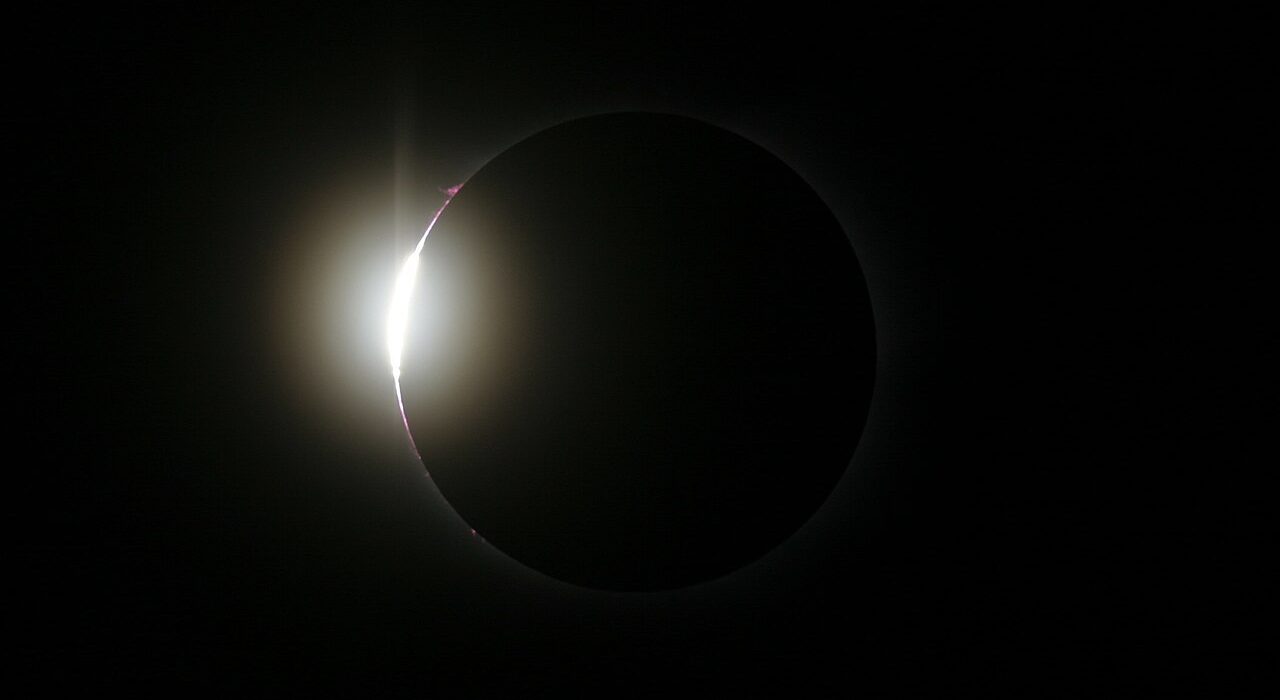
Eye safety is non-negotiable. During the partial phases (19:38 to 20:32 and 20:33 to 21:01), you must wear ISO 12312-2 certified eclipse glasses. Looking at the sun without protection during these times will cause permanent retinal damage. You may only remove your glasses during the brief window of totality (20:32:30 to 20:33:30). The instant you see the “diamond ring” effect or sunlight reappearing at the end of totality, you must immediately look away and replace your protection. For a comprehensive safety briefing, consult our complete guide to the 2026 eclipse in Spain.
- ISO 12312-2 certified eclipse glasses — one per person, bought well in advance. See options on Amazon ES.
The eclipse near Valencia
For travelers willing to drive short distances, nearby locations may offer slightly different durations or horizon profiles. The following table compares Valencia with other key locations in the region to help you finalize your logistics.
| City | Distance | Totality duration | Totality begins |
|---|---|---|---|
| Teruel | 115 km | 1 min 34 s | 20:31:04 |
| Sant Antoni de Portmany (Ibiza) | 155 km | 1 min 06 s | 20:32:40 |
| Cuenca | 165 km | 0 min 53 s | 20:32:06 |
| Ibiza | 167 km | 1 min 04 s | 20:32:45 |
Make a trip of it: what to see in Valencia
Since the eclipse occurs at sunset, the entirety of August 12th before 19:00 is free for tourism. Valencia is a compact city perfect for walking. We recommend visiting the Central Market in the morning and the City of Arts and Sciences in the afternoon before heading to your viewing spot. For a detailed itinerary of the city’s best cultural and culinary stops, read our full guide on what to see and do in Valencia.
Frequently asked questions
What time is the eclipse in Valencia?
The partial phase starts at 19:38:24 CEST. Totality runs from 20:32:30 to 20:33:30, with maximum at 20:33:00. The partial phase ends at 21:01:16.
How long does totality last in Valencia?
1 min 00 s. Being off the centerline, the duration is shorter than the peninsular maximum (Oviedo, 1 min 49 s).
Will the eclipse be total in Valencia?
Yes. Valencia is inside the path of totality with magnitude 1.0036. The sun will be completely covered by the moon for 1 min 00 s.
Do I need eclipse glasses?
Yes — ISO 12312-2 certified glasses during all partial phases. Only during totality can you safely look at the sun with the naked eye. Sunglasses do NOT protect.
What if it is cloudy in Valencia on August 12?
Clear-sky probability for this zone is 70-80% (AEMET historical data). Buena combinación con costa para horizonte despejado. Check the AEMET forecast 24-48 hours before and stay mobile.
When is the next total solar eclipse visible from Spain?
Soon: 2027-08-02. An exceptional back-to-back for the same region.
Conclusion
The August 12, 2026 total solar eclipse is a once-in-a-lifetime event for travellers visiting Spain. With careful planning — picking a centerline location, checking the AEMET forecast 24-48h before, wearing ISO 12312-2 glasses during partial phases and booking accommodation early — you can witness one of nature’s most spectacular phenomena. Use this guide alongside our city guides and itineraries to build the trip of a lifetime.