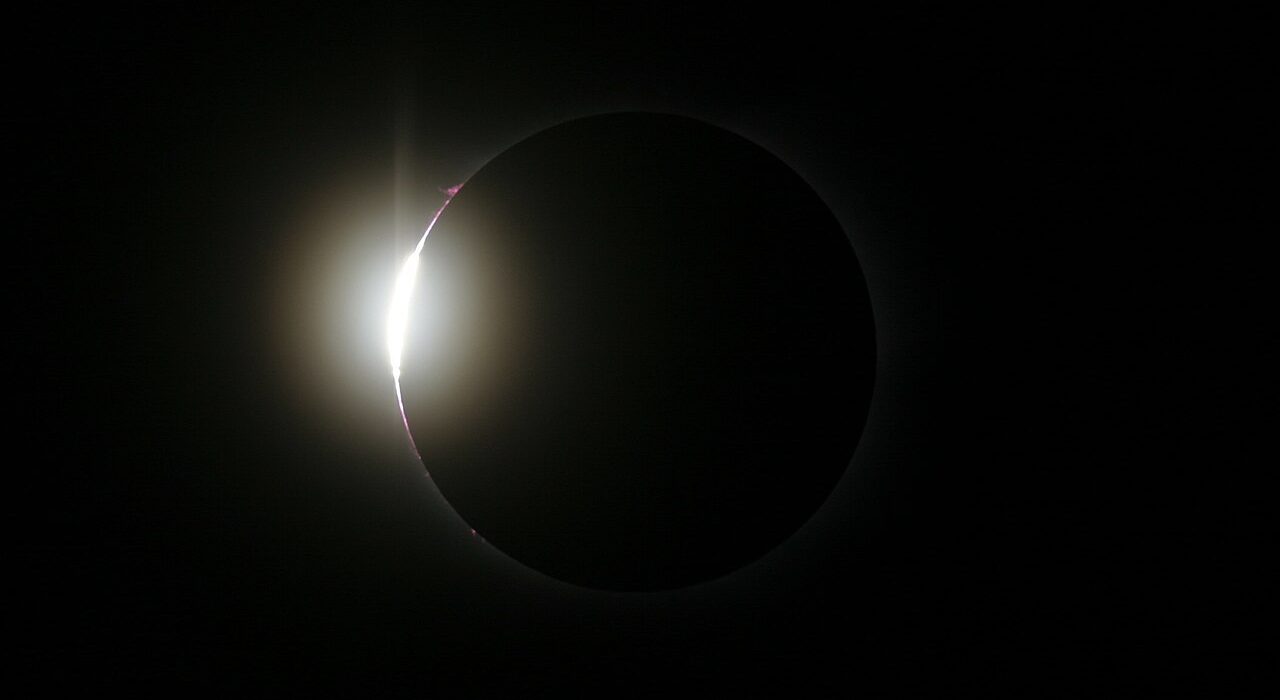
Total Solar Eclipse in Santander, Spain — August 12, 2026: Exact Times and Where to Watch
In Santander the eclipse will be TOTAL, totality starts at 20:26 local time and lasts 1 min 04 s. This event marks Spain’s first total solar eclipse visible from the mainland since August 30, 1905, ending a 121-year wait for observers on the peninsula. While the path of totality crosses the northern coast, Santander offers a unique vantage point where the celestial event coincides with a low summer sunset. This guide provides the verified astronomical data, optimal viewing locations within the city, and critical weather contingency plans for travelers.
Eclipse timeline in Santander
The eclipse sequence in Santander begins in the late afternoon and concludes just after sunset. All times below are in Central European Summer Time (CEST), which is the local time in Spain during August. The partial phases begin at 19:31, as the Moon starts to obscure the solar disk. The moment of maximum eclipse occurs at 20:27, when the Sun is completely covered. The partial phases resume immediately after totality, ending at 21:20 when the Sun dips below the horizon or the Moon fully clears the disk.
| Phase | Local time in Santander (CEST) |
|---|---|
| First contact (partial begins) | 19:31:22 |
| Totality begins | 20:26:57 |
| Maximum eclipse | 20:27:29 |
| Totality ends | 20:28:01 |
| Last contact (partial ends) | 21:20:09 |
| Totality duration | 1 min 04 s |
| Magnitude | 1.0036 |
Source: NASA Five Millennium Catalog. Local times CEST (UTC+2), August 12, 2026.
Santander sits firmly inside the path of totality, guaranteeing a complete blackout of the Sun. However, the city is located slightly south of the centerline of the eclipse path. Consequently, the duration of totality here is 1 minute and 4 seconds. For comparison, the maximum duration on the Iberian Peninsula occurs further north in Oviedo, where observers will experience 1 minute and 49 seconds of darkness. Being off the centerline in Santander means the Moon’s shadow moves slightly faster across your position, but the visual experience of the corona remains identical. The critical factor for Santander is not duration, but altitude; the eclipse occurs approximately one hour before local sunset.
Where to watch it in Santander
Selecting a viewing location in Santander requires prioritizing one specific criterion: an unobstructed western horizon. During totality, which begins at 20:26, the Sun will be low in the sky, at an altitude of approximately 10 to 12 degrees above the west-northwest horizon. Any buildings, hills, or trees blocking this specific vector will ruin the view. You need a clear line of sight toward the Bay of Biscay.
Based on the city’s topography and the solar azimuth, here are the verified locations best suited for this event:
- Playa de El Sardinero: This is the premier location for horizon clearance. The beach and the adjacent park offer a wide, open view toward the west-northwest over the water. The lack of tall structures in the immediate viewing line makes this the safest bet for catching the low-hanging eclipse. Arrive early to secure a spot on the sand or the promenade.
- Jardines de Pereda: Located along the Paseo de Pereda, these gardens provide a direct view of the bay. The elevation is low, but the waterfront promenade ensures no buildings block the western sky. It is a central location with ample space, though it may be crowded. The open water to the west makes it a strong candidate for a clear view.
- Plaza de Cañadío: Situated on a higher elevation than the city center, this square offers a commanding view. While you must check the specific angle of surrounding buildings, the height advantage often allows observers to see over lower rooftops toward the horizon. It is a viable option if the waterfront is too congested.
- Plaza Porticada (Plaza de Velarde): An iconic architectural space, but use caution. The surrounding arcades and building heights can restrict the western view. Only position yourself here if you have verified a clear line of sight to the horizon from your specific standing point. It is better for the atmosphere than the astronomy unless you find a gap in the skyline.
- Plaza de Pombo: This central square is surrounded by significant urban development. While accessible, the western horizon is likely obstructed by the dense city grid. We recommend this location only for the partial phases before the Sun drops too low behind the buildings.
August skies in Cantabria: real odds
Travelers must approach the weather forecast with realistic expectations. According to historical climate data from AEMET (State Meteorological Agency) for the Galicia and Cantabrian Coast zone, the probability of a clear sky in mid-August ranges between 30% and 50%. The region is prone to orballo (drizzle) and coastal fog, particularly in the late afternoon and evening. The risk of low-lying stratus clouds is the primary threat to visibility.
Because the eclipse occurs near sunset, coastal cloud formation is a significant risk. We strongly advise having a “Plan B.” Monitor the AEMET forecast closely 24 to 48 hours before the event. If the model predicts heavy cloud cover over Santander, be prepared to move inland. Cities further south or east, such as Lugo or even Oviedo (if clouds permit), may offer clearer skies. Flexibility is your most valuable asset; do not remain fixed on the coast if the satellite imagery shows a solid marine layer moving in.
Getting to Santander for the eclipse
Santander is well-connected, but traffic on August 12, 2026, will be unprecedented. Thousands of astro-tourists will converge on the narrow path of totality. The smartest logistical move is to arrive in the city at least one day prior, on August 11. Trying to drive into Santander on the morning of the eclipse risks being stuck in gridlock, potentially missing the event entirely.
The city is served by Seve Ballesteros-Santander Airport (SDR), with connections to major European hubs. Alternatively, the Renfe rail network connects Santander to Madrid and other northern cities. Once in the region, local transport will be strained. If you are driving, park your vehicle on August 11 and do not plan to move it until August 13. Walk to your viewing spot. We do not currently have specific published route guides for this city, so rely on standard navigation apps for real-time traffic updates, but expect delays.
Where to stay: book now or arrive the day before
Accommodation within the path of totality has been booking up rapidly since early 2025. Hotels in Santander and surrounding Cantabrian towns are finite resources. If you have not secured lodging yet, you must act immediately. Look for rooms with free cancellation policies to maintain flexibility in case you need to relocate for weather reasons. If Santander is fully booked, consider staying in a nearby city outside the path, such as Bilbao or San Sebastián, and commuting in early on the 12th, though this adds travel risk.
Safety: the 30 seconds you must read
Viewing a solar eclipse requires strict adherence to safety protocols to prevent permanent eye damage. You must wear ISO 12312-2 certified eclipse glasses during ALL partial phases. This includes the time from 19:31 until 20:26, and again from 20:28 until 21:20. The only time it is safe to look at the Sun with the naked eye is during the brief window of totality, which lasts exactly 1 minute and 04 seconds in Santander. The instant the “diamond ring” effect appears signaling the end of totality, you must immediately look away and replace your glasses.
- ISO 12312-2 certified eclipse glasses — one per person, bought well in advance. See options on Amazon ES.
For a comprehensive breakdown of safety protocols and equipment, consult our complete guide to the 2026 eclipse in Spain.
The eclipse near Santander
If you are unable to secure a spot in Santander or wish to compare durations, the following table outlines the eclipse parameters for nearby cities. Note that cities outside the path of totality will only experience a partial eclipse.
| City | Distance | Totality duration | Totality begins |
|---|---|---|---|
| Bilbao | 74 km | 0 min 31 s | 20:27:23 |
| Vitoria-Gasteiz | 115 km | 1 min 04 s | 20:27:43 |
| Burgos | 125 km | 1 min 44 s | 20:28:24 |
| Gijón | 150 km | 1 min 45 s | 20:26:48 |
Make a trip of it: what to see in Santander
Since the eclipse occurs at sunset on August 12, the morning and early afternoon are free for exploration. Santander is a compact, walkable city with excellent culinary offerings and historic architecture. We recommend visiting the Magdalena Palace or exploring the Old Town before heading to your viewing spot. For a detailed itinerary, read our full guide on what to see and do in Santander.
Frequently asked questions
What time is the eclipse in Santander?
The partial phase starts at 19:31:22 CEST. Totality runs from 20:26:57 to 20:28:01, with maximum at 20:27:29. The partial phase ends at 21:20:09.
How long does totality last in Santander?
1 min 04 s. Being off the centerline, the duration is shorter than the peninsular maximum (Oviedo, 1 min 49 s).
Will the eclipse be total in Santander?
Yes. Santander is inside the path of totality with magnitude 1.0036. The sun will be completely covered by the moon for 1 min 04 s.
Do I need eclipse glasses?
Yes — ISO 12312-2 certified glasses during all partial phases. Only during totality can you safely look at the sun with the naked eye. Sunglasses do NOT protect.
What if it is cloudy in Santander on August 12?
Clear-sky probability for this zone is 30-50% (AEMET historical data). Tener plan B tierra adentro (Lugo, Oviedo) o moverse según predicción AEMET 24h antes. Check the AEMET forecast 24-48 hours before and stay mobile.
When is the next total solar eclipse visible from Spain?
Soon: 2027-08-02. An exceptional back-to-back for the same region.
Conclusion
The August 12, 2026 total solar eclipse is a once-in-a-lifetime event for travellers visiting Spain. With careful planning — picking a centerline location, checking the AEMET forecast 24-48h before, wearing ISO 12312-2 glasses during partial phases and booking accommodation early — you can witness one of nature’s most spectacular phenomena. Use this guide alongside our city guides and itineraries to build the trip of a lifetime.