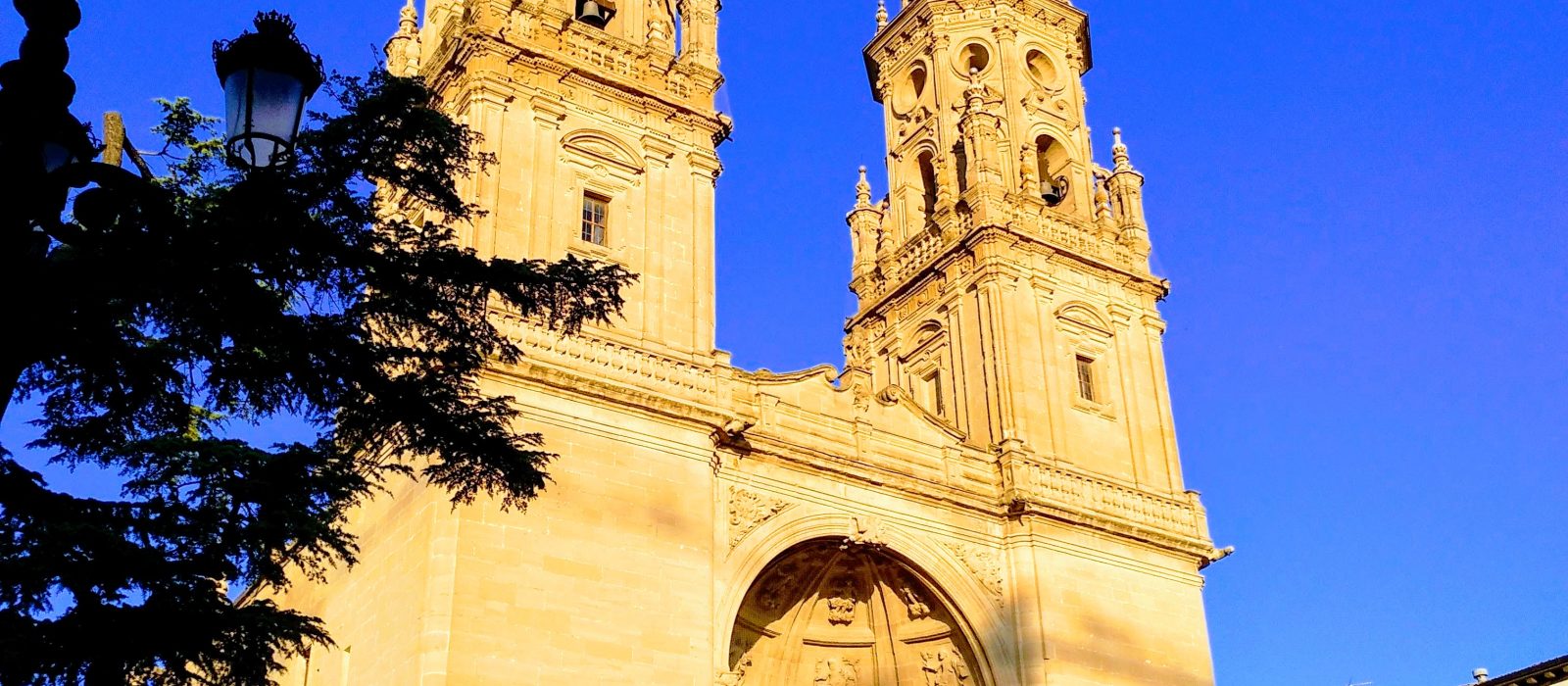
Pamplona → Logroño
92 kmHow to get from Pamplona to Logroño: quick overview
Pamplona and Logroño are separated by just 92 km of road, a very comfortable journey that takes around 1 hour by car on the motorway and is perfect for a day trip or weekend getaway. You have three main options: a private car (the most flexible for making stops), the direct bus (the most convenient if you don’t have a vehicle), and a train combination with a connection, since there is no direct rail service between the two capitals. For those who want to make the most of the route, the car is the ideal option, because it allows you to stop in towns as charming as Puente la Reina, Estella or Viana, historic enclaves of the Camino de Santiago (Way of St. James) that you pass through on the way to La Rioja.
By car from Pamplona to Logroño
The road journey covers 92 km in approximately 1 hour on the toll-free regional motorways of Navarre and La Rioja. The most common option is to take the A-12, known as Donejakue Bidearen autobia, which follows the route of the French Way of St. James and directly links Pamplona with Logroño, passing through Puente la Reina, Estella and Viana. This is the most recommended route if you want to make stops in the towns along the Camino, as the exits are located right next to the historic centres.
Another valid alternative is the A-13, which connects Pamplona with the Viana area and the A-12 before Logroño, or you can link up via the A-21 (Pirinioetako autobia) in the first few kilometres and then take the A-12. You can also use the A-15 (Iruñeko mendebaldeko sahiesbidea) as a variant towards the west before joining the main network. All these roads are free and in good condition.
For drivers coming from the north or east, the N-232 (Carretera de Vinaròs a Santander) and the A-1 (Autovía del Norte) serve as the final stretches once inside La Rioja, while the A-21 connects with the Pyrenean axis towards the east. None of these roads have tolls, so the toll cost on this journey is always €0.
By bus from Pamplona to Logroño
The direct bus is the most practical public transport option for covering the 92 km between Pamplona and Logroño. The main companies operating this route are La Estellesa and PLM Autocares, both with daily frequencies and stops in the main Navarrese towns along the Camino de Santiago.
The average journey time by bus is around 115 minutes (just under 2 hours), with a price ranging from €10.60 to €12 per journey, depending on the company and schedule. Tickets can be purchased at bus stations, at company ticket offices or through their official websites. It is a very economical and convenient option for those who don’t need a car at their destination, and it allows you to reach the centre of Logroño without worrying about parking.
As for the train, there is no direct Pamplona–Logroño rail connection; any rail option would require a transfer via Madrid or Vitoria, which makes the journey considerably more expensive and longer, turning it into several hours of travel. That is why the bus clearly beats the train on this corridor.
Recommended stops along the way
The Pamplona–Logroño route is probably one of the richest in heritage per kilometre in the entire Cantabrian region. Along the motorway, you’ll pass one village after another with Romanesque churches, medieval palaces and wineries with centuries of history. These are the most interesting spots to stop at along the way.
Puente la Reina (km 24)
A key hub on the Camino de Santiago (Way of St James) where the main Jacobean routes converge. Its 11th-century Romanesque bridge over the River Arga is the most iconic sight and an essential photo stop. The Calle Mayor is bustling with pilgrim life all year round. Recommended visiting time: 45 min.
Bodegas Irache – Fuente del Vino (Ayegui, km 48)
Just 2 minutes from the A-12 exit, next to Estella. This monastery is famous for its Fuente del Vino (Wine Fountain), which offers free wine to pilgrims and curious visitors alike. It’s a quick, unique and highly photogenic stop. Recommended time: 20 min.
Los Arcos (km 65)
A typical village on the Camino de Santiago. The A-12 runs right alongside it, so the stop is effortless. Highlights include the monumental Iglesia de Santa María (Church of Saint Mary), with its impressive Plateresque portico, and the arcaded main square, ideal for a quick coffee. Recommended time: 30 min.
Viana (km 82)
The last town on the Camino Navarro before entering La Rioja. A walled town on a hilltop, with privileged views. It is home to the tomb of Cesare Borgia in the Iglesia de Santa María, and the ruins of the Iglesia de San Pedro offer a spectacular panorama of the valley. Recommended time: 60 min.
In addition to these star stops, along the route of the Camino de Santiago you’ll pass through other charming municipalities that also merit a quick visit: Estella-Lizarra, Mendavia, Ayegui/Aiegi, Artajona, Agoncillo, Mendigorria and Villatuerta. With all of them, the Pamplona–Logroño route becomes a genuine cultural journey without barely having to deviate from the main route.
Where to stay in Logroño
Logroño offers a very wide range of accommodation to suit all budgets. The most recommended area to stay is the Casco Viejo (Old Town), around Calle Laurel and Plaza del Ayuntamiento, where boutique hotels, charming guesthouses and tourist apartments are concentrated within easy reach of the main monuments and tapas areas.
Another interesting option is the area around the Espolón and the Paseo del Río Ebro, which is quieter and has large chain hotels with good facilities and parking. For tighter budgets, the surroundings of the bus station have hostales and functional hotels with affordable prices.
As for price ranges, Logroño spans a fairly broad spectrum: budget hostales and guesthouses start at around €40-50 per night, mid-range hotels sit between €70-110 and hotels with more services or a prime location can reach €140-200 per night at weekends. Booking in advance is key, especially during the Fiesta de San Mateo (grape harvest festival) and Semana Santa (Holy Week).
Where to eat along the route
The Pamplona–Logroño route crosses two regions with some of Spain’s most renowned cuisines. In Navarre, before reaching La Rioja, it’s worth trying its most typical products; once in Riojan territory, the classics multiply.
Patatas a la riojana (Rioja-style potato stew) (La Rioja)
A hearty potato stew with chorizo, choricero pepper, onion, garlic, and bay leaf. The potatoes are cut by “breaking” them to naturally thicken the broth, creating a rustic and deeply comforting dish. It is one of the great classics of Riojan cuisine and appears on virtually every menu in the region.
Rioja Wine (La Rioja)
Recognized worldwide, Rioja Wine can be red, white, or rosé, made with selected grapes from the region. It is characterized by its proven quality, its centuries-old tradition, and its diversity of styles: from young and fresh wines to great reservas with long barrel aging. Logroño is, literally, the capital of this Denominación de Origen (Designation of Origin), so ordering a glass in any bar in the center is almost an obligation.
Espárragos de Navarra (Navarre white asparagus) (Navarre)
Navarrese white asparagus are famous for their thickness, tenderness, and delicate flavor. They are grown in the Ribera de Navarra and are usually eaten boiled, with mayonnaise or a mild vinaigrette that does not mask their finesse. They are one of the star products of the Despensa de Navarra (Navarre Pantry) and can easily be found in bars and restaurants along the route.
Pimientos del Piquillo rellenos de bacalao (Piquillo peppers stuffed with salt cod) (Navarre, especially Lodosa)
Sweet, meaty red peppers, roasted and peeled by hand, stuffed with a mixture of flaked salt cod and béchamel. The contrast between the sweetness of the pepper and the richness of the cod makes this dish an essential classic of Navarrese gastronomy. They are usually served as a starter or a sharing portion, and are common on the menus of bars and restaurants between Pamplona and Estella.
Chistorra de Navarra (Navarrese chistorra sausage) (Navarre)
A fresh sausage made with minced pork, garlic, and paprika, reddish in color and intense in flavor. It is quickly fried and served hot, often as a tapa or side dish. It is one of the most direct ways to start getting to know Navarrese cured meats, and it pairs especially well with scrambled eggs or on toast with tomato.
Frequently asked questions about the Pamplona-Logroño route
How long does it take to get from Pamplona to Logroño?
By car, the journey takes approximately 1 hour via the motorway, as the total distance between Pamplona and Logroño is 92 km. By direct bus, the duration is longer: around 115 minutes (almost 2 hours) according to official data from La Estellesa and PLM Autocares. By train, since there is no direct service, you have to add transfers and the total duration far exceeds 3-4 hours, making it uncompetitive for this corridor.
Which is cheaper, the train or the bus?
The bus is clearly the most economical option. Tickets on La Estellesa and PLM Autocares cost between €10.60 and €12 per journey, while the train fare with transfers is much higher and depends on the fare type and how far in advance you book. A private car can be more cost-effective with 2-3 travelers, since the 92 km of toll-free motorway barely consume any fuel.
Is it worth renting a car?
Yes, it is very worthwhile if you want to take advantage of the stops along the Camino de Santiago (Way of St. James) — Puente la Reina, Bodegas Irache, Los Arcos, Viana — or move freely between Navarre and La Rioja. For those limiting themselves to Pamplona and Logroño without needing intermediate stops, the direct bus is more than sufficient and much more economical. If the plan includes wineries in Haro or San Asensio, villages along the Camino off the main route, or excursions along the banks of the Ebro, a rental car is clearly the best option.
When is the best time to travel?
The best time to travel this route is spring (April-June) and autumn (September-October), when the landscapes of the Ebro valley and the Tierra Estella region are at their finest and temperatures are mild. It is advisable to avoid Holy Week and the San Mateo festival in Logroño if you are seeking peace and quiet, although those days are the most culturally vibrant. Summer is perfectly viable, but temperatures in the Rioja riverbank area can easily exceed 35°C, while winter tends to be cold and damp, though without major complications for driving on the motorway.
📍 También te puede interesar
Qué ver en Pamplona →
Qué ver en Logroño →