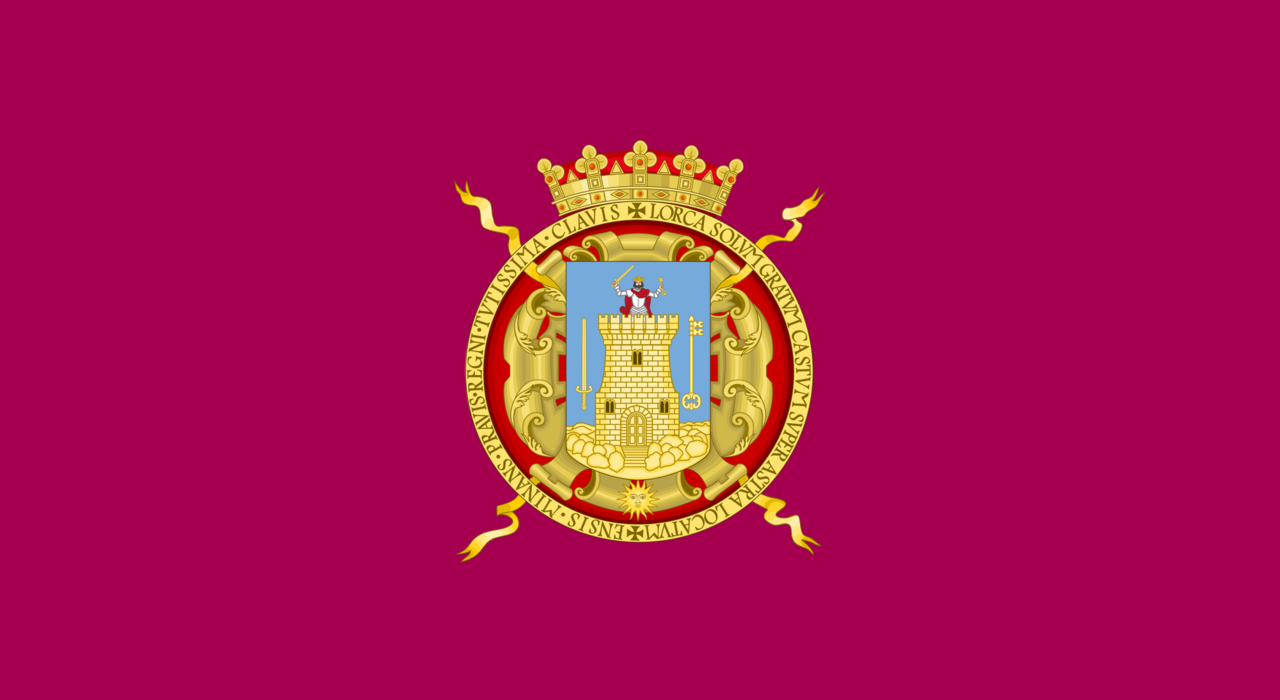
Between the vastness of a municipality spanning over 1,600 square kilometers and the intimacy of its Baroque streets, Lorca welcomes you with a historical force few places in Spain can match. It is not just the “City of the Sun” due to its privileged climate, but a living fortress where the medieval border between Christians and Nasrids left a legacy of castles and synagogues that today coexist with a vibrant urban life of nearly 92,000 inhabitants. Here, stone tells stories of kings, and Holy Week (Semana Santa) transforms into a biblical spectacle of international renown, creating a fascinating contrast between the serenity of its museums and the overflowing passion of its festivals.
The must-seesWhat to see in Lorca: the essentials
To understand Lorca, you must climb to the highest point and then descend to street level, exploring a heritage that ranges from prehistory to the most exuberant Baroque. These are the stops you cannot skip if you want to take home the essence of the city.
Fortaleza del Sol (Sun Fortress)
This monument is the beating heart of the city, an ancient medieval fortress of Islamic origins that was consolidated between the 11th and 15th centuries as a crucial defense on the border between the kingdoms of Murcia and Granada. Inside, a guided tour starting from the interpretation center will allow you to explore the imposing towers of Homenaje and Alfonsina, the cisterns, and, most exceptionally, the archaeological remains of the 15th-century Synagogue, the only one of its kind in Spain. To enjoy this gem, it is necessary to check updated information on prices and opening hours on the official Lorca tourism website, as access is exclusively via guided tour.
Iglesia de San Francisco (Church of Saint Francis)
Housed in the former 16th-century Convent of La Merced, this church is the ideal and strategic place to start your visit to the city. On its ground floor, it hosts a fundamental exhibition on the history of Lorca and two audiovisual presentations that will fully introduce you to the municipality and the fame of its Holy Week (Semana Santa). It is a cultural starting point that connects the religious past with the current festive identity.
Colegiata de San Patricio (Collegiate Church of Saint Patrick)
This monument, declared a Site of Cultural Interest (Bien de Interés Cultural), is one of the key pieces of the city’s religious heritage. Its architecture and historical relevance make it a mandatory stop to understand the spiritual and artistic evolution of Lorca throughout the centuries.
Castillo de Puentes (Puentes Castle)
Another of the defensive bastions watching over the territory, Castillo de Puentes is listed as a Site of Cultural Interest (Bien de Interés Cultural). Although visiting it may differ from the main fortress, its presence testifies to the strategic importance this municipality held in the defense of the southeastern peninsula.
Palacio de Guevara (Guevara Palace)
This building represents the nobility and civil power of the city, being one of the most prominent examples of palace architecture in Lorca. Its façade and structure are a testament to the era of splendor experienced by the town, deserving special attention during your tour of the old town.
What to do in Lorca
Lorca offers activities ranging from immersion in ancestral rituals to enjoying vibrant local markets. Beyond sightseeing, the city is best experienced by participating in its culture.
If you visit in March or April, you will experience Holy Week (Semana Santa), declared a Festival of International Tourist Interest, where biblical passion processions transform the streets into scenes from the Old and New Testaments. For a more everyday but equally authentic experience, you can stroll through the Thursday Weekly Market (Mercado Semanal de los Jueves), a historic open-air market that serves as a social hub, or visit the Central Food Market (Plaza de Abastos) to see fresh produce from the local orchards. It is also highly recommended to walk through the Upper Neighborhoods (Barrios Altos), such as El Calvario, to enjoy panoramic views of the valley and discover quiet hermitages away from the bustling center.
Lorca in one day: express itinerary
If you are short on time, this route will allow you to see the essentials without losing your way, combining history, views, and local culture in an intense but rewarding day.
- 09:30 – Church of San Francisco: Start here to contextualize your visit with audiovisuals about the history and Holy Week before heading up to the castle.
- 10:30 – Fortress of the Sun (Fortaleza del Sol): Dedicate the morning to the guided tour; it is the time of least heat and best light to appreciate the towers and the synagogue.
- 13:30 – Calderón de la Barca Square: Head down to the historic center to see the Guerra Theater and the Collegiate Church of St. Patrick, the monumental heart of the city.
- 15:00 – Lunch in the Historic Center: Take the opportunity to try local gastronomy in the bars near Spain Square (Plaza de España).
- 17:00 – Municipal Archaeological Museum: Located on Santo Domingo Street, end your day viewing key pieces like the Iberian Kernos in a building with renewed museum exhibits.
Where to eat in Lorca: local gastronomy
Lorca’s cuisine is hearty, flavorful, and deeply rooted in the land and festive traditions. Do not leave without trying Crespillos, those very thin, crispy fried sweets made with anise found in pastry shops, or the Tortada Lorquina, the emblematic cake with layers of sponge and custard that is the dessert par excellence.
For lunch, spoon dishes reign supreme: Olla Fresca with legumes and pork is ideal for comfort, while Migas Lorquinas with sausage are the traditional gathering dish. If you visit during Holy Week, Trigo con Manitas de Cordero (wheat with lamb trotters) is a historical experience. For something lighter in summer, Gazpacho Lorquino (cold salad of peeled tomato and tuna) and Zarangolló (scrambled zucchini and onion) are fresh options very popular in downtown bars. Don’t forget to order a Chiquillo, a sausage similar to blood sausage but with pine nuts, perfect as a tapa.
To buy ingredients or eat informally, you have three main options: the Lorca Central Food Market (Plaza de Abastos de Lorca) for fresh orchard products, the Thursday Weekly Market (Mercado Semanal de los Jueves) for a traditional market atmosphere, and the La Hortaliza Central Food Market (Plaza de Abastos de La Hortaliza) for neighborhood commerce.
Where to sleep in Lorca
Choosing the right area depends on the type of experience you are looking for, as Lorca has a varied offer ranging from historic bustle to residential tranquility.
| Zona | Perfil | Ideal para |
|---|---|---|
| Centro Histórico | Corazón de Lorca con palacios barrocos, iglesias y plazas como la de España. | Todos los viajeros que quieren estar cerca de todo. |
| Castillo de Lorca y Judería | Zona de la fortaleza medieval y restos de la judería. | Familias interesadas en la historia y el patrimonio. |
| Barrio de San Cristóbal | Barrio tradicional con identidad propia y museos de Semana Santa. | Amantes de la gastronomía y la vida local auténtica. |
| Barrios Altos (El Calvario) | Zonas residenciales en laderas con vistas panorámicas y ermitas. | Parejas que buscan tranquilidad y vistas. |
| San Juan y San Pedro | Barrios históricos de carácter popular y comercios de proximidad. | Mochileros y viajeros que buscan ambiente vibrante. |
| Puntas de Calnegre | Zona costera en Parque Regional, entorno casi virgen. | Familias que buscan playa y desconexión total. |
How to get to Lorca
Lorca’s connectivity is functional, allowing access by both public and private transport, although it is important to be aware of current railway limitations.
| Medio | Detalles | Frecuencia / Notas |
|---|---|---|
| Tren | Estación de Lorca Sutullena. | Sin servicio AVE disponible actualmente en esta estación. |
| Autobús | Conexiones regionales desde Murcia y otras ciudades. | Variable según la línea y la temporada. |
| Coche | Acceso por autovías principales de la Región de Murcia. | Recomendado para visitar las pedanías y la costa (Puntas de Calnegre). |
Getting Around Lorca
The municipality is the second largest in Spain after Cáceres, covering 1,675 km², so getting around the urban center is easy, but visiting the outlying districts requires planning. For the urban core, you have access to an urban bus service connecting the main points. However, if your intention is to explore the 8 kilometers of pristine coastline or the castles scattered across the municipal territory, a car is practically indispensable due to the vast expanse of the area.
Weather in Lorca
Best Time to Visit Lorca
Lorca’s climate is very favorable, with an average summer temperature of 25.8°C and a winter average of 10.6°C, allowing you to enjoy the city almost year-round. The best time to visit is from April to October, when temperatures are pleasant for walking and festivals are in full swing. Although annual rainfall is low (210.8 mm), winter months can be cool, perfect for enjoying spoon-based gastronomy like Olla Fresca (Fresh Stew) without suffering the summer heat.
Day Trips from Lorca
Taking advantage of its strategic location in the Alto Guadalentín region, you have nearby options to complement your trip. The city of Murcia, the regional capital, is the most logical and closest day-trip destination. Located just a short distance away, it allows you to contrast Lorca’s monumentality with the university life and Baroque architecture of the regional capital, completing a global vision of the Autonomous Community.
Lorca Facts You Didn’t Know
Lorca holds secrets that make it unique on the map of Spain, beyond what meets the eye.
Did you know that Lorca has the second largest municipal territory in Spain? Surpassed only by Cáceres, its 1,675 km² include everything from high mountains to 8 kilometers of virgin coast at Puntas de Calnegre, something unusual for an apparently inland city.
Hidden within its castle is a unique religious treasure: the only 15th-century synagogue in Spain that was never converted into a Christian temple. It preserves original remains of the bimah and the hechal, an archaeological find that redefines Jewish history on the peninsula.
The fame of its Holy Week is not exaggerated: the silk and gold embroidery on its floats is such a valuable technique that they are in the process of being declared Intangible Cultural Heritage of Humanity by UNESCO. They are already a Bien de Interés Cultural (Asset of Cultural Interest) and represent top-tier craftsmanship.
It is known as the ‘City of a Hundred Shields’ due to the large number of stone heraldic shields adorning its facades, testifying to the power of noble families in the 17th and 18th centuries. Additionally, the horror actor Narciso Ibáñez Menta, father of Chicho Ibáñez Serrador, was born here in 1912.
Who Is Lorca For?
Lorca is a versatile destination that fits almost any type of traveler. It is ideal for history lovers thanks to its medieval frontier and Jewish quarter; for foodies who want to try rooted gastronomy like Chiquillo and Migas; and for families who can enjoy both the castle and the protected coast. Backpackers will find a vibrant local atmosphere in the San Juan and San Pedro neighborhoods, while couples will enjoy the romantic views from the Barrios Altos.
Frequently Asked Questions about Lorca
How many days do I need to see Lorca?
To see the essentials, such as the Fortaleza del Sol (Sun Fortress), the Church of San Francisco, and the historic center, one full day is enough following an express itinerary. However, to enjoy the gastronomy, visit the Holy Week museums at a leisurely pace, and explore some outlying districts or the coast, at least 2 or 3 days are recommended.
What is the best time to visit Lorca?
The best time is from April to October, when average temperatures are pleasant (around 25.8°C in summer) and coincide with key events such as Semana Santa (Holy Week) (March/April) or the September Fair. Winter is mild (10.6°C on average), ideal if you prefer to avoid crowds.
How do I get to Lorca by train?
You can arrive at Lorca Sutullena station. It is important to note that this station currently has no AVE service, so you will need to check regional train connections or combine with other means of transport from nearby cities such as Murcia.
Is it worth visiting the coast of Lorca?
Yes, absolutely. Although Lorca seems like an inland city, its municipality includes the area of Puntas de Calnegre, part of a protected Regional Park. It is a nearly pristine environment ideal for disconnecting, hiking, and enjoying quiet beaches away from tourist crowds.