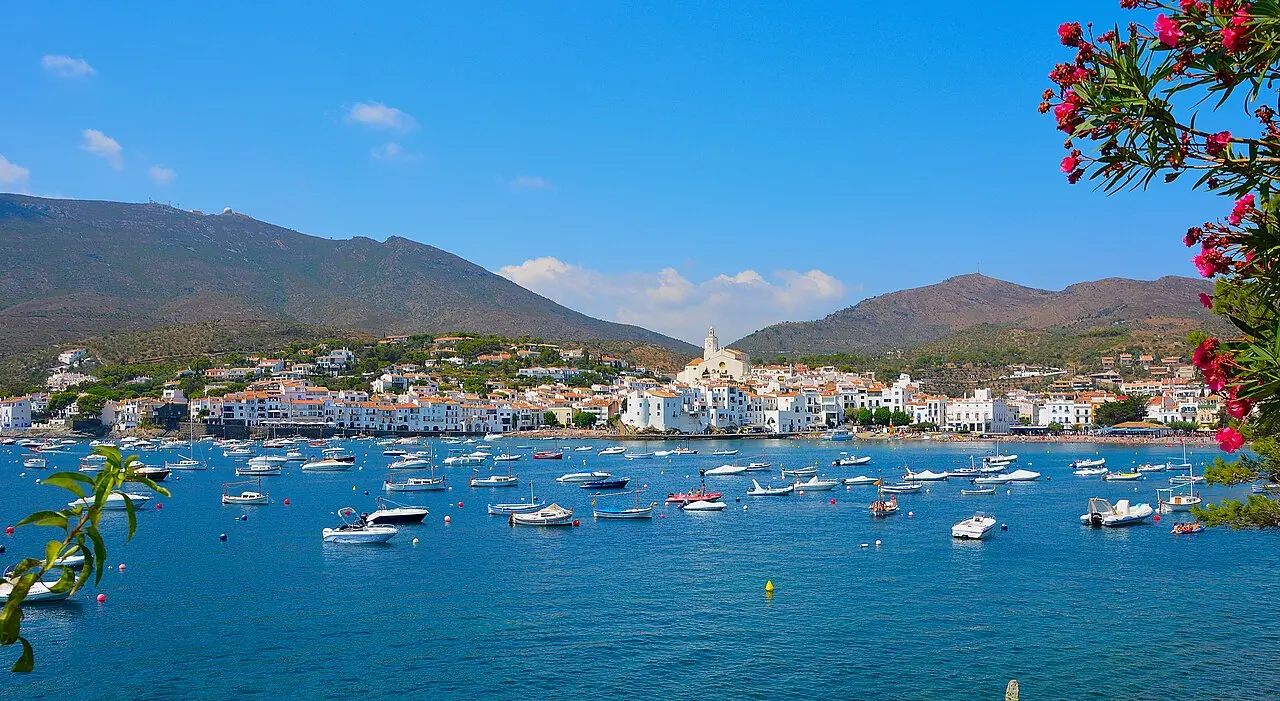
Cadaqués
CataluñaClimate
In 1444, twenty-two galleys of Barbary pirates razed Cadaqués to the ground, including the municipal archive, and yet the town rose again from the rocks at the easternmost tip of the Iberian Peninsula. Today, with barely 2,800 inhabitants, this town in the Alt Empordà region remains a Mediterranean haven where olive trees descend to the sea and the tramontana wind sculpts the black slate of the cape. This is where Dalí spent decades painting, Picasso dined in the neighboring coves, and a Tuscan prince, Cosimo III de’ Medici, chose the bay as the first stop on his journey through Spain in 1668. If you’re looking for a place that blends art, landscape, and seafood cuisine, keep reading.
The must-seesWhat to see in Cadaqués: the essentials
Salvador Dalí House-Museum in Portlligat
The most visited attraction in the municipality, declared a Monument on November 12, 1997, is this succession of fishermen’s huts that Salvador Dalí gradually bought and joined together starting in 1930, when he settled in Portlligat with Gala, until he turned it into a labyrinthine complex of rooms. Entry is in small groups and booking in advance is essential, especially in summer, as capacity is very limited to preserve the painter’s intimate space. Inside, you’ll find such recognizable rooms as the egg room, the lip-shaped sofa in the Mae West Room, the library, and the studio with his working tools. Declared a Monument, it is considered a unique example of vernacular Mediterranean architecture converted into a livable museum.
Cap de Creus Natural Park
The Cap de Creus Natural Park occupies the easternmost tip of Catalonia, where the Pyrenees plunge into the Mediterranean forming a landscape of black slate eroded by the tramontana. It is one of the great scenic jewels of the Catalan Pyrenees and one of the most unique protected areas on the Spanish coast. From Cadaqués, very popular hiking routes set off, such as the Camino Antiguo de Cadaqués al Cabo de Creus (Old Path from Cadaqués to Cap de Creus), 14.8 km long and of notable difficulty, or access points to the Carrerada de Sant Pere de Rodes from Llançà. If you enjoy walking, this is your destination: it combines coastline, mountains, and monumental heritage in a single day.
Church of Santa María de Cadaqués
This parish church crowns the highest point of Cadaqués’ old town, a village isolated from the rest of Alt Empordà by the Pení mountain, which gives it the character of a seafaring town closed in on its own bay. Its whitewashed façade, its dome, and the Baroque altarpieces inside are the temple’s most notable features. The dome, moreover, is visible from the bay and has become one of the most photographed images of the town.
Museum of Cadaqués
Located in the town center, this municipal museum is devoted to the artists and pictorial themes that have been connected with Cadaqués throughout its history. Its main protagonist is Salvador Dalí, to whom it dedicates a good part of its temporary exhibitions with collections of photographs, documents, and materials on the biography and work of the Empordà-born painter. Throughout the year, exhibitions are programmed that are as diverse as the very personality of the Empordà genius, and that is precisely what makes it a museum that never ceases to surprise its visitors.
Casa Serinyana
Built between 1910 and 1915, with an official construction date of September 20, 1913, this Modernista palace was designed by Salvador Sellés i Baró and stands at Plaça des Portitxó, 11, right at the point where the Podritxó beach begins toward the riba es Poal. It is one of the few examples of Modernista architecture in a town dominated by white Mediterranean houses, and it deserves a brief stop to admire its façade.
Cala Nans Lighthouse
It is one of the most photographed spots on the Cadaqués coastline due to its location tucked between cliffs and the natural rock bridge that connects the islet to the shore.
Playa de Sa Conca
This is the town’s main beach, with coarse sand, located on both sides of the harbor breakwater, with lifeguard services, showers, and accessible access during the summer season.
Sa Cova de s’Infern
It owes its name to a natural hollow in the rock, known as sa Cova, and forms part of the walking itineraries that traverse the municipality’s rocky eastern coastline.
Bahía de Portlligat
A small bay north of Cadaqués where Salvador Dalí established his residence and built the Casa-Museo Salvador Dalí (Salvador Dalí House-Museum), which can be reached on foot from the town center via a coastal walk of about fifteen minutes. The bay was a meeting point for European artists and intellectuals throughout much of the 20th century.
Espai Cap de Creus
A commercial or entertainment establishment located in the municipality, linked to the tourism offerings of the Cap de Creus Natural Park.
🍂 Otoño
Si visitas Cadaqués en otoño, notarás cómo baja la temperatura y el ambiente se vuelve más tranquilo, ideal para recorrer el Casco antiguo a tu ritmo y fotografiar el Parque Natural del Cap de Creus con sus tonos dorados. El Faro de Cala Nans y la Playa de Sa Conca tienen un aspecto precioso sin el gentío del verano. Eso sí, te recomiendo consultar el tiempo antes de ir al Faro del Cap de Creus, ya que los días de viento fuerte son más frecuentes.
What to do in Cadaqués
Cadaqués offers a weekly market, hiking routes through the Cap de Creus Natural Park, visits to the Casa-Museo Salvador Dalí in Portlligat, and coastal walks.
On Mondays the town comes alive with the weekly market on Sa Riera or Riera Sant Vicenç, where food products, textiles, and other goods mingle—a perfect excuse to mix with the locals. If you feel like walking, the Cap de Creus Natural Park is your playground, with routes such as the Camino Antiguo de Cadaqués al Cabo de Creus (Old Path from Cadaqués to Cap de Creus) at 14.8 km or approaches to Sant Pere de Rodes. For art lovers, a visit to the Casa-Museo Salvador Dalí in Portlligat, in the bay of the same name a fifteen-minute walk from the center, is unmissable, and it pairs well with the Museo de Cadaqués (Cadaqués Museum) and its temporary exhibitions. Coastal walks along the rocky eastern shoreline are also a must, especially at sunset, when the tramontana wind usually lets up.
Cadaqués in a day: express itinerary
- 09:30 – Old Town and Iglesia de Santa María: start the day wandering the cobbled lanes of the historic center and climbing up to the church to see the whitewashed façade, the Baroque altarpieces, and the views over the bay from the highest point.
- 11:00 – Casa Serinyana and the seafront promenade: head down to Plaça des Portitxó to admire the Modernista palace by Salvador Sellés i Baró, then stroll along the seafront promenade with the dome of Santa María always in the background.
- 13:00 – Lunch at the harbor: take the opportunity to try suquet de peix (Catalan fish stew) or a seafood paella at a restaurant on the waterfront, gazing out at the boats.
- 15:30 – Casa-Museo Salvador Dalí in Portlligat: walk about fifteen minutes along the coast to the bay and book your visit to the painter’s house-studio in advance; it was declared a Monument in 1997.
- 18:00 – Cap de Creus at sunset: end the day by driving or joining an organized excursion to the Cap de Creus Natural Park to watch the black slate change color with the setting sun.
Where to eat in Cadaqués: local gastronomy
Where to stay in Cadaqués
El Casco Antiguo
Zona más encantadora y popular con callejuelas empedradas, casas blancas y proximidad al paseo marítimo.
Portlligat
Cala conocida por albergar la Casa-Museo de Salvador Dalí, ideal para un paisaje tranquilo y cultural.
How to get to Cadaqués
From Girona, the fastest option is driving: 1 h 15 min.
| From | Direct train | Direct bus | Car |
|---|---|---|---|
| Girona | — | 1 h 45 min · 2/day SARFA | 1 h 15 min 74 km |
| Figueres | — | 1 h 10 min · 10/day SARFA | 47 min 35 km |
| Barcelona | — | 2 h 45 min · 2/day SARFA | 2 h 19 min 171 km |
Direct trains and buses from the official timetables published by the operators on Spain's National Transport Access Point (a reference Wednesday); driving times from OpenStreetMap. Operators that do not publish their timetables may run more services. Check the timetable before you travel.
How to get around Cadaqués
The town is small and its center is largely pedestrianized, so walking is the best way to explore the Old Town, head down to the harbor, and reach the bay of Portlligat in about fifteen minutes. For longer distances, there is an urban bus service connecting residential areas with the town center and beach area, and in summer it is reinforced with shuttle buses to the most popular coves. If you travel by car, keep in mind that access to the old town is restricted and parking is limited in high summer.
Weather in Cadaqués
Live webcam — Roses*
Cadaqués* The nearest webcam to Cadaqués is in Roses, 8.7 km away.
Source: Windy Webcams
Best time to visit Cadaqués
Day trips from Cadaqués
The main day trip from Cadaqués is Girona, a monumental city with one of the best-preserved medieval Jewish quarters in Europe, Carolingian walls, and the cathedral with the widest Gothic nave in the world. Getting there is easy via the AP-7 and N-260, in just over an hour by car or by bus from the Cadaqués Bus Station. Combining it with a visit to the Monastery of Sant Pere de Rodes, in the heart of Cap de Creus Natural Park, makes for one of the most complete day trips you can take from the town.
Curious facts about Cadaqués you probably didn’t know
Cadaqués is the easternmost town on the entire Iberian Peninsula, a geographical edge that as early as the 17th century attracted illustrious travelers such as Cosimo III de’ Medici, crown prince of Tuscany, who on September 25, 1668 made his first peninsular stop here after setting sail from Livorno.
Between 1843 and 1844, the Cadaqués customs house exported 1,339 pounds—around 536 kilos—of red coral to the Americas, a figure that gives an idea of the marine wealth of this coastline and of how important this product was to the local economy before the tourism boom.
In 1444, twenty-two Moorish galleys attacked and destroyed the entire village, including the municipal archive, an episode that shows the vulnerability of this open coast and that, nevertheless, did not erase the seafaring identity of its inhabitants.
Joan Escofet i Palau, born in Cadaqués in 1720 and died in 1810, rose to become Lieutenant General of the Royal Armies and Engineer General of Catalonia—quite a figure to emerge from this small fishing village, and one who left his mark on Spanish military history.
Lídia Noguer, a fisherwoman born in Cadaqués in 1866, supposedly inspired Eugeni d’Ors’s protagonist in ‘La ben plantada,’ Teresa, and hosted illustrious families of the Catalan intelligentsia in her home—a little-known link between seafaring life and turn-of-the-century Catalan culture.
Who Cadaqués is for
Cadaqués is an ideal destination for couples and art lovers drawn by the figure of Salvador Dalí and by the bohemian atmosphere that still lingers in its coves, as well as for hikers and nature lovers who want to lose themselves in the Cap de Creus Natural Park. It also works very well for foodies, thanks to a seafood-focused gastronomy centered on suquet de peix (Catalan fish stew), seafood rice dishes, anchovies, and sea urchins. It is not the best destination for families with very young children looking for large resorts with entertainment, since the offering is based on houses and small boutique hotels with charm, nor for those who need an intense nightlife. For backpackers and curious travelers, however, it is perfect: the town is walkable, there is public transport, and you can get by on a tight budget if you avoid the heart of summer.
💡 ¿Sabías que...?
- ● Cadaqués es la localidad más oriental de la península ibérica, situada en el extremo oriental de la comarca del Alto Ampurdán. (https://es.wikipedia.org/wiki/Cadaqu%C3%A9s_de_Rosas)
- ● Entre 1843 y 1844, la aduana de Cadaqués exportó 1.339 libras (unos 536 kilos) de coral rojo a las Américas. (https://www.terresdegirona.cat/alt_emporda_cadaques.htm)
- ● El 25 de septiembre de 1668, el príncipe heredero de Toscana Cosme III de Médici realizó su primera parada peninsular en la bahía de Cadaqués, tras hacerse a la mar en Livorno. (https://theconversation.com/cadaques-antes-del-turismo-y-de-salvador-dali-278752)
- ● En 1444, un ataque de 22 galeras de moros destruyó el pueblo, incluyendo el archivo municipal. (https://visitacadaques.com/cadaques-historia-y-tradicion-de-un-pueblo-unico-en-la-costa-brava/)
- ● Joan Escofet i Palau, nacido en Cadaqués en 1720 y fallecido en 1810, fue ingeniero militar y arquitecto que llegó a ser Teniente General de los Reales Ejércitos e Ingeniero General de Cataluña. (https://www.terresdegirona.cat/alt_emporda_cadaques.htm)
- ● Lídia Noguer, pescadora nacida en Cadaqués en 1866, supuestamente inspiró a Eugeni d'Ors el personaje protagonista de 'La ben plantada', Teresa, y hospedó en su casa a ilustres familias de la intelectualidad catalana. (https://www.lluiscanovas.cat/articles/literatura/lidia_noguer.htm)
Frequently asked questions about Cadaqués
How many days do I need to see Cadaqués?
With two full days you can cover the must-see attractions: one day for the old town, the Church of Santa María, the Cadaqués Museum, Casa Serinyana and the Salvador Dalí House-Museum in Portlligat, and another for the Cap de Creus Natural Park and a cove like Sa Conca. If you only have one day, the express itinerary I suggest above is enough to get a complete picture.
What is the best time of year to visit Cadaqués?
According to available climate data, the best time runs from May to September, with an average summer temperature of 22.9°C and a cooler winter, around 8.6°C. May and June offer the best balance of good weather, fewer crowds and more pleasant hiking in the Cap de Creus Natural Park.
How do I get to Cadaqués from Madrid?
The most convenient option is the AVE to Figueres Vilafant station, with direct services from Madrid according to Renfe, followed by a SARFA bus to the Cadaqués Bus Station. By car, the route follows the AP-7 with transfers to the N-260 and the GI-614; by plane, the nearest airport is Girona-Costa Brava (GRO), 60.4 km away.
Is it necessary to book the Salvador Dalí House-Museum in Portlligat?
Yes, visits to the Salvador Dalí House-Museum in Portlligat are conducted in small groups and advance booking is essential, especially between May and September. Tickets sell out weeks in advance in high summer, so it is best to arrange them through the official website before travelling.
Is Cadaqués a summer-only village?
No, although summer is the high season, Cadaqués has attractions all year round: the Cap de Creus Natural Park for hiking, the Cadaqués Museum with its temporary exhibitions, the gastronomic offer with seasonal products such as sea urchins in winter, and a more authentic and peaceful atmosphere outside July and August.