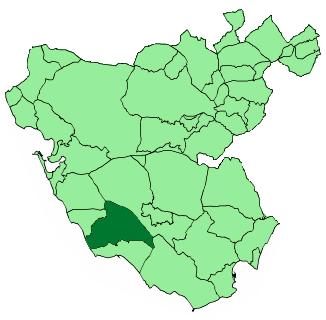
Vejer de la Frontera
AndalucíaClimate
Daily budget
Climb a a 200-meter-high hill where the Atlantic breeze caresses the whitewashed streets, and descend to a mile-long beach where time seems to stand still. Vejer de la Frontera is not just a white village of 13,000 inhabitants; it is the perfect balance between the medieval defense of its walls and the bohemian freedom of its golden sands. Here, the history of the Granadan Frontier coexists with surfing and retinto gastronomy, creating a destination where every corner tells a story of battles won against time.
The must-seesWhat to see in Vejer de la Frontera: the essentials
Old Town of Vejer de la Frontera
This iconic walled enclosure dominates the town from a hill, featuring an irregular layout adapted to the local topography. Visitors can enjoy spectacular views of the surroundings and the Andalusian countryside from its 15th-century walls, which still preserve original gates such as the Arco de la Villa (Town Gate). Its structure is part of the Arab and Christian legacy visible in the municipality’s architecture, including defensive towers like the Torre del Mayorazgo. It was declared a Historic-Artistic Site in 1976, recognizing its exceptional state of preservation. Exploring it on foot is the only way to understand the verticality and charm of this labyrinth of history.
El Palmar Beach
Located just a few kilometers from the municipality, this mile-long beach invites you to relax under the Andalusian sun. The natural setting features extensive dune fields covered with vegetation and agriculture along the nearby coast, offering a pristine landscape. The 16th-century Torre Almenara stands out on its promenade, a historical remnant watching over the ocean. Access is free, making it an ideal starting point for surfing and excursions year-round, serving as the area’s most touristy rural hub.
Arco de la Villa
It constitutes one of the main access gates preserved in its original state within the walled enclosure of Vejer de la Frontera. Its structure is part of the medieval defensive system consolidated during the 15th century that protects the historic old town. The monument blends into the urban landscape and can be admired free of charge as part of a walk along the walls and adjacent streets. It is the most photogenic entry point to begin exploring the interior of the village.
Convento de San Francisco
Located in Plaza San Francisco, it was founded in 1566 and rebuilt in the late 17th century, showcasing the area’s architectural evolution. Organized around a Mannerist cloister with Doric and Ionic columns, its single-nave church with side chapels stands out for its artistic and historical significance. It is a clear example of the religious life that shaped the municipality’s development after the Reconquista. Its central location makes it a must-visit stop for lovers of sacred art.
Iglesia del Divino Salvador
Accessible via Calle Córdoba, this is the Collegiate Church mentioned in the municipality’s religious heritage and a pillar of local faith. Its Gothic and Mudéjar architecture reflects construction between the 15th and 16th centuries following the Christian Reconquista, blending styles that define Vejer’s identity. It lies within the usual walking route of the historic center, allowing for a comfortable visit while exploring the surrounding streets. Its tower and façade are visual landmarks in the town’s skyline.
Other points of interest
The Arco de la Segur is located in the 15th-century walled enclosure and maintains its original state alongside other historic gates. The Torre del Mayorazgo, dating from the 15th century, stands out for its skiff vault on squinches with Mudéjar characteristics and dominates the Paseo de la Corredera. The Mirador de la Cobijada, situated on the Paseo de las Cobijadas, offers privileged views where, on clear days, it is possible to see the African Continent. Finally, La Plazuela occupies a renovated historic building from the early 19th century in the emblematic Plaza de España, combining traditional and contemporary decor.
🍂 Otoño
Si visitas Vejer de la Frontera en otoño, las temperaturas bajan gradualmente y puede haber alguna lluvia de las 658.2mm anuales. Es la época perfecta para disfrutar de la gastronomía local y la tranquilidad del pueblo blanco. Lleva siempre un paraguas plegable y calzado cómodo para las calles empedradas que pueden resbalar.
What to Do in Vejer de la Frontera
Vejer de la Frontera offers specific activities ranging from surfing in El Palmar to cultural immersion in its local festivals. You can join the Carnival of Vejer between February and March, enjoying group competitions, parades, and street music. If you visit in August, the Velada de Nuestra Señora de la Oliva (Vigil of Our Lady of the Olive) combines religious acts, a procession honoring the patron saint, and open-air parties featuring local gastronomy. For a more everyday experience, stroll through the Vejer Market on Thursdays along Avenida Rey Juan Carlos I, where you’ll find everything from clothing to fresh, typical regional foods.
Vejer de la Frontera in One Day: Express Itinerary
If you’re short on time, this route will let you see the essentials without missing any of Vejer’s charm:
- 10:00 AM – Arco de la Villa (Town Arch): Start your day by entering through this 15th-century medieval gate to feel the transition into the historic quarter.
- 11:30 AM – Iglesia del Divino Salvador (Church of the Divine Savior): Visit the Collegiate Church via Calle Córdoba to admire its blend of Gothic and Mudéjar architecture.
- 13:30 PM – Mirador de la Cobijada (Viewpoint of La Cobijada): Head up to the Paseo de las Cobijadas to enjoy panoramic views over La Janda and, if you’re lucky, Africa.
- 15:00 PM – Convento de San Francisco (Convent of Saint Francis): Explore the Mannerist cloister in Plaza San Francisco before lunch.
- 17:00 PM – Playa de El Palmar (El Palmar Beach): End the day by heading down to the coast to see the 16th-century Torre Almenara and relax on the sand.
Where to Eat in Vejer de la Frontera: Local Gastronomy
Where to Stay in Vejer de la Frontera
Casco Histórico
El corazón de Vejer. Un laberinto de calles encaladas, patios floridos y arcos antiguos, rodeado por murallas medievales. Es la zona más monumental y con más encanto, declarada Conjunto Histórico-Artístico.
Barrio de la Judería
Una de las zonas más pintorescas y fotogénicas dentro del casco antiguo. Se caracteriza por sus calles excepcionalmente estrechas y sinuosas, conectadas por arcos como el famoso Arco de las Monjas.
Zona de La Corredera
Esta avenida-mirador bordea una parte del casco antiguo, ofreciendo vistas panorámicas espectaculares del paisaje rural. Es el principal centro gastronómico de Vejer, repleto de restaurantes y terrazas de alta calidad.
El Palmar
Es la zona de playa de Vejer, a unos 11 km del pueblo. Famosa por su extensa playa de arena dorada, es un paraíso para surfistas y amantes del mar. El ambiente es joven, relajado y bohemio, especialmente en verano con sus numerosos chiringuitos.
Zona Nueva
La parte más moderna de Vejer, situada fuera de las murallas. Aquí se encuentran la mayoría de los servicios como supermercados, bancos y comercios locales. Ofrece una estancia más práctica y funcional, con mejor acceso y aparcamiento.
How to Get to Vejer de la Frontera
Air and land connectivity make accessing this municipality in the province of Cádiz easy:
| Medio | Duración | Precio aprox. | Frecuencia |
|---|---|---|---|
| Avión (AeroSidonia) | Variable según origen | Variable | Según temporada |
| Bus Urbano | Conexión local | Económico | Regular |
Getting Around Vejer de la Frontera
Once in town, urban transport relies mainly on the city bus, which connects the different population centers of the municipality. Since the old town is pedestrian-only and streets are narrow, the best way to get around the historic center is on foot. For trips to the coast, such as El Palmar, located about 11 km from the village, using your own vehicle or public transport are the most viable options.
Weather in Vejer de la Frontera
Best Time to Visit Vejer de la Frontera
Day Trips from Vejer de la Frontera
From the Mirador de la Cobijada (Cobijada Viewpoint), you can already spot towns like Medina Sidonia or Alcalá de los Gazules, ideal destinations for day trips. These cities in the region share the essence of the White Towns and offer a rich historical heritage that complements a visit to Vejer. Exploring the Vejer countryside and the inland area of La Janda will help you understand the agricultural and livestock context that sustains the local economy alongside tourism.
Facts About Vejer de la Frontera You Didn’t Know
Did you know that Vejer was declared a Historic-Artistic Site in 1976 and, just two years later, in 1978, received the I National Award for the Beautification of Towns in Spain? This double recognition highlights its exceptional conservation and beauty.
In the vicinity of Vejer, at the La Janda lagoon, the Battle of Guadalete took place in the year 711. In this battle, the army of the Visigothic king Don Rodrigo was defeated by the Arab forces of Táriq ibn Ziyad, marking the beginning of the Muslim conquest of the peninsula.
The traditional costume is the “cobijada,” an outfit of Castilian origin (16th–17th centuries) that completely covers the woman with a black mantle, leaving only one eye uncovered. A bronze sculpture next to the castle now pays homage to this unique figure.
The suffix “de la Frontera” alludes to its position on the border line that separated the Kingdom of Castile from the Nasrid Kingdom of Granada, the last Muslim taifa on the peninsula, during the 13th to 15th centuries.
Every four years, the draw for the “Hazas de Suerte” takes place, a tradition dating back to 1285. The benefits of nearly 3,000 hectares of communal lands are distributed by lot among the residents, a right defended in the 15th century by local hero Juan Relinque.
Vejer is one of the epicenters for breeding the “Retinta” cattle breed, a native mahogany-colored cow. This livestock is raised freely, and its meat is a protected gastronomic product bearing the official “Raza Autóctona 100% Retinta” logo.
Vejer de la Frontera is twinned with the city of Chefchaouen in Morocco. Both towns share a very similar visual aesthetic, with whitewashed architecture, narrow streets, and an atmosphere that evokes their Andalusian past.
The actor Jesús Castro, star of the successful film “El Niño” (The Kid) (2014) and series such as “La Reina del Sur” (Queen of the South), was born and raised in Vejer de la Frontera, making him one of the most famous personalities originating from the municipality.
Who Is Vejer de la Frontera For?
Vejer is a versatile destination that enchants all types of travelers. It is ideal for couples seeking romance in the Barrio de la Judería (Jewish Quarter), for backpackers who prefer the surfer vibe of El Palmar, and for families needing the services of the Zona Nueva (New Town). History lovers will find an open book in its 15th-century walls and borderland past, while foodies will enjoy Retinta beef and fresh fish in La Corredera.
Frequently Asked Questions about Vejer de la Frontera
How many days do I need to see Vejer de la Frontera?
With a one-day express itinerary, you can visit the 5 main attractions such as the Arco de la Villa (Town Arch) and the Iglesia del Divino Salvador (Church of the Divine Savior). However, to enjoy Playa de El Palmar and the local gastronomy at a leisurely pace, at least 2 or 3 days are recommended.
Is Vejer de la Frontera expensive?
Prices vary. An average meal costs between €12 and €18. For accommodation, a hostel ranges from €40–70/night, while a 3-star hotel is between €70–120/night and a 4- or 5-star hotel between €100–200/night.
When is the best time to visit Vejer de la Frontera?
The best time is from April to October. The average summer temperature is 24.1°C, ideal for beach activities and sightseeing, whereas in winter the average drops to 12.9°C.
How do I get to Vejer de la Frontera?
You can arrive by flying into AeroSidonia Airport. Within the municipality, urban transport is provided by city buses, although the old town is primarily pedestrianized.