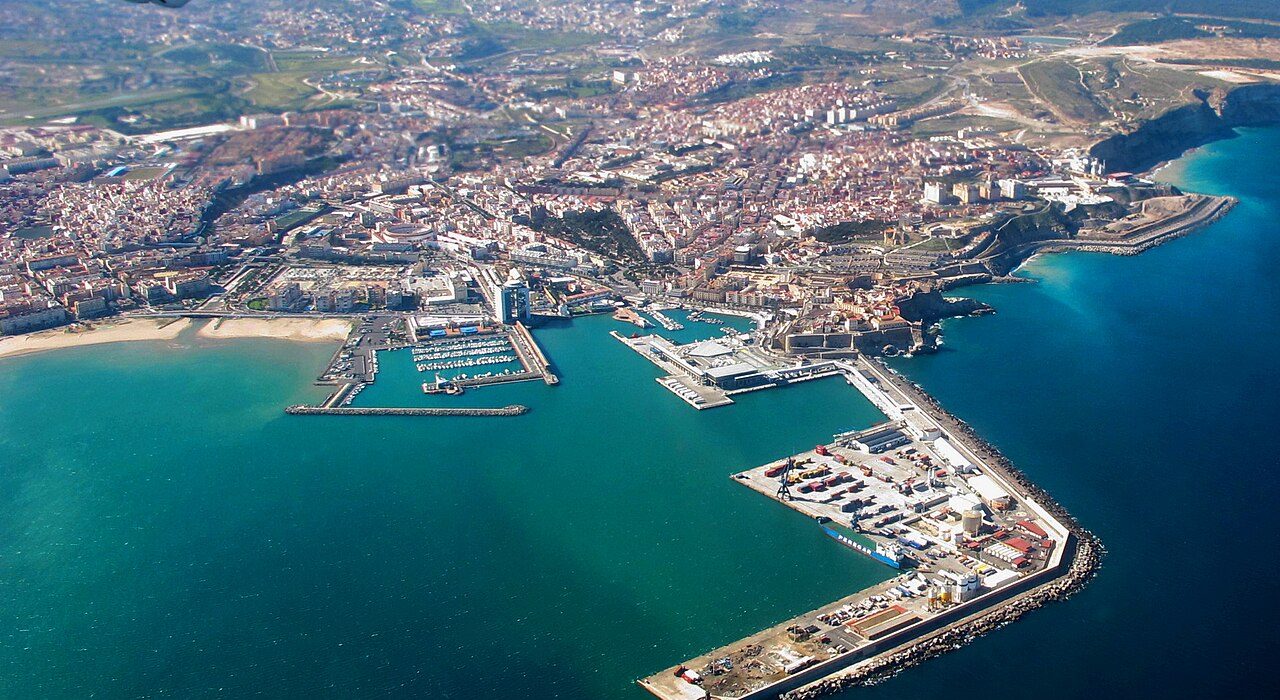
Melilla
MelillaClimate
Walking through its streets is like crossing a history book lying open under the sun, where Enrique Nieto’s Modernista architecture converses with the walls of a medieval fortress and the aroma of Rif spices mingles with the salty Mediterranean air. This autonomous city, home to 86,000 inhabitants, is the only place in Spain where four major cultures officially and harmoniously coexist — Christian, Muslim, Jewish and Hindu — creating a social tapestry unlike any other on the European continent. More than a destination, it is a living border where time seems to have paused between the 19th and 21st centuries, offering a sensory experience you won’t find anywhere else in the country.
The must-seesWhat to see in Melilla: the must-sees
Museo de Arqueología y Historia de Melilla (Museum of Archaeology and History of Melilla)
This museum is essential for understanding the city’s historical layering, from its Phoenician origins to the contemporary era. Inside you’ll find key pieces that tell the story of the fortified stronghold and the Rif region. It’s a must-stop to put your visit into context before venturing into the old town.
Museo Ibáñez de Melilla (Ibáñez Museum of Melilla)
Housed in a Modernista mansion, this space pays tribute to the painter Enrique Ibáñez and offers an in-depth look at local culture through his works and collections. It stands out for its architecture in itself, a perfect example of the style that permeates the Ensanche district. Here you can breathe the artistic essence that has defined the city for decades.
Plaza de toros de Melilla (Melilla Bullring)
The bullring in Melilla is an emblematic building that reflects the bullfighting tradition in Spanish North Africa. Although its main use is bullfighting events, its architectural structure merits an exterior visit to appreciate its circular design and its integration into the urban fabric. It is a cultural landmark for lovers of Spanish traditions.
Teatro Kursaal-Fernando Arrabal (Kursaal-Fernando Arrabal Theatre)
This theatre in Melilla, Spain, is a monument to the performing arts and bears the name of the celebrated local playwright Fernando Arrabal. Its façade and its history make it one of the most significant buildings in the city’s cultural heritage. It is the main stage where many of the local artistic activities and festivals take place.
Teatro-Cine Perelló (Perelló Theatre-Cinema)
Known simply as the city’s go-to cinema, this monument combines the function of a screening venue with architecture that evokes the golden age of entertainment. It is a place where Melilla’s social life has unfolded for generations. Visiting it means connecting with the collective memory of the people of Melilla.
Other points of interest
- The Memorial to the Heroes of Spain is a solemn monument that remembers the fallen.
- The Auditorium Carvajal serves as an auditorium in Melilla, Spain, for concerts and events.
- The Fuerte de María Cristina (Fort of María Cristina) is a fortified palace with great military historical value.
- The Plaza Menéndez Pelayo (Menéndez Pelayo Square) is a key urban monument in the city center.
- The Monumento Encuentros (Encounters Monument) symbolizes the union of the different cultures that inhabit the city.
- The monument to the Heroes of Taxdirt pays tribute to a local historical episode.
- The Yacimiento Arqueológico de Casa del Gobernador (Archaeological Site of the Governor’s House) offers a glimpse into the ancient roots of the city.
- The Plaza de las Culturas (Square of Cultures) is a monument dedicated to religious and social diversity.
- The Fuerte de San Carlos (Fort of San Carlos) is another fortified palace essential to the defensive system.
- The “Valerio Manchón” Exhibition Hall hosts temporary art exhibitions.
- The Museo Etnográfico de las Culturas Amazigt y Sefardí (Ethnographic Museum of Amazigh and Sephardic Cultures) explores Berber and Jewish roots.
- The Museo de la Asociación de Estudios Melillenses (Museum of the Association of Melillan Studies) safeguards local historical memory.
- The Triángulo de Oro (Golden Triangle) is a distinctive urban monument.
- The monument to Saint John Baptist de La Salle honors the educator saint.
- The Rotonda Cuatro Caminos (Four Roads Roundabout) is a traffic junction turned landmark.
- The T.12 airplane propeller is a monument that recalls aviation history.
- The Statue of aviator Castaño de Meneses pays tribute to aviation pioneers.
- The Plaza de San Lorenzo (San Lorenzo Square) is a square in Melilla with local atmosphere.
- The Plaza de España (Spain Square) is the most central and busiest square in Melilla.
- The Plaza de Armas (Parade Ground) is a square in Melilla, Spain, of great historical importance.
- The Osborne Bull is a visual icon at the entrance to the city.
- Melilla La Vieja (Old Melilla) is the most important living monument, the walled citadel.
🍂 Otoño
Si visitas Melilla en otoño, aún podrás aprovechar el buen tiempo ya que la mejor época se extiende hasta noviembre. Es el momento ideal para visitar museos y mercados sin el calor intenso del julio. Lleva siempre un paraguas pequeño en la mochila por si cae algún chaparrón sorpresa.
What to do in Melilla
Melilla offers specific activities such as attending the Carlos V Renaissance Market, an annual event that transforms the center into a historical scene, or enjoying the Melilla Film Week, a film festival held in the city that attracts lovers of the seventh art. You can also explore neighborhoods like the Ensanche Modernista (Modernist Extension) to admire the architecture or stroll through La Marina to enjoy gastronomy facing the sea.
Melilla in one day: express itinerary
If you are short on time, this plan allows you to see the essentials without rushing too much, taking advantage of the city’s compact surface area of 12.3 km².
- 09:00 – Melilla La Vieja: Start early in the walled historic quarter to avoid the heat and enjoy the sea views from the promontory.
- 11:30 – Museum of Archaeology and History: Immerse yourself in the Phoenician and military past within the citadel to understand the evolution of the stronghold.
- 13:30 – Lunch in La Marina: Head down to the port area to eat fresh fish with views of the Mediterranean.
- 16:00 – Ensanche Modernista: Walk along the wide pedestrian avenues to see the buildings by Enrique Nieto and visit the Plaza de España.
- 18:30 – Kursaal-Fernando Arrabal Theater: End the day admiring the facade of this emblematic theater before dinner.
Where to eat in Melilla: local gastronomy
Where to stay in Melilla
Melilla la Vieja
Es el casco histórico amurallado situado en un promontorio junto al mar. Alberga edificios renacentistas y barrocos, iglesias antiguas y museos dentro de una ciudadela defensiva bien conservada.
Ensanche Modernista
Zona urbana planificada a principios del siglo XX famosa por su concentración de edificios modernistas, muchos diseñados por Enrique Nieto. Es el centro comercial y administrativo con amplias avenidas peatonales.
El Hipódromo
Barrio residencial tranquilo y verde que creció alrededor del antiguo recinto hípico. Ofrece zonas ajardinadas, el estadio de fútbol y un ambiente más local y relajado lejos del bullicio turístico.
La Marina
Zona portuaria y de paseo marítimo que conecta el centro con los fuertes exteriores. Destaca por sus vistas al mar, restaurantes de pescado fresco y acceso a las playas urbanas.
Polígono Industrial El Polígono
Área principalmente industrial y de servicios logísticos situada en la periferia. No es una zona turística habitual, pero contiene grandes superficies comerciales frecuentadas por residentes para compras cotidianas.
Ciudad Alta
Barrio residencial ubicado en una zona elevada que ofrece vistas panorámicas de la ciudad y el puerto. Es una área predominantemente vecinal con parques locales y menos afluencia de visitantes externos.
How to get to Melilla
The main connection with the Spanish mainland and North Africa is through its port and airport, although land transport data focuses on the nearby rail connection and the bus.
| Medio | Origen/Destino | Detalles |
|---|---|---|
| Tren | Estación de Beni Ensar Port | Conexión ferroviaria cercana (sin AVE directo a la ciudad autónoma). |
| Bus Urbano | Interurbano | Conecta los diferentes puntos de la ciudad y alrededores. |
How to get around Melilla
Given its small area of 12.3 km², the city is very walkable, especially in areas like the Ensanche and Melilla La Vieja. For longer distances or to reach the outer forts, the urban bus is the available and efficient public transport option. There’s no need to rent a car if you’re staying in the center, as traffic can be heavy at peak times and parking in Melilla La Vieja is limited.
Weather in Melilla
Best time to visit Melilla
Day trips from Melilla
Nestled in the heart of the Rif region, Melilla serves as a gateway to the cities of the Moroccan region. Although specific data on nearby cities is limited to a general mention of the region, the geographical position on the northern border with Morocco allows you to explore the culture of North Africa. It is a strategic point for understanding the dynamics between the European and African continents.
Curious facts about Melilla you probably didn’t know
Did you know that Melilla is one of only two sovereign Spanish cities on the African continent, along with Ceuta? Its area is approximately 12.3 km², which makes it a highly concentrated enclave of history and culture.
The city’s name has a sweet and ancient origin: it derives from the Phoenician ‘Malilit’, meaning ‘red city’ or ‘honey’, a reference to the abundance of bees in the area in antiquity.
In terms of architecture, Melilla has the second most important collection of Modernista architecture in Spain, surpassed only by Barcelona. It is home to more than 700 buildings constructed mainly between 1909 and 1920, many of them the work of Enrique Nieto.
The city was officially founded as a Spanish stronghold on 17 September 1497, when Pedro de Estopiñán took possession of the Peñón de Vélez de la Gomera and Melilla for the Crown of Castile.
It is one of the few places in Europe where official public holidays are observed for the Christian, Islamic and Jewish faiths, the result of the peaceful coexistence of four main cultures (Christian, Muslim, Jewish and Hindu).
During the African War (1859–1860), also known as the War of Tetuán, Melilla was the departure point for the Spanish troops led by General Leopoldo O’Donnell.
It is home to the only mosque on Spanish soil built expressly as such before the 21st century, the Mezquita Central (Central Mosque), and it preserves one of the oldest synagogues in continuous use in the Iberian Peninsula and North Africa.
Who Melilla is for
This destination is ideal for curious travellers looking for something beyond sun-and-beach tourism. It is perfect for history lovers, given its military and multicultural past, and for foodies interested in the fusion of Mediterranean and Maghrebi flavours. Families will find a relaxed atmosphere in neighbourhoods such as El Hipódromo, while architecture lovers will discover an open-air museum in the Ensanche Modernista (Modernist Ensanche).
💡 ¿Sabías que...?
- ● Melilla es una de las dos únicas ciudades soberanas de España en el continente africano, junto con Ceuta, y cuenta con una superficie de aproximadamente 12,3 km². (Instituto Nacional de Estadística (INE))
- ● El nombre de Melilla deriva del fenicio 'Malilit', que significa 'ciudad roja' o 'miel', haciendo referencia a la abundancia de abejas en la zona en la antigüedad. (Real Academia Española / Etimología histórica)
- ● Melilla posee la segunda colección más importante de arquitectura modernista de España, solo superada por Barcelona, con más de 700 edificios construidos principalmente entre 1909 y 1920. (Consejo Superior de los Colegios de Arquitectos de España)
- ● La ciudad fue fundada oficialmente como plaza fuerte española el 17 de septiembre de 1497, cuando Pedro de Estopiñán tomó posesión del Peñón de Vélez de la Gomera y Melilla para la Corona de Castilla. (Archivo General de Simancas / Historia oficial de Melilla)
- ● En Melilla conviven pacíficamente cuatro culturas principales (cristiana, musulmana, judía e hindú), siendo uno de los pocos lugares en Europa donde se celebran festivos oficiales de las religiones cristiana, islámica y judía. (Gobierno de Melilla / Estatuto de Autonomía)
- ● El actor español Antonio Banderas nació en Málaga pero pasó parte de su infancia y juventud vinculada a la región, mientras que el pintor Enrique Simonet, autor de 'El entierro de la sardina', tuvo una estrecha relación artística con la ciudad; sin embargo, un personaje nacido allí es el político Marcelino Oreja Aguirre (aunque nacido en Madrid, su familia tiene raíces profundas), pero más precisamente, el cantante de flamenco Diego El Cigala no es de allí. Un dato correcto es que el general Gómez Jordana, figura clave de la Guerra Civil, nació en Melilla en 1876. (Biografías históricas verificadas)
- ● Durante la Guerra de África (1859-1860), conocida también como Guerra de Tetuán, Melilla fue el punto de partida de las tropas españolas lideradas por el general Leopoldo O'Donnell, conflicto que inspiró numerosas obras literarias y periodísticas de la época. (Ministerio de Defensa de España)
- ● Melilla alberga la única mezquita en suelo español construida expresamente como tal antes del siglo XXI, la Mezquita Central, aunque el islam ha estado presente desde la fundación de la ciudad; además, conserva una de las sinagogas más antiguas en uso continuo en la península ibérica y norte de África. (Patrimonio Histórico de Melilla)
Frequently asked questions about Melilla
How many days do I need to see Melilla?
With an express one-day itinerary you can see the main sights, but 2 or 3 days are recommended to visit the museums at a leisurely pace, enjoy the local cuisine such as cuscús (couscous) and rape (monkfish), and explore the different neighbourhoods like Melilla La Vieja and the Ensanche.
What is the best time of year to visit Melilla?
According to climate data, the best time is from March to November, when the average temperature is pleasant (summer 24.9°C) and there is less rainfall (371.3 mm per year).
How do I get to Melilla from the Spanish mainland?
You can get there by air or sea. As for nearby land transport, there is the Beni Ensar Port train station (with no direct AVE to the city), and once there, urban transport is by bus.
Is it safe to visit Melilla?
Melilla is an autonomous Spanish city with a population of 86,000 inhabitants where diverse cultures live together peacefully. It is a safe destination similar to any other Spanish city, with a police and military presence due to its border status.
Where can I find more up-to-date information?
For further practical information on museum opening hours and the schedule of events such as the Semana de Cine (Film Week) or the Mercado Renacentista (Renaissance Market), you can consult the official Melilla tourism website.