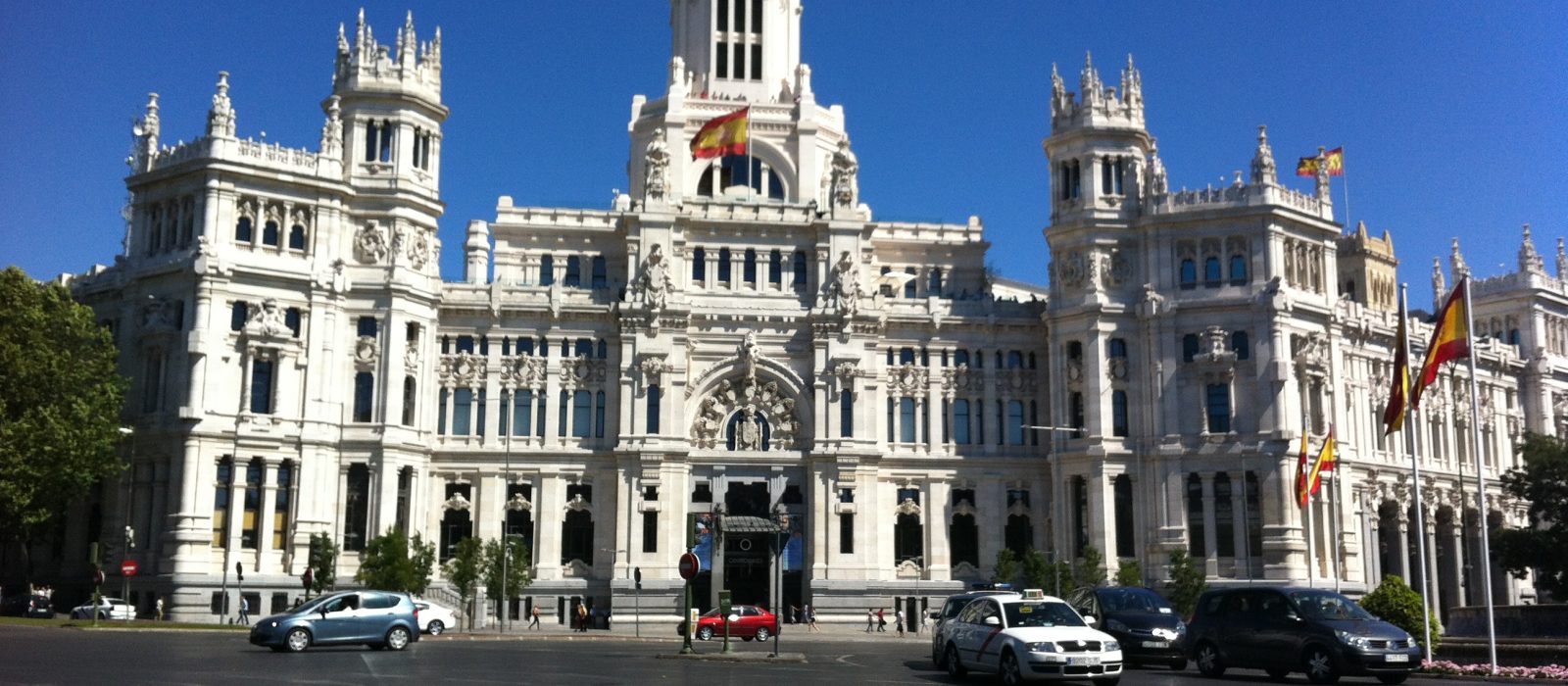
Burgos → Madrid
243 kmImagine leaving behind the majestic Burgos Cathedral and, in just two and a half hours, strolling along Madrid’s Gran Vía. This journey is not just a transfer between two provincial capitals; it is a trip through the heart of Castile, where the speed of the AVE competes with the freedom of the open road under an infinite sky.
How to Get from Burgos to Madrid: Quick Overview
The fastest way to travel from Burgos to Madrid is the AVE train, covering the distance in just 93 minutes, while the most economical option is usually the Alsa bus with fares starting from €13.90. If you prefer flexibility and making tourist stops, the car is ideal for covering the 243 km in approximately 2 hours and 30 minutes.
For the business traveler who prioritizes time, the train is indisputably the king of the route, offering up to 13 direct daily connections from Burgos Rosa Manzano station to Madrid-Chamartín. On the other hand, families or groups of friends wanting to enjoy the Castilian landscape and have freedom of movement once they arrive in the capital will find the car a very competitive alternative in terms of time and comfort. The bus positions itself as the perfect solution for the backpacker or those looking to save as much as possible without sacrificing a direct and comfortable service.
By Car from Burgos to Madrid
The road distance between Burgos and Madrid is exactly 243 km, a journey completed in an estimated driving time of 2 hours and 30 minutes.
The main route benefits from excellent road infrastructure composed almost exclusively of free highways, making the trip very smooth and economical in terms of tolls. The backbone of this journey is the A-1 (Autovía del Norte), which directly connects both cities across the plateau. To access this road or vary the route depending on your departure point in Burgos, you can use the A-62 (Autovía de Castilla) or the A-73, both toll-free. Additionally, the network of secondary and national roads such as the N-627 and the N-1 offer toll-free alternatives for those who prefer to avoid highways on certain stretches.
It is important to note that, although many other highways exist in the Spanish network listed in transport data, such as the A-5, A-11, A-2, A-3, A-4, A-6, or the N-122, the logical and direct route to the capital focuses on the north-south axis. When approaching the outskirts of Madrid, traffic can become denser, but the connection is perfectly signposted. With no tolls on the main recommended routes (A-1, A-62, A-73), the only variable cost will be fuel, making this a very attractive option for group travel.
By train from Burgos to Madrid
The operator Renfe offers a direct rail service with 13 daily trains connecting Burgos Rosa Manzano station with Madrid-Chamartín-Clara Campoamor station.
The range of services is wide and adapts to different speed and budget needs. The jewel in the crown is the AVE, available on 2 daily frequencies, which covers the journey in a record time of 93 minutes. For those seeking a balance between price and speed, the Intercity (3 trains a day) takes 105 minutes, and the ALVIA (also 3 daily trains) completes the trip in 114 minutes. These high-speed options are ideal for travellers who need to arrive fresh and on time.
If time is not a critical factor and you are looking for economy, there are regional and medium-distance train options. The MD service operates with 4 daily frequencies and has a duration of 262 minutes, while the REG.EXP. has 1 departure per day and takes 297 minutes to arrive. The departure schedule is very convenient, with the first train leaving at 6:40 in the morning and the last at 20:18, allowing you to plan full days in either city. All these connections are direct, eliminating the need for inconvenient transfers.
By bus from Burgos to Madrid
The company Alsa manages the direct bus service, with a journey duration of 150 minutes and prices ranging between €13.90 and €24.
The bus presents itself as a solid and reliable alternative, especially for those travellers who have not booked train tickets far in advance or who are looking for the lowest possible fare. With a travel time of 2 hours and 30 minutes (150 minutes), it competes directly with the car in terms of duration, though without the worries of driving or parking in Madrid. Alsa’s fleet usually features basic amenities such as air conditioning and reclining seats, sufficient for a journey of this length. The price range is very competitive, starting at €13.90, making it the cheapest verified option for this route, although prices can rise to €24 at peak times or on special dates.
Recommended stops along the way
If you decide to make the journey by car, there are two verified strategic stops that allow you to stretch your legs and enjoy the local culture before arriving in the capital.
The first essential stop is Aranda de Duero. Located in the province of Burgos, this town is world-famous for its wine and gastronomy. It is the perfect place to stop halfway, visit its underground bodegas (wine cellars) and enjoy a roast lamb, a local specialty that will give you energy for the second part of the journey. Its location makes it a natural resting point with hardly any deviation from the main route.
The second recommended stop is Tres Cantos. Much closer to Madrid, this municipality offers an interesting contrast. It is a planned and modern city, ideal for a final technical stop before heading into the chaotic traffic of the capital’s centre. Here you can find modern service areas and green spaces for a short stroll before your definitive arrival at your accommodation in Madrid.
Where to sleep in Madrid
Madrid offers a wide range of accommodation divided by areas, from luxury in the historic centre to more budget-friendly options in residential neighbourhoods.
For the traveller arriving by train at Chamartín, the northern part of Madrid is very convenient, offering business hotels and apartments with good metro connections. If you prefer classic sightseeing, central Madrid (Sol, Gran Vía, Huertas) concentrates the largest supply, with prices that vary drastically depending on the season, but which guarantee being steps away from museums and nightlife. For tighter budgets, peripheral areas well connected by Cercanías or metro, such as the surroundings of Atocha station or even areas further south connected by the A-4 motorway, usually have lower price ranges. There is no fixed price, but you can find everything from budget hostales (family-run guesthouses) to 5-star hotels, depending entirely on the chosen area and how far in advance you book.
Frequently asked questions about the Burgos-Madrid route
How long does it take to get from Burgos to Madrid?
The time varies depending on the transport: by car it is 2 hours and 30 minutes (243 km); by bus it is 150 minutes; and by train it varies from 93 minutes on the AVE to 297 minutes on the Regional Exprés.
Which is cheaper, the train or the bus?
Generally the bus is cheaper, with fares on Alsa starting from €13.90, while train prices vary according to advance booking and type (AVE, MD, etc.), making the bus the most economical entry-level option.
Is it worth renting a car?
Yes, it is worth it if you plan to make tourist stops such as Aranda de Duero or Tres Cantos, or if you are travelling in a group, as the 243 km route is fast (2h 30min) and toll-free on the main motorways.
When is the best time to travel?
The best time depends on whether you are looking for good weather or good prices, but to avoid crowds on the train (13 daily services) or traffic on the A-1, it is recommended to travel on weekdays outside of national holidays.
📍 También te puede interesar
Qué ver en Burgos →
Qué ver en Madrid →