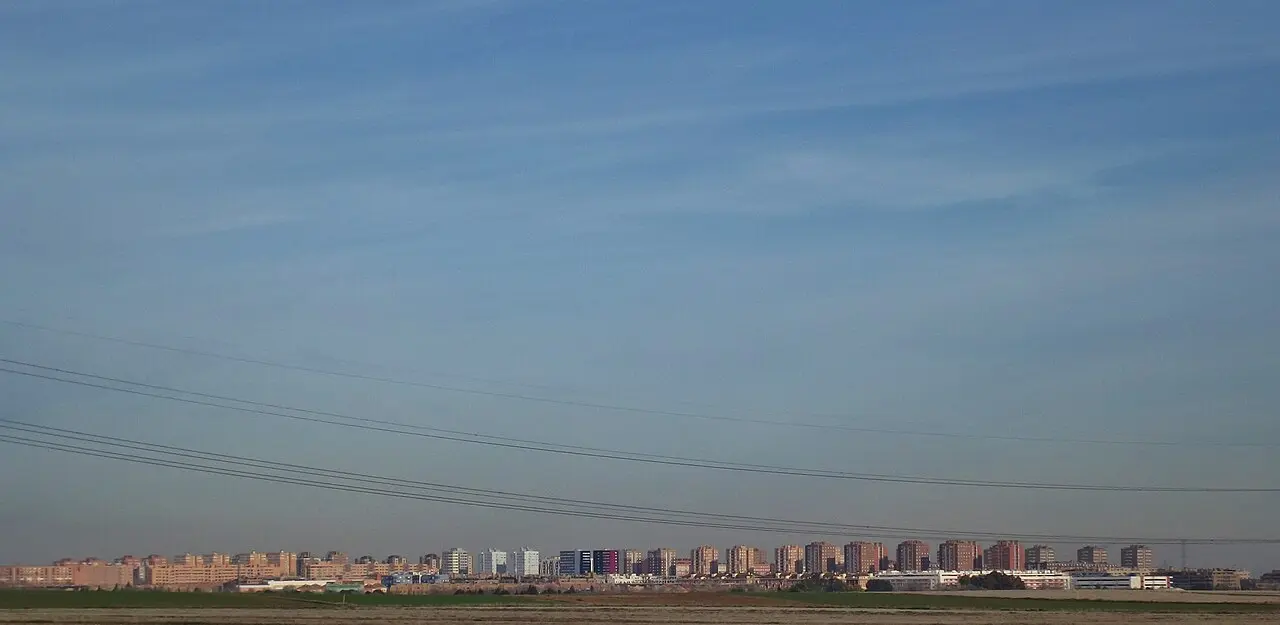
Parla
Comunidad de MadridClimate
What to see in Parla: the essentials
Parla is not just a commuter town south of Madrid: it is a place with a history dating back to the 14th century, a miraculous chapel and a hill that serves as a biodiversity refuge. Here is what you should not miss, ordered by level of interest.
11-M (monument)
Memorial monument to 11 March 2004. It is a space of memory and tribute that forms part of Parla’s urban landscape.
Humanejos (monument)
Monument linked to the ancient settlement of Humanejos, one of the historic centres of the municipality of Parla. Its presence recalls the territorial evolution of the town.
Cerro de la Cantueña (viewpoint)
This hill is much more than a mound: its geological composition mixes sands, clays, limestones and small flint intrusions, giving it a very distinctive profile in the south of Madrid. In its surroundings, 271 botanical species and more than 100 bird species have been recorded, as well as various mammals, reptiles and amphibians. It serves as a natural viewpoint over the municipality, so take your time climbing up and enjoy the views of Parla and its surroundings.
Iglesia de Nuestra Señora de la Asunción (church)
Built in the early 16th century and rebuilt throughout the 20th century, this church is popularly known as Iglesia Vieja (Old Church). It was the main temple of the municipality and is linked to the former patron saint, Nuestra Señora de la Asunción. It stands out for its historical and religious value within Parla’s old town, and is one of the town’s most representative buildings.
Iglesia de los Santos Justo y Pastor (church)
Also known as the Gothic-Mudéjar church of Humanejos, this historic temple follows the Gothic-Mudéjar style characteristic of the region’s religious architecture. It was graphically documented by artists such as Jenaro Pérez de Villaamil, whose drawing captures its traditional appearance. Its heritage value makes it part of the town’s urban heritage routes, ideal for understanding the religious and architectural evolution of Parla.
Casa Consistorial de Parla (palace)
It represents the city’s institutional architecture and forms part of the urban heritage route. It houses the mayor’s office and municipal offices, serving as a civic and administrative reference point for residents. It is one of the main places of interest in the historic centre.
Fuente de la Teja and Ermita de San Isidro (church)
A religious and natural ensemble made up of a traditional spring and a small chapel dedicated to the patron saint of farmworkers. The Fuente de la Teja was historically linked to the town’s water supply and recreation. The local pilgrimage is held around the chapel, and the climb to the nearby pines offers views of Parla’s natural surroundings.
Monumento al Calvario and Vía Crucis (monument)
The Ermita de Nuestra Señora de la Soledad, linked to this ensemble, was originally built in the early 16th century and rebuilt from scratch in the 17th century by the architect Bartolomé Hurtado García. The current temple has the architecture typical of 17th-18th century chapels. It is one of the most important religious sites in Parla.
Musical road (R-4 link) (monument)
In 2021, musical strips were installed featuring a fragment of Isaac Albéniz’s “Asturias”. These strips are approximately 158 metres long. To hear them, drivers must place half of the vehicle’s axle on the hard shoulder.
Plaza de la Constitución de Parla (square)
Parla’s central square, included in the urban heritage routes and surrounded by institutional and commercial buildings. Nearby is the casa grande de Bartolomé Hurtado, built between 1665 and 1670, a large historic building. It is one of the municipality’s landmark public spaces and a meeting point for local life.
Teatro Dulce Chacón (theatre)
Municipal theatre dedicated to the playwright Dulce Chacón, included in the urban routes covering parks and monuments. It is located at Calle Rosa Manzano, 3, and is part of the Community of Madrid Theatre Network. It is accessible, with lifts and reserved spaces for people with physical disabilities. Advance ticket sales are available through www.bacantix.com, and at the box office on the day of the performance from one hour before. It can be reached by bus (lines 402 and 418 from Estación Sur, and 460, 461, 463, 464 and 469 from Plaza Elíptica) and by Cercanías Renfe (line C-4, Parla station).
Casa de la Cultura de Parla (other)
Cultural centre located at Calle San Antón, 46, dedicated to cultural and exhibition activities, with educational and cultural outreach projects developed alongside organisations and centres in the municipality.
Museo Eduardo Barreiros (museum)
Museum dedicated to Eduardo Barreiros, a key figure in the industrial history of Parla.
Museo del Bonsái (museum)
Museum dedicated to the art of bonsai.
Memorial Francisco Chico Pérez (monument)
Memorial monument.
Mirador del Arco Verde de la Cantueña (viewpoint)
Viewpoint located in the surroundings of the Arco Verde de la Cantueña.
Puerta de la Tolerancia (other)
Urban feature of a symbolic nature.
🍂 Otoño
Si visitas Parla en otoño, septiembre y octubre te regalan temperaturas suaves y un ambiente muy cómodo para recorrer la ciudad. Septiembre coincide con las Fiestas Patronales en honor a Nuestra Señora de la Soledad, así que encontrarás más vida en las calles y un clima ideal para disfrutarlas. Lleva algo de abrigo ligero para el final del día y consulta la agenda de la Casa de la Cultura.
What to do in Parla
Parla offers a weekly street market, patron saint festivities with free concerts and fireworks, tapas routes, strolls through the old town and excursions to the Cerro de la Cantueña to observe birds and flora. If you come in September, the Fiestas Patronales in honour of Nuestra Señora de la Soledad concentrate the greatest activity: free concerts, religious events, fireworks, fairground rides and popular activities at the Recinto Ferial on Calle Picasso. The Parla market, with 175 stalls, is held on Wednesdays and Sundays, ideal for buying fruit, vegetables, olives and pickles. For tapas, look for the Ruta de la Tapa de Parla or Tapeando Parla, where you can try everything from migas manchegas to Romanian-style grilled meat. If you prefer something quieter, wander through the pedestrian old town, visit the Plaza de la Constitución and finish at one of the terraces. The La Laguna and Parla Este neighbourhoods offer spacious parks for walking or exercising, while El Nido has an authentic local atmosphere with affordable bars.
Parla in a day: express itinerary
- 09:30 – Plaza de la Constitución: start in the heart of the old town, with the casa grande de Bartolomé Hurtado (17th century) and the morning terrace atmosphere.
- 10:15 – Iglesia de Nuestra Señora de la Asunción: the Iglesia Vieja, built in the early 16th century and rebuilt in the 20th, gives you the historical and religious context of the municipality.
- 11:00 – Casa Consistorial and the pedestrian streets of the old town: stroll through the historic centre, visit the Casa Consistorial and discover the traditional urban layout.
- 12:00 – Iglesia de los Santos Justo y Pastor: a Gothic-Mudéjar temple graphically documented by Jenaro Pérez de Villaamil, essential for understanding the religious architecture of the region.
- 13:30 – Tapas lunch: order migas manchegas, callos a la madrileña or Spanish omelette with gambas al ajillo at any bar in the centre.
- 17:00 – Cerro de la Cantueña: climb to the natural viewpoint, observe birds and enjoy the views of southern Madrid. Bring water and comfortable footwear.
- 19:30 – Fuente de la Teja and Ermita de San Isidro: end the day with a walk through the pine woods and up to the pines, with views of the natural surroundings that surround Parla.
Where to eat in Parla: local cuisine
Where to stay in Parla
Casco Antiguo
Centro histórico de Parla, con calles peatonales y edificios tradicionales. Alberga la Plaza de la Constitución, la Iglesia de Santa María la Blanca y el Ayuntamiento. Ambiente tranquilo durante el día y animado en las terrazas.
Parla Este
Barrio moderno y residencial con amplias avenidas y parques. Cuenta con el Centro Comercial Parla Este y el Parque de la Dehesa. Ambiente familiar y tranquilo, con zonas verdes y equipamientos nuevos.
La Laguna
Zona residencial con el Parque de La Laguna, un gran espacio verde con lago artificial. Ambiente tranquilo y familiar, ideal para pasear y hacer deporte. Cuenta con algunos comercios locales.
San Roque
Barrio tradicional con ambiente de pueblo, cerca del casco antiguo. Tiene la Ermita de San Roque y calles tranquilas. Zona residencial con pequeños comercios y bares de barrio.
El Nido
Barrio obrero y popular, con ambiente auténtico y vida de barrio. Cuenta con el Parque de El Nido y varios centros educativos. Zona animada con bares y restaurantes económicos.
Fuentebella
Barrio residencial con el Parque de Fuentebella y el Centro Comercial Fuentebella. Ambiente familiar y tranquilo, con amplias zonas verdes y equipamientos deportivos.
How to get to Parla
From Madrid, the fastest option is the train: 16 min (Cercanías C4), 120 a day.
| From | Direct train | Direct bus | Car |
|---|---|---|---|
| Madrid | 16 min · 120/day Cercanías C4 | 16 min · 37/day ALSA | 29 min 25 km |
| Getafe | 10 min · 119/day Cercanías C4 | 6 min · 37/day ALSA | 13 min 11 km |
| Alcobendas | 59 min · 55/day Cercanías C4a | — | 39 min 43 km |
| San Sebastián de los Reyes | 1 h · 55/day Cercanías C4a | — | 41 min 45 km |
| Colmenar Viejo | 1 h 07 min · 58/day Cercanías C4b | — | 56 min 59 km |
| Toledo | — | 1 h 08 min · 34/day ALSA | 36 min 52 km |
Direct trains and buses from the official timetables published by the operators on Spain's National Transport Access Point (a reference Wednesday); driving times from OpenStreetMap. Operators that do not publish their timetables may run more services. Check the timetable before you travel.
Getting around Parla
Parla has an urban bus service connecting the main neighbourhoods, the old town and the shopping areas. For short distances, the old town is pedestrianised and easy to explore on foot. If you’re coming from Madrid, the combination of the C-4 Cercanías line and the Tranvía de Parla drops you at the interchange on Calle Real, from where you can start exploring the historic centre. To reach the Cerro de la Cantueña or the Fuente de la Teja, the most practical option is the urban bus or a private vehicle.
Weather in Parla
Live webcam — Fuenlabrada*
Parla* The nearest webcam to Parla is in Fuenlabrada, 9.5 km away.
Source: Windy Webcams
Best time to visit Parla
Day trips from Parla
Parla is in the Community of Madrid, which makes it a practical base for exploring other cities in the region. You can travel by Cercanías Madrid, intercity bus or private vehicle to visit nearby destinations with historic heritage, food and natural spaces. Options include towns in the south and southeast of Madrid, reachable in short or medium-length journeys.
Little-known facts about Parla
A mute young woman who began to speak: according to a 14th-century legend, the name Parla comes from a mute young woman who drank water from a fountain in the town and miraculously began to speak. The fountain existed and is preserved today as a well inside the ermita de Nuestra Señora de la Soledad (Chapel of Our Lady of Solitude).
The only chapel still standing: of the four chapels built in Parla in the 16th century, the ermita de Nuestra Señora de la Soledad is the only one still standing. It was blessed on 28 September 1670, and that same day the first fiestas de la Soledad were held inside it.
A miraculous tap on the façade: in 1971 a tap connected to the water of the miracle well was opened, set into the façade of the chapel and surrounded by a large arch, so that people could drink.
One of the densest cities in Madrid: Parla had 137,471 inhabitants (INE 2025) across 24.43 km², giving a density of around 5,627 inhabitants per square kilometre. It is one of the densest cities in the Community of Madrid.
The oldest place name: the first written record of the place name Parla appears in the year 1338, in a document by Alfonso XI.
A royal hunting preserve with great bustards: in the topographical surveys of Philip II, from the 16th century, a seasonal lagoon is described near the road to Arijales with an area called la avutardera, which the royal family used as a hunting preserve due to the abundance of great bustards.
Who Parla is for
Parla is ideal for travellers seeking an authentic Madrid experience without the tourist crowds. Families will enjoy the parks of Parla Este, La Laguna and Fuentebella, with extensive green spaces and sports facilities. History and heritage lovers will find in the old town, the Iglesia Vieja and the ermita de la Soledad a compact and well-preserved route. Foodies can plan their visit around the tapas routes and the Wednesday and Sunday market. And budget backpackers will feel at home in El Nido, with affordable bars and restaurants and an authentic neighbourhood atmosphere.
💡 ¿Sabías que...?
- ● Según una leyenda del siglo XIV, el nombre de Parla proviene de una joven muda que bebió agua de una fuente del municipio y comenzó a hablar milagrosamente; la fuente existió y hoy se conserva como pozo dentro de la ermita de Nuestra Señora de la Soledad. (https://es.wikipedia.org/wiki/parla)
- ● La ermita de Nuestra Señora de la Soledad es la única que sigue en pie de las cuatro ermitas construidas en Parla en el siglo XVI. (https://lugaresextraordinarios.com/lugar/ermita-de-nuestra-senora-de-la-soledad-parla)
- ● En 1971 se abrió un grifo con acceso al agua del pozo de los milagros, empotrado en la fachada de la ermita y rodeado por un gran arco, para que la gente pudiera beber. (https://lugaresextraordinarios.com/lugar/ermita-de-nuestra-senora-de-la-soledad-parla)
- ● Parla tenía 137.471 habitantes (INE 2025) en 24,43 km², lo que da una densidad de unos 5.627 habitantes por kilómetro cuadrado, siendo una de las ciudades más densas de Madrid. (https://pueblos10.com/madrid/parla/)
- ● La primera noticia escrita del topónimo Parla aparece en el año 1338, en un documento de Alfonso XI. (https://www.nuevosvecinos.com/convipromparla/264608-un-poco-de-historia-a-modo-curiosidad)
- ● En las relaciones topográficas de Felipe II, del siglo XVI, se describe cerca del camino de Arijales una laguna estacional con una zona llamada la avutardera, que la realeza usaba como coto de caza por la abundancia de avutardas. (https://pueblos10.com/madrid/parla/)
- ● La ermita de la Soledad se bendijo el 28 de septiembre de 1670, y ese día se celebraron en su interior las primeras fiestas de la Soledad. (https://lugaresextraordinarios.com/lugar/ermita-de-nuestra-senora-de-la-soledad-parla)
Frequently asked questions about Parla
How many days do I need to see Parla?
With a full day you can see the essentials: the old town, Plaza de la Constitución, Iglesia Vieja, Iglesia de los Santos Justo y Pastor, and climb up to Cerro de la Cantueña. If you want to include museums, theatre or leisurely tapas routes, two days are enough.
What is the best time of year to visit Parla?
May, June, September and October, with mild and pleasant temperatures. The average temperature in summer is 25.5°C and in winter 6.5°C. Avoid July and August due to extreme heat and January due to recurrent frosts.
How do I get to Parla from Madrid?
The most direct way is the C-4 line of Cercanías Madrid, whose station in Parla is the terminus and forms a multimodal interchange with the Tranvía de Parla. There are also intercity buses: lines 402 and 418 from Estación Sur, and 460, 461, 463, 464 and 469 from Plaza Elíptica.
What typical dishes should I try in Parla?
Don’t leave without trying migas manchegas, cocido madrileño, callos a la madrileña, Spanish omelette with gambas al ajillo and carne a la rumana (mici), the latter a reflection of the local Romanian community. All are served as tapas on Parla’s food routes.
Does Parla have a market?
Yes, the Parla market is held on Wednesdays and Sundays with 175 stalls selling fruit, vegetables, olives, pickles and other fresh produce.
For more practical information on opening hours, tickets and cultural events, see the official Parla tourism website.