Móstoles
Comunidad de MadridClimate
What to see in Móstoles: the essentials
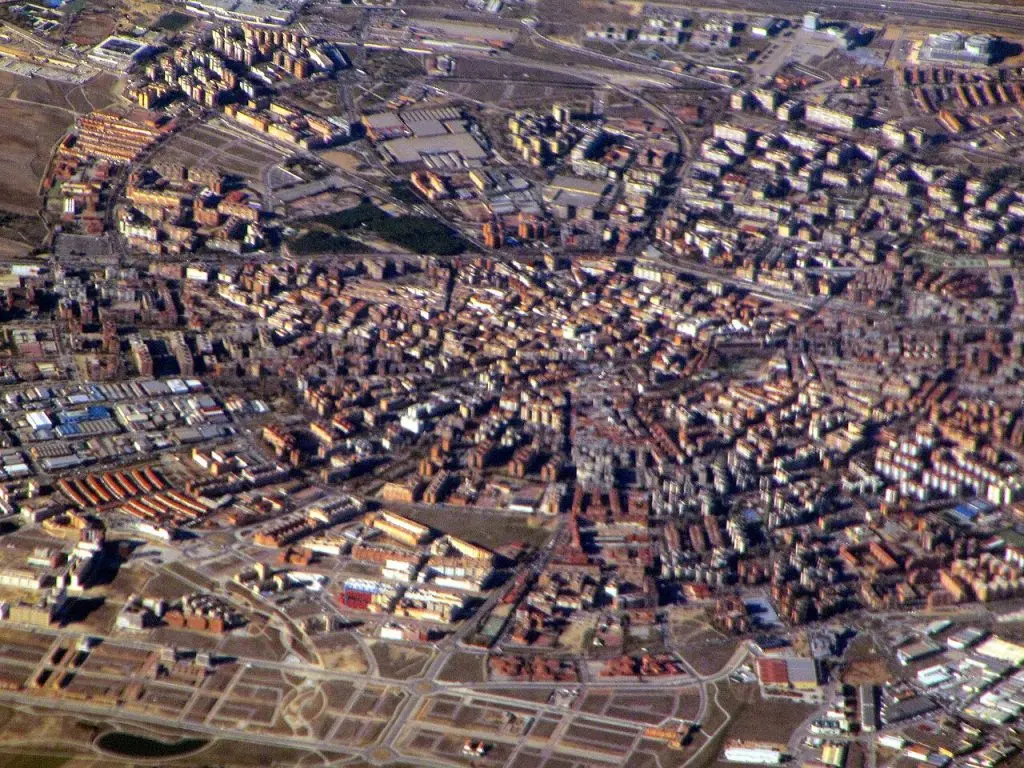
The smell of callos simmering slowly behind the bars of the town centre, mingling with the sound of birds in the arcades of plaza del Pradillo, is the first hint that Móstoles is no mere dormitory town. Here, just 18 km from central Madrid, you breathe in a curious blend of living history, contemporary art and neighbourhood life that draws you in from the very first caña. With more than 213,000 inhabitants, it is the second most populous city in the Community of Madrid, and yet it still holds on to corners with the soul of an old town that deserve an unhurried visit.
Centro de Arte 2 de Mayo (CA2M)
The CA2M is the leading contemporary art centre in southern Madrid, with a constantly changing exhibition programme and cultural activities throughout the year. It is housed in a functional building that contrasts with its urban surroundings, and its schedule ranges from audiovisual installations to workshops and meetings with artists. If contemporary art interests you, this is an essential stop to see what is brewing on Madrid’s emerging scene. It is best to check its programme before you go, as exhibitions rotate frequently.
Ermita de Nuestra Señora de los Santos
This chapel is one of Móstoles’ listed heritage sites and is linked to the town’s patron saint, the Virgen de los Santos. Its heritage and historical value make it an essential visit for understanding popular devotion in Móstoles. The surroundings invite a leisurely stroll, especially during the September festivities, when the image of the Virgin takes centre stage in the traditional bajada and procession.
Iglesia de San Juan de Ávila
The church of San Juan de Ávila is a modern temple that reflects the urban expansion of Móstoles. Its functional, light-filled architecture sets it apart from the historic churches of the centre. It is a good example of how the city has grown while integrating places of worship into its new neighbourhoods.
Teatro del Bosque
The Teatro del Bosque is one of Móstoles’ most important performing arts venues, with a steady programme of theatre, dance, music and family shows. It has become a cultural meeting point for locals and visitors alike. If your visit coincides with a performance, it is well worth checking its listings.
Plaza de toros de Móstoles
The Móstoles bullring is a distinctive building that forms part of the city’s urban landscape. During the September patron saint festivities it takes on special prominence with the scheduled bullfighting events. Its silhouette is a reminder of the bullfighting tradition that is still alive in many towns across the Community of Madrid.
Plaza del Pradillo
Plaza del Pradillo is one of Móstoles’ most recognisable public spaces, a meeting point and a familiar thoroughfare in the town centre.
Casa Museo Andrés Torrejón
According to oral tradition, this house is where Andrés Torrejón lived and died, the mayor who signed the famous Bando of 1808. The street where it stands was formerly called calle de Segovia and in 1868 took its current name in honour of the celebrated mayor. The building preserves the historical legacy of the episode that brought the town national fame, and a visit offers a glimpse of Móstoles two centuries ago.
Finca Liana
Parque Finca Liana is the second largest park in Móstoles, with 14.44 hectares of gardens and woodland bordered by Avenida Olímpica, calle Benito Pérez Galdós and Avenida de Portugal. It is a popular green lung for strolling and exercising, with broad lawns and shaded paths.
Museo de la Ciudad
The Museo de la Ciudad de Móstoles is the space dedicated to preserving and showcasing the history and evolution of the municipality.
El Soto Paleontological Zone
El Soto Park is a 44-hectare forest park, the largest green area in the municipality, designated a “Singular Park” by the City Council. It features a central lake, more than 200 species of flora and trails that make it the green lung of southern Madrid, accessible from Móstoles-El Soto Station.
Fuente de los Peces
Fuente de los Peces is an urban fountain that forms part of Móstoles’ distinctive street furniture.
Monument to Freedom
The Monument to Freedom is an urban sculpture located in a public space in Móstoles.
Guardia Civil
Guardia Civil is a geodetic vertex located in Móstoles, a geographical reference point in the municipality.
Valle de las Higueras Archaeological Zone
The Valle de las Higueras archaeological zone is a site of cultural interest that documents ancient human presence in the territory of Móstoles.
Plaza de la Cultura
Plaza de la Cultura is a square in Móstoles that forms part of the central urban space.
Plaza de España
Plaza de España is a square in Móstoles with a character of its own within the urban fabric.
Plaza de Ernesto Peces
Plaza de Ernesto Peces is a square in Móstoles that pays tribute to a local figure.
🍂 Otoño
Si visitas Móstoles en otoño, el clima se vuelve más fresco y las lluvias son escasas, así que apenas te mojarás. Septiembre es un mes clave porque se celebran las Fiestas Patronales en honor a Nuestra Señora de los Santos y San Simón de Rojas. Lleva una chaqueta fina y acércate a la plaza de toros o al Teatro del Bosque si hay programación.
What to do in Móstoles
Móstoles offers a range of activities that go from immersing yourself in the historical reenactment of the 2nd of May to getting lost among Goyaesque markets, float parades and free concerts during its patron saint festivities. The city combines the pulse of a major urban centre in southern Madrid with the closeness of its neighbourhoods, its parks and its year-round cultural calendar.
If you happen to visit during the Móstoles Carnival in February, prepare for more than two weeks of carnival atmosphere with group competitions, chirigotas, family costume dances, a pet parade and the traditional burial of the sardine. In May, the Fiestas del 2 de Mayo commemorate the 1808 uprising with a tribute to the Heroes of Independence, historical reenactment, a lantern parade, a float competition and a Goyaesque market. And in September, the Patron Saint Festivities in honour of Nuestra Señora de los Santos and San Simón de Rojas fill the town with liturgical events, a floral offering, the lowering of the Virgin, a procession, bullfighting events and free concerts.
For everyday life, the parks take centre stage: El Soto Park with its central lake and more than 200 species of flora, Finca Liana with its 14.44 hectares of meadows, and neighbourhood parks such as Villafontana and Parque Coimbra. The Old Town invites you to wander among squares, terraces and local shops, while the area around Móstoles Central Station concentrates urban and commercial atmosphere.
Móstoles in a day: express itinerary
If you only have one day, this route lets you cover Móstoles’ must-sees without rushing and with time to eat well.
- 10:00 – Plaza del Pradillo and Casco Antiguo: start in the heart of the town, stroll through its pedestrian streets and squares, and soak up the quiet morning atmosphere. It’s the best way to get your bearings and understand the scale of the city.
- 11:00 – Casa Museo Andrés Torrejón: delve into the history of the Bando of 1808 and the legacy of Móstoles’ most famous mayor. A must to understand why this city is a symbol of the War of Independence.
- 12:00 – Ermita de Nuestra Señora de los Santos: visit this heritage site linked to the city’s patron saint. The surroundings invite a quiet pause before carrying on.
- 13:30 – Lunch in the centre: order a portion of callos a la madrileña or some empanadillas de Móstoles in any of the bars in the old town. Pair it with a well-poured caña and don’t rush: here people eat at their leisure.
- 16:00 – CA2M (Centro de Arte 2 de Mayo): spend the afternoon with contemporary art at the region’s leading artistic reference in the south. Check the day’s programme and let the exhibitions surprise you.
- 18:30 – Parque de El Soto or Finca Liana: end the day with a stroll among green spaces, beside the central lake of El Soto or through the meadows of Finca Liana. The perfect way to wind down.
Where to eat in Móstoles: local gastronomy
Where to stay in Móstoles
Casco Antiguo
Centro histórico de Móstoles, con calles peatonales, plazas y edificios emblemáticos como la Iglesia de Nuestra Señora de la Asunción. Ambiente tranquilo durante el día y animado por las tardes, con comercios locales y terrazas.
Parque Coimbra
Zona residencial moderna y bien comunicada, con amplias avenidas y el Parque Coimbra como pulmón verde. Cuenta con centros comerciales y servicios, ideal para estancias tranquilas.
Estación de Móstoles Central
Área alrededor de la estación de tren y metro, con alta conectividad a Madrid. Ambiente urbano y comercial, con numerosos bares y restaurantes.
Móstoles Sur
Zona residencial en expansión, con parques y equipamientos deportivos. Ambiente familiar y tranquilo, con supermercados y centros educativos.
El Soto
Barrio residencial con el Parque de El Soto, uno de los más grandes de la ciudad. Zona tranquila con zonas verdes y áreas de recreo.
Villafontana
Zona residencial cercana al centro, con calles arboladas y ambiente familiar. Cuenta con el Parque de Villafontana y diversos comercios locales.
How to get to Móstoles
Móstoles is 18 km southwest of central Madrid, in the Guadarrama river valley, and its main advantage is the rail connection to the capital. Universidad Rey Juan Carlos train station is the reference point for arriving by Cercanías, with no AVE service. Cuatro Vientos aerodrome, for civil use, is the nearest air infrastructure, although for commercial flights Madrid-Barajas airport remains the main option.
| Medio | Duración | Precio aprox. | Frecuencia |
|---|---|---|---|
| Tren de cercanías desde Madrid | 20-30 min | 2-4 € | Alta frecuencia en hora punta |
| Autobús interurbano desde Madrid | 30-45 min | 2-5 € | Frecuencia media |
| Coche particular por A-5 | 20-35 min | Peaje y combustible variables | Según tráfico |
| Aeródromo de Cuatro Vientos | Acceso en coche o taxi | Variable | Uso civil limitado |
Getting around Móstoles
Urban transport in Móstoles relies mainly on the city bus network, which connects the different neighbourhoods with each other and with the train and metro stations. To get around between the Casco Antiguo (Old Town), the parks and the residential areas, the bus is the most practical option if you don’t have a car. The city is also well suited to walking in its central area, where squares and pedestrian streets allow for short trips on foot. If you come by car, the main avenues and the proximity to the A-5 make access to outlying neighbourhoods such as Parque Coimbra or El Soto easy.
Weather in Móstoles
Live webcam — Madrid*
Móstoles* The nearest webcam to Móstoles is in Madrid, 8.8 km away.
Source: Windy Webcams
Best time to visit Móstoles
Day trips from Móstoles
Móstoles is an excellent base for exploring the cities of the Madrid region thanks to its strategic position just 18 km from the capital and its good rail and road connections. The most obvious excursion is to central Madrid, less than half an hour away by Cercanías, with all the capital’s cultural, culinary and leisure offerings. You can also travel to other towns in the south and west of the Community of Madrid to discover historic centres, natural spaces and a varied culinary scene. The Guadarrama river valley, in which Móstoles sits, offers interesting routes and landscapes for a short getaway without going too far.
Curiosities about Móstoles you never knew
Eleven hermitages for a tiny town. In the 16th century Móstoles came to have more hermitages than streets, building as many as 11 different hermitages. Today it is hard to imagine, but that devout town dotted its small old quarter with temples everywhere.
The proclamation that sparked a war. The Bando de los alcaldes de Móstoles (Proclamation of the Mayors of Móstoles) was signed by Andrés Torrejón and Simón Hernández on 2 May 1808, becoming a symbol of the outbreak of the Peninsular War. That document brought national fame to a town that until then was little more than a crossroads.
A mystic adviser to kings. San Simón de Rojas, a religious man and mystic born in Móstoles in 1552, came to be an adviser to kings and is a patron saint of the city alongside the Virgen de los Santos. His figure links local history with the court and the spirituality of the Golden Age.
Independence was bought. Móstoles became independent from Toledo in 1565 after purchasing its own jurisdiction from King Philip II. Literally, the town paid to stop depending on Toledo, a gesture that shaped its character.
Prehistoric elephants in the arroyo del Soto. In the area around the arroyo del Soto, fossils of Gomphotherium, a distant relative of elephants, have been found alongside Palaeolithic flint tools. Long before Móstoles existed, there was already animal and human life here.
The first mostoleños with names of their own. In 2002 a 2nd-century funerary stone appeared next to the arroyo del Soto, dedicated by a woman named Fortunata to her husband Flavianus. They are probably the first mostoleños whose names we know, and their love story has been written in stone for almost two millennia.
Who Móstoles is for
Móstoles is a city for curious travellers who want to see the real face of southern Madrid, far from the saturated tourist circuits. Families will find spacious parks such as El Soto or Finca Liana, quiet neighbourhoods and an affordable range of leisure options. History lovers have the Casa Museo Andrés Torrejón, the Ermita de Nuestra Señora de los Santos and the 2 May festivities as more than enough reason to come. Foodies will enjoy a route of empanadillas, callos and cocido madrileño without paying city-centre prices. And backpackers will appreciate the excellent connection with Madrid and the budget accommodation near the station. It is not a city of grand monuments, but it is an authentic place to experience the everyday pulse of the Community of Madrid.
💡 ¿Sabías que...?
- ● Móstoles llegó a tener más ermitas que calles en el siglo XVI, construyendo hasta 11 ermitas diferentes. (https://www.epe.es/es/madrid/mostoles/20260319/mostoles-pueblo-mas-ermitas-calles-11-siglo-xvi-128063370)
- ● El Bando de los alcaldes de Móstoles fue firmado por Andrés Torrejón y Simón Hernández el 2 de mayo de 1808, convirtiéndose en símbolo del inicio de la Guerra de la Independencia. (https://es.wikipedia.org/wiki/Bando_del_alcalde_de_M%C3%B3stoles)
- ● San Simón de Rojas, religioso y místico nacido en Móstoles en 1552, fue consejero de reyes y es patrón de la ciudad junto a la Virgen de los Santos. (https://conocemostoles.blogspot.com/p/personajes-page.html)
- ● Móstoles se independizó de Toledo en 1565 tras comprar al rey Felipe II su propia jurisdicción. (https://www.cosasdemadrid.es/curiosidades-sobre-la-ciudad-de-mostoles/)
- ● En el entorno del arroyo del Soto se han hallado fósiles de Gomphotherium, un pariente lejano de los elefantes, junto a útiles de sílex del Paleolítico. (https://mostoles365.com/historia/origenes)
- ● En 2002 apareció junto al arroyo del Soto una lápida funeraria del siglo II dedicada por una mujer llamada Fortunata a su marido Flavianus, probablemente los primeros mostoleños cuyo nombre se conoce. (https://mostoles365.com/historia/origenes)
Frequently asked questions about Móstoles
How many days do I need to see Móstoles?
With a full day you can cover the essentials: Casco Antiguo (Old Town), Casa Museo Andrés Torrejón, Ermita de Nuestra Señora de los Santos, CA2M and one of its large parks. If you want to explore the cultural offering at a leisurely pace, enjoy the food and coincide with fiestas or markets, two days will give you room to add the Teatro del Bosque, Finca Liana or Parque de El Soto without rushing.
What is the best time of year to visit Móstoles?
From May to September, according to climate data. The average summer temperature is 24.8°C, ideal for terraces and parks. May stands out for the Fiestas del 2 de Mayo and September for the Fiestas Patronales, both with free activities and a great atmosphere. Winter is colder, with an average of 7.1°C, and annual precipitation is 412.3 mm.
How do I get to Móstoles from Madrid?
The fastest option is the commuter train, arriving at Universidad Rey Juan Carlos station in about 20-30 minutes with high frequency at peak times. There are also intercity buses that take between 30 and 45 minutes. By car, the A-5 connects Madrid with Móstoles in 20-35 minutes depending on traffic.
Does Móstoles have a beach or natural spaces?
It has no beach, but it does have large urban and forest parks. Parque de El Soto is the municipality’s largest green area, with 44 hectares, a central lake and more than 200 species of flora. Finca Liana, with 14.44 hectares, is another green lung ideal for strolling. Both are classified as singular spaces by the Ayuntamiento (City Council).
What typical dishes should I try in Móstoles?
Callos a la madrileña (Madrid-style tripe), cocido madrileño served in three vuelcos (three courses), the house caracoles (snails) with a family recipe dating back to 1969, the empanadilla de Móstoles in its Cedillo, de la yaya or criolla varieties, and the lechazo churro de Palencia with IGP roasted in the traditional way. All of them can be found in bars and restaurants in the centre and around the station area.