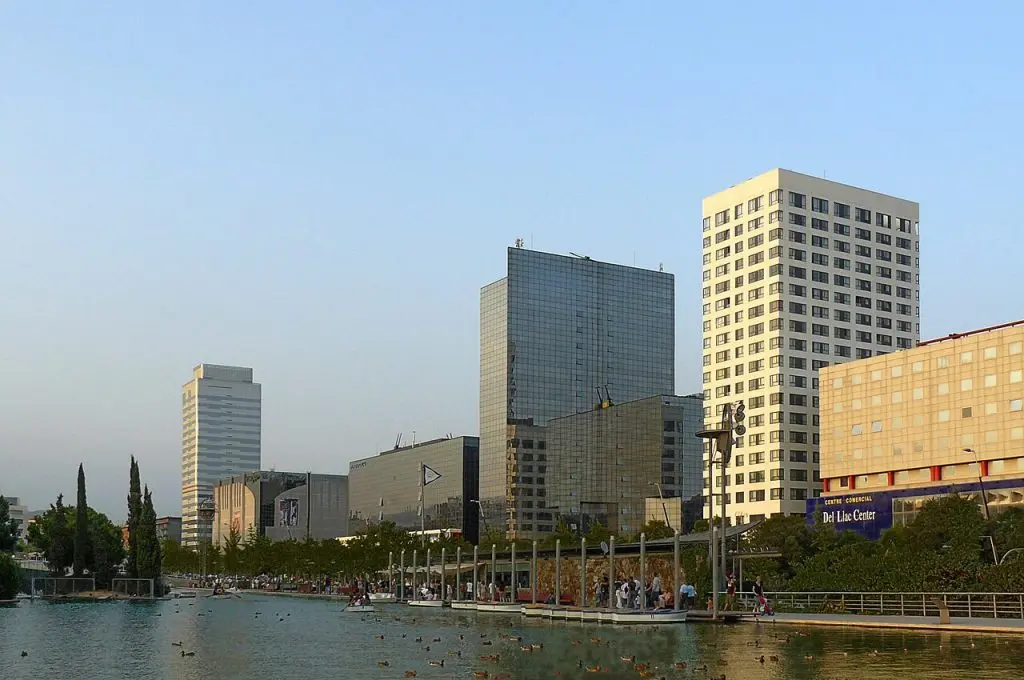
Sabadell
CataluñaClimate
The smell of fresh butifarra sausage and nuts mingles with the bustle of the stalls in the Mercat Central, while the mid-morning light bounces off the modernist façade of the Torre de l’Aigua. Sabadell doesn’t announce itself loudly: it draws you in slowly, among the pedestrian streets of the historic centre, façades that recall its wool-making past and squares where vermouth lingers without haste. It’s a city to walk at an easy pace, without crowds, and to discover that Catalonia has far more to offer than Barcelona half an hour away by train.
The must-seesWhat to see in Sabadell: the essentials
Sabadell’s heritage combines medieval remains, industrial architecture and religious corners that explain why this city was once known as “the Catalan Manchester”. These are the stops you shouldn’t miss.
Institut Català de Paleontologia Miquel Crusafont
A museum devoted to palaeontology, named after one of the most important scientists in the field in Catalonia. It’s a particularly interesting visit for travellers curious about evolution and fossils, with an educational approach that works well for both adults and children.
Casa Duran
The Casa Duran del Pedregar was built between 1578 and 1606 and is one of the oldest surviving civil buildings in Sabadell. A blend of manor house and farmstead, it preserves wine cellars, underground storerooms and the remains of a soap factory for textile dressing on the ground floor. On the main floor, the principal hall and the rooms with 18th- and 19th-century mural paintings stand out. Its eastern façade was raised over the old layout of the town’s late-medieval wall, and the outer courtyard coincides with the site of the moat. It is a jewel of local traditional architecture.
Mercat Central de Sabadell
Designed by the local architect Josep Renom i Costa and built between 1927 and 1930, this market reflects the monumental style typical of the architecture of the period and is listed as a Cultural Asset of Local Interest. Its food stalls retain the atmosphere of a neighbourhood market, with fresh produce, cured sausages and Catalan specialities. Its location on the Plaça del Mercat makes it part of the historic centre route, and its architectural value makes it an essential stop even if you’re not buying anything.
Castell de Ribatallada
This former castle, declared a Monument under code RI-51-0005623 in 1988, stands beside the Ribatallada stream, at the top of a hill near Sant Julià d’Altura. Today it is a partly ruined farmhouse with an irregular layout, the result of its adaptation to the terrain and the alterations it has undergone throughout its history. Its style, linked to popular architecture, and its semi-wild state give it a romantic and mysterious air. It is one of the most singular historic heritage elements in the municipality.
Castell d’Arraona
A palace that forms part of Sabadell’s historic heritage, linked to the seigneurial past of the Vallès Occidental region.
Torre de l’Aigua de Sabadell
One of the most representative symbols of Sabadell and one of the most singular works of its industrial heritage. Construction began in 1916 in response to the increased demand for water caused by industrial and demographic growth, and it was inaugurated in 1918. The project is the work of the architect Lluís Homs, with the participation of Josep Renom, and it was one of the first buildings in Sabadell constructed with reinforced concrete. Modernist in style, it stored the water pumped from the Caseta de les Aigües, on the Ripoll riverbed. Today it is a recognisable industrial icon and one of the most photographed postcards of the city.
Santuari de la Mare de Déu de la Salut
It stands at the top of the Sant Iscle mountain range, on the remains of the ancient Roman villa of Arraona. In the mid-17th century, an image of the Virgin was found near the spring of the Canyameres stream, which began to be venerated in the already existing Sant Iscle chapel. Since 1697, the Aplec de la Salut has been held there every second Sunday in May, with religious and popular events. It is a reference point for hiking routes and visits in the natural surroundings of the mountain range.
Església de Sant Fèlix de Sabadell
The archpriestal church of Sabadell, officially Sant Feliu, is one of the city’s main religious buildings. Its construction dates back to the 15th century and combines Gothic, Baroque and Neo-Gothic elements resulting from various renovations. Listed as a Cultural Asset of Local Interest, its interior stands out for its religious architecture, and its setting within the old town makes it a must-see stop on any route through the centre.
Museu d’Història de Sabadell (MHS)
Its activity focuses on the conservation, research and dissemination of its art collection and the city’s heritage. Over the last two hundred years, Sabadell has stood out as one of the Catalan cities with the strongest artistic identity, both in terms of the quality and the quantity of its output. The museum’s collection is one of the most representative in the country, and its building, with a distinctive façade, offers a journey through the art produced in the city and its surroundings.
Plaça de Sant Roc
The central square of Sabadell and the city’s historic core, popularly known as the rovell de l’ou (egg yolk) because it has traditionally concentrated political, financial and ecclesiastical power. Around it are the main headquarters of the Ajuntament de Sabadell, the building that was the headquarters of the Banc de Sabadell, the Església de Sant Fèlix, l’Ateneu and the first Viena chain establishment. It took shape at the end of the 16th century as the placeta dels Estricadors, and has changed its name several times: plaça de la Constitució in 1873, Sant Roc in 1874 and Pi i Margall in 1902. It is a mandatory stop on urban routes and a civic meeting place.
Other points of interest
- Castell de Can Feu: 19th-century manor house located in the Can Feu neighbourhood.
- Monument a Miguel Carreras i Costajussà: the “Trona al sol” monument located in Parc Taulí 9.
- Espai Cultura Fundació 1859 Caixa Sabadell: cultural and entertainment venue.
- Masia de Can Rull: palace of local heritage interest.
- Granja del Pas: city monument.
- Bassa de Sant Oleguer: monument linked to the urban environment.
- L’home de bronze: emblematic monument of Sabadell.
🍂 Otoño
Si visitas Sabadell en otoño, septiembre y octubre son meses excelentes por sus temperaturas suaves y menor bochorno, perfectos para actividades al aire libre. Puedes acercarte a la Casa Duran o al Institut Català de Paleontologia Miquel Crusafont sin pasar calor. Lleva un paraguas plegable porque las lluvias pueden aparecer de forma ocasional.
What to do in Sabadell
Sabadell offers strolls through its pedestrianised historic centre, industrial and natural heritage routes in the Sant Iscle mountain range, shopping in traditional markets and a cultural calendar that combines popular festivals and music festivals.
The Mercat Central is an activity in itself: going first thing in the morning, watching the stalls being set up, buying Catalan cured meats and nuts, and having a mel i mató for breakfast at one of the stops is a perfect plan to start the day. If you’re looking for something livelier, the Embassa’t festival fills the city with live music, and the Ball de Diables de Sabadell keeps popular culture alive with its correfocs and performances.
For walking, the historic centre is a delight: pedestrian streets, squares such as Sant Roc and Modernista buildings that appear when you least expect them. If you prefer nature, head up to the Santuari de la Mare de Déu de la Salut along the hiking routes of the Sant Iscle mountain range. And if urban leisure is more your thing, the Eix Macià area brings together cinemas, restaurants and shopping centres.
Sabadell in a day: express itinerary
With a full day you can see the essentials of Sabadell without rushing. This is the route I would take:
- 9:30 — Mercat Central de Sabadell: start with a local breakfast among century-old stalls and take the opportunity to buy cured meats or nuts for the day.
- 10:45 — Plaça de Sant Roc and Església de Sant Fèlix: the historic and political heart of the city, with the archpriestal church and the institutional buildings all in one setting.
- 12:00 — Casa Duran: travel back to the Sabadell of the 16th-17th centuries among wine cellars, mural paintings and remains of the old city wall.
- 13:30 — Lunch in the centre: try canelons, escudella i carn d’olla or some bravas in the bars along Carrer Advocat Cirera.
- 16:00 — Torre de l’Aigua: Sabadell’s most iconic Modernista and industrial postcard, ideal for photos and for understanding the city’s wool-making past.
- 17:30 — Museu d’Història de Sabadell: a journey through the art produced in the city and its surroundings, with one of the most representative collections in Catalonia.
Where to eat in Sabadell: local gastronomy
Where to stay in Sabadell
Centre
El centro histórico y comercial de Sabadell. Incluye el casco antiguo con calles peatonales, plazas y edificios modernistas. Es la zona más animada para pasear, comprar y comer.
Gràcia
Barrio residencial y comercial, con una mezcla de viviendas y pequeños comercios. Tiene un ambiente local y tranquilo, con algunos parques y plazas.
Creu Alta
Barrio obrero e industrial tradicional, con una fuerte identidad local. Alberga el estadio del Centre d'Esports Sabadell y zonas residenciales.
Can Rull
Barrio periférico residencial con grandes bloques de viviendas. Es una zona tranquila, con servicios básicos y parques, pero menos atractiva para turistas.
La Concòrdia
Barrio residencial de clase trabajadora, con una mezcla de viviendas y pequeñas industrias. Tiene un ambiente de barrio auténtico y poco turístico.
Eix Macià
Zona moderna y comercial, con grandes avenidas, centros comerciales y hoteles. Es la principal área de compras y ocio de la ciudad, con cines y restaurantes.
How to get to Sabadell
Sabadell is well connected to Barcelona and the rest of Catalonia by train and bus. The main station is Sabadell Parc del Nord, with no AVE service, so for long distances you’ll need to change in Barcelona.
| Medio | Duración | Precio aprox. | Frecuencia |
|---|---|---|---|
| Tren desde Barcelona | 30-40 min | 3-5 € | Alta, cada 10-15 min en horas punta |
| Bus urbano | Según línea | 1-2 € | Variable según ruta |
| Coche desde Barcelona | 25-35 min | Peajes y combustible | Según tráfico |
For up-to-date timetables and frequencies, check the official Sabadell tourism website.
Getting around Sabadell
Sabadell’s historic centre is perfectly walkable, with pedestrian streets and squares that invite you to stroll at leisure. For longer journeys, the city has a urban bus network connecting the outlying neighbourhoods with the centre and the train station. If you’re staying in areas such as Eix Macià, Creu Alta or Can Rull, the bus is the most practical option for reaching the old town without depending on a car.
Weather in Sabadell
Best time to visit Sabadell
Day trips from Sabadell
Sabadell is an excellent base for exploring the comarca of Vallès Occidental and other cities in the Barcelona region. Its position as co-capital of the comarca, alongside Terrassa, places it a short distance from centres with a rich industrial and Modernista heritage. By train or car you can head to Terrassa, with its group of Romanesque churches of Sant Pere, or to Barcelona, just half an hour away, to combine urban bustle with Sabadell’s calm. Other cities in the region, such as Sant Cugat del Vallès or Granollers, are also comfortable excursions to complete a route through the Vallès Occidental.
Curiosities about Sabadell you didn’t know
The nickname “the Catalan Manchester” was no exaggeration. In the second half of the 19th century, Sabadell became the most important wool city in Spain, and in 1838 the country’s first textile steam machine was installed here. The chimneys and industrial warehouses scattered across the city are the legacy of that era.
The name Sabadell might come from an onion. One of the theories about the origin of the place name derives it from “ceba” (onion), which appears drawn on the city’s coat of arms. Another theory links it to market day: Saturday, dissabte in Catalan, sabbatum in Latin, with sabbatellum as the diminutive.
An emergency landing marked the history of local aviation. In 1919, the Catalan aviator Manel Colomer made an emergency landing in the upper part of the city, known today as Creu Alta. Years later, on 1 August 1934, the Sabadell aerodrome was officially inaugurated for military and civil use.
Beneath Sabadell lies a necropolis 6,500 years old. The Can Roqueta necropolis dates from 4500 BC, was located in 1913 and first excavated between 1999 and 2000. It is one of the most significant prehistoric sites in the Barcelona area.
One of the most international Sabadell natives was born here in 1884. Ferran Casablancas Planell, born in Sabadell and died in Barcelona in 1960, is considered one of the most international figures the city has produced.
Who Sabadell is for
Sabadell is a city for travellers fleeing the crowds and seeking an authentic Catalonia, without pretense. Lovers of history and industrial heritage will delight in the Torre de l’Aigua, the Casa Duran and the remnants of the wool past. Families will find quiet neighbourhoods like Gràcia or Can Rull, with parks and a relaxed pace. Backpackers have in Creu Alta and La Concòrdia areas with lower prices and a genuine neighbourhood atmosphere. And foodies will feast on cured meats, Catalan stews and almond sweets in the markets and bars of the centre. It is not a city of grand monuments, but of atmosphere, history and local life.
💡 ¿Sabías que...?
- ● Sabadell fue conocida como «la Mánchester catalana» en la segunda mitad del siglo XIX y se convirtió en la ciudad lanera más importante de España a mitad del siglo XIX. (https://es.wikipedia.org/wiki/Sabadell)
- ● En 1838 se instaló en Sabadell la primera máquina de vapor textil del país. (https://www.mycityhunt.es/explorer-blog/10-datos-sobre-sabadell-que-te-dejaran-boquiabierto-1428)
- ● Una de las teorías sobre el origen del topónimo Sabadell lo deriva de «ceba» (cebolla), que aparece dibujada en el escudo de la ciudad. (https://es.wikipedia.org/wiki/Sabadell)
- ● Otra teoría sobre el nombre de Sabadell lo relaciona con el día de la semana en que se celebraba el mercado: el sábado (dissabte en catalán, sabbatum en latín, con sabbatellum como diminutivo). (https://es.wikipedia.org/wiki/Sabadell)
- ● En 1919 se produjo la primera operación de un avión en Sabadell: el aviador catalán Manel Colomer hizo un aterrizaje de emergencia en la parte alta de la ciudad, conocida hoy como Creu Alta. (https://www.aena.es/es/sabadell/conocenos/historia.html)
- ● La necrópolis de Can Roqueta, en Sabadell, data del 4500 aC y fue localizada en 1913 y excavada por primera vez entre 1999 y 2000. (https://www.diaridesabadell.com/sabadell/2021/10/09/el-subsol-de-la-ciutat-un-mon-per-descobrir/)
- ● El aeródromo de Sabadell se inauguró oficialmente el 1 de agosto de 1934 para uso tanto de la aviación militar como civil. (https://www.aena.es/es/sabadell/conocenos/historia.html)
- ● Ferran Casablancas Planell, nacido en Sabadell en 1884 y fallecido en Barcelona en 1960, es considerado uno de los personajes más internacionales que ha dado Sabadell. (https://museus.sabadell.cat/mhs/exposicions-temporals-museu-historia/actuals/1715-de-sabadell-al-mon-ferran-casablancas-inventor-i-empresari-150-anys)
Frequently asked questions about Sabadell
How many days do I need to see Sabadell?
With a full day you can see the essentials: Mercat Central, Plaça de Sant Roc, Església de Sant Fèlix, Casa Duran, Torre de l’Aigua and Museu d’Història de Sabadell. If you want to add the Santuari de la Salut, the Castell de Ribatallada or a hiking route through the Serra de Sant Iscle, 2 days are ideal.
What is the best time of year to visit Sabadell?
May, June, September and October are the best months, with mild temperatures and less humidity. The average summer temperature is 24.5 °C and the winter average is 8.8 °C. July and August are the worst months due to the heat, tropical nights and the muggy feel.
How do I get to Sabadell from Madrid?
There is no direct AVE to Sabadell. The most common option is to take an AVE or long-distance train to Barcelona and from there a Cercanías train to Sabadell Parc del Nord station, a journey of 30-40 minutes with a high frequency of service.
Is Sabadell a good base for visiting Barcelona?
Yes, if you’re looking for lower prices and a less touristy atmosphere. The train to Barcelona takes between 30 and 40 minutes, which lets you combine day trips to the Catalan capital with the calm of a mid-sized city like Sabadell.
What typical dishes should I try in Sabadell?
Don’t leave without trying escudella i carn d’olla (Catalan stew) in winter, gratinated cannelloni, the patatas bravas on Carrer Advocat Cirera, xató (a Catalan salad with romesco sauce), Catalan cured meats and, for dessert, mel i mató (honey with fresh cheese) or panellets if you travel around All Saints’ Day.