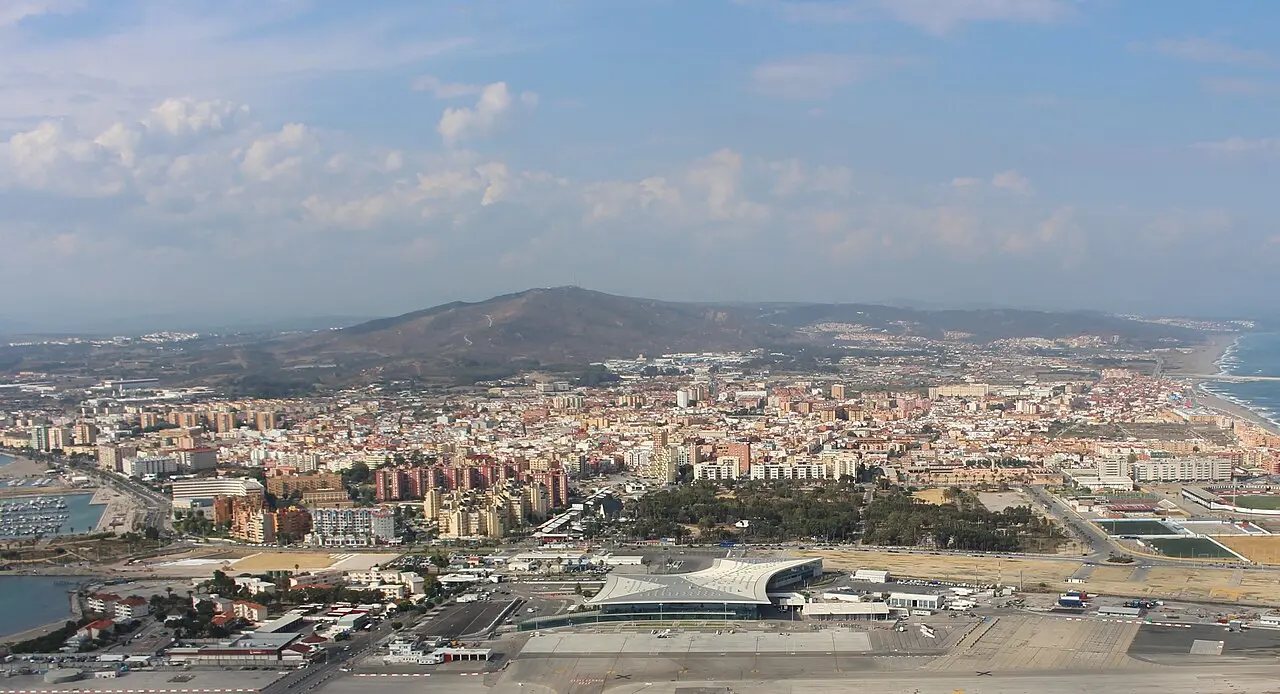
La Línea de la Concepción
AndalucíaClimate
What to see in La Línea de la Concepción: the essentials
La Línea de la Concepción holds surprise after surprise for anyone who approaches without haste. Its heritage combines the defensive footprint of centuries past with monuments that celebrate Andalusian popular culture, all just a stroll from a beach where the Rock of Gibraltar seems close enough to touch. This is the route through its unmissable sights.
Plaza de Toros de La Línea de la Concepción
The bullring of La Línea, also known as Plaza El Arenal, is an exceptional testament to the rise of bullfighting in the 19th century. Built between 1880 and 1883, just a few years after the municipality separated from San Roque in 1870, it follows the classic typology of Andalusian bullrings with a late-Baroque style that has earned it designation as a Monument, with code RI-51-0011557 and publication in the BOJA no. 98 of 18 May 2007. Beyond bullfighting events, the venue hosts occasional cultural events, especially during the fair, and maintains a close link with the history of flamenco and the popular culture of the region. If you coincide with any activity, going inside will let you appreciate the scale of the arena and its atmosphere steeped in tradition.
Ruins of the Fuerte de Santa Bárbara
Next to the beach, stretches of wall, bastions and archaeological remains of the Fuerte de Santa Bárbara are preserved, an old fortification that formed part of the area’s defensive system. The site is signposted with explanatory panels that help to understand its original function and its evolution. It is currently undergoing a process of enhancement through a refurbishment project aimed at conservation and improving public visits, making it an interesting stop for those who enjoy military heritage without the crowds.
Santuario de la Inmaculada Concepción
The Santuario de la Inmaculada Concepción is the main religious and architectural landmark of La Línea’s old town. Inside it preserves an altarpiece of heritage interest that deserves a careful look. The temple forms part of the city’s historic ensemble and is a meeting point for liturgical celebrations and popular traditions, especially during the patron saint’s festival in December.
Playa de la Alcaidesa
Playa de la Alcaidesa stretches from the Puerto de Higuerón stream with an average length of about 1,050 metres and moderate bathing waters. Its large expanse of golden sand is backed by a large embankment that gives it the appearance of a cove, and at the main access a rocky outcrop emerges from the water as a landmark to orient yourself. It is frequented mainly by residents of the La Alcaidesa development and offers conditions for windsurfing, kitesurfing, kayaking, sailing and diving; it is reached by car from exit 124 of the Mediterranean motorway.
Monument to Camarón de la Isla
The Monument to Camarón de la Isla has become one of the city’s popular symbols and a pilgrimage site for flamenco fans who come to pay tribute to the artist. The work forms part of Andalusia’s historical and cultural heritage, protected by Law 16/1985 on Spanish Historical Heritage. It is an almost obligatory stop for any lover of cante jondo visiting La Línea.
Las Tres Gracias Monument
Sculptural ensemble by Nacho Falgueras, an adopted son of La Línea, created as a tribute to the painter José Cruz Herrera and an adaptation of Rubens’ painting ‘The Three Graces’, featuring three Romani women in traditional Andalusian dress; it stands in the centre of the plaza de la Iglesia and has been a symbol of the town since its inauguration in 2002.
Playa de Levante (Castle Beach)
Urban beach next to the border with Gibraltar, known as Castle Beach for its view of the Rock and its fortifications, with a promenade, beach bars and quiet swimming areas; it is one of the busiest in summer.
Cruz Herrera Museum
A municipally owned museum housing a collection of oil paintings, drawings and portraits by the artist from La Línea, particularly on female and genre themes, alongside works by other creators linked to the city; its opening hours are limited to weekdays, so it is worth checking before you go.
🍂 Otoño
Si visitas La Línea de la Concepción en otoño, el calor veraniego se suaviza y el ambiente se vuelve más tranquilo, ideal para conocer las Ruinas del Fuerte de Santa Bárbara o el Santuario de la Inmaculada Concepción sin prisas. La luz otoñal favorece los paseos por la costa y las visitas al aire libre. Consulta el parte meteorológico porque pueden aparecer lluvias, ya que la precipitación anual es de 601.5mm.
What to do in La Línea de la Concepción
La Línea de la Concepción offers a whole range of things to do, from having an africano for breakfast at the Mercado de Abastos (market) to following the flamenco trail at the Monument to Camarón de la Isla, not to mention days at the beach in Levante or La Alcaidesa and strolls through neighbourhoods as full of character as La Atunara or the Casco Antiguo (old town).
If you travel in February, Carnival fills the streets with presentations, cultural events, the carnival groups competition, the opening speech, the children’s fancy-dress contest and a big parade. In December, the patron saint festivities in honour of the Immaculate Conception, patron saint and perpetual mayoress of the city, turn the centre into a hive of liturgical acts and popular celebrations. And in January, the Three Kings’ Parade winds through the streets with the traditional procession of the Magi.
For everyday life, the Mercado de Abastos is an experience in itself: here you can have the famous africano for breakfast at Bar Francis and buy fresh local produce. Afterwards, you can lose yourself in the fishing neighbourhood of La Atunara, next to the fishing port, where the lively atmosphere and the fish and seafood restaurants set the pace. If you’re looking to shop, the Centro area concentrates the commercial and administrative district, with busy streets such as Avenida de España and calle Real.
La Línea de la Concepción in a day: express itinerary
With a well-organised day you can get a very complete picture of La Línea de la Concepción, combining heritage, food and beach. This is the route I would take:
- 9:00 – Breakfast at the Mercado de Abastos: start the day like a true local, with a hot africano at Bar Francis and a stroll among the stalls of fresh local produce.
- 10:30 – Casco Antiguo and the Sanctuary of the Immaculate Conception: wander the narrow streets of the historic centre, visit the church and its altarpiece of heritage interest, and photograph the Las Tres Gracias Monument in the plaza de la Iglesia.
- 12:00 – Monument to Camarón de la Isla: come and pay tribute to the flamenco genius at one of the city’s most popular symbols; it’s a brief stop but an essential one.
- 13:00 – La Línea Bullring: admire this late-Baroque monument built between 1880 and 1883, a witness to the bullfighting boom of the 19th century and a venue for cultural events during the fair.
- 14:30 – Lunch in La Atunara: the fishing neighbourhood is the perfect place to try fresh fish, fried or grilled volaores, and enjoy tapas with local produce in an authentic setting.
- 17:00 – Playa de Levante (Castle Beach): end the afternoon with a stroll along the promenade, a relaxing swim and views of the Rock of Gibraltar and its fortifications.
- 19:30 – Ruins of the Fuerte de Santa Bárbara: before you say goodbye, walk the stretches of wall and bastions next to the beach, with their information panels on the defensive system.
Where to eat in La Línea de la Concepción: local cuisine
Where to stay in La Línea de la Concepción
Centro
Zona comercial y administrativa de la ciudad, con calles concurridas como la Avenida de España y la calle Real. Ambiente animado durante el día, con tiendas, bancos y restaurantes. Es el núcleo urbano principal y bien comunicado.
Casco Antiguo
Zona histórica con calles estrechas y edificios antiguos, aunque menos monumental que en otras ciudades andaluzas. Incluye la Iglesia de la Inmaculada Concepción y plazas pequeñas. Ambiente tranquilo y auténtico.
La Atunara
Barrio marinero tradicional situado junto al puerto pesquero, con un ambiente popular y auténtico. Destaca por sus restaurantes de pescado y marisco, y por su cercanía a la playa de La Atunara. Es una zona con mucho carácter local.
Zona de la Playa de Levante
Área residencial y turística junto a la playa de Levante, con paseo marítimo y varios hoteles y apartamentos. Es la zona más orientada al turismo de sol y playa, con ambiente relajado en verano.
Zona de la Frontera (Gibraltar)
Área cercana al paso fronterizo con Gibraltar, con gran afluencia de viajeros y trabajadores. Predominan hoteles económicos, hostales y comercios orientados al tránsito. Es práctica para quienes visitan Gibraltar.
Zona de la Plaza de Toros
Barrio residencial alrededor de la Plaza de Toros de La Línea, con calles tranquilas y algunos bares de barrio. Menos turístico pero bien conectado con el centro.
How to get to La Línea de la Concepción
La Línea de la Concepción is connected to the rest of the province and Andalusia mainly by road, and its bus station is the reference point for those arriving by public transport. The Market Place serves as the city’s bus station, with services linking it to other towns in the Campo de Gibraltar and to regional destinations.
| Medio | Duración | Precio aprox. | Frecuencia |
|---|---|---|---|
| Autobús interurbano | Variable según origen | Medio | Consultar en la estación Market Place |
| Coche particular | Variable según origen | Variable | Acceso por la autovía del Mediterráneo |
| Bus urbano | Dentro del municipio | Bajo | Servicio de transporte urbano |
How to get around La Línea de la Concepción
La Línea de la Concepción has an urban bus service connecting the main neighbourhoods and areas of interest, a practical option for getting around without a car. For short distances, the centre and the old town are perfectly walkable, and the promenade along Playa de Levante invites you to stroll by the sea. If you want to go to Playa de la Alcaidesa or the area around the border with Gibraltar, the car or the urban bus are the most comfortable alternatives.
Weather in La Línea de la Concepción
Best time to visit La Línea de la Concepción
Day trips from La Línea de la Concepción
La Línea’s location in the Campo de Gibraltar region makes it an excellent base for exploring the cities of the area. Gibraltar is just a stone’s throw away, with its Rock and its peculiar status as a Territory pending decolonisation under the United Nations framework, visible from Levante beach and accessible through the border crossing. San Roque, from which La Línea was separated in 1870, offers a charming historic centre and strong historical ties to the town of La Línea. Algeciras, as the great port of the Strait, allows you to combine a seafaring atmosphere, maritime connections and a varied culinary offering. Tarifa, somewhat further west, is a benchmark for wind sports and boasts some of the most spectacular beaches on the Cádiz coast.
Curiosities about La Línea de la Concepción you didn’t know
The only European border with a Territory pending decolonisation. La Línea de la Concepción is the only European municipality that borders a Territory pending decolonisation under the United Nations (UN) framework. This geopolitical singularity defines part of its border character and its day-to-day life.
A young municipality with deep roots. La Línea became an independent municipality on 17 January 1870, after separating from San Roque. Barely a decade later it was already building its bullring, a symbol of the young town’s rapid growth.
Record for tropical nights in Cádiz. La Línea is the municipality in the province of Cádiz with the most tropical nights, those in which the temperature does not drop below 20°C. A fact that turns summer evenings into a particularly pleasant experience.
The oldest building isn’t the one you’d imagine. The Torre Nueva or Torre Sabá, built after the inspection ordered by Philip II in 1580, is the oldest building in La Línea de la Concepción. A vestige predating the founding of the municipality itself that recalls the strategic importance of this coast.
Who La Línea de la Concepción is for
La Línea de la Concepción is a destination for travellers seeking authenticity without artifice. Families enjoy Levante beach and Alcaidesa, with calm waters and a promenade; foodies have a paradise of local produce in La Atunara and the Mercado de Abastos (central market), with African (stuffed fried fish) and volaores (fried fish) as its standard-bearers; lovers of flamenco and heritage find more than enough reasons to stay in the Monument to Camarón de la Isla, the bullring and the Old Town. And backpackers and budget-conscious travellers appreciate the affordable offerings of the border area and the direct connection to Gibraltar. It is, in short, a city for those who prefer the flavour of the local to the shine of the touristy.
💡 ¿Sabías que...?
- ● La Línea de la Concepción es el único municipio europeo que linda con un Territorio pendiente de descolonización en el marco de la Organización de las Naciones Unidas (ONU). (https://doi.org/10.25267/cuad_gibraltar.2019.i3.1405)
- ● La Línea de la Concepción se constituyó como municipio independiente el 17 de enero de 1870, tras segregarse de San Roque. (https://en.wikipedia.org/wiki/La_L%C3%ADnea_de_la_Concepci%C3%B3n)
- ● La Línea es el municipio de la provincia de Cádiz con más noches tropicales. (https://www.civinauta.com/municipios/cadiz/linea-de-la-concepcion-la)
- ● La Torre Nueva o Torre Sabá, construida tras la inspección ordenada por Felipe II en 1580, es la construcción más antigua de La Línea de la Concepción. (https://www.europasur.es/suplementos-europa-sur/150-aniversario-la-linea/curiosidades-Linea_0_1484551656.html)
Frequently asked questions about La Línea de la Concepción
How many days do I need to see La Línea de la Concepción?
With a full day you can cover the essentials: the Plaza de Toros (bullring), the Santuario de la Inmaculada Concepción, the Monumento a Camarón de la Isla, the Mercado de Abastos (market) and Levante beach. If you want to add La Alcaidesa beach, the Cruz Herrera Museum, the ruins of the Fuerte de Santa Bárbara and enjoy the food in La Atunara at a leisurely pace, 2 or 3 days are ideal. The city works very well as a base for exploring Gibraltar and the Campo de Gibraltar, so a stay of 3 or 4 days lets you combine La Línea with nearby excursions.
What is the best time of year to visit La Línea de la Concepción?
The best time runs from May to October, with average temperatures of 21.7°C in summer and 13.3°C in winter, according to climate data. Annual precipitation is 601.5 mm, concentrated outside the summer months. What’s more, La Línea is the municipality in the province of Cádiz with the most tropical nights, which makes summer evenings especially pleasant. If you’re after beach and atmosphere, choose the months of June to September; if you prefer to explore at a calmer pace, May, June and October are ideal.
How do I get to La Línea de la Concepción from Madrid?
The most common way is to combine train or plane to a nearby city and then bus or car. La Línea’s bus station is the Market Place, which connects with other towns in the Campo de Gibraltar and regional destinations. By car, access is via the Mediterranean motorway, with exit 124 for La Alcaidesa beach. For specific routes and timetables, it’s worth checking the bus companies that operate from the Market Place station.
What is the africano and where can I try it?
The africano is La Línea de la Concepción’s most famous sandwich: it’s made with pork loin fillet, mayonnaise, fried onion and a spice blend, and served hot, typically for breakfast. The classic place to try it is around the Mercado de Abastos, on Calle Aurora, and especially at Bar Francis, inside the market itself. It’s a must-stop for any visitor.
What sets La Línea de la Concepción apart from other towns in Cádiz?
La Línea has an identity strongly shaped by its border status: it is the only European municipality bordering a Territory pending decolonization under the UN framework, Gibraltar. Add to that its youth as an independent municipality, constituted on 17 January 1870 after separating from San Roque, and its own cuisine with dishes such as the africano, the rosto, the japonesas or the volaores. Its mix of bullfighting heritage, flamenco, urban beaches and characterful neighbourhoods makes it unlike any other town in the province.