Valencia
Comunidad ValencianaClimate
Daily budget
It’s eight in the evening in Plaza de la Virgen and the orange light bounces off the tiled dome of the Basílica while someone orders a horchata with fartons at a nearby terrace. A few metres away, the sound of a charanga band drifts through the streets of the Barrio del Carmen, and you understand why this city of 800,000 inhabitants has been captivating anyone who sets foot in it for more than two thousand years. Valencia can’t be explained: it’s eaten, strolled and lived.
The must-seesWhat to see in Valencia: the essentials
Valencia packs UNESCO heritage, futuristic architecture and neighbourhoods with soul into a compact urban core you can explore on foot or by public transport. These are the stops that truly matter.
La Lonja de la Seda
A masterpiece of Valencian civil Gothic and a UNESCO World Heritage Site since 1996, this building was the old silk trading centre that enriched the city for centuries. Step inside and look up: its hall of helical columns is one of those images you don’t forget, with a sense of spaciousness that impresses even today. The orange tree courtyard and the spiral staircase complete a visit that rarely takes more than an hour. It’s open from 10:00 to 19:00 and requires a ticket, so it’s worth having cash or card to hand.
Ciudad de las Artes y las Ciencias
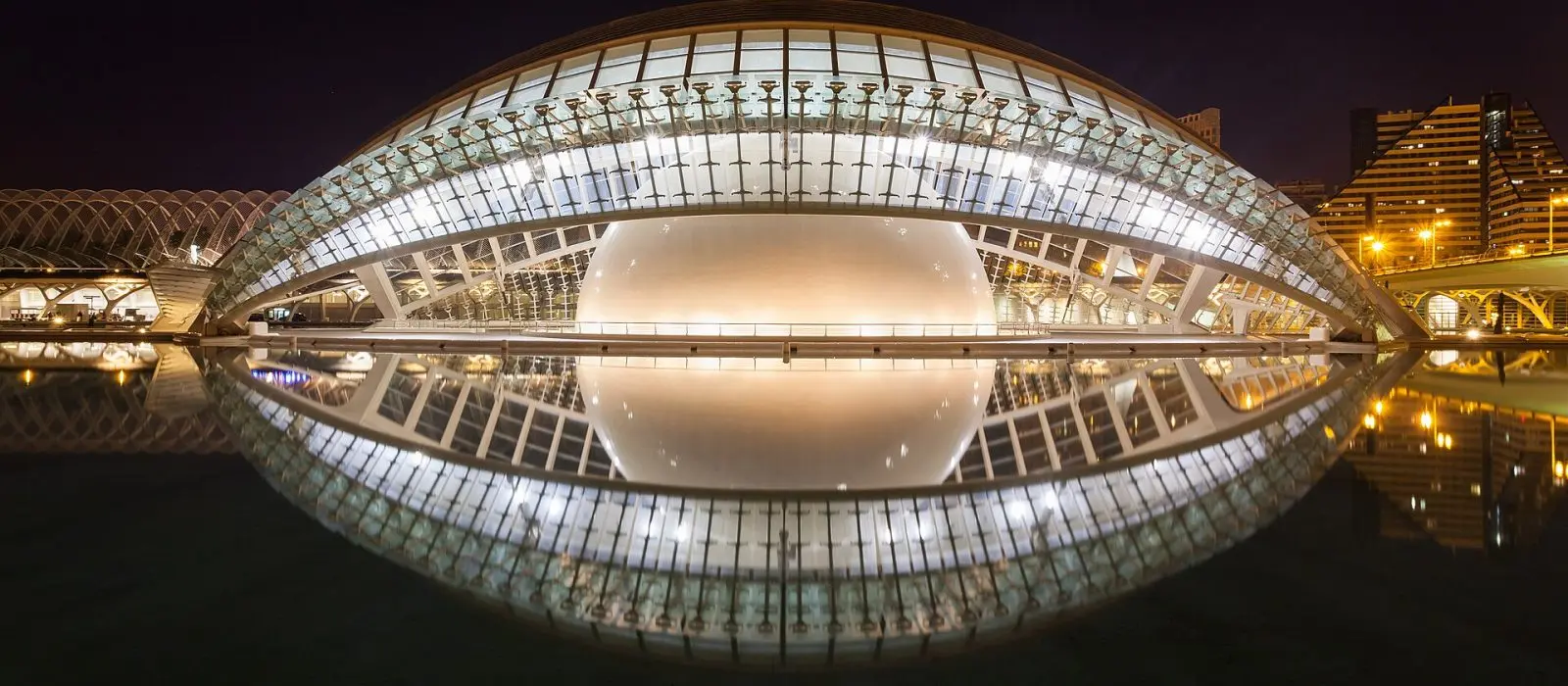
The architectural and cultural complex designed mainly by Santiago Calatrava is the most recognisable image of modern Valencia, with its white, curving forms reflected in sheets of water. You don’t need to enter every building to enjoy it: strolling across the bridges and outdoor viewpoints already justifies the visit, especially at sunset. If you want to go inside, general opening hours are 10:00 to 19:00 and each space requires its own ticket. It’s an essential stop for families, architecture lovers and anyone after the definitive Valencia photo.
Catedral de Valencia
Valencia Cathedral, right on Plaza de la Virgen, blends styles ranging from Romanesque to Baroque after centuries of renovations and extensions. Inside, artworks, chapels and the famous Micalet coexist — the bell tower that has become a privileged viewpoint over the historic centre. It’s open from 10:30 to 18:30 and requires a ticket, though access to the temple may vary depending on religious celebrations. Climb the Micalet if you’re after the best panorama of the centre: the reward is worth every step.
Torres de Serranos
One of the twelve gates that guarded Valencia’s old Christian wall, now converted into an open viewpoint over the city.
Mercado Central de Valencia
Its construction combines iron, glass and ceramics, with a large central dome and stained-glass windows that flood with light a space selling fruit, vegetables, fish, seafood, meats and cured sausages, alongside an outstanding food offering of Valencian products.
Oceanogràfic de Valencia
Part of the Ciudad de las Artes y las Ciencias, it has a 4D cinema and various complementary activities; check updated opening hours and prices on the official website before you go.
Basílica de la Virgen de los Desamparados
Its curved façade, tiled dome and the Virgin’s camarín stand out, along with the museum housing the image’s mantle and jewels. Entry to the temple is free, the museum has a symbolic price and it opens every day; its feast day is celebrated on the second Sunday of May.
Parque Natural de L’Albufera de Valencia
A vital habitat for migratory and resident birds such as the common coot, the red-crested pochard or the purple heron, ideal for birdwatching. Boat trips leave from the El Palmar jetty or from the Gola de Pujol, access is free and sunrise or sunset offers the best light.
Jardín del Turia
A vast 9 km urban garden built on the old bed of the Turia river that crosses the city.
Playa de la Malvarrosa
Valencia’s most famous urban beach, with a wide seafront promenade full of restaurants.
Plaza de la Virgen
Pedestrian square in the heart of the old town, surrounded by emblematic buildings such as the Cathedral and the Basilica.
Hortensia Herrero Art Centre
Contemporary art museum at Calle del Mar, 31, housed in a 17th-century palace transformed into an exhibition space where art, history and architecture coexist. During the visit you can see archaeological remains such as the old Roman circus, a medieval kiln or an alleyway of the former Jewish quarter, with guided tours in Spanish and English and an audio guide in Spanish, Valencian and English.
Church of San Nicolás de Bari
One of the oldest churches in Valencia, dedicated to San Nicolás de Bari and San Pedro Mártir, it preserves its elegant original Gothic structure. Access is via a narrow alley off Calle Caballeros, the entrance includes an audio guide for around 6 euros and it opens from Tuesday to Sunday in the morning and afternoon.
🍂 Otoño
Si visitas Valencia en otoño, el ambiente se vuelve templado y muy cómodo para explorar la ciudad. Puedes visitar la Lonja de la Seda o el Parque Natural de L'Albufera con una luz preciosa. Lleva algo de abrigo ligero para el atardecer y disfruta de los colores de la estación.
What to do in Valencia
Valencia offers lively markets, neighbourhoods with a character all of their own and a cultural calendar spread between the old town, the waterfront and reclaimed green spaces. Start the day at the Mercado Central to watch the bustle of the fresh produce stalls, cross over to the Barrio del Carmen to lose yourself among palaces, shops and bars, and finish in Ruzafa, where art galleries and vintage shops sit alongside speciality cafés. If you’re travelling with children, El Cabañal-Cañamelar brings you close to Malvarrosa beach and the popular Modernista architecture of the old fishermen’s houses. And if your trip coincides with Fallas, be prepared: the whole city becomes a stage of gunpowder, music and ephemeral monuments that burn on the eve of San José.
Valencia in a day: express itinerary
- 09:00 – Mercado Central: start with breakfast among stalls of fruit, cured meats and horchata; it’s the best gauge of local life.
- 10:30 – La Lonja de la Seda: go in as soon as it opens to see the civil Gothic architecture without the crowds and understand the commercial power of medieval Valencia.
- 12:00 – Cathedral and Plaza de la Virgen: climb the Micalet, visit the Cathedral and peek into the Basílica de la Virgen de los Desamparados, all in the same square.
- 14:00 – Lunch in the centre or Ruzafa: order a paella valenciana or an esgarraet at a restaurant in the old town or the trendy neighbourhood.
- 17:00 – City of Arts and Sciences: stroll around the exterior of Calatrava’s complex, cross the bridges and enjoy the architecture without needing tickets.
- 19:30 – Jardín del Turia and Torres de Serranos: walk along the old riverbed and climb the towers to end the day with views over the city.
Where to eat in Valencia: local cuisine
Where to stay in Valencia
Barrio del Carmen
Historic heart of the city, filled with palaces, museums, shops, and a vibrant nightlife.
Ruzafa
Trendy neighborhood featuring art galleries, vintage shops, cafés, and a wide variety of restaurants.
El Cabañal-Cañamelar
Former fishing district by the beach, with houses showcasing popular modernist architecture.
How to get to Valencia
From Alicante, the fastest option is the train: 1 h 55 min (AVE Euromed), 9 a day.
València-Joaquín Sorolla (1,3 km from the centre)
| From | Direct train | Direct bus | Car |
|---|---|---|---|
| Alicante | 1 h 55 min · 9/day AVE Euromed | 2 h · 49/day ALSA, Bilmanbus | 2 h 03 min 177 km |
| Castellón de la Plana | 46 min · 73/day AVE | 1 h · 11/day Castelló de la Plana-València amb prolongació a Vinarós, ALSA | 54 min 74 km |
| Gandía | 1 h 06 min · 36/day Cercanías C1 | 1 h · 19/day ALSA | 53 min 68 km |
| Barcelona | 2 h 47 min · 13/day AVE Euromed | 4 h 15 min · 13/day ALSA | 4 h 04 min 351 km |
| Peñíscola | 1 h 34 min · 24/day Intercity | — | 1 h 44 min 147 km |
| Madrid | 1 h 54 min · 20/day AVE | — | 4 h 357 km |
| Denia | — | 1 h 25 min · 21/day ALSA | 1 h 19 min 105 km |
| Murcia | 3 h 45 min · 3/day Regional | 3 h 10 min · 14/day ALSA, Bilmanbus | 2 h 25 min 214 km |
| Cuenca | 50 min · 16/day AVE | — | 2 h 34 min 200 km |
| Benidorm | — | 1 h 40 min · 43/day ALSA, Bilmanbus | 1 h 40 min 139 km |
Direct trains and buses from the official timetables published by the operators on Spain's National Transport Access Point (a reference Wednesday); driving times from OpenStreetMap. Operators that do not publish their timetables may run more services. Check the timetable before you travel.
Getting around Valencia
Valencia is easy to explore on foot, especially in the pedestrianised centre, but for longer distances you have the metro, city buses and tram. The metro connects the centre with the City of Arts and Sciences, the airport and much of the metropolitan area, while city buses cover the neighbourhoods and the seafront. If your plan is beach, centre and Ruzafa, the tram and bus will get you everywhere without any hassle. For up-to-date timetables and fares, check the official Valencia tourism website.
Weather in Valencia
Best time to visit Valencia
Day trips from Valencia
Valencia is an excellent base for exploring the coast and inland areas of the Valencian Community. Gandía combines beach, history and a lively town centre, perfect for a getaway of sun and rice dishes. Castellón de la Plana offers a more urban and relaxed feel, with good access to the northern coast. Denia, to the south, adds a marina, a castle and seafood cuisine that justifies the trip. All three are well connected by road and public transport from the capital.
Fun facts about Valencia you didn’t know
A city founded as a retirement home for veterans. Valencia was born in 138 BC when the consul Decimus Junius Brutus founded it as a colony for his veteran legionaries on a river island in the Turia. The original name, Valentia Edetanorum, means “valour” or “bravery”.
The narrowest building in Europe is in Plaza Lope de Vega. La Estrecha (The Narrow One) is a façade just 107 centimetres wide that holds that record and has become a curious stop for those strolling through the centre.
Valencia was Spain’s provisional capital. During the Civil War, between 1936 and 1937, the city served as Spain’s provisional capital, an episode that left its mark on its recent history.
Las Fallas were born from useless wood. The origin of Las Fallas lies in an old custom among carpenters, who piled up useless wood and set it alight on the eve of Saint Joseph’s Day.
Valencia’s first public clock dates back to 1378. Long before modern clocks, the city was already measuring time in its squares and towers from the late 14th century.
A buckle saved Blasco Ibáñez. The Valencian writer survived a duel thanks to a buckle that deflected the impact, one of those anecdotes that seem like fiction but are local history.
King James I is buried with two skulls. The tomb of King James I holds a peculiarity that has given rise to all kinds of theories: two skulls are preserved in his grave.
Who Valencia is for
Valencia works for almost every type of traveller. Couples will find charming corners in the Barrio del Carmen (Carmen Quarter) and Michelin-starred dinners; families have the City of Arts and Sciences, Malvarrosa beach and the Oceanogràfic; backpackers appreciate hostels from 20 euros and a pedestrianised centre you can explore without transport; history lovers have the Lonja (Silk Exchange), the Cathedral and the Torres de Serranos (Serranos Towers); and foodies, one of the finest larders in the Mediterranean, with rice dishes, markets and haute cuisine. With 2,124,174 visitors a year (INE), 56% of them foreign, and an average stay of 2.34 nights, Valencia is a city that begs a return visit.
💡 ¿Sabías que...?
- ● Valencia fue fundada en el año 138 a. C. por el cónsul Décimo Junio Bruto como retiro para sus legionarios veteranos, en una isla fluvial del Turia. (https://www.visitvalencia.com/que-hacer-valencia/cultura-valenciana/historia)
- ● El nombre original de Valencia proviene del latín Valentia Edetanorum, que significa 'valor' o 'valentía'. (https://www.valenciaandgo.com/10-datos-valencia/)
- ● La Estrecha, en la Plaza Lope de Vega, es una fachada de solo 107 centímetros de ancho que ostenta el título de edificio más estrecho de Europa. (https://www.valenciaandgo.com/10-datos-valencia/)
- ● Valencia fue capital provisional de España durante la Guerra Civil, entre 1936 y 1937. (https://www.valenciaandgo.com/10-datos-valencia/)
- ● Las Fallas tienen su origen en una antigua costumbre de los carpinteros, que amontonaban maderas inservibles para prenderles fuego antes de la víspera de San José. (https://supercurioso.com/curiosidades-de-valencia/)
- ● El primer reloj público de Valencia data de 1378. (https://www.abc.es/espana/comunidad-valenciana/abci-curiosidades-historia-valencia-visita-sissi-hebilla-salvo-vida-blasco-ibanez-201801281918_noticia.html)
- ● Una hebilla salvó a Blasco Ibáñez de morir en un duelo. (https://www.abc.es/espana/comunidad-valenciana/abci-curiosidades-historia-valencia-visita-sissi-hebilla-salvo-vida-blasco-ibanez-201801281918_noticia.html)
- ● El rey Jaime I está enterrado con dos cráneos. (https://www.abc.es/espana/comunidad-valenciana/abci-curiosidades-historia-valencia-visita-sissi-hebilla-salvo-vida-blasco-ibanez-201801281918_noticia.html)
Frequently asked questions about Valencia
How many days do I need to see Valencia?
With 2 or 3 days you can see the essentials: the Lonja, the Cathedral, the Central Market, the City of Arts and Sciences, the Turia Garden and Malvarrosa beach. If you want to add L’Albufera, the Hortensia Herrero Art Centre or a day trip to Gandía or Denia, allow 4 or 5 days. The average stay is 2.34 nights (INE), which confirms that most people visit on a short break.
Is Valencia expensive?
Valencia is more affordable than Madrid or Barcelona. An average meal costs between 15 and 25 euros, a hostel between 20 and 35 euros per night, a 3-star hotel between 60 and 110 euros and a 4- or 5-star hotel between 100 and 250 euros. Urban transport and many open-air attractions, such as the Turia Garden or the beach, help keep your budget under control.
What is the best time to visit Valencia?
Spring and autumn are the best seasons, with pleasant temperatures and plenty of life on the streets. The average temperature in summer is 26°C and in winter 11°C (AEMET). Avoid late July and August if you don’t handle heat well, especially for walking around the centre at midday.
How do I get to Valencia from Madrid?
The fastest way is the AVE from Estació del Nord, with a direct journey of approximately 1 hour and 40 minutes according to Renfe. There are also Alsa and Avanza buses from Valencia Bus Station, and road access via the A-3.
What typical dishes should I try in Valencia?
Don’t leave without trying Valencian paella with chicken, rabbit, garrofó and green beans; all i pebre from the Albufera; esgarraet made with roasted red pepper and cod; and horchata with fartons. The Central Market and the Colón Market are two great gateways to local gastronomy.
🗺️ Rutas desde Valencia
- How to Get from Peñíscola to Valencia: Distance, Train, Bus and Car
- How to Get from Valencia to Peñíscola: Distance, Train, Bus and Car
- How to Get from Denia to Valencia: Distance, Train, Bus and Car
- How to Get from Valencia to Denia: Distance, Train, Bus and Car
- How to Get from Valencia to Cuenca: Distance, Train, Bus and Car
- How to Get from Cuenca to Valencia: Distance, Train, Bus and Car
- How to Get from Gandia to Valencia: Distance, Train, Bus and Car
- How to Get from Valencia to Gandía: Distance, Train, Bus and Car