Calvià
Islas BalearesClimate
Calvià is not just the hustle and bustle of nightclubs at sunset; it is also the sacred silence of a Talayotic settlement three thousand years ago and the scent of sun-scorched pine in the Sierra de Tramontana. While 52,000 residents enjoy 54 kilometers of coastline ranging from unspoiled coves to luxury marinas, the municipality holds an open secret: its ability to be, at once, the epicenter of mass tourism and a refuge of medieval history where James I changed the fate of the island. Here, the white sand of Palmanova coexists with the dry stone of archaeological sites, offering a dual experience where you can go from international partying to rural tranquility in a matter of minutes.
The must-seesWhat to see in Calvià: the must-sees
Palmanova Beach
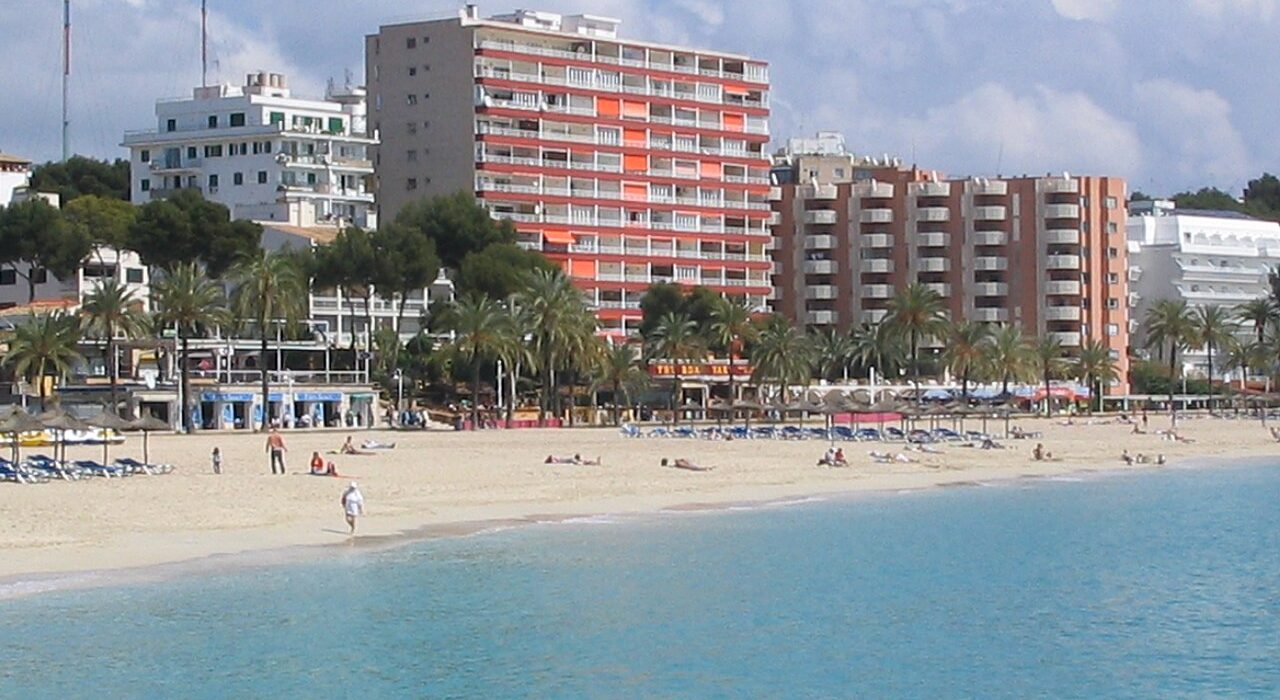
Located in the heart of the tourist area, this beach is much more than a place to sunbathe; it is a sandy circuit linked to Es Carregador and Son Maties by a vibrant, lively seafront promenade. What you should highlight here are its wide stretches of sand bordered by pine groves that offer natural shade and crystal-clear waters ideal for families. It is a fully accessible setting with all the necessary services, including restaurants and play areas, placing you close to the best accommodation options without sacrificing comfort.
Portals Nous
This enclave represents the most sophisticated side of the municipality, shaped as a residential and coastal area with a high density of international tourist services. The must-see is its renowned marina, Puerto Portals, surrounded by exclusive shops and three beaches that define it as a tranquil spot. Particularly noteworthy is the wide cove where the islet of d’en Sales lies, a perfect point to watch the comings and goings of yachts in an atmosphere of absolute calm.
Puig de sa Morisca Archaeological Park
For history lovers, this park extends over 45 hectares of natural landscape in Santa Ponça, offering a network of signposted trails through impressive open scenery. Visitors can observe in situ the Puig de sa Morisca Settlement, an Iron Age Talayotic settlement, alongside fascinating structures such as Tower III and the roter’s hut. The site features privileged viewpoints offering specific views over Santa Ponça, Son Ferrer, and El Toro, allowing public access to significant archaeological sites that define Calvià’s identity.
Cross of the Montcada
This historic monument, included in the municipality’s cultural heritage, commemorates the tragic memory of Guillermo de Montcada and his relatives who died during the Battle of Portopí. It is a cenotaph erected in 1886 that you can find near Palmanova, integrated into the layout of the Paseo Calviá. Although the remains currently rest in the Monastery of Santes Creus, this point serves as a solemn reminder of the events that marked the conquest of the island.
Other points of interest
Among the sites that complete your visit are Finca Galatzó, a heritage estate with hiking routes; the Bay of Santa Ponça, historically marked by the landing of James I; and the es Mirador viewpoint next to the puig de na Bauçana for the best views. Also don’t miss the monument to Pere Josep Cañellas Jaume, the historic center of Calvià Pueblo, the municipal capital at 119 meters above sea level with its Sunday market, nor Peguera with its green promenade, or Ses Illetes in Formentera if you venture further afield.
🍂 Otoño
Si visitas Calvià en otoño, el clima sigue siendo agradable durante octubre, aunque las temperaturas comienzan a bajar gradualmente. Es una temporada excelente para disfrutar de la gastronomía local y visitar pueblos con más tranquilidad. Ten presente el pronóstico del tiempo, ya que las lluvias anuales pueden concentrarse en estos meses.
What to do in Calvià
Calvià offers a cultural and leisure calendar that ranges from hiking at Finca Galatzó to immersing yourself in traditional festivals such as those of San Cristóbal in July or the Medieval Market in October. You can explore the rural history and traditional Majorcan architecture along the trails of Finca Galatzó, which form part of the public municipal heritage that must be preserved. If you visit in November, the Fiestas de la Beata (Festival of the Blessed) in Son Ferrer or Santa Catalina Thomàs will offer you an intense neighborhood atmosphere with correfocs (fire runs) and popular dinners, while in August the Fira d’Art i Artesania (Art and Crafts Fair) showcases works by local and international artists.
Calvià in a day: express itinerary
If you are short on time, this route will allow you to see the essentials combining history, beach and local gastronomy:
- 09:00 – Puig de sa Morisca Archaeological Park: Start the morning with energy walking along the trails of Santa Ponça to see the Talayotic settlement and enjoy the views from the lookout points before the heat arrives.
- 12:00 – Palmanova Beach: Head down to the coast to cool off in its transparent waters and stroll along the circuit connected to Es Carregador, taking advantage of the play areas and the family-friendly atmosphere.
- 14:30 – Lunch in Calvià Vila: Go up to the historic capital at 119 meters above sea level to eat in a quiet, traditional setting, far from the coastal bustle, trying the local gastronomy near the church of Santa Maria.
- 17:00 – Portals Nous: End the day in the most sophisticated area, strolling through Puerto Portals to see the luxury yachts and enjoying a coffee facing the island of d’en Sales at sunset.
Where to eat in Calvià: local gastronomy
Where to stay in Calvià
Santa Ponsa
Zona turística costera conocida por sus amplias playas de arena y aguas tranquilas, con una gran oferta de resorts y campos de golf cercanos. Es un área muy desarrollada que combina turismo familiar con zonas residenciales de lujo.
Palmanova
Destino clásico de turismo de masas situado entre Santa Ponsa y Magaluf, famoso por su playa de forma curva y su paseo marítimo lleno de restaurantes y tiendas. Ofrece un ambiente más relajado que su vecino nocturno pero con todos los servicios turísticos.
Magaluf
La zona más famosa por su vida nocturna vibrante, clubes y bares dirigidos principalmente a un público joven internacional. Aunque tiene fama de fiesta, también cuenta con una larga playa de arena blanca y ha undergone recientes renovaciones urbanísticas.
Calvià Vila
El casco antiguo y núcleo histórico del municipio, ubicado en la montaña lejos de la costa, manteniendo un encanto rural y tranquilo con calles empedradas y arquitectura tradicional mallorquina. Es el centro administrativo donde se encuentran el ayuntamiento y la iglesia parroquial.
Portals Nous
Una zona sofisticada y elegante conocida por su puerto deportivo donde atracan yates de lujo, rodeado de boutiques exclusivas y restaurantes gourmet. El ambiente es exclusivo y tranquilo, atrayendo a visitantes de alto poder adquisitivo.
Sol de Mallorca
Urbanización residencial y turística situada en una bahía pequeña y protegida, ideal para quienes buscan tranquilidad absoluta alejados del bullicio de las grandes zonas hoteleras. Cuenta con un pequeño puerto pesquero y deportivo con un ambiente muy local.
How to get to Calvià
Access to the municipality is easy thanks to its road connection and intercity bus network:
| Medio | Detalle | Frecuencia / Nota |
|---|---|---|
| Autobús (TIB) | Red de Paradas TIB Calvià (Transport de les Illes Balears / Moventis). | Conexión regular con Palma y otros puntos. |
| Coche | Vía Carretera Ma-1, Ma-10, Ma-1014 y Ma-1015. | Rápido desde el aeropuerto o Palma. |
| Bus Urbano | Transporte urbano dentro del municipio. | Para moverse entre núcleos como Peguera o Magaluf. |
How to get around Calvià
Once in the municipality, the most practical way to explore the different scattered centers is by using the urban bus, which connects the coastal areas with the interior. If you prefer total freedom, the Ma-1 and Ma-10 roads are the main routes that cross the area, while the Ma-1014 and Ma-1015 will allow you to access more specific points along the coast and the mountains. The TIB bus stop network is reliable for longer journeys to Palma or Andratx.
Weather in Calvià
Best time to visit Calvià
Day trips from Calvià
Since Calvià borders Palma de Mallorca to the east, you have the island’s capital just a stone’s throw away to visit its cathedral and old town on a quick excursion. To the west, the boundary with Andratx invites you to explore the continuation of the coastline and the mountain range, perfect for scenic drives. To the north, the municipalities of Puigpunyent and Estellencs offer total immersion in the Serra de Tramuntana, ideal for escaping the coastal heat and enjoying mountain landscapes.
Things you didn’t know about Calvià
Did you know that Calvià is the municipality in Majorca with the highest number of beaches and coves? It boasts a total of 54 kilometres of coastline that includes more than 20 different beaches, from Palmanova to Santa Ponsa.
The name ‘Calvià’ has a mysterious origin that comes from the Latin ‘Calvianum’, derived from a hypothetical Roman landowner named Calvius, although some linguistic theories link it to the pre-Roman word ‘cal’, meaning stone or rock.
A key historical moment occurred in 1229, when the beach of Santa Ponsa was the scene of the landing of the troops of King James I of Aragon, marking the beginning of the Christian conquest with an army of approximately 15,000 infantrymen and 1,500 knights.
The town of Portals Nous is home to one of the most exclusive marinas in the Mediterranean, where the royal yacht of the King of Spain is usually moored and which is frequently visited by European monarchs.
Calvià was a pioneer in Spain when it approved its General Urban Development Plan (PGOU) in 1988 with an explicit focus on environmental sustainability, before specific state laws on the subject existed.
The ‘Es Firo’ tradition in Santa Ponsa commemorates each year the victory of the Christians over the Saracens after the battle of 1230, being one of the oldest and most representative Moors and Christians festivals in the Balearic Islands.
The municipality has 42 catalogued archaeological sites, including the Phoenician necropolis of Puig des Molins in the bordering area and prehistoric talaiots dating back to 1000 BC.
Who Calvià is for
Calvià is a versatile destination that works for almost every type of traveller: it is ideal for families looking for safe beaches such as Palmanova or Santa Ponsa, and for young people who want nightlife in Magaluf. History lovers will find satisfaction in the talaiotic sites and the old town of Calvià Vila, while luxury travellers and shoppers will feel right at home in Portals Nous. It is also perfect for foodies interested in market-fresh cuisine and traditional dishes such as roast lamb.
💡 ¿Sabías que...?
- ● Calvià es el municipio de Mallorca con mayor número de playas y calas, sumando un total de 54 kilómetros de costa que incluyen más de 20 playas distintas como Palmanova, Magaluf y Santa Ponsa. (Ayuntamiento de Calvià)
- ● El nombre 'Calvià' proviene del latín 'Calvianum', derivado de un hipotético propietario romano llamado Calvius, aunque algunas teorías lingüísticas lo vinculan a la palabra prerromana 'cal' que significa piedra o roca. (Gran Enciclopèdia de Mallorca)
- ● En 1229, la playa de Santa Ponsa fue el escenario del desembarco de las tropas del rey Jaime I de Aragón, marcando el inicio de la conquista cristiana de Mallorca con un ejército de aproximadamente 15.000 infantes y 1.500 caballeros. (Crónica de Jaime I (Llibre dels fets))
- ● La localidad de Portals Nous, dentro del municipio, alberga uno de los puertos deportivos más exclusivos del Mediterráneo, donde está amarrado habitualmente el yate real del rey de España y frecuentemente visitado por monarcas europeos. (Autoridad Portuaria de Baleares)
- ● Calvià fue pionera en España al aprobar en 1988 su Plan General de Ordenación Urbana (PGOU) con un enfoque explícito en la sostenibilidad ambiental y la limitación de la densidad turística, antes de que existieran leyes estatales específicas sobre el tema. (Ayuntamiento de Calvià / Ministerio de Turismo)
- ● La tradición de 'Es Firo' en Santa Ponsa conmemora cada año la victoria de los cristianos sobre los sarracenos tras la batalla de 1230, siendo una de las fiestas moriscas más antiguas y representativas de las Islas Baleares. (Consell de Mallorca - Patrimoni Immaterial)
- ● El municipio cuenta con 42 yacimientos arqueológicos catalogados, incluyendo la necrópolis fenicia de Puig des Molins en la zona limítrofe y talayots prehistóricos que datan del año 1000 a.C. (Catálogo del Patrimonio Histórico de las Islas Baleares)
Frequently asked questions about Calvià
How many days do I need to see Calvià?
To see the essentials such as the Archaeological Park, a main beach and the historic centre, you need at least 2 days. However, to enjoy its 54 kilometres of coastline and visit the different hubs such as Peguera or Portals Nous at a relaxed pace, 4 or 5 days are recommended.
What is the best time of year to visit Calvià?
The best time is from April to October, according to climate data, with average summer temperatures of 25.3°C. This allows you to enjoy both water activities and hiking in the Finca Galatzó without the winter cold (12.5°C).
How do I get to Calvià from the airport?
You can easily get there using the TIB (Transport de les Illes Balears) bus network, which connects with Palma and from there to Calvià, or by renting a car to take the Ma-1 road, which is the main access route from the east.