Torrelavega
CantabriaClimate
The midday sun warms the stone of Boulevard Luciano Demetrio Herrero as a Torrelavega local crosses toward Plaza Gilberto Quijano with a coffee in hand. A few meters away, the dome of the Mercado Nacional de Ganados (National Livestock Market) stands out against the Cantabrian sky, reminding you that this city of 51,000 inhabitants is not just a stop on the way to the coast: it is the capital of the Besaya region, the second-largest city in Cantabria, and a place where the weight of the livestock trade and the indiano legacy intersect on every corner. If you’re looking for Cantabria with character, beyond the showcase of Santander, this is where the route begins.
The must-seesWhat to see in Torrelavega: the essentials
Mercado Nacional de Ganados Jesús Collado Soto
Considered the largest livestock market in Spain and one of the largest in Europe, this building is Torrelavega’s great contemporary emblem. Its construction began in 1969 and it was inaugurated in 1973, designed by architect Federico Cabrillo Vázquez, with structural engineering by INTEMAC and civil works by Gerardo Cavadas Sánchez and the construction company ARCISA. Beneath its enormous dome —visible from several points in the city center— the tradition of fairs that Tataín (Torrelavega) has carried on for decades continues to this day, and it is also a place where international reference prices for beef cattle are set. It is worth visiting from the outside to appreciate the dome and, if you happen to be there on a market day, peeking inside to soak up the industrial and livestock character of the city.
Palacio de Demetrio Herrero
This emblematic palatial building from 1888 is the current seat of the Torrelavega City Council and one of the finest examples of the indiano and bourgeois legacy that drove the city forward. It features a three-story ashlar stone facade, divided into several sections, with a highly striking central body: a portico of three semicircular arches on Doric columns, and above it a balcony with three windows crowned by curved pediments. It stands right on Boulevard Luciano Demetrio Herrero, so you can combine the exterior photo with a stroll along the main artery of the urban center. The interior is usually accessible during office hours; ask at the front desk if you’re interested in seeing the council chambers up close.
Iglesia de Nuestra Señora de la Asunción (Church of Our Lady of the Assumption)
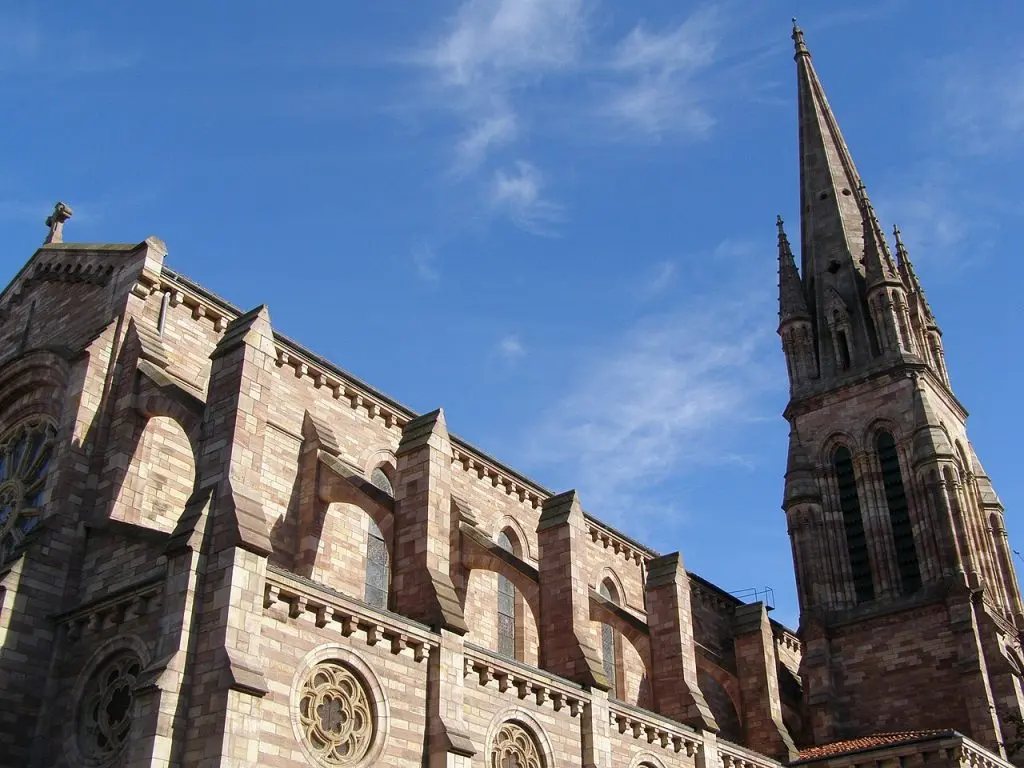
This is the main church in central Torrelavega and one of the visual landmarks of the old town. Walk up to see its facade and, if you go inside, take your time to appreciate it because it is a building tied to the city’s religious identity and its founding in the 14th century. The best time to visit is usually early afternoon, when the light falls nicely on its facade.
Iglesia de la Virgen Grande (Church of the Great Virgin)
Another significant temple in the municipality, known locally simply as “La Virgen Grande.” It is a must-stop to understand the popular devotion that gives its name to the August patron saint festivities and to explore the historic stretch of the old town. It deserves a brief stop if you’re making a route through the central squares.
Teatro Concha Espina
A monument tied to the cultural life of Torrelavega, named in honor of the writer Concha Espina, closely linked to Cantabria. Walk past its facade to appreciate the building and, if you happen to catch a performance, it’s one of the best nighttime plans in the area. Check the local listings before you arrive; it usually has a steady program almost all year round.
Centro de Interpretación El Caserío (El Caserío Interpretation Center)
A museum dedicated to Cantabrian ethnography through the architecture of the caserío (traditional farmhouse), considered one of the identity symbols of the region. It is located at Calle Caseríos, 143B, open from 9:00 to 16:00 every day, with telephone 942 80 60 32 and website coorcopar.com. It also has a restaurant service and is very family-oriented, making it an ideal stop if you’re traveling with kids.
Plaza Mayor (Gilberto Quijano)
The historic center of commercial life for some 300 years, with a market that began thanks to a Royal Decree issued by Charles III in 1767. It is the ideal setting to sit at a terrace and observe the social pulse of the Besaya region.
Plaza de la Llama
One of the most dynamic squares in the center, a regular setting for cultural activities, open-air concerts, and the ‘Jueves de boleros’ (Bolero Thursdays) series with more than 30 participants per performance. If you are traveling on a weekend, check the schedule: there is usually something going on.
Plaza de San Bartolomé
A square in the historic center with the highest rating (5.0 out of 5) among Torrelavega’s urban spaces. It is part of the heritage routes through the old town and is a good spot for a quiet photo.
Fuente de la Plaza Baldomero Iglesias
A monumental fountain in one of the most emblematic areas of the urban center, with postal code 39300. It is one of the most representative ornamental elements of the city’s urban heritage.
Torres de Carabaza
Ancient historic towers located within the municipality, at 6 C. Poeta José Luis Hidalgo. They are open 24 hours a day, every day, so you can drop by late for a quick visit and photos without the crowds.
Corredor Verde del Saja-Besaya
A natural area that follows the Saja and Besaya rivers as they pass through Torrelavega, with trails for walking or cycling among alders, ash trees, willows, and hazelnut trees. If you enjoy birdwatching, look for herons and kingfishers along the riverbanks.
Parque de Pequeñeces
An urban park where the municipal Tourist Office is located and from where the tourist train “El Grillo” departs, traveling through the Museo al Aire Libre del Boulevard Ronda —with works by Mikel Navarro, Jaume Plensa, Adolf Schlosser, Chema Alvargonzález, José Pedro Croft, Jesús González de la Vega, Juan Asensio, and Mercedes Rodríguez— and reaching Viérnoles. It is the ideal base for a guided visit to the city.
Dobra
A geodetic vertex of Torrelavega, a geographical reference point for the municipality.
Cementerio de La Llama
A mass grave from the Spanish Civil War recorded on the map of graves, with historical and memorial value.
Salón de Actos
An auditorium and theater in Torrelavega, another cultural venue to keep in mind for the local events calendar.
Avenida de España
One of the city’s main commercial and entertainment arteries, the setting for the September Medieval Market.
🍂 Otoño
Si visitas Torrelavega en otoño, notarás cómo bajan las temperaturas y vuelven las lluvias con fuerza, así que el plan cultural es tu mejor aliado. Date una vuelta por la iglesia de la Virgen Grande y el Salón de Actos, y si vienes en septiembre, aprovecha el Mercado Medieval de Torrelavega, una cita muy especial. Consejo práctico: lleva calzado impermeable, porque en Cantabria el agua cae sin avisar.
What to do in Torrelavega
Torrelavega offers patron saint festivities with more than 250 activities, themed markets, and a very lively cultural calendar throughout the year. In August, the Fiestas de la Virgen Grande (La Patrona) take over the city with an opening proclamation, procession, concerts, Medieval Market, Feria del Hojaldre (Puff Pastry Fair), Gala Floral (Floral Gala), competitions, rural sports, and bowling spread over about eleven days. In September, Avenida de España is transformed by the Medieval Market, full of stalls and period entertainment. In February, the Torrelavega Carnival fills the streets with parades, costumes, and music as the last great celebration before Lent. For day-to-day exploring, it is worth wandering through the center and Plaza de la Llama, riding or walking along the Corredor Verde del Saja-Besaya, and heading up to Parque de Pequeñeces to catch the tourist train “El Grillo” to Viérnoles.
Torrelavega in one day: express itinerary
- 10:00 — Parque de Pequeñeces and Tourist Office: start here to catch the “El Grillo” tourist train or simply to ask about guided tours from the Concejalía de Turismo (Tourism Department).
- 11:00 — Boulevard Ronda and Open-Air Museum: stroll past the sculptures by Jaume Plensa, José Pedro Croft, Chema Alvargonzález and company. It’s a free open-air art class.
- 12:30 — Plaza Mayor (Gilberto Quijano) and Palacio de Demetrio Herrero: quick coffee on a terrace and a photo of the 1888 palatial façade, home to the City Hall.
- 14:00 — Cocido Montañés in a set lunch menu: to recharge with beans, cabbage, and compango (cured meats) from the Besaya region.
- 16:00 — Mercado Nacional de Ganados (National Livestock Market): head over to see the dome and, if there’s a fair on, peek inside to understand the city’s livestock heritage.
- 17:30 — Churches and Plaza de San Bartolomé: stop by La Asunción and La Virgen Grande, then finish at San Bartolomé for a quiet photo.
- 19:00 — Saja-Besaya Green Corridor: a short walk among alders and willows to walk off lunch and spot herons along the riverbank.
Where to eat in Torrelavega: local gastronomy
Where to stay in Torrelavega
Centro (Casco Antiguo)
Es el corazón comercial y administrativo de la ciudad, donde se fusiona la vida cotidiana de los locales con la arquitectura civil más representativa. Pasear por sus calles peatonales es disfrutar de un ambiente dinámico repleto de terrazas, cafeterías y comercios tradicionales. Destacan sus plazas monumentales y sus notables edificios de finales del siglo XIX.
El Zapatón
Es una de las zonas residenciales más tranquilas y valoradas, estratégicamente situada a escasos pasos de la zona central. Se caracteriza por un urbanismo más holgado, albergando importantes equipamientos educativos, culturales y de recreo. El ambiente es relajado e idóneo para dar un paseo familiar o descansar tras una jornada de turismo.
La Inmobiliaria
Se trata de un histórico y denso barrio residencial que goza de un marcado ambiente multicultural y una incesante actividad a pie de calle. Aquí abundan los pequeños comercios de barrio, locales de alimentación diversa y un carácter popular sumamente auténtico. Además, limita y se integra perfectamente con espacios verdes clave de la ciudad.
Tanos
Antigua pedanía rural hoy plenamente integrada en la urbe, que mantiene con orgullo su identidad de carácter familiar y de vecindario afable. Dispone de excelentes servicios y zonas deportivas de gran relevancia regional, además de la principal conexión ferroviaria de la zona. Es una excelente base de operaciones para el viajero que prefiere entornos menos congestionados.
Viérnoles
Situado en el sector sur, a los pies del imponente monte Dobra, es un núcleo rural de incalculable valor patrimonial. Conserva un extraordinario conjunto de casonas montañesas y palacios de los siglos XVII y XVIII que asombrarán al visitante. Su atmósfera es apacible, rodeada de senderos, valles verdes e historia viva.
Nueva Ciudad
Es un barrio de diseño moderno y avenidas espaciosas que acoge el campus universitario local, inyectando un dinamismo juvenil indiscutible. Destaca por contar con amplias instalaciones de ocio y eventos a gran escala que atraen a público de toda Cantabria. Su vida diurna y vespertina es muy activa y animada.
How to get to Torrelavega
| Medio | Duración | Precio aprox. | Frecuencia |
|---|---|---|---|
| Tren (estación Torrelavega, sin AVE) | Variable según origen | Rango medio según Renfe | Trenes regionales diarios según Renfe |
| Bus (estación Avda. Oviedo 1) | Variable según origen | Rango económico-medio | Servicios regulares diarios |
| Avión (Aeropuerto de Cóbreces) | Variable según origen | Variable | Consultar operador |
| Coche | Variable según origen | Combustible + peajes | Acceso por carretera |
How to get around Torrelavega
The urban bus is the most practical way to get around the city, connecting residential neighborhoods with the center and main facilities. For an express visit, walking is your best bet: the urban core is compact and can be covered on foot from Boulevard Ronda to Plaza Mayor in just a few minutes. If you want to combine the city center with Viérnoles, the “El Grillo” tourist train from Parque de Pequeñeces is a convenient option so you don’t have to worry about the car.
Weather in Torrelavega
Best time to visit Torrelavega
Day trips from Torrelavega
From Torrelavega you have several Cantabrian towns within easy reach that are well worth a day trip. Santander, the regional capital, is just a few kilometers away and combines beaches, seafront promenades, and the Palacio de la Magdalena. If you’re into the mountains, the Saja and Besaya valleys offer villages with traditional casonas montañesas (mountain manor houses) and hiking routes. The Cantabrian coast, with towns like Comillas or Santillana del Mar, is also a classic excursion from the city. And if you want a more nature-focused day, the Picos de Europa are within reach for a full-day route.
Curious facts about Torrelavega you probably didn’t know
Torrelavega is the second most important urban centre in Cantabria, behind only Santander, and the capital of the Besaya comarca (district), which makes it a mini service hub for the entire central part of the region.
The city’s name has a very specific medieval origin: it was founded in the 14th century by Garci Lasso de la Vega, a Castilian nobleman who received these lands after the Castilian conquest of Cantabria, and both the name and the coat of arms of Torrelavega derive from his family — whose emblem was a tower.
In the neighbouring village of Viérnoles grows the Eucaliptón, the largest eucalyptus tree in Cantabria, listed as a singular tree and standing more than 70 metres tall. A fact that surprises even locals.
The Mercado Nacional de Ganado “Jesús Collado Soto” (National Cattle Market, popularly known as La Cuadrona) is one of the largest covered livestock markets in Europe and an international reference point for beef cattle prices, according to industry data.
The La Inmobiliaria neighbourhood owes its name to the Sociedad Inmobiliaria Montañesa, which built housing in the 1950s for local industry workers. A curious urban-planning episode that still defines the neighbourhood’s layout today.
Who Torrelavega is for
Torrelavega is for those curious about the Cantabria beyond the postcard: travellers who want to understand the region’s industrial and livestock character, foodies who love Cocido Montañés (a hearty mountain stew) and Sobao Pasiego (a traditional butter sponge cake), families thanks to the El Caserío Interpretation Centre and Parque de Pequeñeces, couples on a getaway to Viérnoles, and rally fans who coincide with the annual event held since 1967 around the city and other parts of Cantabria. It is also an excellent strategic base for exploring the region without the tourist pace of the coast.
💡 ¿Sabías que...?
- ● Torrelavega es el segundo núcleo urbano más importante de Cantabria, por detrás de Santander, y capital de la comarca del Besaya. (https://es.wikipedia.org/wiki/Torrelavega)
- ● La ciudad fue fundada en el siglo XIV por Garci Lasso de la Vega, noble castellano que recibió estas tierras tras la conquista castellana de Cantabria, y de cuya familia (con una torre como emblema) deriva el nombre y el escudo de la ciudad. (https://www.eldiarioalerta.com/articulo/torrelavega/sabias-que-uno-puentes-mas-famosos-torrelavega-hicieron-prisioneros-guerra/20250321143044555347.html)
- ● El Eucaliptón de Viérnoles, en Torrelavega, es el eucalipto más grande de Cantabria, catalogado como árbol singular, con más de 70 metros de altura. (https://www.eldiarioalerta.com/articulo/torrelavega/historias-cosas-raras-reales-que-solo-pasan-torrelavega/20250421100706558608.html)
- ● El Mercado Nacional de Ganado 'Jesús Collado Soto' (La Cuadrona) es uno de los mayores mercados cubiertos de reses de Europa y referencia para los precios del ganado vacuno a nivel internacional. (https://www.eldiarioalerta.com/articulo/torrelavega/historias-cosas-raras-reales-que-solo-pasan-torrelavega/20250421100706558608.html)
- ● Existe en Torrelavega un barrio llamado La Inmobiliaria, cuyo nombre proviene de la Sociedad Inmobiliaria Montañesa, que construyó viviendas en los años 50 para los trabajadores de la industria local. (https://www.eldiarioalerta.com/articulo/torrelavega/historias-cosas-raras-reales-que-solo-pasan-torrelavega/20250421100706558608.html)
Frequently asked questions about Torrelavega
How many days do I need to see Torrelavega?
One full day is enough to see the essentials: Palacio de Demetrio Herrero, Plaza Mayor, the National Cattle Market, churches and a stroll along the Corredor Verde (Green Corridor). If you want to add Viérnoles and the Boulevard Ronda Open-Air Museum with the “El Grillo” mini train, the ideal is to stay two days.
What is the best time of year to visit Torrelavega?
The best time is from June to September, with an average summer temperature of 18.8°C according to AEMET. Annual rainfall is around 1,249.8 mm, so it’s worth carrying a raincoat in any season. In August the Fiestas de la Virgen Grande coincide, and in September the Mercado Medieval (Medieval Market).
How do I get to Torrelavega from Madrid?
There is no direct AVE: Torrelavega train station offers regional services. From Madrid, according to Renfe, it’s best to travel by train to Santander and transfer, or take a long-distance bus to the station at Avda. Oviedo 1. By car, the most common route is via the A-67.
What can you do with children in Torrelavega?
The El Caserío Interpretation Centre (calle Caseríos, 143B, open 9:00-16:00) is especially geared towards families and has a restaurant. Parque de Pequeñeces is a good outdoor plan, and the “El Grillo” mini train tends to delight younger children.
Does Torrelavega have a good atmosphere for a weekend getaway?
Yes. With 51,000 inhabitants and as the capital of the Besaya district, the city has restaurants open at weekends, a stable cultural programme at the Teatro Concha Espina and the Salón de Actos, and squares like Plaza de la Llama with outdoor activities. It is a very convenient base for combining city, coast and the Cantabrian mountains.