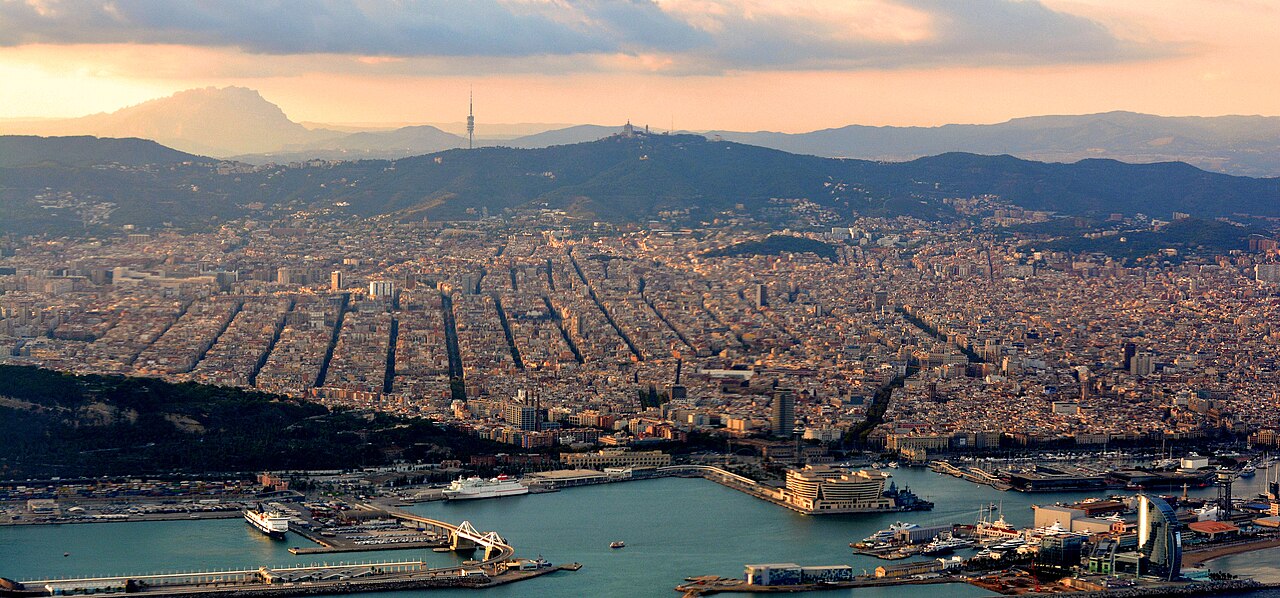
Tarragona → Barcelona
99 kmHow to get from Tarragona to Barcelona: quick overview
The connection between Tarragona and Barcelona offers train, bus, and car options—three valid choices depending on your budget and available time. The train operated by Renfe is the fastest option, with AVE and AVANT services covering the 99 km in just 34-38 minutes from Camp Tarragona station to Barcelona-Sants, with frequencies of up to 78 daily trains. The direct bus run by Plana and Monbus takes about 60 minutes and is the most economical alternative, with tickets from €4. Driving via the A-7 or A-2 takes approximately one hour and allows flexible stops in towns like Castelldefels or Sitges. For travelers who prioritize speed, the train is unbeatable; for those looking to save, the bus wins hands down; and for those who prefer freedom of movement and taking things at their own pace, the road remains an excellent choice.By car from Tarragona to Barcelona
The road route between Tarragona and Barcelona covers 99 km and takes approximately 1 hour under normal traffic conditions. The main route is the A-7, known as the Autovía del Mediterráneo (Mediterranean Motorway), a toll-free artery that directly connects both cities following the coastline. It’s the most natural option and the one offering the best views, with the sea appearing at intervals between industrial areas and residential developments. The inland alternative is the A-2, the Autovía del Nordeste (Northeast Motorway), also toll-free, which runs somewhat farther from the coast and is useful if you want to avoid metropolitan area traffic or access towns in the Baix Llobregat region. To connect with the A-2 from Tarragona, you can first take the A-27, the Autovía Tarragona-Montblanc (Tarragona-Montblanc Motorway), which heads north from the city toward the interior. All three motorways are toll-free, which makes the car a highly competitive option compared to public transport when traveling in a group or with family. That said, during rush hour the final stretch entering Barcelona can easily add between 20 and 40 minutes to the journey.By train from Tarragona to Barcelona
The train is, without question, the fastest and most comfortable way to cover the Tarragona-Barcelona route. Renfe operates from Camp Tarragona station, located about 10 km from the city center, arriving at Barcelona-Sants, the main station of the Catalan capital. There are 78 daily trains, with the first departing at 5:45 and the last at 22:49, according to Renfe data. The offering is extensive: AVANT (8 frequencies, 34 minutes of travel), ALVIA (4 frequencies, 36 minutes), Intercity (5 frequencies, 36 minutes), AVE (22 frequencies, 38 minutes), EUROMED (6 frequencies, 46 minutes), and REG.EXP. (31 frequencies, 82 minutes). The AVANT is the fastest, at 34 minutes end to end, while the AVE offers an excellent balance between speed (38 minutes) and frequency. The price varies depending on the type of train and schedule: from €6 on regional services to €83 on AVE trains during peak hours, according to Renfe. The practical recommendation is clear: for business trips or day getaways, AVANT or AVE; for tourists with more time and a smaller budget, the REG.EXP. or Intercity services are perfectly valid and far more economical.By bus from Tarragona to Barcelona
The direct bus is the cheapest option and remains competitive in terms of time. The Plana and Monbus companies connect Tarragona with Barcelona in approximately 60 minutes, with prices ranging from €4 to €10 per journey, depending on how far in advance the ticket is purchased and the company. It is a very attractive alternative for travelers on a tight budget, students, or backpackers, as it allows you to save a significant amount compared to the train. The duration is similar to that of driving, so if you don’t need the comfort of the AVE, the bus is a smart choice. That said, it’s advisable to book in advance on key dates such as Semana Santa (Holy Week), summer, or long weekends, when demand rises and prices approach the upper end of the range.Recommended stops along the way
The Tarragona-Barcelona route is dotted with towns that deserve a stop, whether to stretch your legs, grab a bite, or extend the trip with an extra dose of beach, culture, or nature. Torredembarra, in the Tarragonès region, is the first interesting town leaving Tarragona along the coast. Its wide beach and seafront promenade invite you to enjoy breakfast with sea views before continuing your journey. Castelldefels, already in the province of Barcelona, boasts one of the longest beaches in Baix Llobregat, with the imposing 16th-century castle as a backdrop. It’s ideal for a swimming stop in summer. Sitges, very close to Castelldefels, is a must-stop: charming old town, museums, cosmopolitan atmosphere, and the DO Garraf as an ally for sweet wine lovers. Sant Feliu de Llobregat, in the heart of Baix Llobregat, offers historical heritage with its Benedictine monastery and an authentic local atmosphere, far from mass tourism. Cornellà de Llobregat and l’Hospitalet de Llobregat are the large municipalities in the metropolitan area that link Tarragona with Barcelona. L’Hospitalet is practically another neighborhood of the capital and features facilities such as Gran Via 2 or the Museu de Cera (Wax Museum). Esplugues de Llobregat, for its part, is known for its quiet streets and for being home to the historic Teresianes school, a work by Gaudí. Pallejà and Corbera de Llobregat lie somewhat further north, toward the Ordal massif. They are perfect for those who want to take a short detour and enjoy hiking trails among vineyards and Mediterranean forests.Where to stay in Barcelona
Barcelona offers accommodation for every budget, from youth hostels to five-star boutique hotels. For a first visit, the most recommended areas are the Barri Gòtic (Gothic Quarter) and El Born, in Ciutat Vella, for their atmosphere, proximity to the main attractions, and dining scene. Here, mid-range hotels range from €100 to €200 per night, while boutique hotels can exceed €300. The Eixample is the most balanced option: well connected, safe, and with spectacular modernist architecture, including Gaudí’s La Pedrera and Casa Batlló. Prices are similar to those in the old town. For tight budgets, the Gràcia and Poble-sec neighborhoods offer hostels and guesthouses with rooms from €50-80, as well as a more local and less touristy atmosphere. Near Barcelona-Sants station, where trains from Tarragona arrive, there are also functional hotels ideal for business trips or short stopovers.Where to eat along the route
Gastronomy is one of the great attractions of the Tarragona-Barcelona corridor, and starting the journey in Tarragona’s lands is a sure bet. Calçots with romesco sauce are the big star of the Tarragonès area. They are sweet spring onions grilled over an open flame, eaten by peeling them layer by layer and dipping them generously in romesco sauce, made with tomato, garlic, ñora peppers, and nuts. The season runs from November to April, and the perfect social excuse is the calçotada (calçot feast). Xató is another emblematic salad, with roots in Tarragona and Vilanova i la Geltrú. It includes escarole, salt cod, tuna, anchovies, and olives, all dressed with xató sauce, a close cousin of romesco. As for wine, the route crosses several top-tier designations of origin: DO Priorat, DO Montsant, DO Tarragona, and DO Conca de Barberà. The garnacha and cariñena reds from Priorat are true gems, with prices ranging from €8 in shops to stratospheric figures for great vintages. DO Siurana olive oil, made mainly from arbequina olives, is another must: fruity, slightly bitter and peppery, ideal for dipping bread or dressing any salad. And to finish on a sweet note, Malvasia de Sitges, a sweet, aromatic white wine made from the Malvasía grape variety, is the emblematic drink of the Garraf region and the perfect pairing for fish dishes along the coast.Frequently asked questions about the Tarragona-Barcelona route
How long does it take to get from Tarragona to Barcelona?
The time varies depending on the means of transport chosen. By car on the A-7 or A-2, the journey takes approximately 1 hour (99 km). By train, the fastest services such as AVANT cover the route in just 34 minutes, while the AVE takes around 38 minutes; regional trains can take up to 82 minutes. By direct bus, with companies such as Plana or Monbus, the duration is around 60 minutes.
Which is cheaper, the train or the bus?
The bus is clearly the most economical option, with tickets from €4 to €10 depending on the company and how far in advance you book. The Renfe train starts at €6 on regional services and can reach €83 on the AVE at peak times. To save money, the bus is unbeatable, although the AVE offers speed and comfort that are hard to match for little extra money.
Is it worth renting a car?
It depends on your travel plans. If you are only going to move between Tarragona and Barcelona, the train is faster and avoids the stress of parking in the Catalan capital. However, renting a car is worth it if you want to make flexible stops in Torredembarra, Castelldefels, or Sitges, or explore wine areas of Penedès and Priorat that do not have good public transport connections. The A-7 and A-2 motorways are toll-free, which greatly reduces the cost of the journey.
When is the best time to travel?
The best time to enjoy the route is spring (April-June) and early autumn (September-October), when the weather is mild, calçots are in season until April, and the summer crowds thin out. Summer offers magnificent beaches in Castelldefels and Sitges, but prices rise and there is more traffic on the A-7. Avoid Holy Week, long weekends, and the month of August if you want to travel smoothly and save on accommodation.
💡 ¿Sabías que...?
- ● Según el mito, Hércules fundó Barcelona tras encontrar un navío extraviado de Jasón y los Argonautas y la llamó Barca-nona (novena barca), de donde evolucionó el nombre de la ciudad. (https://www.laramblabarcelona.com/curiosidades-de-barcelona/)
- ● La Pedrera de Gaudí fue tan controvertida en su época que muchos barceloneses la odiaban y decían que se parecía a una mona de Pascua. (https://www.mochileandoporelmundo.com/curiosidades-de-barcelona/)
- ● En el parque de atracciones del Tibidabo hay una réplica del primer avión comercial que sobrevoló España, que despegó de Barcelona dirección Madrid en 1927. (https://www.mochileandoporelmundo.com/curiosidades-de-barcelona/)
- ● La estatua de Colón al final de La Rambla no señala hacia América, sino hacia Génova, su tierra natal. (https://www.mochileandoporelmundo.com/curiosidades-de-barcelona/)
- ● Un museo de Copenhague conserva una moneda ibera con la palabra BARKENO, acuñada antes de la llegada de los romanos, lo que añade un enigma al origen del nombre de Barcelona. (https://www.lugaris.com/10-curiosidades-de-barcelona-que-quizas-no-conocias/)
📍 También te puede interesar
Qué ver en Tarragona →
Qué ver en Barcelona →