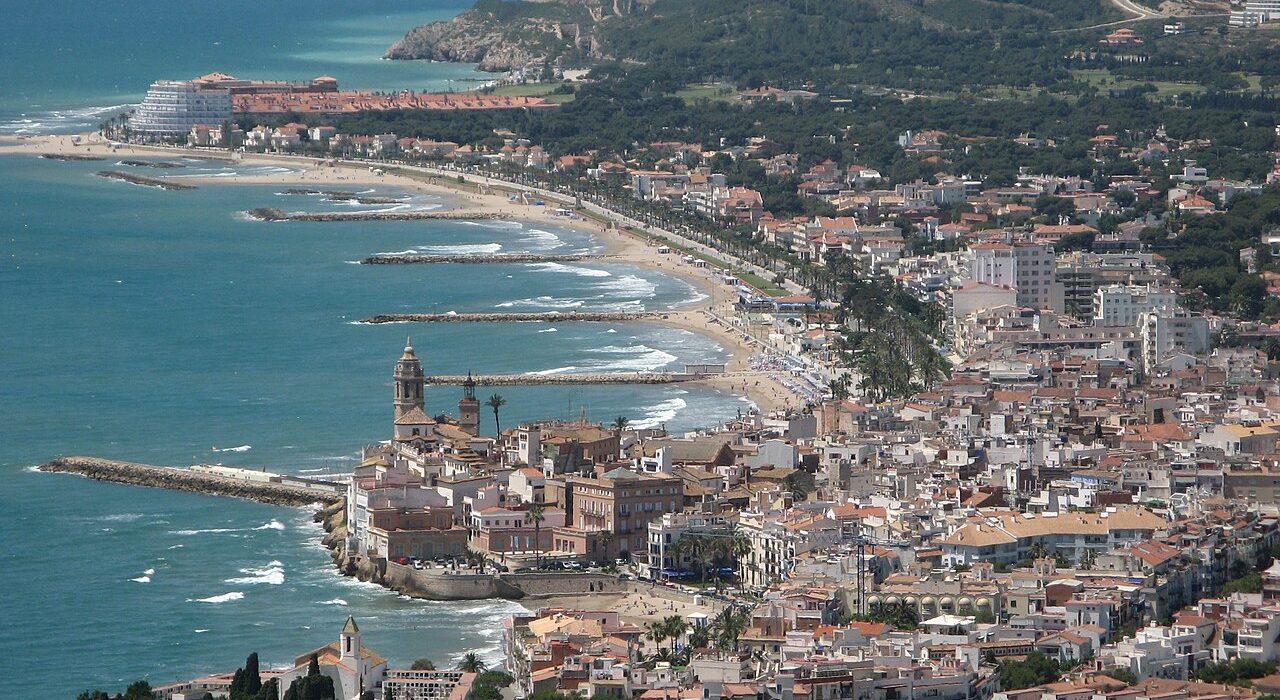
Sitges
CataluñaClimate
Daily budget
Nestled between the vastness of the Mediterranean Sea and the striking silhouette of the Garraf Massif, there lies an enclave where the history of Modernism coexists with a vibrant contemporary life. Sitges is not just a sun-and-beach destination 38 km from Barcelona; it is a town of 29,000 inhabitants that has successfully fused its seafaring past with a top-tier cultural reputation, ranging from fantasy cinema to avant-garde art. Here, the cobblestone streets of the old town lead directly to palm-lined promenades, creating a unique contrast between the tranquility of its coves and the energy of its international festivals.
The must-seesWhat to See in Sitges: The Essentials
Sitges’ cultural offering centers on renowned museums and historical spaces that define the town’s identity.
Museo del Cau Ferrat (Cau Ferrat Museum)
Founded in 1893 by the artist Santiago Rusiñol, this space originally served as his home-studio before becoming a public museum in 1933. Inside, you can admire an impressive collection of ancient art including paintings, wrought iron, ceramics, and glass, alongside modern works by masters such as Picasso, Casas, and El Greco. The visit allows you to preserve the founder’s original artistic spirit thanks to the structure of the historic building, which remains intact. Tickets can be purchased online, and the site serves as the main headquarters of the Museus de Sitges, making it a mandatory stop to understand the municipality’s artistic soul.
Museu Maricel de Mar
This museum is part of the Maricel monumental complex and differs from the Palau de Terra due to its exclusively museological use. It houses a complete artistic itinerary spanning from the 10th century to the realism of the first half of the 20th, thanks to the collections of Dr. Jesús Pérez-Rosales and the municipality. The cultural experience is enriched by its seaside location and its Noucentista architecture designed by Miquel Utrillo, perfectly integrated into the landscape. It preserves its heritage value as a historical icon of Sitges since its initial foundation, offering unique views and contexts.
Museo del Romanticismo (Can Llopis) (Romanticism Museum)
Integrated into the Museus de Sitges, this neoclassical building was constructed in 1793 outside the perimeter of the ancient walls and was owned by the Llopis family, a dynasty of landowners and wine merchants. During the visit, you can observe furniture, paintings, and everyday objects from the Catalan Romantic era that have been preserved in their original state. The experience offers a firsthand look at the city’s bourgeois life and the history of this family of lawyers and diplomats in their historic residence. It is a living testament to Sitges society from the late 18th and early 19th centuries.
Calas del Garraf (Garraf Coves)
This natural enclave is located in the Garraf Massif, right at the junction between the Mediterranean Sea and the mountains, offering truly spectacular landscapes. The place stands out for its transparent water and unique geological formations, such as the Cova del Gegant, which complement the municipality’s main beach offerings. It is the ideal spot for those seeking to connect with nature away from the urban bustle, enjoying protected geological spaces. The beauty of the surroundings makes it a strategic point for hiking and swimming in crystal-clear waters.
Sitges International Fantastic Film Festival
This event has earned the town a worldwide reputation as a capital of fantastic cinema, held annually since 1968. It attracts thousands of visitors with its specialized genre programming, cementing a legacy that is one of the recurring reasons for making a getaway from Barcelona. It is not just a festival, but a cultural pillar defining Sitges’ modern identity on the international calendar. Its importance lies in being the world’s first fantastic film festival and one of the most important in Europe.
Church of Sant Bartomeu and Santa Tecla
A Baroque-style building located in the center of the old town atop a monumental staircase, it dominates the city’s silhouette by the sea, with its main construction dating to the 17th century.
Palau de Maricel
Designed by artist and engineer Miquel Utrillo between 1910 and 1918 for collector Charles Deering, it serves as a venue for institutional events and a museum featuring Modernist and Noucentista styles.
Casa Bacardí Sitges
This historic ensemble of narrow streets and whitewashed sailor houses hosts most of the town’s Modernist buildings and main monuments, reflecting its cultural past.
Santuario de la Mare de Déu del Vinyet
A sanctuary originating in the 17th century with documented seafaring devotion in the locality, it is a pilgrimage destination included in the Inventory of Architectural Heritage of Catalonia.
Plaça del Baluard
A historic square situated in the urban core of Sitges, formed over ancient defensive elements of the village and surrounded by traditional buildings and narrow streets of medieval origin.
Passeig Marítim (Seafront Promenade)
Recognized as one of the most emblematic promenades on the Catalan coast with views of the Mediterranean, it links Sant Sebastià and Ribes Roges beaches, offering access to restaurants and historic hotels.
Casa Carbonell
A Modernist building located in the town’s urban core, linked to the Sitges Museums and noted for its exterior decoration and architectural elements typical of the period.
🍂 Otoño
En otoño el clima sigue siendo suave y es una temporada excelente para eventos culturales como el Festival de Cine. La ciudad recupera su tranquilidad local y los precios suelen ser más accesibles. Revisa la cartelera de actividades para aprovechar al máximo tu estancia.
What to do in Sitges
Sitges offers cultural and leisure activities based on its famous festivals, local markets, and the exploration of its distinctive neighborhoods.
If you visit the town in February or March, do not miss the Sitges Carnival, one of the most famous in Spain, known for its massive parades and festive atmosphere. For lovers of the seventh art, the International Fantastic Film Festival in October is a unique immersive experience. In June, the Corpus Christi celebration transforms the center with spectacular flower carpets, while in August the Festa Major de Sitges (Sant Bartomeu) fills the streets with fireworks and traditional dances. Additionally, you can stroll through the Mercat Municipal de Sitges to buy fresh products or visit the flea market at Plaça Catalunya on Saturday mornings.
Sitges in one day: express itinerary
This practical 1-day itinerary covers the 4-5 main attractions to make the most of your visit.
- 10:00 AM – Cau Ferrat Museum: Start the morning by immersing yourself in the artistic history of Santiago Rusiñol and his collection of ancient and modern art.
- 12:00 PM – Church of Sant Bartomeu and Santa Tecla: Climb the monumental staircase to admire the Baroque architecture and panoramic views dominating the city’s silhouette.
- 14:00 PM – Lunch in the Old Town: Enjoy a Xató or a Fideuà in the cobblestone streets near Plaça del Baluard.
- 16:00 PM – Museu Maricel de Mar: Explore the artistic journey from the 10th century to Realism in this historic icon by the sea.
- 18:00 PM – Passeig Marítim (Seafront Promenade): End the day walking between Sant Sebastià and Ribes Roges beaches at sunset.
Where to eat in Sitges: local gastronomy
Where to sleep in Sitges
Casco Antiguo
El corazón histórico de Sitges, con calles empedradas, tiendas boutique y galerías de arte.
Passeig Marítim
Un vibrante paseo junto al mar bordeado de palmeras, playas y restaurantes, ideal para familias y ciclistas.
Carrer Primer de Maig
Conocida como la 'Calle del Pecado', es el epicentro de la vida nocturna con innumerables bares y discotecas.
Port d'Aiguadolç
El puerto deportivo, una zona pintoresca con excelentes restaurantes de marisco y un ambiente más relajado.
How to get to Sitges
The main connection to the city is by train or bus from Barcelona and other nearby towns.
| Medio | Duración | Precio aprox. | Frecuencia |
|---|---|---|---|
| Tren (Estación Sitges) | Variable según origen | Según Renfe | Frecuente (sin AVE) |
| Autobús | Variable | Económico | Regular |
Sitges train station does not have AVE service, but it connects effectively with the Cercanías network.
Getting around Sitges
Urban transport in Sitges is simple and efficient for covering distances within the municipality. The city has an urban bus service that allows comfortable travel between the center, the beaches, and residential neighborhoods. Since the old town is largely pedestrianized, walking is the best option to visit main attractions such as the church and museums.
Weather in Sitges
Best time to visit Sitges
Day trips from Sitges
Sitges’ strategic location allows for quick excursions to nearby destinations of great interest. The city of Barcelona is the primary option for a day trip, offering a direct and fast connection to explore the Catalan capital. Its proximity of just 38 km south of the provincial capital makes it easy to combine the tranquility of the Sitges coast with the urban tourism of Barcelona.
Who is Sitges for?
Sitges is a versatile destination that attracts couples seeking romance in the old town, families enjoying the Passeig Marítim and the beaches, and culture lovers interested in Modernism and cinema. It is especially relevant for LGBT tourism, constituting a significant destination in this sector, as well as for professionals attending conferences and business meetings. With an average stay of 2.6 nights and 63% foreign travelers (INE), it is a cosmopolitan place open to all types of visitors.
Frequently Asked Questions about Sitges
How many days do I need to see Sitges?
The average stay is 2.6 nights according to INE data, which is enough time to visit the main museums such as Cau Ferrat and Maricel, enjoy the beaches, and explore the old town.
Is Sitges expensive?
Prices vary: an average meal costs between €15 and €35, hostels range from €25 to €45 per night, and 3-star hotels cost between €60 and €120, making it accessible for different budgets.
What is the best time to visit Sitges?
The best time is from May to October, taking advantage of an average summer temperature of 23.8°C, although events like Carnival in February or the Film Festival in October are also highlights.
How do I get to Sitges from Madrid?
You must take a train or bus to Barcelona and from there connect to the Sitges train station (no direct AVE to Sitges), using the Cercanías network or bus.
Which festivals stand out in Sitges?
The most important ones are Carnival (February/March), the International Fantastic Film Festival (October), the Festa Major de Sant Bartomeu (Main Festival of Saint Bartholomew, August), and Corpus Christi (June).