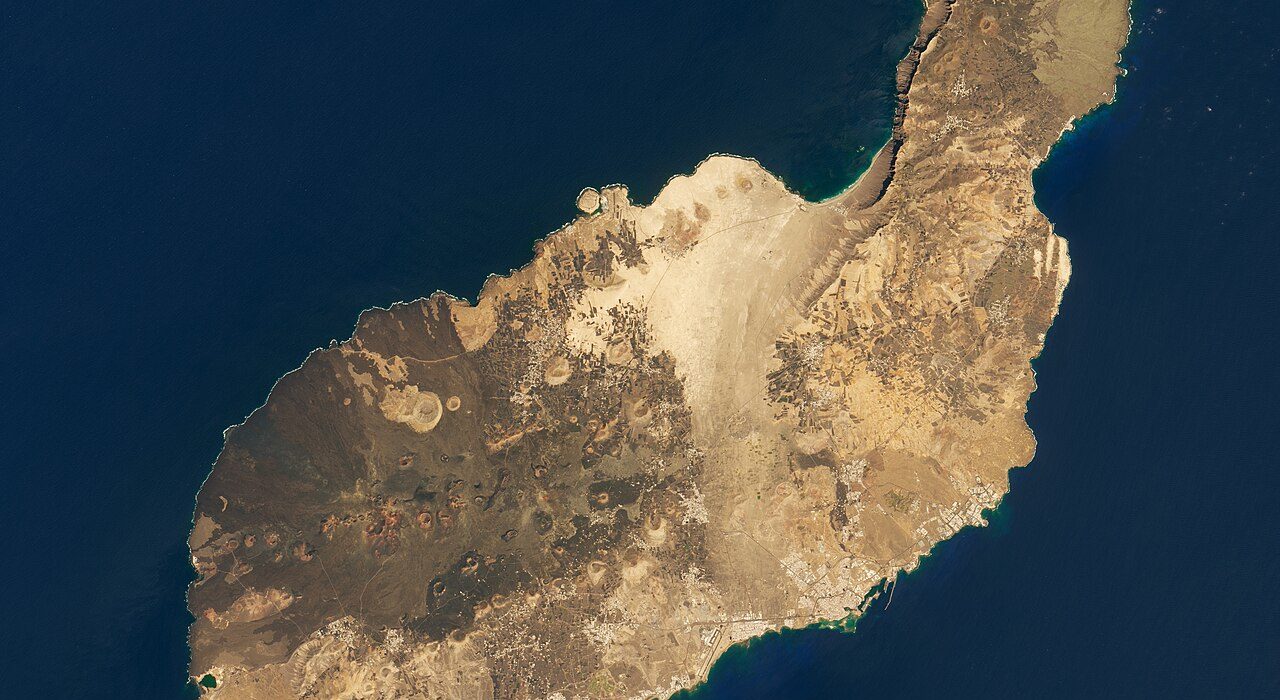
Lanzarote
CanariasClimate
Daily budget
Lanzarote is not just a sun-and-beach destination; it is a stage where the raw force of volcanic nature collides head-on with the delicate architecture of César Manrique. While the turquoise waters of Papagayo in the south invite absolute relaxation, the island’s interior transports you to Mars with its Montañas del Fuego (Mountains of Fire), creating a visual contrast that few places in the world can match. With a population of 155,000 inhabitants spread across a territory marked by lava, this island in the province of Las Palmas offers a unique experience combining the tranquility of its fishing villages with the vibrant life of its tourist areas.
The must-seesWhat to see in Lanzarote: the essentials
Isla de La Graciosa
This is the only inhabited island of the Chinijo Archipelago and was originally settled in 1867 by just seven families, maintaining an authentic rural charm to this day. Most notably, it completely lacks paved roads, preserving an atmosphere of white houses in a fishing village where time seems to have stood still. Its fine-sand beaches and turquoise waters are protected under the designation of the Chinijo Archipelago Natural Park, a UNESCO recognition that guarantees their conservation. To visit, you must take a ferry from Órzola, as it is a separate destination from the rest of the main island.
Timanfaya National Park
Popularly known as the ‘Montañas del Fuego’ (Mountains of Fire), this spectacular volcanic landscape is part of a UNESCO Biosphere Reserve declared in 1993. The park offers an immersive experience into the island’s geology, where the ground still retains residual heat from past eruptions. Visiting hours are from 09:30 to 15:45h, and it is strictly necessary to purchase a ticket to access the site. It is the perfect place to understand the volcanic formation that defines Lanzarote’s identity.
Cueva de los Verdes
This fascinating lava tube is part of an underground system 7 km long, resulting from eruptions of the Volcán de la Corona. Visitors can explore approximately 1 km of these galleries on guided tours noted for their artistic lighting and natural acoustics. Opening hours are from 10:00 to 16:00h, and prior admission is also required. It is a unique opportunity to walk beneath the earth’s crust in a safe and spectacular environment.
Casa-Museo del Campesino
This cultural and ethnographic center was designed by the artist César Manrique to showcase Lanzarote’s traditional agricultural life. The complex includes the Monumento a la Fecundidad (Monument to Fertility), an imposing sculpture 15 meters high that dominates the landscape. The buildings follow traditional architecture with white walls and green details, also housing local craft workshops.
Castillo de Santa Bárbara
This 16th-century military fortress is located on Mount Guanapay above Teguise, which was the former capital of the island until 1852. The castle currently houses the Pirate Museum, documenting the corsair attacks Lanzarote suffered over centuries. From its ramparts, you get unparalleled panoramic views of the Teguise valley and the north coast.
Salinas de Janubio
These are traditional salt flats located on the southwest coast of the island, whose construction began in 1895 by Vicente Lleó Benlliure and was completed in 1945. They produce sea salt through natural evaporation in shallow ponds, maintaining historical artisanal methods managed by the Padrón family. The landscape of white rectangles contrasts with the surrounding volcanic black, standing out for its unique saltworks architecture.
Volcán del Cuervo
This is a Strombolian volcano formed during the 1730-1736 eruptions in Los Volcanes Natural Park, a protected area adjacent to Timanfaya National Park. Visitors can walk along trails surrounding the crater and observe the vegetation that has recovered on the slopes. Access is regulated to protect the volcanic ecosystem, allowing for a respectful approach to nature.
Jardín de Cactus (Cactus Garden)
This was César Manrique’s last major work and houses more than 4,500 cactus specimens from around the world in an old quarry. It is a space that combines botany with art, creating a unique vegetal amphitheater on the island. Its design takes advantage of the quarry’s original topography to organize the species in a staggered manner.
Playa de Papagayo (Papagayo Beach)
Considered one of the most beautiful beaches on the island, it is famous for its golden sand and turquoise, crystal-clear waters. Located in the south of Lanzarote, within a protected area that limits massive urban development, it is the ideal spot for those seeking a preserved natural environment away from large hotel complexes.
Jameos del Agua
This is an art, culture, and tourism center created by César Manrique inside a natural volcanic tunnel. The space features an underground lake inhabited by endemic blind crabs and an auditorium with exceptional acoustics. It is a perfect example of how the artist integrated human intervention into volcanic nature.
Mirador del Río
This architectural work by César Manrique offers impressive panoramic views of the Chinijo Archipelago and the island of La Graciosa. Built on top of the Risco de Famara cliff, the viewpoint blends into the rock so as not to break the horizon line. From here, you can appreciate the immensity of the ocean and the beauty of the smaller islands.
Fundación César Manrique (César Manrique Foundation)
This was the artist’s former home-studio, built upon five natural volcanic bubbles that he himself inhabited. Today, it operates as a museum exhibiting his works and private collections, showcasing his vision of art and nature. It is an essential place to understand the artist’s influence on the aesthetic configuration of Lanzarote.
Charco de los Clicos (El Golfo)
This is an intense green lagoon located in the crater of a volcano on the seaside. This phenomenon creates a unique and photogenic contrast with the black sand of the surrounding beach. It is one of the most curious and visited geological sites on the west coast.
Museo Internacional de Arte Contemporáneo (International Museum of Contemporary Art)
Located in Castillo de San José, a military bastion built in the 18th century to defend the island from pirate attacks. The museum permanently houses the MIAC Collection in two vaulted halls, including the Lasso Hall dedicated to the Lanzarote artist Pancho Lasso and the Canarian Artists Hall. The castle walls offer panoramic views of the port of Arrecife.
Pueblo de Teguise
It was the former capital of Lanzarote from the 15th century until 1852, preserving well-maintained colonial architecture. The historic center includes the Church of Nuestra Señora de Guadalupe, founded in the 15th century, and palaces of noble Canarian families. Its Sunday market is one of the most traditional in the Canary Islands, attracting visitors from across the island.
🍂 Otoño
Si visitas Lanzarote en otoño, el mar estará cálido y habrá menos turistas que en julio. Aprovecha para visitar los parques naturales con más tranquilidad. Reserva tus actividades con antelación aunque sea temporada media.
What to Do in Lanzarote
Lanzarote offers cultural and leisure activities rooted in its local traditions and vibrant festival calendar. Immerse yourself in island culture by visiting the Mercado de Teguise (Teguise Market), the largest and most popular on the island, held every Sunday in the historic Villa de Teguise, or explore the Mercado de Arrecife (Arrecife Market) in the capital to find fresh products like fish, meat, and cheeses. If you travel during key dates, don’t miss the Carnival in February or March, one of the most important festivities featuring grand parades and comparsas (carnival groups) across all municipalities, nor the Romería de la Virgen de los Dolores (Pilgrimage of the Virgin of Sorrows) in September, the most significant pilgrimage honoring the island’s patron saint, also known as the Virgen de los Volcanes (Virgin of the Volcanoes).
Lanzarote in One Day: Express Itinerary
If you are short on time, this itinerary allows you to touch upon the island’s essentials in an intense but memorable day:
- 09:30 – Timanfaya National Park: Start your day early to avoid queues and enjoy the volcanic landscape of the Montañas del Fuego (Mountains of Fire) in the morning light.
- 12:30 – Jardín de Cactus (Cactus Garden): Head to this work by Manrique for a photographic stroll among thousands of cacti before the peak heat of the day.
- 14:30 – Lunch in Teguise: Take the opportunity to eat near the Village of Teguise and visit its historic center or the market if it is Sunday.
- 16:30 – Cueva de los Verdes (Green Cave): Explore the lava tube on a guided tour to cool down underground and learn about local geology.
- 18:30 – Mirador del Río (River Viewpoint): End your day contemplating the sunset over the Chinijo Archipelago from this architectural viewpoint.
Where to Eat in Lanzarote: Local Gastronomy
Where to Sleep in Lanzarote
Playa Blanca
Zona tranquila y familiar en el sur, con excelentes playas, un puerto deportivo y vistas a Fuerteventura.
Puerto del Carmen
El principal centro turístico, conocido por su larguísima avenida con playas, tiendas y una vibrante vida nocturna.
Costa Teguise
Área bien equipada con buenas playas, ideal para deportes acuáticos como el windsurf y con un ambiente relajado.
Arrecife
La capital de la isla, ofrece una experiencia más local con el Charco de San Ginés y una buena conexión de transporte.
How to Get to Lanzarote
The island is well connected, primarily by air, with the airport being the most common entry point for most travelers.
| Medio | Duración | Precio aprox. | Frecuencia |
|---|---|---|---|
| Avión (Aeropuerto César Manrique-Lanzarote – ACE) | Variable según origen | Variable | Diaria |
| Bus (Estación de Guaguas de Arrecife) | Variable | Económico | Regular (IntercityBus Lanzarote) |
How to Get Around Lanzarote
To explore the island freely, it is highly recommended to use public transport or rent a vehicle, as distances between points of interest can be considerable. Urban transport relies on a bus network connecting the main hubs. The Estación de Guaguas de Arrecife (Arrecife Bus Station) is the central node where companies like IntercityBus Lanzarote operate. The main roads structuring the island are the LZ-1, LZ-2, and LZ-3, which will allow you easy access to the tourist areas of the south, north, and the capital. If you prefer not to drive, the urban bus is a viable option for common routes, although for remote places like La Graciosa or certain areas of Timanfaya, you will need to organize specific transfers.
Weather in Lanzarote
Best time to visit Lanzarote
Day trips from Lanzarote
Although Lanzarote is an island with plenty to see on its own, its location in the archipelago allows connections with other cities in the region. You can plan excursions to discover nearby islands or thoroughly explore the municipalities of the island itself that function as day-trip destinations, such as the historic Teguise or the capital Arrecife, taking advantage of ferry connections to visit the Chinijo Archipelago.
Who is Lanzarote for?
Lanzarote is a versatile destination that suits almost any type of traveler. It is ideal for families seeking safety and tranquil beaches in areas like Playa Blanca, but also for history and geology enthusiasts who want to explore the volcanoes and Manrique’s art centers. Foodies will enjoy the local cuisine based on fish and gofio (toasted grain flour), while budget travelers can opt for hostels in Arrecife. It is a place for those who value protected nature and architecture integrated into the landscape.
Frequently asked questions about Lanzarote
How many days do I need to see Lanzarote?
To see the main attractions such as Timanfaya, La Graciosa, and Manrique’s art centers, at least 4 or 5 days are recommended. This will allow you to follow a relaxed itinerary without rushing.
Is Lanzarote expensive?
Prices vary but are accessible. An average meal costs between €15-25, a hostel between €20-35, and a 3-star hotel between €60-120 per night. It is possible to adjust the budget depending on the accommodation area.
What is the best time to visit Lanzarote?
According to climate data, the best time is from April to October, with average summer temperatures of 25°C. Avoid December to March if you seek to guarantee absolute sunshine, although winter temperatures are mild (18°C).
How do I get to Lanzarote from Madrid?
The most direct way is to fly to César Manrique-Lanzarote Airport (ACE). Once on the island, you can take a bus from the Arrecife Bus Station operated by IntercityBus Lanzarote to get around.