Santiago de Compostela → A Coruña
75 kmHow to Get from Santiago de Compostela to A Coruña: Quick Overview
The journey between Santiago and A Coruña takes under an hour by road, or just 31 minutes if you take the fastest train. Driving gives you the freedom to stop in O Milladoiro, Ordes or Arteixo, while the Renfe train offers excellent frequency with 35 daily departures. The bus is the cheapest option, with tickets ranging from €5 to €10.
Driving from Santiago de Compostela to A Coruña
The drive covers 75 km in about 50 minutes, almost entirely along the AP-9, the Autoestrada do Atlántico. Of those 75 km, roughly 64 km run along this toll motorway, guaranteeing a smooth, traffic-light-free trip. It’s the perfect option if you want to make stops along the way or if you’re travelling with bulky luggage.
The AP-9 connects Santiago directly with A Coruña, skirting Galicia’s Atlantic coastline. Although it’s a toll road, the time saved compared with regular roads is considerable. Keep in mind that the toll is paid in cash or by card at the designated booths. If you travel in high season or during peak hours, the AP-9 may see somewhat heavier traffic on the approach to A Coruña, but it rarely causes a significant delay.
By Train from Santiago de Compostela to A Coruña
According to Renfe, there is a direct train between Santiago de Compostela and A Coruña with 35 daily departures and a journey time of between 31 and 43 minutes. The operator is Renfe and the departure station is Santiago de Compostela-Daniel Castelao, arriving at A Coruña station. The first train leaves at 06:36 and the last at 23:28, covering practically the whole day.
The range of trains is wide: AVLO (2 a day in 31 min), MD (11 a day in 31 min), AVANT (14 a day in 31 min), AVE (3 a day in 32 min) and REGIONAL (5 a day in 38 min). The time difference between the fastest services and the regional train is minimal, so your choice will depend more on price and schedule than on speed. AVLO trains tend to have cheaper fares if booked in advance, while AVANT and AVE offer more flexibility.
By Bus from Santiago de Compostela to A Coruña
The direct bus takes 50 minutes and costs between €5 and €10, making it the cheapest option for this route. Several companies operate the service: Transporte Público de Galicia, ALSA and Monbus, ensuring multiple departure times throughout the day. The journey time is practically identical to driving, though without the flexibility of making stops.
Buses leave from Santiago’s bus station and arrive at A Coruña’s bus station, which is well connected to the city centre. For travellers on a tight budget or in no hurry to arrive, the bus is a solid and comfortable alternative. Frequency is lower than the train, but sufficient to plan your trip with some leeway.
Recommended stops along the way
The route between Santiago and A Coruña is short, but it hides three stops that are worth a visit if you’re driving. They’re all right off the AP-9 or very close to it, so you’ll barely have to detour from your route.
O Milladoiro is the first natural stop when leaving Santiago. It’s a growing residential and commercial hub, ideal for refuelling, grabbing a coffee or stretching your legs before hitting the motorway. It doesn’t have a noteworthy old town, but its range of services is very practical for travellers.
Ordes sits roughly halfway along the route. It’s a municipality with a farming and livestock tradition, known for its green surroundings and its small taverns where you can try home-style Galician cooking. If you’re travelling at a leisurely pace, it’s a good spot for a quick food stop without the tourist prices of the cities.
Arteixo is the last stop before reaching A Coruña. It’s an industrial and coastal municipality, with beaches such as Barrañán and a pleasant seafront promenade. If the weather cooperates, you can detour for a few minutes to see the sea before heading into the city. It’s also known for housing the headquarters of Inditex, but its appeal for travellers lies more in its coastline and its viewpoints.
Where to stay in A Coruña
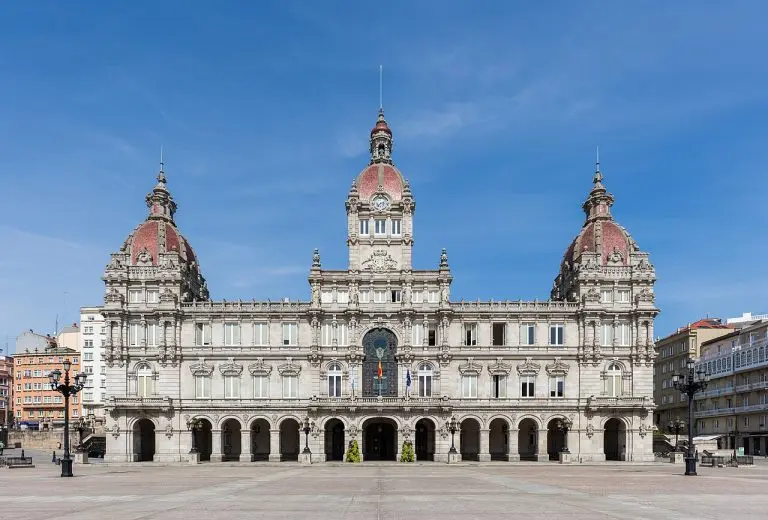
The best area to stay in A Coruña is the centre, near Plaza de María Pita and the marina, where most of the restaurants, bars and points of interest are concentrated. The seafront promenade and the Riazor-Orzán area are also good options if you’re after sea views and a beachy atmosphere.
As for types of accommodation, A Coruña offers everything from budget hostels and guesthouses to four-star hotels with views over the bay. Prices vary depending on the season: a hostel can cost around €40-60 per night in low season, while a central hotel can exceed €100 in summer. For short stays of one or two nights, the centre is the most practical option because everything is within easy walking distance.
Where to eat along the route
Food is one of the great draws of this journey, with dishes ranging from seafood to traditional pastries. In Santiago, A Coruña and the towns in between, Galician cuisine is served in its most authentic form.
Pulpo a la gallega (Galician-style octopus): a dish of boiled octopus sliced into rounds, dressed with olive oil, coarse salt and paprika. It is traditionally served over boiled potatoes. It is the most emblematic dish of the province of A Coruña and can be found at almost any fair or traditional restaurant.
Empanada gallega (Galician pie): bread dough filled with various ingredients, the most typical being tuna, onion and tomato. There are also versions with meat, scallops or cod. It is perfect to take in the car or for a quick meal on the road.
Tarta de Santiago (Santiago almond cake): a dessert made with ground almonds, eggs, sugar and lemon zest, with no flour. It is characterised by the cross of Saint James drawn on top with icing sugar. It is the ideal sweet finish in Santiago before setting off on your trip.
Caldo gallego (Galician broth): a hearty soup made with grelos or cabbage leaves, potatoes, white beans and pork (lacón, chorizo, morcilla). It is a very traditional spoon dish that you will find all along the route, especially in the cold months.
Pimientos de Padrón (Padrón peppers): small green peppers fried in olive oil and sprinkled with coarse salt. Some are spicy, which gives rise to the saying “unos pican y otros no” (some are hot and some are not). Although they originate from Padrón, they are served throughout the province of A Coruña.
Albariño wine: a young, aromatic white wine with good acidity, made mainly from the Albariño grape. It pairs very well with seafood and fish. Although its origin is in Rías Baixas, it is consumed throughout Galicia.
Ribeiro wine: a fresh, fruity white wine; there are also light reds. Made with varieties such as Treixadura, Godello and Loureira. It is another Galician wine option very present on menus in the area.
Herb liqueur: an alcoholic drink obtained by macerating aromatic herbs in aguardiente. It is usually drunk as a digestif after meals. It is common in Santiago and A Coruña, and a traditional way to round off a Galician meal.
Frequently asked questions about the Santiago de Compostela-A Coruña route
How long does it take from Santiago de Compostela to A Coruña?
By car, the 75 km journey takes about 50 minutes via the AP-9. By train, the AVLO, MD and AVANT take 31 minutes, the AVE 32 minutes and the REGIONAL 38 minutes. By bus, the journey takes 50 minutes.
Which is cheaper, the train or the bus?
The bus is the most economical option, with tickets between 5 and 10€ depending on the company (Transporte Público de Galicia, ALSA or Monbus). The Renfe train offers more frequency and speed, but prices tend to be higher, especially on AVANT and AVE. AVLO trains can be competitive if booked in advance.
Is it worth renting a car?
It depends on your plan. If you are only travelling between Santiago and A Coruña, the train is faster and avoids the AP-9 toll. But if you want to stop in O Milladoiro, Ordes or Arteixo, or explore the Arteixo coast at your leisure, a car gives you a freedom that public transport cannot offer. For an urban getaway with no stops, the train is the best option.
When is the best time to travel?
Spring and autumn are the best seasons for this journey: mild temperatures, fewer tourists and green landscapes. Summer in A Coruña is pleasant but busier, and accommodation prices rise. The Galician winter is wet and windy, although caldo gallego and pulpo a la gallega taste better in the cold.
📍 También te puede interesar
Qué ver en Santiago de Compostela →
Qué ver en A Coruña →