Marbella → Málaga
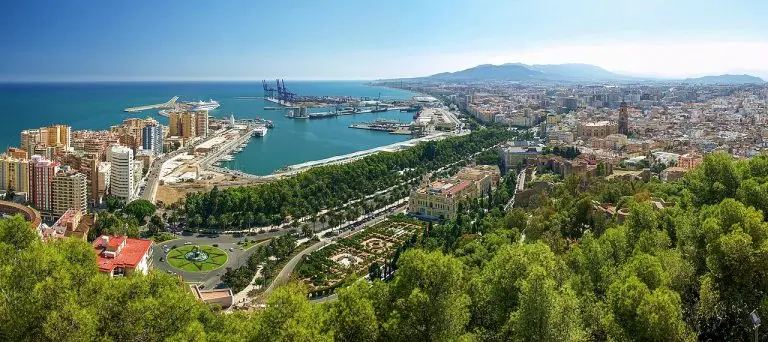
60 kmA journey of barely an hour that takes you away from the glitz of Puerto Banús and drops you in front of the Alcazaba of Málaga, with the Mediterranean peeking out on your left for much of the way. Covering the 60 km that separate Marbella from Málaga is one of those short routes to be savoured without rushing, whether on a comfortable bus with sea views or behind the wheel with the freedom to detour to a whitewashed village and stretch out the morning.
How to get from Marbella to Málaga: quick summary
The fastest and most flexible option is the car, with a journey of about 50 minutes along the AP-7 and the A-7. The direct bus is the ideal budget alternative if you don’t need to stop en route: it costs between €7 and €11 and takes 55 minutes. There is no direct train or flight between the two cities, so the real choice comes down to bus or private vehicle.
If you’re travelling with a large suitcase and want to get around Málaga afterwards, the car gives you total independence. If your plan is simply to reach the centre and walk, the bus is unbeatable for price and convenience.
Driving from Marbella to Málaga
The drive takes approximately 50 minutes for the 60 km of road distance, travelling mainly along the AP-7, the A-7 and the MA-20.
The most direct route combines three well-signposted roads. First you take the AP-7, the Mediterranean Motorway, which covers about 32 km of the journey. It is a toll motorway with wide lanes and flowing traffic, especially comfortable in high season when the coastal road becomes congested. Then you link up with the A-7, the Mediterranean Dual Carriageway, which runs for about 12 km toll-free and brings you close to the entrance to the capital. Finally, the MA-20, the Málaga Ring Road, circles the city for about 10 km until it connects with the centre or with the exits towards the airport and the port.
Practical tip: if you’re travelling in summer or at the weekend, leave Marbella early. The AP-7 clears before midday and you avoid the typical queues on the approach to Málaga via the MA-20 at rush hour.
By bus from Marbella to Málaga
There is a direct bus between Marbella and Málaga with a duration of 55 minutes and a price ranging from €7 to €11, operated by companies such as ALSA, Avanza, BlaBlaCar Bus and Movelia.
Frequency is ample throughout the day, with departures from Marbella bus station and arrival at Málaga station, very well connected to the historic centre and the rest of the city. The buses are usually modern, with air conditioning and space for luggage, which makes them a comfortable option for most travellers.
To get the best price, book in advance on the ALSA or Movelia websites. The cheapest tickets tend to sell out quickly at weekends and on public holidays.
Recommended stops along the way
If you’re driving, you can turn a 50-minute journey into a half-day excursion with stops in inland villages or coastal towns, all easily accessible from the main route.
Fuengirola
The most natural coastal stop if you barely want to deviate from your route. Fuengirola has a lively promenade, wide beaches and an Arab castle, the Sohail, that’s worth a photo. It’s ideal for a coffee with sea views before continuing on to Málaga.
Torremolinos
Another coastal stop, now almost on the home stretch towards Málaga. Torremolinos offers a more touristy, beach-focused atmosphere, with a huge range of dining options. If you fancy stretching your legs, its promenade is perfect for a half-hour walk along the Mediterranean.
Alhaurín de la Torre
A detour inland that takes you away from the coastal bustle. Alhaurín de la Torre is a quiet village with good views over the Bay of Málaga and pleasant rural surroundings. A good option for an unhurried Andalusian breakfast.
Alhaurín el Grande
A little further from the main route, but with a charming old town of whitewashed streets and squares filled with orange trees. It’s a recommended stop if you’re after a more authentic, less touristy experience than the coast.
Coín
Another inland village with an Arab layout and privileged natural surroundings. Coín is known for its agricultural production and its viewpoints over the Guadalhorce valley. A perfect stop to buy local produce.
Cártama
Strategically located next to the Guadalhorce valley, Cártama is a village with historical remains and panoramic views. Its proximity to the motorway makes it a quick and accessible stop.
Estación de Cártama
A landmark for those travelling around the region by public transport. Although it isn’t a classic tourist stop, its location in the Guadalhorce corridor makes it useful as a point of reference on the route to Málaga.
Pizarra
A village with rural charm and a hilltop castle dominating the landscape. Pizarra is a peaceful stop for those who prefer the inland to the coast, with tapas bars and a slow pace.
Where to stay in Málaga
The best area to stay in Málaga depends on your priority: the historic centre for cultural sightseeing, Soho for an alternative vibe, or La Malagueta for beach and relaxation.
The historic centre has the largest concentration of accommodation, from hostels and budget guesthouses to boutique hotels in restored buildings. Prices vary widely depending on the season, with options from around €50 per night in simple hostels to more than €150 in four-star hotels.
The Soho district, near the port and the bus station, is ideal if you arrive by bus and want to get around on foot. La Malagueta, next to the beach, offers holiday apartments and hotels with sea views, especially recommended in summer.
Where to eat along the route
The cuisine of the Costa del Sol and Málaga takes centre stage on this journey, with dishes that smell of the sea, almonds and olive oil.
Espetos de sardinas (grilled sardine skewers) are the culinary icon of the coast. They are made with fresh sardines threaded onto cane sticks and grilled over wood embers, typically right on the beach sand. It is a simple but delicious dish that showcases the freshness of the fish, and it can be found in both Marbella and Málaga.
The fritura malagueña (mixed fried fish) is another local institution: a varied selection of small fish, such as anchovies, squid, red mullet and pijotas, lightly floured and fried in olive oil. It is served crispy and usually accompanied by lemon.
Ajoblanco is a cold, creamy soup made with ground almonds, garlic, bread, extra virgin olive oil and vinegar. It is traditionally served with fresh grapes or pieces of melon, and it is perfect for cooling down on hot days.
The ensalada malagueña (Málaga-style salad) combines boiled potatoes, flaked cod, oranges, spring onion and olives, dressed with olive oil. It is a refreshing yet hearty option for summer.
To drink, DO Málaga wines are traditionally sweet, liqueur-like or naturally sweet, made mainly from Moscatel de Alejandría and Pedro Ximénez grapes. There are different types depending on their production and ageing, and they pair especially well with desserts and long after-meal conversations.
Frequently asked questions about the Marbella-Málaga route
How long does it take to get from Marbella to Málaga?
By car it takes about 50 minutes to cover the 60 km by road. By direct bus, the journey takes 55 minutes. There is no direct train or flight between the two cities.
Which is cheaper, the train or the bus?
The bus is the cheapest option, with prices between 7 and 11 €. There is no direct train between Marbella and Málaga, since Marbella has no train station, so the bus is the only affordable public transport alternative.
Is it worth renting a car?
Yes, if you want to make stops along the way. With a car you can visit towns such as Fuengirola, Torremolinos, Coín or Pizarra, something impossible on a direct bus. If you are only going to stay in Málaga city, the bus is enough and more economical.
When is the best time to travel?
The best time is spring or autumn, when temperatures are mild and traffic on the AP-7 and the MA-20 is lighter. In summer the journey is feasible but there can be more congestion, especially during peak hours and at weekends.
📍 También te puede interesar
Qué ver en Marbella →
Qué ver en Málaga →