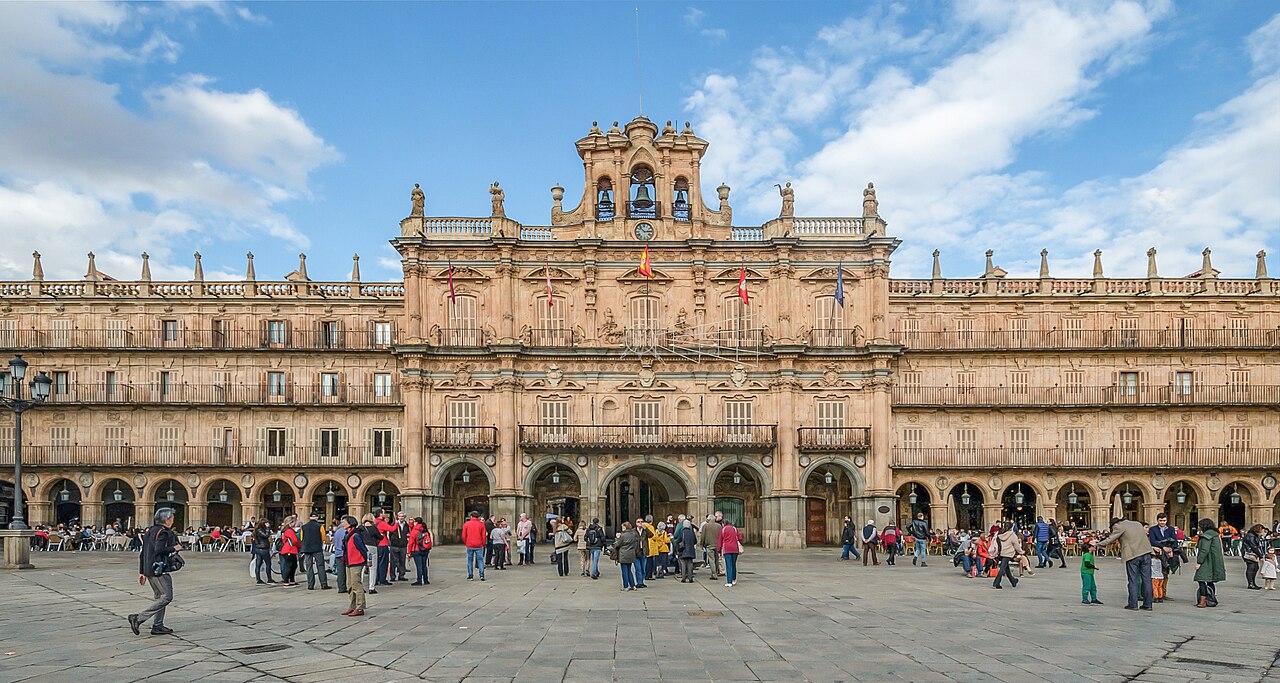
Madrid → Salamanca
212 kmLeaving the bustling capital for the golden city is an experience that transforms the landscape in a matter of minutes, shifting from the vastness of the Castilian plateau to the architectural elegance of Salamanca. This journey is not just a transfer; it is the perfect bridge between Madrid’s vibrant modernity and the living history that breathes in every stone of the university city, whether you choose the freedom of the road or the comfort of the train.
How to Get from Madrid to Salamanca: Quick Overview
The fastest way to travel from Madrid to Salamanca is by ALVIA train, covering the distance in just 97 minutes, while the cheapest option is the bus at €14.16.
For the traveler who prioritizes time and comfort, the train operated by Renfe is the undisputed choice, especially the ALVIA services departing from Chamartín. However, if you seek total flexibility and the chance to explore the surroundings at your own pace, the car is an excellent alternative, covering the 212 km in about 2 hours and 15 minutes with no toll costs. The bus stands out as the ideal solution for backpackers or budget-conscious travelers who don’t mind a slightly longer journey. Ultimately, the choice depends on whether you value the speed of the AVE, the savings of the bus, or the freedom of the car more.
By Car from Madrid to Salamanca
The road distance between Madrid and Salamanca is 212 km and can be covered in approximately 2 hours and 15 minutes using a completely toll-free motorway network.
Driving to Salamanca is a smooth experience thanks to the area’s excellent road infrastructure. The main route benefits from a direct connection via toll-free motorways, making the trip very economical in terms of travel expenses. According to verified road network data, you have several main arteries at your disposal to connect both cities and their surroundings at no extra cost. The A-6 (Autovía del Noroeste) and the A-50 (Autovía Ávila-Salamanca) are the trunk roads that structure this communication axis, allowing a constant flow of traffic.
In addition to these two essential routes, the network is complemented by other motorways that, while not the main direct route, form part of the toll-free transport ecosystem in central Spain. You can count on the A-66 (Autovía Ruta de la Plata), which is vital for north-south connections, and the A-62 (Autovía de Castilla), which facilitates movement across the plateau. Other available routes in the toll-free system include the A-5 (Autovía del Suroeste), the A-2 (Autovía del Nordeste), the A-3 (Autovía del Este), the A-4 (Autovía del Sur), the A-1 (Autovía del Norte), and the A-42 (Autovía de Toledo). All these roads are toll-free, ensuring that the only cost of your car journey will be fuel and vehicle wear and tear, making the total cost of the trip very competitive compared to other transport options.
By train from Madrid to Salamanca
The train is the fastest means of transport, with ALVIA services covering the journey in 97 minutes operated by Renfe.
The rail connection is robust and frequent, offering a total of 15 daily trains linking the capital with the city on the Tormes River. The operator in charge of this service is Renfe, which manages departures from Madrid-Chamartín-Clara Campoamor station bound for Salamanca station. The offering is divided into two main types of services tailored to different speed and schedule needs.
On the one hand, you have the ALVIA service, which is the premium speed option. There are 5 ALVIA trains a day covering the distance in a record time of 97 minutes, although in some cases the journey can extend up to 183 minutes depending on the stop and the specific service. On the other hand, there are MD (Media Distancia) trains, with 10 running daily. These trains have an average duration of 154 minutes, offering a solid alternative if the ALVIA schedules don’t fit your plan. The operating hours are extensive, with the first train leaving at 7:40 in the morning, ideal for those who want to make the most of the day, and the last train departing at 21:11, perfect for dinners or evening events in Madrid before heading back.
By bus from Madrid to Salamanca
The bus is the most economical option, with tickets available from €14.16 operated by the company Monbus.
For travelers looking to maximize their budget, road transport by bus is the winning alternative. The company Monbus is responsible for providing this direct service, eliminating the need for complicated transfers. Although the exact journey duration may vary depending on traffic and road conditions, the main advantage lies in its highly competitive price. At a cost of €14.16, the bus positions itself as the cheapest option on the market, costing significantly less than a standard train ticket or the fuel expenses of a solo car trip. It is a recommended option for students and independent travelers who prioritize savings over extreme speed.
Recommended stops along the way
If you are travelling by car, there are 8 verified stops along the route that enrich the journey with history and natural scenery before reaching Salamanca.
- Segovia: This stop is almost obligatory for its impressive heritage. Located on the route, Segovia offers one of the finest displays of Roman and medieval architecture in Spain. It is the ideal place to stretch your legs and visit the famous Aqueduct (Acueducto) before continuing west.
- San Lorenzo de El Escorial: Right in the foothills of the mountains, this town is famous for its Monastery (Monasterio), an architectural jewel declared a UNESCO World Heritage Site. It is a top-tier cultural stop that combines royal history with protected natural surroundings.
- Alpedrete: Located in the mountain area, Alpedrete is known for its granite quarries and natural environment. It is a strategic point to enjoy the cool mountain air and the area’s traditional architecture before descending to the plateau.
- El Escorial: Different from the previous town, this locality is intrinsically linked to the monastic complex. Strolling through its streets allows you to feel the history of the Catholic Monarchs (Reyes Católicos) and Philip II, offering a solemn and tranquil atmosphere perfect for a short break.
- Villanueva del Pardillo: This town offers an interesting contrast, situated in a position that allows you to see the transition between the mountains and the plain. It is a good point to observe the changing geography of the Community of Madrid.
- Torrelodones: Known for its watchtower and its proximity to the capital, Torrelodones is an accessible stop that combines residential areas with open spaces. It is useful for those needing a quick technical stop with services close to the motorway.
- Colmenar Viejo: Set in a privileged environment near La Pedriza, Colmenar Viejo is famous for its meat and historical heritage. It is an excellent stop for travellers looking to combine local gastronomy with views of unique granite formations.
- Moralzarzal: Surrounded by nature and with a well-kept town centre, Moralzarzal is the last of the recommended stops on this list before venturing further along the route to Salamanca. It offers peace and a relaxed atmosphere far from the noise of the big city.
Where to stay in Salamanca
To stay in Salamanca, the most recommended areas are the Historic Centre (Casco Histórico) and the area near the Plaza Mayor, where you will find a mix of historic hotels and modern apartments.
The city offers a variety of accommodation to suit different budgets. Although this guide does not specify concrete hotel names, the typology is clear. In the centre, near the Cathedral and the University, charming hotels located in restored buildings predominate, ideal for couples seeking romance and proximity to the monuments. For travellers on a medium or low budget, there are guesthouses and hostels in the streets surrounding the Plaza Mayor, allowing you to save money without sacrificing location. There are also tourist apartment options perfect for families or groups of friends who want to cook and have more space. Price ranges usually vary according to the season, being higher during weekends and university festivities, but are generally competitive compared to Madrid.
Frequently asked questions about the Madrid–Salamanca route
How long does it take to get from Madrid to Salamanca?
Travel time varies depending on the mode of transport: by car it takes 2 hours and 15 minutes, by ALVIA train it takes 97 minutes, and by MD train it takes 154 minutes.
Which is cheaper, the train or the bus?
The bus is considerably cheaper, with a fixed price of €14.16, while train prices vary according to how far in advance you book and the type of ALVIA or MD ticket.
Is it worth renting a car?
Yes, it is worth it if you plan to make several of the 8 recommended stops along the route, such as Segovia or El Escorial, as the 212 km journey is short and has no tolls.
When is the best time to travel?
It is best to travel avoiding the peak departure times from Madrid (7:00–9:00) and taking advantage of the frequency of 15 daily trains or the availability of clear motorways.
📍 También te puede interesar
Qué ver en Madrid →
Qué ver en Salamanca →